

Fashion
Italy’s Moncler Group’s 9M 2025 revenues hold steady at $2.13 bn

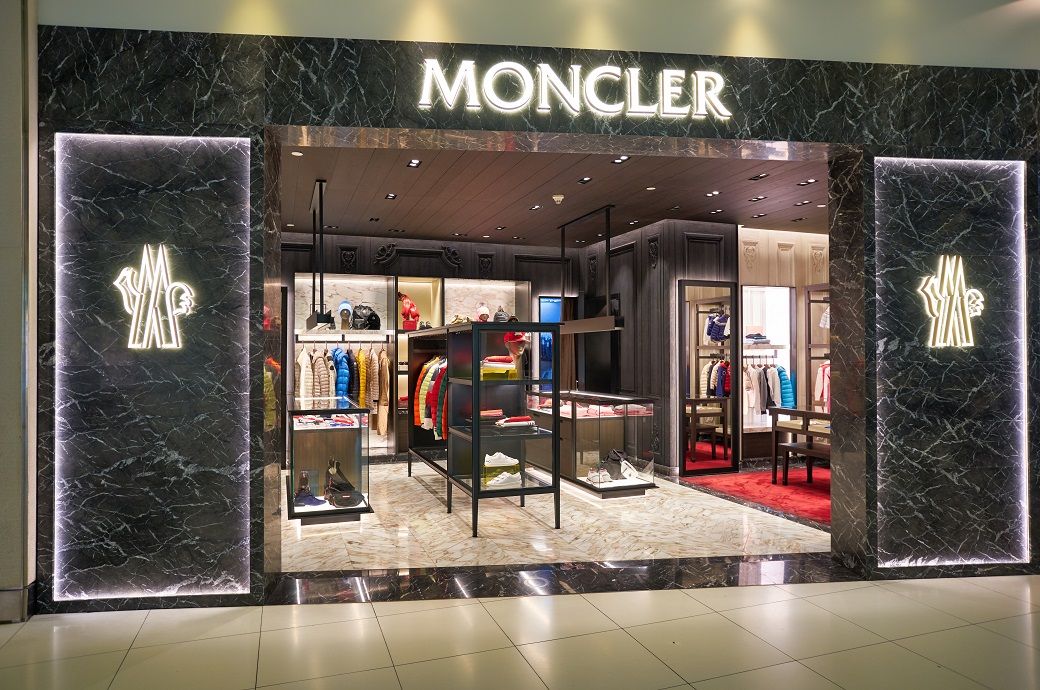
Moncler brand revenues were €1.55 billion (~$1.8 billion), stable at constant exchange rates compared with 2024. In Q3 2025, revenues reached €514.2 million (–1 per cent cFX YoY), supported by sequential gains in both DTC and wholesale channels, Moncler Group said in a press release.
Italian Moncler Group has reported revenues of €1.84 billion (~$2.13 billion) in the 9M 2025, flat at constant exchange rates.
Moncler brand sales totalled €1.55 billion (~$1.8 billion) and Stone Island €288 million (~$334.1 million), with both showing sequential improvement in DTC performance.
The Americas and China outperformed, offsetting softer EMEA and Japan results.
Asia’s revenues increased 3 per cent cFX to €752.6 million, driven by continued strength in China, partially offset by softness in Japan and Korea. Revenues in Europe, the Middle East and Africa (EMEA) declined 4 per cent cFX to €581 million, affected by subdued tourism flows despite a slight sequential improvement. Americas’ revenues rose 2 per cent cFX to €219.6 million, with Q3 growth of 5 per cent cFX driven by double-digit DTC sales.
Moncler brand’s direct-to-consumer (DTC) channel grew 1 per cent cFX to €1,255.4 million, maintaining stable performance through Q3 despite macroeconomic headwinds. Wholesale revenues fell 5 per cent cFX to €297.8 million, reflecting Moncler’s continued focus on distribution quality and network optimisation.
As of September 30, 2025, Moncler operated 294 directly operated stores (DOS), a net increase of seven since June 2025, including a new boutique in Austin and an expanded SKP location in Beijing. The brand also managed 49 wholesale shop-in-shops, five fewer than the previous quarter.
Stone Island recorded revenues of €288.1 million (~$334.1 million) in 9M 2025 (–1 per cent cFX), with Q3 revenues flat year-on-year. Performance was shaped by a robust DTC segment and a wholesale decline due to shipment timing differences between quarters.
Revenues in Asia rose 13 per cent cFX to €74.2 million, driven by strong momentum in China and Japan. EMEA declined 4 per cent cFX to €196.2 million, as robust DTC growth was offset by weaker wholesale sales. The Americas fell 11 per cent cFX to €17.7 million, though both channels improved sequentially in Q3. The DTC channel advanced 9 per cent cFX to €145.1 million, accounting for over half of total sales, while wholesale revenues dropped 9 per cent cFX to €143.0 million due to shipment timing differences but showed sequential improvement during the quarter.
Stone Island operated 92 directly operated stores and 11 wholesale mono-brand stores as of September 30, 2025. Notably, the brand relocated its flagship store in New York City during the quarter.
Meanwhile, in the third quarter (Q3), group revenues totalled €615.6 million (–1 per cent cFX YoY), with Moncler and Stone Island contributing €514.2 million and €101.4 million respectively. Both brands demonstrated sequential improvement in their direct-to-consumer (DTC) channels, reflecting effective execution amid subdued market demand.
“As we close the first nine months of the year, we remain focused on executing our strategy with discipline, agility, and a strong sense of direction – aware of the challenges around us, but even more committed to the opportunities ahead,” said Remo Ruffini, chairman and CEO of Moncler Group.
“Our recently-launched communication campaign Warmer Together celebrates the values that have defined Moncler for over 70 years—love, connection, and a shared sense of warmth—brought to life through the friendship of two legendary Hollywood icons,” added Ruffini. “These same values come to life in Casa Moncler, our new headquarters and a key milestone in our journey. More than just a space, it is a powerful expression of our culture—where creativity meets innovation, and where our people come together with strong energy and a deep sense of belonging to shape the future of our brand.”
Moncler continues to prioritise organic growth, direct engagement through its retail network, and the elevation of its wholesale distribution. The company also published its 2026 Corporate Events Calendar, available on its website under the Investors section, added the release.
“As we close the first nine months of the year, we remain focused on executing our strategy with discipline, agility, and a strong sense of direction—aware of the challenges around us, but even more committed to the opportunities ahead,” said Ruffini.
Fibre2Fashion News Desk (SG)










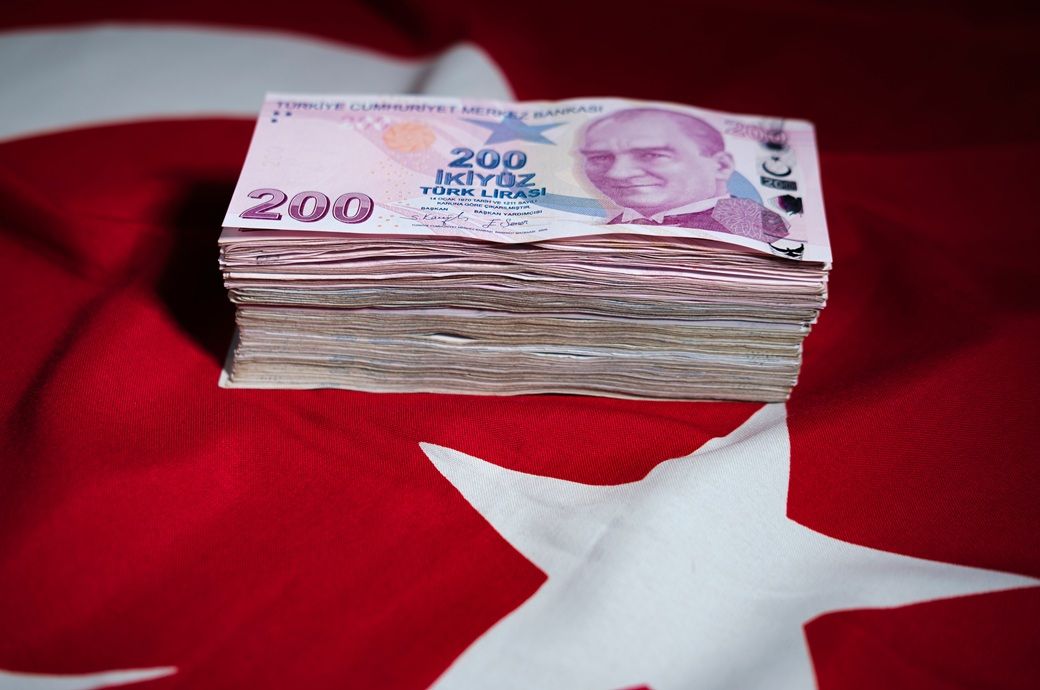
Current account excluding gold and energy indicated net deficit of $3.9 billion, while goods saw a deficit of $9.5 billion.
Turkiye recorded a current account deficit (CAD) of $9.6 billion in March, the country’s central bank said.
Treasury and Finance Minister Mehmet Simsek said the CAD is expected to widen this year, due to high energy and non-energy commodity prices.
Simsek said the deterioration is likely to remain temporary and manageable, thanks to stronger macroeconomic fundamentals and policy gains.
According to annualised data, current account deficit recorded as $39.7 billion (2.6 per cent of gross domestic product) in March, while the goods deficit recorded as $77.8 billion.
Simsek said the deterioration is likely to remain temporary and manageable thanks to stronger macroeconomic fundamentals and policy gains, domestic media outlets reported.
Turkiye is heavily reliant on imported energy, whose prices spiralled due to the Middle East conflict.
Simsek said elevated global commodity prices would put pressure on the external balance, but emphasised that the government’s economic programme had improved resilience against such shocks.
He said foreign direct investment (FDI) inflows totalled $1 billion in March, bringing annualised foreign direct investment to $12.6 billion.
The new investment incentive package under discussion in parliament now is expected to strengthen the country’s financing structure and support long-term capital inflows, he added.
Fibre2Fashion News Desk (DS)

During the first quarter of ****, the UK’s imports of textile fabrics eased down *.** to £*,*** million (~$*,*** million), against £*,*** million in January-March **** but slightly higher from £*,*** million in the fourth quarter of ****. Its imports of fibre were noted at £** million (~$***.** million) steady as £** million in Q*, **** but slightly lower than £** million in Q*, ****.
During the third month of this year, the country’s clothing imports declined *.** per cent to £*.*** billion (~$*.*** billion), compared with £*.*** billion in March ****. But the inbound shipment was slightly higher month on month compared with £*.*** billion in February ****.

Higher rents, utility bills and fuel prices are eating away at already thin profit margins, it found.
High inflation is cutting deep into Bangladesh consumer spending, with weak demand turning one of the biggest concerns for businesses, DCCI said.
Higher rents, utility bills and fuel prices are eating away at already thin profit margins.
DCCI’s economic position index revealed that consumers have sharply reduced spending as the cost of living continues to rise.
SMEs are feeling the pressure the most.
The chamber’s economic position index (EPI) revealed that consumers have sharply reduced spending as the cost of living continues to rise, putting pressure on retailers, transport operators and other service providers.
Small and medium enterprises (SMEs) are feeling the pressure the most as they struggle to manage higher operating costs without losing customers.
Businesses also cited difficulties in obtaining bank loans, while delays in licensing and other regulatory procedures are adding to costs.
The DCCI report identified a shortage of skilled workers, particularly in technical and customer service roles, as another challenge for the sector.
The country’s inflation rose to 9.04 per cent in April from 8.71 per cent in March, according to official statistics.
Fibre2Fashion News Desk (DS)


Two Americans arrested at Japanese zoo

Turkiye’s current account deficit expected to widen in 2026: Minister

UK’s clothing imports fall 3% in Q1, sharply lower than Q4 2025

-

 Entertainment6 days ago
Conan O’Brien hat tricks as Oscar host
-

 Tech1 week ago
Could Contact-Tracing Apps Help With the Hantavirus? Not Really
-

 Fashion5 days ago
Italy’s Zegna Group’s Q1 growth boosted by strong organic performance
-

 Sports1 week ago
Bobby Cox, legendary Atlanta Braves manager who led 1995 World Series champions, dead at 84
-

 Entertainment1 week ago
Martin Short: Facing tragedy with joy
-

 Entertainment1 week ago
Tom Brady gets back at Kevin Hart during Netflix roast
-

 Sports1 week ago
Jacob Fatu unleashes vicious assault on Roman Reigns after World Heavyweight Championship loss at WWE Backlash
-

 Entertainment1 week ago
Martha Stewart: How to make an omelet