

Business
FAA announces flight reductions at 40 airports. Here’s where cuts are expected and what travelers need to know


A Republic Airways plane takes off near the air traffic control tower at Ronald Reagan Washington National Airport (DCA) in Arlington, Virginia, US, on Tuesday, Oct. 28, 2025.
Samuel Corum | Bloomberg | Getty Images
Airlines rushed to provide travelers updates this week after the Federal Aviation Administration said it would reduce flights across 40 airports as the longest government shutdown in history continues to drag on.
Many major airlines said they would waive cancellation fees for even their most basic tickets, which often come with penalties for changes.
Transportation Secretary Sean Duffy previously said he would reduce flight capacity by roughly 10%, affecting 3,500 to 4,000 flights daily.
On Thursday, the FAA formalized a list of affected airports and clarified the reductions would begin at 4% and slowly ramp up to 10% by Nov. 14. The reductions began Friday morning with more than 700 flight cancellations.
These are the airports that are expected to be impacted, including some of the country’s largest airports and major international hubs in Atlanta, Chicago, Dallas, Los Angeles and New York City.
Impacted airports:
- ANC – Anchorage International
- ATL – Hartsfield-Jackson Atlanta International
- BOS – Boston Logan International
- BWI – Baltimore/Washington International
- CLT – Charlotte Douglas International
- CVG – Cincinnati/Northern Kentucky International
- DAL – Dallas Love
- DCA – Ronald Reagan Washington National
- DEN – Denver International
- DFW – Dallas/Fort Worth International
- DTW – Detroit Metropolitan Wayne County
- EWR – Newark Liberty International
- FLL – Fort Lauderdale/Hollywood International
- HNL – Honolulu International
- HOU – Houston Hobby
- IAD – Washington Dulles International
- IAH – George Bush Houston Intercontinental
- IND – Indianapolis International
- JFK – New York John F. Kennedy International
- LAS – Las Vegas McCarran International
- LAX – Los Angeles International
- LGA – New York LaGuardia
- MCO – Orlando International
- MDW – Chicago Midway
- MEM – Memphis International
- MIA – Miami International
- MSP – Minneapolis/St. Paul International
- OAK – Oakland International
- ONT – Ontario International
- ORD – Chicago O’Hare International
- PDX – Portland International
- PHL – Philadelphia International
- PHX – Phoenix Sky Harbor International
- SAN – San Diego International
- SDF – Louisville International
- SEA – Seattle/Tacoma International
- SFO – San Francisco International
- SLC – Salt Lake City International
- TEB – Teterboro
- TPA – Tampa International
(The airport in Las Vegas was renamed the Harry Reid International Airport in 2021.)
On Wednesday, Duffy said the reduction was a “proactive” measure because of the delays and cancellations already occurring due to the shutdown. Air traffic controllers, who are considered essential employees required to work during a shutdown, have missed paychecks, and the FAA has said the closure has also raised concerns about already thin staffing among controllers.
Duffy said he expects more cancellations as a result of the reduction, which has no set end time.
“We thought 10% was the right number based on the pressure we were seeing,” Duffy added.
Earlier this week, Duffy told CNBC’s “Squawk Box” that he could “shut the whole airspace down” if the shutdown drags on.
FAA Administrator Bryan Bedford said Wednesday that additional measures may be implemented after the reduction, which he said he has never seen before in his time in the industry. The officials said they were planning to meet with airlines to discuss which flights would be cut.
Airline response
In a Wednesday memo to United Airlines employees, CEO Scott Kirby said the carrier will not be reducing long-haul international flying and hub-to-hub flying, instead reducing regional and domestic flights that do not fly between hubs.
The airline also offered all customers refunds even if their flights are not impacted. Kirby said that included “non-refundable tickets and those customers with basic economy tickets.”
On Thursday afternoon, the airline preemptively said it was going to cancel 4% of its flights from Friday through Sunday.
In a statement, Delta Air Lines said it expects to operate the “vast majority” of its flights as scheduled and will offer changes, cancellations or refunds for customers’ flights during the impacted period. Delta also said that would include basic economy fares, without penalty.
The airline added on Thursday afternoon that it will cancel flights a day in advance to allow customers enough time.
Frontier Airlines CEO Barry Biffle said he highly recommends travelers flying Friday or in the next 10 days book a backup ticket on another carrier as the flight reductions begin to avoid getting stranded due to cancellations.
“I’m sorry this is happening. Hopefully the shutdown is over soon,” Biffle wrote on LinkedIn. “Just giving everyone practical travel advice.”
American Airlines said it expects that the “vast majority of customers’ travel will proceed as planned,” adding that the carrier will reach out to travelers proactively as schedule changes occur.
The airline also said that it will offer immediate rebooking options for all impacted travelers and that customers whose flights are canceled for any reason will be able to change their flight or request a refund without penalty. As of Thursday morning, the airline was still awaiting clarifying information from the FAA about which of its flights will be impacted.
Southwest Airlines also released a statement saying that the majority of its flights will not be impacted and that its international flights should operate as usual. The airline said it will “proactively communicate well in advance and will offer flexibility in travel plans.”
The Association of Flight Attendants, representing 55,000 flight attendants at 20 airlines, released a statement Wednesday urging Congress to end the shutdown so air traffic controllers and Transportation Security Administration workers can get paid.
“The false narrative that this shutdown is a choice of either paying federal workers or protecting affordable healthcare is outrageous when both crises were manufactured by the exact people who can fix it,” the statement read.
What travelers need to know
Passengers check in at an American Airlines’ counter at Ronald Reagan Washington National Airport in Arlington, Virginia, the United States, on Oct. 10, 2025.
Li Rui | Xinhua News Agency | Getty Images
Experts recommend consumers who are set to travel in the next week stay on top of flight cancellations and delays through the websites and apps.
Nick Ewen, senior editorial director at travel site The Points Guy, said flexibility “is going to be key” as travelers rush to rebook, adding it’s important to download each airline’s mobile app and enable all notifications.
“A lot of the times, you have to actually enable notifications on individual trips or in your account to text you if there are changes or disruptions,” Ewen told CNBC.
He recommended anyone with nonurgent travel reschedule their trips, though that likely only applies to a small number of travelers, and consider choosing other forms of transportation instead. For essential trips, Ewen said passengers should be prepared for long wait times, use self-service rebooking tools, and be aware of the fact that many other people will also be rebooking and scrambling for limited seats.
Ewen said he has been covering the industry for many years, and the last time he and his colleagues saw a major, national disruption in air travel like this was 9/11.
“The biggest thing is a lot of kindness goes a long way,” he said. “So if you’re at an airport and you find out that your flight is canceled, I promise you screaming at that airline employee is not going to get you rebooked any faster — in fact, it’s probably going to make them less likely to be willing to help you. So recognize that everyone is in this together.”
AAA spokesperson Aixa Diaz said the company recommends arriving at the airport extra early to avoid long lines and avoid checking in a bag if possible in case flights get canceled.
“Ultimately, there’s a lot that’s out of travelers’ control — so control what you can, and be as flexible as possible,” Diaz said.

Travel insurance
Travel insurance can reimburse consumers for certain costs and inconveniences incurred from a trip disruption, like flight cancellations, delays, lost luggage, or unforeseen costs for lodging and meals.
Consumers have been buying travel insurance at an elevated rate amid the government shutdown, but travel and insurance experts warn that such policies don’t offer blanket protection for shutdown-related travel snafus, and a lot depends on the fine print.
For example, a policyholder generally can’t get insurance benefits if they choose to cancel their travel plans to avoid any headaches. Cancel-for-any-reason coverage is an exception, though it also comes with its own caveats.
Whether or not a policyholder gets compensated may come down to the rationale an airline provides for a delayed or canceled flight.
Many insurers only pay benefits if a delay or cancellation is attributable to a “common carrier” disruption like a mechanical failure, travel experts said.
“Airlines typically won’t cite causes other than operational terms like ‘mechanical issues’ or general delays, cancellations, or lost belongings, even during a government shutdown,” Lauren McCormick, a spokesperson for Squaremouth, an online platform for comparing travel insurance policies, wrote in a recent blog post. “So, these are generally still covered under most comprehensive travel insurance plans.”
— CNBC’s Phil LeBeau contributed to this report.




Business
WTO reform push: India flags dysfunctional dispute system at MC14, seeks review of e-commerce duty moratorium – The Times of India
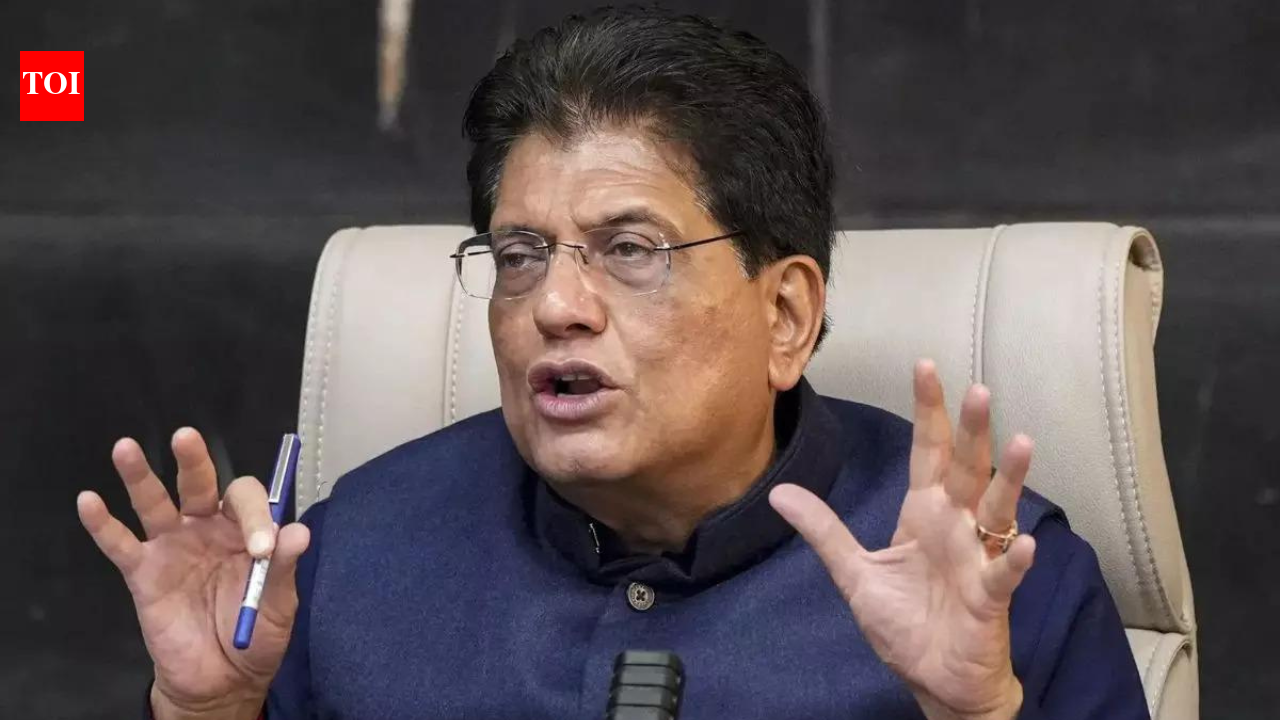
India on Thursday urged members of the World Trade Organisation (WTO) to restore a fully functional dispute settlement system, saying the current mechanism has deprived countries of effective redressal, PTI reported.Speaking on the opening day of the WTO’s 14th ministerial conference (MC14) in Yaounde, Cameroon, commerce and industry minister Piyush Goyal stressed the need to revive the automatic and binding nature of dispute resolution within the global trade body.“A dysfunctional Dispute Settlement System has deprived Members from effective redressal. We must restore the automatic and binding dispute settlement system,” he said.The WTO’s dispute settlement mechanism has faced prolonged disruption since 2009 after the US blocked appointments to the Appellate Body.Goyal also called for a reassessment of the moratorium on customs duties on electronic transmissions, which WTO members have periodically extended since 1998. India has repeatedly raised concerns over the potential revenue implications of the arrangement.“In the absence of a common understanding among Members on the scope of the moratorium on customs duties on electronic transmissions and given its potentially significant implications, the continued extension of this moratorium warrants careful reconsideration,” he said.The four-day MC14 is scheduled to conclude on March 29.On broader WTO reforms, Goyal emphasised that any restructuring should be transparent, inclusive and member-driven, with development concerns at the centre. He underlined that core principles such as non-discrimination, consensus-based decision-making and equity must be upheld. The minister added that the principle of special and differential treatment (S&DT) should be made precise, effective and operational.On agriculture negotiations, he said a permanent solution on public stockholding for food security purposes, the special safeguard mechanism and cotton are long-pending mandated issues that member countries “must deliver on them on priority”.“India remains committed to negotiating a comprehensive Fisheries Subsidies Agreement that balances current and future fishing needs, protects the livelihoods of poor fishers, with appropriate and effective S&DT,” Goyal said.He also stated that incorporating plurilateral outcomes into the WTO framework should be based on consensus and should not undermine the rights of non-participants or impose additional obligations on them.“We will engage constructively to show that WTO remains central to global trade and strive to Reform it to remain responsive, Perform in delivering on development, equity, and inclusiveness, and Transform to better serve the interests of the poor, vulnerable, and marginalized people, anchored in consensus and multilateralism,” he said.Other WTO members also highlighted the need for reforms. According to a statement from US Trade Representative Jamieson Greer, the organisation has struggled to address systemic issues such as persistent trade imbalances, structural excess capacity, economic security and supply chain resilience.“As ministers, our focus should be on reforms that would make the WTO more responsive to Members and improve our ability to achieve outcomes that optimize our trading relationships,” Greer said, adding that countries should consider making the e-commerce duty moratorium permanent.Separately, a ministerial statement by the G-33 grouping of developing countries reiterated that public stockholding for food security remains a crucial policy tool for developing and least developed nations.“We urge all WTO Members to work together in reaching a permanent solution on this issue as per the Ministerial mandates,” the statement said.China also called for restoring a fully functioning dispute settlement mechanism at the earliest to strengthen the WTO’s role in global economic governance. The UK said it wanted to “improve accountability by reinstating a functioning dispute settlement system”.EU trade commissioner Maros Sefcovic warned that inaction could weaken the rules-based trading system. “Maintaining the status quo is not an option — we cannot go on as we are. If we do, we risk erosion of the rules-based system and the WTO sliding into irrelevance. Therefore, I strongly believe we must act urgently to reform the WTO,” he said
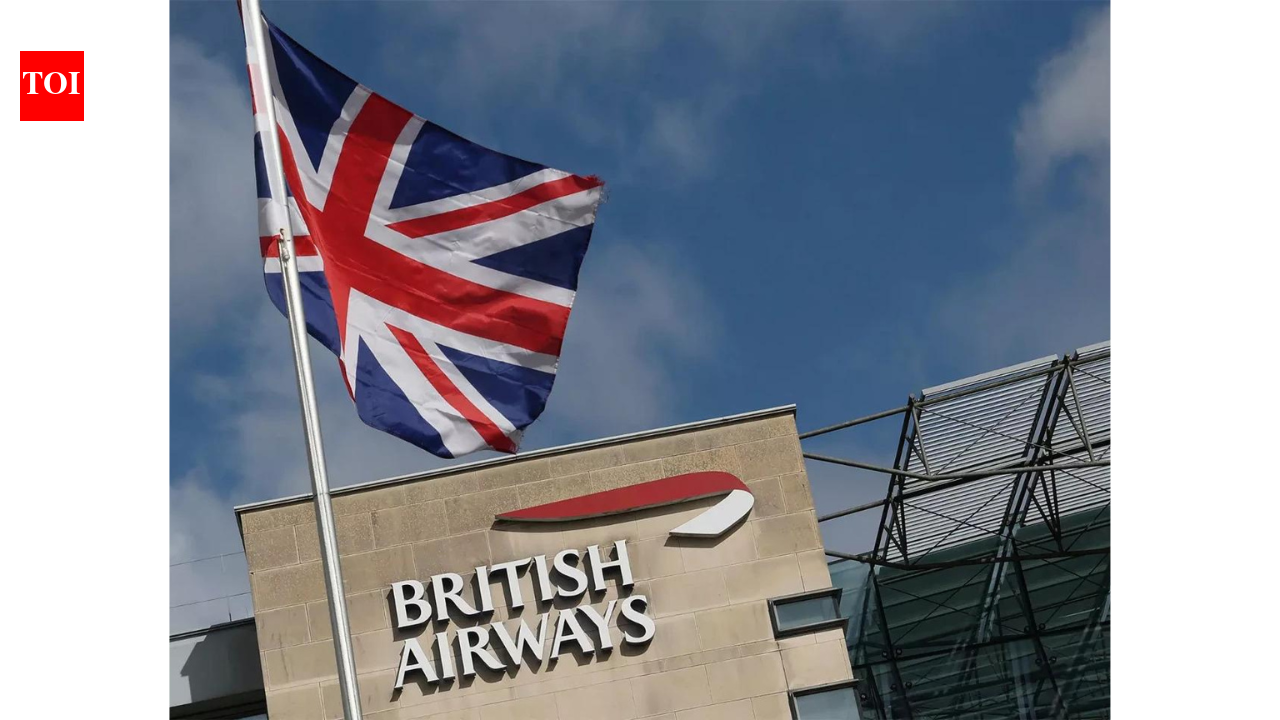
NEW DELHI: With the big Gulf carriers operating a fraction of their schedules, foreign airlines are expanding their India flights to meet the increased demand for options to the likes of Emirates, Qatar Airways and Etihad. SWISS will operate a second daily light between between Delhi and Zurich from April 1 to May 31, 2026. British Airways will have a third daily service from Delhi starting April 7, followed by a third daily service from Mumbai from May 15. Air India has been adding flights to the west whenever possible during the Iran war.In a statement Thursday, Lufthansa group carrier SWISS said it is increasing its flight offering between Switzerland and India. “From April 1 to May 31, 2026, in addition to its regular service from Zurich to Delhi, SWISS will operate a second daily connection using an Airbus A330. Numerous passengers of other airlines are currently unable to take their originally booked flights via the Gulf region. As a result, many are switching to direct connections to and from Asia. SWISS is seeing a corresponding rise in demand for such nonstop services. We are pleased to offer our customers this additional flight to Delhi over the next two months. The flights are available for booking with immediate effect,” SWISS said in a statement.“Depending on further developments in the Middle East, SWISS continuously assesses how aircraft and capacities that become available can be deployed where demand is particularly strong. In addition to demand, key factors include operational constraints such as available airport slots, traffic rights and fleet deployment capabilities,” SWISS statement added.British Airways also announced additional flights from Delhi and Mumbai “to meet strong travel demand”. “In response to the ongoing situation in the Middle East, the airline is adding short-term capacity from Delhi and Mumbai to meet customer demand. A third daily service from Delhi will launch on April 7, followed by a third daily service from Mumbai from May 15. With this additional capacity, British Airways will operate up to 63 weekly flights with more than 1,000 additional seats per week between India and the UK, offering more options for customers travelling to the UK or connecting onwards across the airline’s global network,” BA said in a statement.Neil Chernoff, British Airways’ chief planning and strategy officer, said: “As we continue to respond to the evolving situation in the Middle East, we’ve been able to reallocate additional capacity to meet strong demand to other destinations across our route network. India remains one of our most important global markets, and these additional services from Delhi and Mumbai respond to customer demand and provide greater choice and flexibility for our customers when travelling to the UK and beyond. We will continue to review our network and make adjustments based on where our customers want to fly this summer.”

Two major CEOs told CNBC in recent months that the rise of artificial intelligence contributed to their decisions to hand over the reins and step down from their positions.
It’s one of the latest insights into how America’s corporate leaders are sizing up the AI transition.
Coca-Cola CEO James Quincey told CNBC’s “Squawk Box” on Thursday that his decision to step down from his role was influenced by larger “waves of the organizational momentum.”
“My job is also to think who’s the best team to put on the field to get the next wave done,” Quincey said. “And I concluded that, actually, it was time to put someone else on the field for the next wave of growth.”
Quincey, who has served as CEO of the beverage giant since 2017, will be succeeded by current COO Henrique Braun, effective at the end of this month.
“In a pre-AI, a pre-gen-AI mode, we made a lot of progress. But now there’s a huge new shift coming along,” Quincey said.
While he said he’s leaning into the technological advances, he believes the beverage company needs “someone with the energy to pursue a completely new transformation of the enterprise.”
That person, Quincey said, is Braun, who he believes will uniquely equip the company to embrace its next chapter.
Quincey’s comments echo sentiments from former Walmart CEO Douglas McMillon in December ahead of his departure from that role.

McMillon, who had held the position as CEO of the global retailer since 2014, told CNBC’s “Squawk Box” at the time that he had decided to hand over the role to someone “faster.” John Furner, who was previously head of Walmart U.S., took over the top job on Feb. 1.
“With what’s happening with AI, I could start this next big set of transformations with AI, but I couldn’t finish,” McMillon told CNBC.
“About a year ago, I really started feeling like this next run, you could see what agentic commerce was gonna look like, the vision for AI shopping, and I started thinking about everything that needs to happen over the next few years, and it really caused me to think that now was the right time [to step down],” he said.
Walmart in December made the move to list on the Nasdaq, something McMillon said was symbolic of the progress the company has made with technology.
The retailer has been incorporating AI to optimize its supply chain, provide assistants for customers and more.
“I think what you’re going to see from the Walmart team is they’re just going to keep scaling what we’ve already started, build some new stuff on top, and then use AI to transform it all,” he said.


Amazon’s Spring Sale Is So-So, but Cadence Capsules Are a Bright Spot

The unexpected path that led Morgan and Frankie Price to Arkansas gymnastics

US-Iran mediation: Politicians castigate India’s Jaishankar for spiteful remarks on Pakistan

Sales at US apparel, clothing accessories stores up 4% YoY in Jan 2026

Justice Department Says Anthropic Can’t Be Trusted With Warfighting Systems

March Madness 2026 – How to watch in SA, start time, schedule, TV channel for NCAA championship basketball tournament

-
 Fashion1 week ago
Sales at US apparel, clothing accessories stores up 4% YoY in Jan 2026
-
 Tech1 week ago
Justice Department Says Anthropic Can’t Be Trusted With Warfighting Systems
-
 Sports1 week ago
March Madness 2026 – How to watch in SA, start time, schedule, TV channel for NCAA championship basketball tournament
-

 Fashion1 week ago
Spain’s Inditex FY25 sales rise 3.2% to $46.28 bn amid strong demand
-

 Politics1 week ago
Iran strikes Tel Aviv with cluster-warhead missiles in retaliation of Larijani’s martyrdom
-

 Entertainment1 week ago
Val Kilmer revived 1 year after death through AI
-

 Entertainment1 week ago
With few new leads 45 days after Nancy Guthrie’s disappearance, investigation “becomes much harder,” expert says
-
 Business1 week ago
Brits cashing in jewellery as gold price hits record high