

Politics
Zelensky, EU leaders travel to US for discussions on peace agreement terms

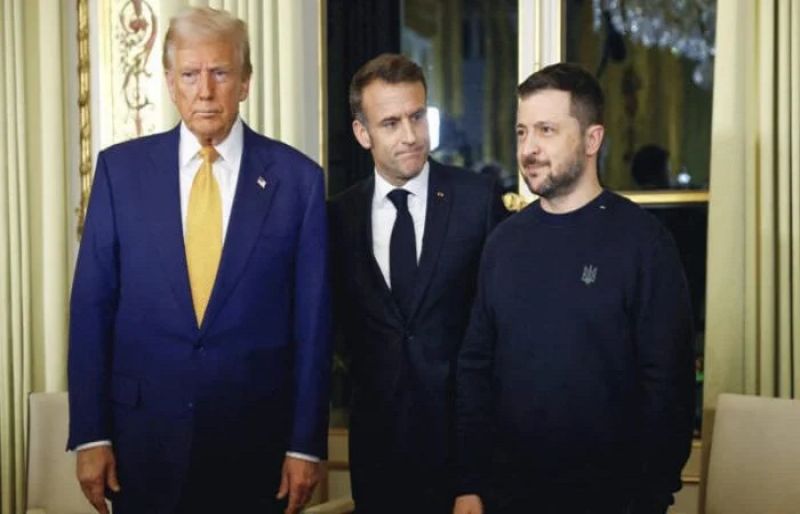

Former US President Donald Trump declared that Ukraine reclaiming Crimea or joining NATO was “off the table,” as President Volodymyr Zelensky landed in Washington on Monday for high-stakes talks on ending the war with Russia.
Zelensky, who has consistently ruled out territorial compromises, is scheduled to meet Trump in Washington alongside European Commission chief Ursula von der Leyen and several other European leaders.
The talks follow last Friday’s Trump-Putin summit in Alaska, which did not secure a ceasefire but produced pledges from both leaders to offer Ukraine “strong security guarantees.”
Notably, Zelensky was excluded from the Alaska meeting, after which Trump aligned with Russia’s long-standing stance that a ceasefire was unnecessary before finalizing a peace agreement.
“President Zelensky of Ukraine could end this war with Russia almost immediately if he chooses, or he can continue fighting,” Trump wrote on his social media platform.
He added: “There’s no taking back Crimea (Obama gave it away 12 years ago, without firing a shot!), and NO NATO membership for Ukraine. Some things never change!!!”
According to the White House schedule, Trump and Zelensky will first hold a one-on-one meeting before being joined by European leaders, including von der Leyen, NATO chief Mark Rutte, and the heads of Britain, Finland, France, Germany, and Italy.
It will be the first time Zelensky visits Washington since a bust-up with Trump and Vice President JD Vance in February when the two men berated the Ukrainian leader for being “ungrateful.”
On Sunday night, after arriving in Washington, Zelensky said: “We all share a strong desire to end this war quickly and reliably.”
Security guarantees
Since the Oval Office row in February, Trump has grown more critical of Putin and shown some signs of frustration as Russia repeatedly stalled on peace talks.
But Washington has not placed extra sanctions on Moscow and the lavish welcome offered to Putin in Alaska on his first visit to the West since he invaded Ukraine in 2022 was seen as a diplomatic coup for Russia.
Speaking in Brussels on the eve of his visit to the United States, Zelensky said he was keen to hear more about what Putin and Trump discussed in Alaska.
He also hailed Washington’s offer of security guarantees to Ukraine as “historic.”
Trump said he spoke to Putin about the possibility of a Nato-style collective defense guarantee for Ukraine.
The promise would be outside of the framework of the Western military alliance that Ukraine wants to join and which is seen as an existential threat by Russia.
French President Emmanuel Macron said European leaders would ask Trump “to what extent” Washington is ready to contribute to security guarantees for Ukraine.
Discussion on land
Trump’s envoy Steve Witkoff said Moscow had made “some concessions” regarding five Ukrainian regions that Russia fully or partially controls, and said that “there is an important discussion with regard to Donetsk and what would happen there.
“That discussion is going to specifically be detailed on Monday,” he said, without giving details.
Russia annexed Crimea in 2014 following a sham referendum and did the same in 2022 for four Ukrainian regions Donetsk, Kherson, Lugansk and Zaporizhzhia even though its forces have not fully captured them.
A source briefed on a phone call between Trump and European leaders on Saturday told AFP that the US leader was “inclined to support” a Russian demand to be given territory it has not yet captured in the Donbas, an area that includes the Donetsk and Lugansk regions and which has seen the deadliest battles of the war.
In exchange, the source cited Trump as saying, Moscow would agree to “freeze” the front line in the Kherson and Zaporizhzhia, where Russian forces hold swathes of territory but not the regional capitals.
Russia has until now insisted that Ukraine pull its forces out of all four regions as a precondition to any deal.


- No fixed timeline announced for truce: source.
- Trump says US to continue blockade despite truce extension.
- Iran says talks will be held after lifting of US naval blockade.
A second round of US-Iran talks could take place as early as Friday, the New York Post reported on Wednesday, citing President Donald Trump.
“It’s possible!” Trump reportedly told the Post by text message, when asked about sources in Pakistan — which mediated the first round of talks — saying that a second round was “expected in Islamabad within the next 36 to 72 hours.”
Trump on Tuesday extended a two-week truce in the war just as it was about to expire. A digital news outlet in Pakistan reported the three-day time frame for more talks without a source or further details.
However, Reuters, citing a source, reported that no fixed timeline has been announced for any long-term extension.
The US source said Trump was willing to extend the ceasefire with Iran by another three to five days. “It is not going to be an open-ended ceasefire,” the source added.
Uncertainty continues to cloud the second round of peace talks, as Washington and Tehran remain at odds on several issues, most notably the Strait of Hormuz.
Tehran closed the strait for all traffic after the US and Israel began strikes across Iran on February 28. Apart from closing Hormuz, Tehran also launched strikes against Israel and US bases across the Middle East.
The fighting ended on April 8 when Prime Minister Shehbaz Sharif announced a two-week ceasefire and invited both sides to Islamabad for talks, which concluded without a deal on a permanent end to the conflict.
Islamabad, however, continued its effort to bring both sides back to the negotiating table and ensure an extension in the ceasefire.
Ceasefire extended
Late Tuesday, US President Donald Trump announced extending the Iran ceasefire until an Iranian proposal was submitted and discussions were concluded.
Trump, in a post on Truth Social, said he was acting at the request of Pakistan to hold off attacks until Iranian leaders and representatives could come up with what he called a unified proposal.
However, Trump said the US Navy would continue its blockade of Iranian maritime trade, a measure Tehran considers an act of war.
While Washington has announced members of its delegation for the second round of talks, Tehran says it would return to the negotiating table only after the US lifts the naval blockade of its ports.
“As soon as they lift the blockade, the next round of negotiations will be held in Islamabad,” Aljazeera quoted Iran’s Ambassador to the UN Amir-Saeid Iravani as saying.
Meanwhile, Pakistani authorities said that Islamabad was in constant touch with the Iranian leadership and was pursuing the path of diplomacy and dialogue.
“Formal response from Iranian side about confirmation of delegation to attend Islamabad Peace Talks is still awaited,” Information Minister Attaullah Tarar wrote in a post on X on Tuesday.
Iran hails Pakistan’s efforts to end war
Iran’s foreign ministry spokesperson Esmaeil Baqaei said on Wednesday that the Islamic republic appreciates Pakistan’s efforts to end the Middle East war, without commenting on a ceasefire extension announced by the United States.
Iranian state broadcaster IRIB reported that Baqaei was asked by journalists to comment on the truce extension, which US President Donald Trump said he approved following a request by Pakistani mediators.
“While appreciating Pakistan’s efforts to end the imposed war and establish peace”, Baqaei stressed that Tehran “is taking the necessary measures to safeguard Iran’s national interests and security”
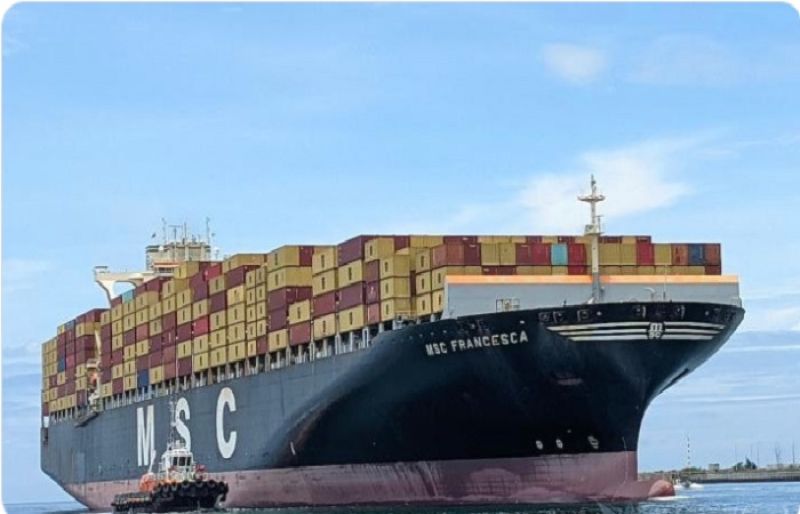
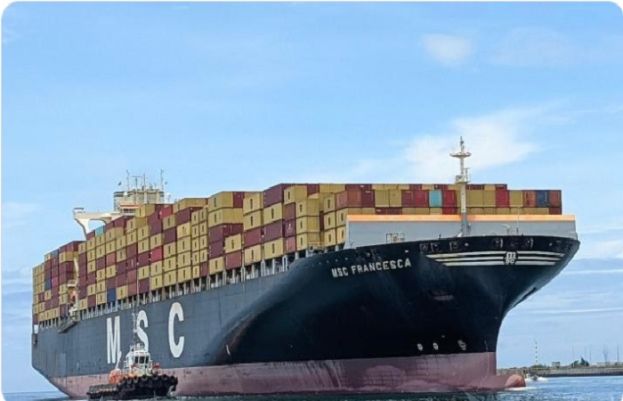
The Islamic Revolution Guards Corps (IRGC) Navy says it has intercepted and transferred to Iranian territorial waters two vessels for having committed violations in the Strait of Hormuz.
In a statement released on Wednesday, the IRGC identified the vessels as the MSC-Francesca, which it said belongs to the Israeli regime, and the Epaminodes.
The vessels, it said, were operating without authorization, committing repeated violations, tampering with navigation aid systems, and endangering maritime security in an attempt to exit the strait covertly.
“With the intelligence dominance of the forces, these vessels were identified and stopped in order to uphold the rights of the noble Iranian nation in the Strait of Hormuz,” the IRGC Navy said.
It added that the vessels have now been transferred to Iranian territorial waters for inspection of their cargo and documents.
The IRGC Navy reiterated that any attempt to disrupt the implementation of laws announced by Iran for transit through the Strait of Hormuz, or any activity inconsistent with safe passage through this strategic waterway, will be continuously monitored and met with decisive and legal action against violators.
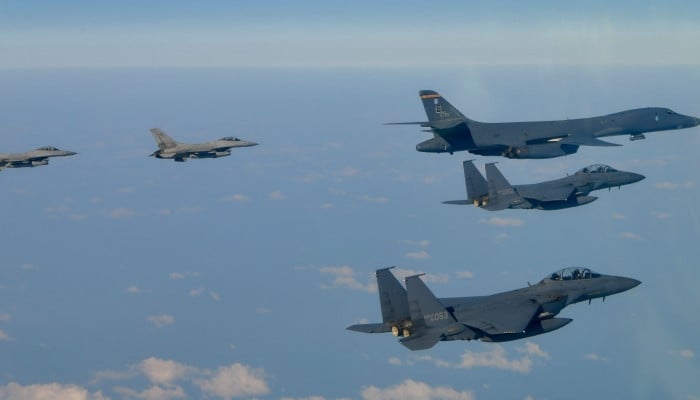

A South Korean fighter pilot has been ordered to pay 88 million won ($59,200) in damages over a 2021 mid-air collision he caused by trying to get photos and videos of himself flying, an official report said on Wednesday.
The pilot, whose identity was withheld, wanted to capture footage of his last sortie before reassignment, according to the report by the Board of Audit and Inspection.
While travelling at 578 kilometres per hour (359 mph), he had the pilot of a second plane and another colleague take snaps of him on their phones.
In search of the perfect shot, he flipped his jet and flew close to the other aircraft, resulting in a misjudgement that caused his left stabilator — a horizontal stabiliser on a plane’s tail — to collide with its wing.
There were no casualties, but the unsanctioned move caused 878 million won in damages.
The pilot’s manoeuvre, which had not been coordinated with others in his formation, caused the aircraft to “invert up to 137 degrees so that its upper side could be captured on video”, the report published on Wednesday said.
The defence ministry initially ordered him to pay the full amount but he appealed to the board, which reduced his liability to 10% of the total repair costs.
The board took into account that other pilots had previously conducted in-flight filming, and that he had still safely commanded the flight and returned to base without causing further damage.
“Since commissioning in 2010, the individual has served for an extended period as a fighter pilot, managing aircraft safely,” the report said.
While the report did not specify what type of aircraft was involved, the Yonhap news agency said it was an F-15K.


‘RHOA’ alum and Kim Zolciak’s ex was 68

2026 NFL Draft Odds: Draft Positions for Ty Simpson, Jeremiyah Love, More

How a pivot to hair accessories led to business success

-

 Fashion7 days ago
France’s LVMH Q1 revenue falls 6%, shows resilience amid Iran war
-

 Entertainment1 week ago
Is Claude down? Here’s why users are seeing errors
-

 Tech1 week ago
The Deepfake Nudes Crisis in Schools Is Much Worse Than You Thought
-

 Tech1 week ago
Bremont Is Sending a Watch to the Moon’s Surface
-

 Sports1 week ago
PSL 11: Peshawar Zalmi win toss, opt to field first against Quetta Gladiators
-

 Tech1 week ago
Human-machine teaming dives underwater
-
 Business1 week ago
BP sees ‘exceptional’ oil trading result as Iran war sends crude costs soaring
-

 Fashion1 week ago
What no one is saying about the 2026 apparel slowdown