

Politics
Zelensky, EU leaders travel to US for discussions on peace agreement terms

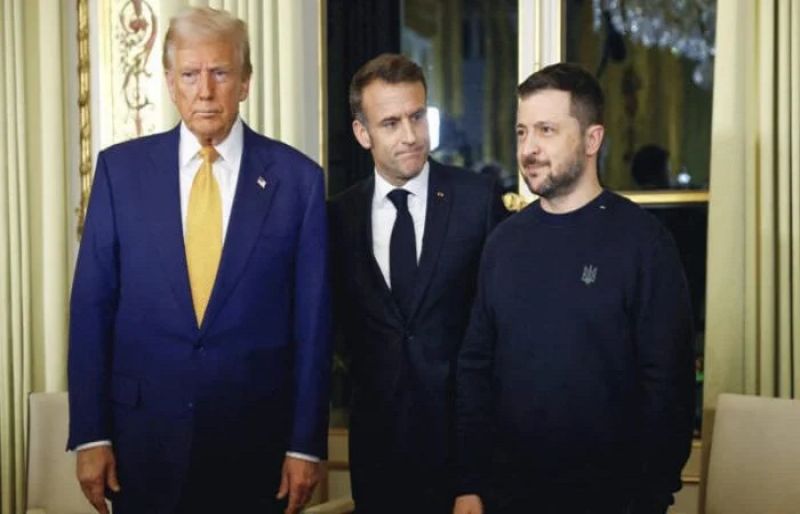

Former US President Donald Trump declared that Ukraine reclaiming Crimea or joining NATO was “off the table,” as President Volodymyr Zelensky landed in Washington on Monday for high-stakes talks on ending the war with Russia.
Zelensky, who has consistently ruled out territorial compromises, is scheduled to meet Trump in Washington alongside European Commission chief Ursula von der Leyen and several other European leaders.
The talks follow last Friday’s Trump-Putin summit in Alaska, which did not secure a ceasefire but produced pledges from both leaders to offer Ukraine “strong security guarantees.”
Notably, Zelensky was excluded from the Alaska meeting, after which Trump aligned with Russia’s long-standing stance that a ceasefire was unnecessary before finalizing a peace agreement.
“President Zelensky of Ukraine could end this war with Russia almost immediately if he chooses, or he can continue fighting,” Trump wrote on his social media platform.
He added: “There’s no taking back Crimea (Obama gave it away 12 years ago, without firing a shot!), and NO NATO membership for Ukraine. Some things never change!!!”
According to the White House schedule, Trump and Zelensky will first hold a one-on-one meeting before being joined by European leaders, including von der Leyen, NATO chief Mark Rutte, and the heads of Britain, Finland, France, Germany, and Italy.
It will be the first time Zelensky visits Washington since a bust-up with Trump and Vice President JD Vance in February when the two men berated the Ukrainian leader for being “ungrateful.”
On Sunday night, after arriving in Washington, Zelensky said: “We all share a strong desire to end this war quickly and reliably.”
Security guarantees
Since the Oval Office row in February, Trump has grown more critical of Putin and shown some signs of frustration as Russia repeatedly stalled on peace talks.
But Washington has not placed extra sanctions on Moscow and the lavish welcome offered to Putin in Alaska on his first visit to the West since he invaded Ukraine in 2022 was seen as a diplomatic coup for Russia.
Speaking in Brussels on the eve of his visit to the United States, Zelensky said he was keen to hear more about what Putin and Trump discussed in Alaska.
He also hailed Washington’s offer of security guarantees to Ukraine as “historic.”
Trump said he spoke to Putin about the possibility of a Nato-style collective defense guarantee for Ukraine.
The promise would be outside of the framework of the Western military alliance that Ukraine wants to join and which is seen as an existential threat by Russia.
French President Emmanuel Macron said European leaders would ask Trump “to what extent” Washington is ready to contribute to security guarantees for Ukraine.
Discussion on land
Trump’s envoy Steve Witkoff said Moscow had made “some concessions” regarding five Ukrainian regions that Russia fully or partially controls, and said that “there is an important discussion with regard to Donetsk and what would happen there.
“That discussion is going to specifically be detailed on Monday,” he said, without giving details.
Russia annexed Crimea in 2014 following a sham referendum and did the same in 2022 for four Ukrainian regions Donetsk, Kherson, Lugansk and Zaporizhzhia even though its forces have not fully captured them.
A source briefed on a phone call between Trump and European leaders on Saturday told AFP that the US leader was “inclined to support” a Russian demand to be given territory it has not yet captured in the Donbas, an area that includes the Donetsk and Lugansk regions and which has seen the deadliest battles of the war.
In exchange, the source cited Trump as saying, Moscow would agree to “freeze” the front line in the Kherson and Zaporizhzhia, where Russian forces hold swathes of territory but not the regional capitals.
Russia has until now insisted that Ukraine pull its forces out of all four regions as a precondition to any deal.
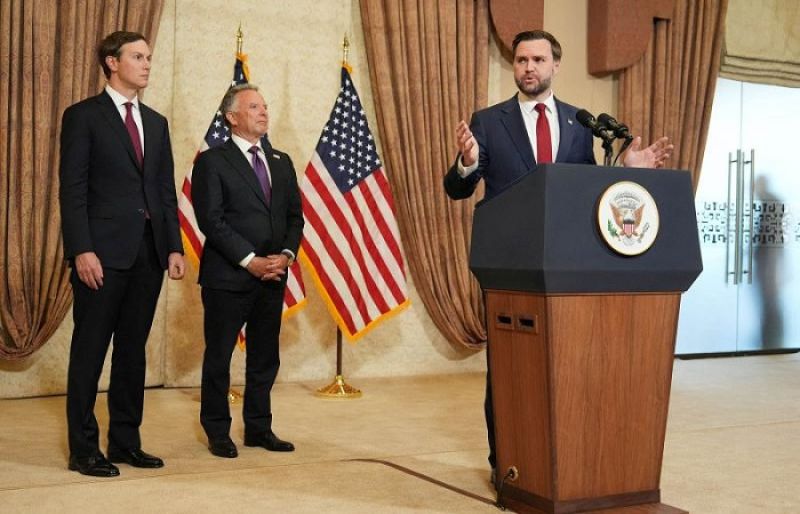
A US delegation led by Vice President JD Vance is en route to Pakistan and expected to land in Islamabad within hours for the second round of talks with Iran, President Donald Trump said on Monday.
Trump confirmed the development in an interview with the New York Post, saying he would be willing to meet Iranian leaders himself if progress is made in the talks.
Apart from Vance, the US delegation includes Trump’s son-in-law, Jared Kushner, and Special Envoy to the Middle East Steve Witkoff, as per a report by Axios.
If reports about the other delegation members are accurate, it would mean the US delegation is the same as in the first round of Iran talks held in Islamabad on April 11.
However, a source familiar with the plan told AFP on Monday that a US delegation will head to Pakistan “soon” for a new round of peace negotiations with Iran.
Meanwhile, mediator Pakistan — which brokered a two-week ceasefire between the two sides on April 8 — was making efforts to end the US naval blockade of Iranian ports and to ensure Iran’s participation in the peace talks.
With the ceasefire set to expire, a senior Iranian official told Reuters that Tehran was “positively reviewing” its participation following Pakistan’s efforts, but no final decision had been made.
The comments conveyed a clear change of tone from earlier statements ruling out attendance and pledging to retaliate for US aggression.
Separately, Deputy Prime Minister and Foreign Minister Ishaq Dar held a phone call with Iranian Foreign Minister Abbas Araghchi, emphasising the importance of continued dialogue and engagement to resolve all pending issues.
DPM Dar stressed that persistent dialogue was essential to ensure regional peace and stability, read a statement issued by the Foreign Office.
Since the announcement of the ceasefire, Tehran and Washington have disagreed on a number of issues, including Iran’s blockade of the Strait of Hormuz and the US naval blockade of Iranian ports.
Tehran effectively blocked the waterway and launched attacks against Israel and US bases across the Middle East in response to the joint US-Israel attacks on February 28.
Iranian Foreign Minister Abbas Araghchi, on April 17, announced the reopening of the strait for commercial vessels following the ceasefire in Lebanon.
However, Iranian authorities blocked the waterway again the following day, citing the US blockade of Iranian ports.
On April 18, the Islamic Revolutionary Guard Corps (IRGC) said that the US blockade represented “acts of piracy and maritime theft”.
“Until the US restores full freedom of navigation for vessels travelling from Iran to their destinations and back, the status of the Strait of Hormuz will remain tightly controlled and in its previous condition,” it said.
US Marines board Iranian vessel
The ceasefire had appeared in jeopardy after the US said it had seized an Iranian cargo ship that tried to run its blockade, and Tehran vowed to retaliate.
The US military said it had fired on an Iranian-flagged cargo ship headed towards Iran’s Bandar Abbas port on Sunday after a six-hour standoff, disabling its engines.
US Central Command released a video showing Marines descending ropes from helicopters onto the vessel.
Iran’s military said the ship had been travelling from China and accused the US of “armed piracy”, according to state media.
They said they were ready to confront US forces over the “blatant aggression”, but were constrained by the presence of crew members’ families on board.
Trump on Sunday warned that the US would destroy every bridge and power plant in Iran if it rejected his terms, continuing a recent pattern of such threats.
Iran has said that if the US were to attack its civilian infrastructure, it would strike power stations and desalination plants in its Gulf Arab neighbours.
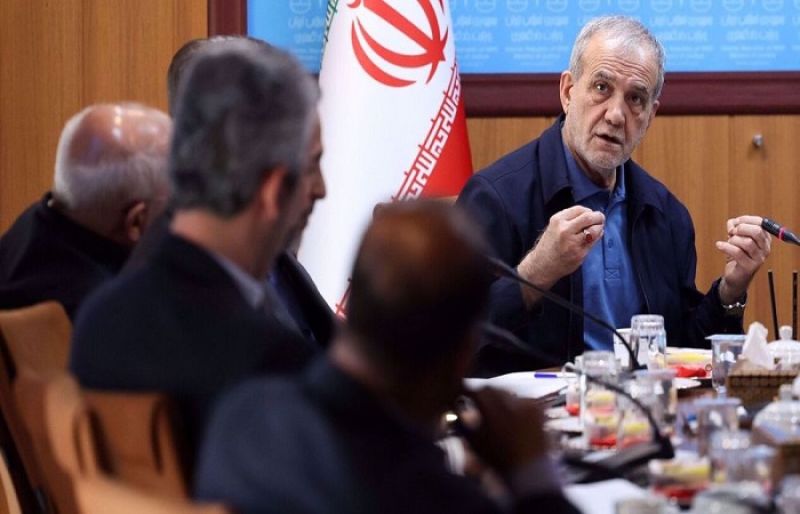
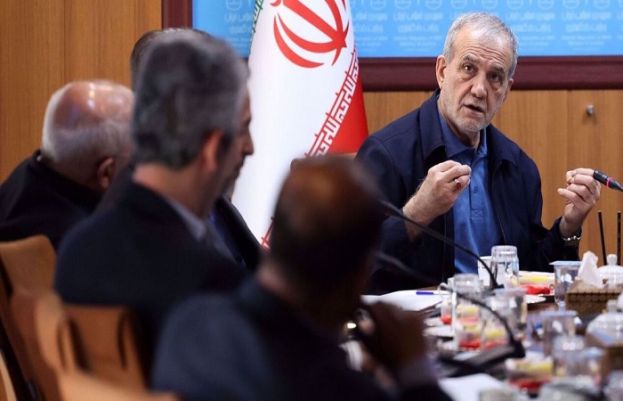
Iran’s President Masoud Pezeshkian says strengthening unity among Islamic countries is the most important way to counter conspiracies and prevent foreign powers from taking advantage.
Speaking during a supervisory visit to the Ministry of Justice on Monday, Pezeshkian received a comprehensive report on the ministry’s actions and missions under the special circumstances resulting from the recent US-Israeli aggression.
Pezeshkian noted that through “empathy, honesty, and collective participation, we can get past this stage and continue the country’s path toward dignity and progress.”
He highlighted the need for a rational approach toward regional and international developments, adding, “War benefits no one. While standing firm against threats, we must use every rational and diplomatic path to reduce tensions.”
He further noted that distrust toward the enemy and vigilance in interactions remain an undeniable necessity.
Following the US and Israel’s recent aerial strikes on Iran launched on February 28, Iran retaliated with barrages of missile and drone attacks on Israeli-occupied territories and US bases and interests in the region.
The president noted that passing through the battlefield does not mean the end of the road. Rather, it marks the beginning of a more important phase: the ‘Greater Jihad.'”
He described this as a struggle in which all people must play a role through patience, tolerance, cooperation, and active participation in rebuilding the country and solving its problems.
“This phase requires greater mental and social readiness than the war era,” he added.
Referring to the decisive role of the guidance of the Leader of the Islamic Revolution Ayatollah Seyyed Mojtaba Khamenei and martyr Leader of the Islamic Revolution Ayatollah Seyyed Ali Khamenei, Pezeshkian stated, “The support and directives of the great and martyred Leader of the Revolution have been a solid pillar for the government since the very beginning of its work.
“It was the coordination formed in the light of these guidelines that today makes effective decision-making and overcoming challenges possible,” he highlighted.
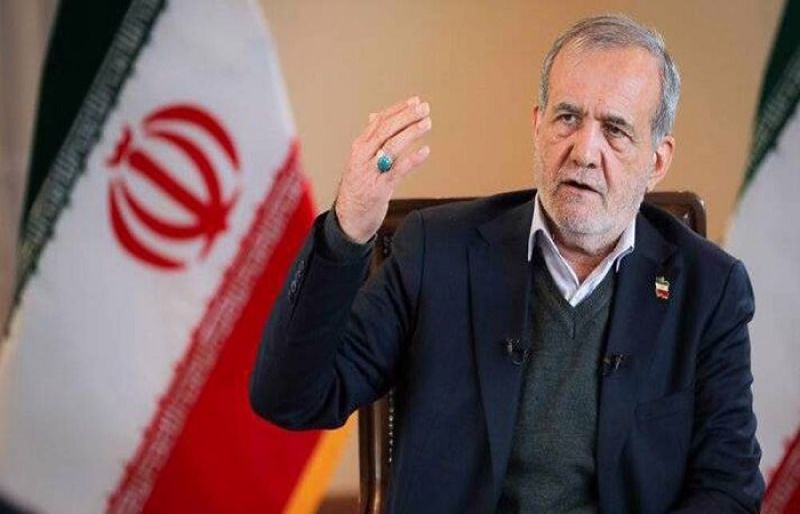
President Masoud Pezeshkian says Iranians will never submit to force despite “bitter messages” from American officials.
Pezeshkian made the remark in a post on his X account on Monday as US President Donald Trump said an American delegation was on route to Islamabad for talks with Iran after he renewed his threat of attacking Iranian power plants and bridges if no deal is reached.
Iranian officials have said there is currently no plan to hold a second round of talks with the US after 21 hours of Pakistani-mediated negotiations failed to yield an agreement on April 11-12 over Washington’s excessive demands and shifting positions
In his post, Pezeshkian stressed that honoring commitments was the basis of “meaningful dialogue.”
“Deep historical mistrust in Iran toward U.S. gov conduct remains, while unconstructive & contradictory signals from American officials carry a bitter message; they seek Iran’s surrender. Iranians do not submit to force,” the president wrote.
Speaking to reporters on Monday, Iranian Foreign Ministry spokesman Esmaeil Baghaei said the United States is not serious about negotiations with Iran, and that Tehran had no plans to take part in a second round of talks with Washington.
A US naval blockade of Iranian ports, excessive demands and shifting positions have hindered progress in the talks.


US air force’s A-10 Warthog jet spared retirement even after reported loss in Iran war

Jennifer Hudson shares more details about ‘American Idol’ comeback

Greg Olsen on Travis Kelce returning to Chiefs for 14th season: ‘League is better off with him playing’

-

 Fashion5 days ago
France’s LVMH Q1 revenue falls 6%, shows resilience amid Iran war
-

 Sports1 week ago
The case for Man United’s Fernandes as Premier League’s best
-

 Entertainment1 week ago
Palace left in shock as Prince William cancels grand ceremony
-
 Business1 week ago
UK could adopt EU single market rules under new legislation
-

 Entertainment5 days ago
Is Claude down? Here’s why users are seeing errors
-

 Fashion1 week ago
Energy emerges as biggest cost driver in textile margins
-
 Business1 week ago
Delta Air Lines unveils first new Delta One suite in premium cabin arms race
-

 Tech1 week ago
A Lot of Shops Won’t Fix Electric Bikes. Here’s Why