

Politics
Indonesia probes student after nearly 100 hurt in school blasts

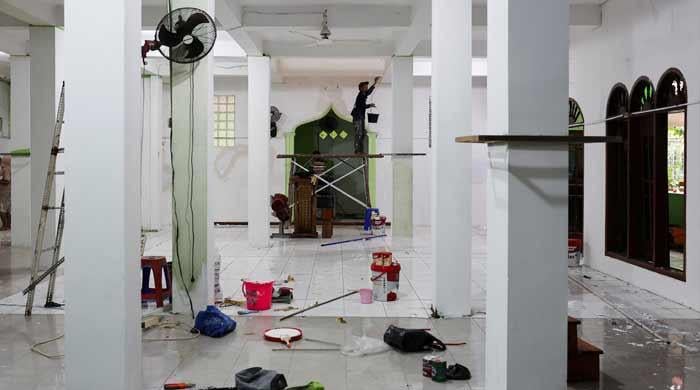
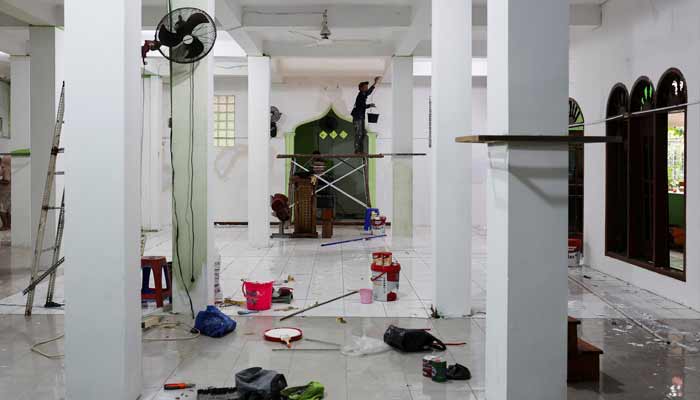
- Blasts hit school mosque during Friday prayers gathering.
- Investigators examine suspect’s family, social media.
- Twenty-nine victims remain hospitalised, with two in ICU.
Indonesian authorities said on Saturday they were investigating a student over their alleged involvement in explosions that wounded nearly 100 people at a school in the capital Jakarta.
The blasts hit a school mosque in North Jakarta just as people were gathering for Friday prayers, sparking panic among worshippers.
The national police chief said investigators had gathered “several pieces of evidence” as part of their probe.
“There’s writing, and there is also evidence of powder that could potentially have caused an explosion,” Listyo Sigit Prabowo said in comments broadcast by Kompas TV.
Authorities so far have identified one suspect, a student who was wounded in the explosions, but Listyo did not rule out the involvement of others.
Investigators are also examining the suspect’s family and social media, the police chief added.
Ninety-six people were wounded in the incident, Listyo said, revising the police’s earlier casualty figure of 54.
Twenty-nine victims remain hospitalised, including at least two in intensive care, he said.
Mayndra Eka Wardhana, spokesman for the counter-terrorism police unit Densus 88, told AFP that investigators had searched the suspect’s home.
He added that they were still probing the motive behind the incident.
A witness told AFP there was confusion over what happened.
“At first we thought it came from some electronic equipment, maybe the sound system… but it turned out the explosion came from under the prayer mat,” Kinza Ghaisan Rayyan, a 17-year-old student, said on Friday.
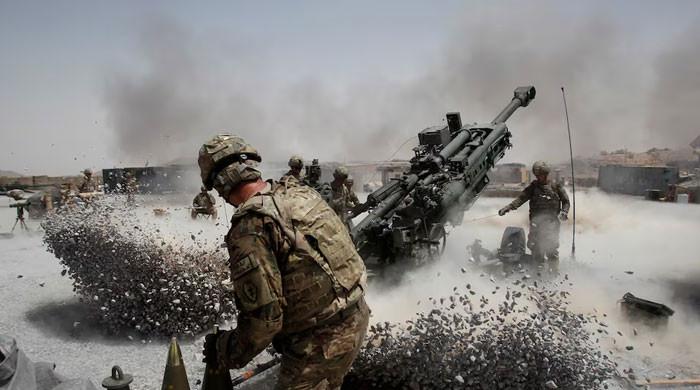
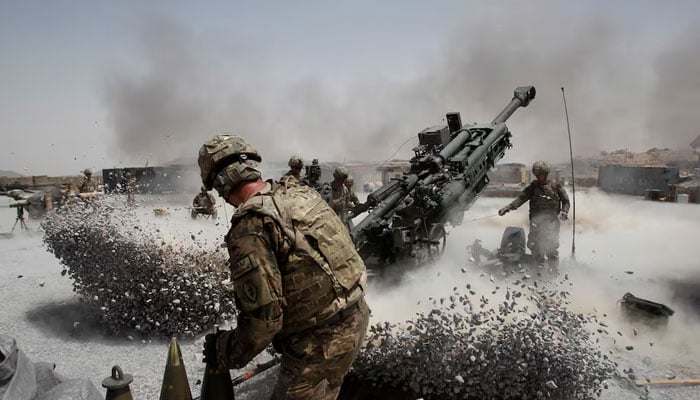
Despite promising to end United States’ involvement in costly and destructive foreign wars, President Donald Trump, together with Israel, has launched a massive military assault on Iran, targeting its leadership as well as its nuclear and missile infrastructure.
Since the September 11, 2001, attacks on New York and Washington DC, the United States has engaged in three full-scale wars and conducted bombing operations in at least 10 countries. These operations have ranged from large-scale invasions to targeted air strikes and drone campaigns, often carried out over multiple years.
In the immediate aftermath of 9/11, then-President George W Bush declared a “war on terror”, launching a global military campaign that reshaped US foreign policy.
The wars in Afghanistan and Iraq were followed by military operations in Pakistan, Syria, Yemen and other regions, as successive administrations expanded or sustained counterterrorism efforts.
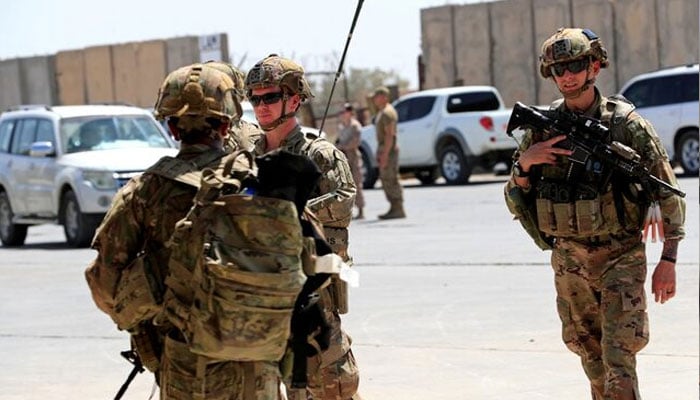
Two decades of war and its costs
Research by Brown University’s Watson Institute for International and Public Affairs estimates that US-led wars since 2001 have directly caused approximately 940,000 deaths across Afghanistan, Pakistan, Iraq, Syria, Yemen and other conflict zones, according to Al Jazeera report.
The figure excludes indirect deaths resulting from displacement, destruction of infrastructure, limited access to healthcare and food shortages, the report said.
According to the report, the United States has spent an estimated $5.8 trillion on post-9/11 wars. This includes $2.1 trillion allocated by the Department of Defence, $1.1 trillion by the Department of Homeland Security, $884 billion added to the Pentagon’s base budget, $465 billion for veterans’ medical care and roughly $1 trillion in interest payments on war-related borrowing.
In addition, the US is projected to spend at least another $2.2 trillion on veterans’ care over the next three decades, bringing the total estimated cost of its post-2001 wars to approximately $8 trillion.
- Airline shares stabilise after significant losses.
- Skies over swathes of Middle East still empty.
- Worst crisis for global travel industry since Covid-19.
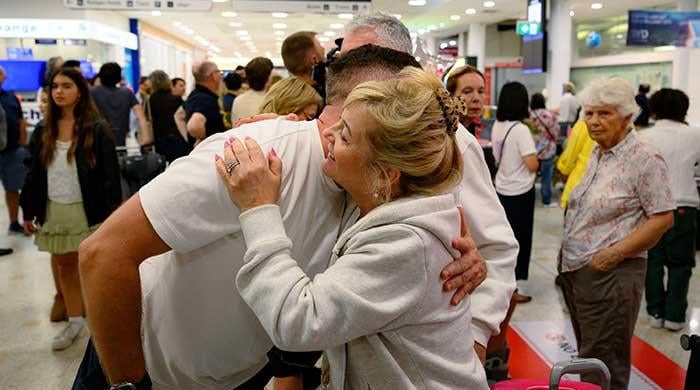
Dozens of repatriation flights were due to depart from the Middle East on Wednesday as governments hurried to bring tens of thousands of stranded citizens home in the midst of an intensifying US and Israeli conflict with Iran.
Skies over most of the Middle East remained empty of commercial planes on Wednesday, with major Gulf hubs, including the world’s busiest international airport in Dubai, largely shut for a fifth day, in the biggest travel disruption since the Covid-19 pandemic.
The first repatriation flights were due to leave for Britain and France on Wednesday, and the United Arab Emirates opened special corridors to allow some citizens to return home. Normally, thousands of commercial flights would take off from the region daily.
Marooned tourists and some expatriates have also tried to find their own way out.
“We’re doing this cautiously,” said French Finance Minister Roland Lescure. The French government said several repatriation flights for its citizens, around 400,000 of whom are in the region, were planned for Wednesday.
A British chartered flight will leave Oman on Wednesday evening, prioritising vulnerable UK nationals, the British Foreign Office said.
Emirates, the world’s largest international carrier, said all routes to and from Dubai remain suspended until March 7 and it was operating a “limited” flight schedule from Dubai International and from Maktoum International.
The New Zealand government said it expected a total of 121 repatriation flights to depart from Dubai International Airport on Wednesday.
Qantas, meanwhile, was running extra flights to bring British people stuck in Australia back home, but would have to route them via a refuelling stop in Singapore as an alternative to the normal Middle East hubs.
With airspace severely constrained, many airlines are carrying extra fuel or making additional refuelling stops to guard against sudden rerouting or longer flight paths through safer corridors.
Airline shares were less volatile on Wednesday after double-digit percentage drops in the past few days, which wiped tens of billions of dollars from airlines’ market value.
Lufthansa was up 3% at 1306 GMT, while Qantas closed down 2.7% lower, having lost more than 10% of their value so far this week. BA-owner ICAG was up 2%, having fallen more than 13% in the past three days.
Airline executives have said that crew and pilots are now scattered across the world, complicating the process of resuming flights when airspace reopens. Soaring prices of oil will also add to carriers’ costs.
Analysts said flights will become more expensive if longer routes become the only options for international carriers.
The Gulf is also a major hub for air cargo, putting further pressure on international trade routes following the disruption of Red Sea shipping routes.
Asian airline stocks
Shares of US carriers United Airlines, American Airlines and Delta Air Lines were all up about 1% in pre-market trading, while Southwest Airlines shares were marginally lower.
Most Asian airline shares pared losses from earlier this week, though Korean Air Lines shares fell 7.9% after dropping 10.3% on Tuesday.
South Korea’s stock market was closed on Monday when most airline and travel stocks bore the brunt of the impact from the conflict.
Oil prices have risen sharply this week, with Brent crude oil up around 14% since the US-Israeli strikes on Iran, potentially pushing up fuel costs for airlines.
Hedging is expected to help mitigate some of the cost increases.
“Recent guidance indicates that the airlines have hedged around 50% of their jet fuel needs. In general, they should be able to pass through the balance of the price rise to passengers,” Lorraine Tan, director of equity research for Asia at Morningstar, said.
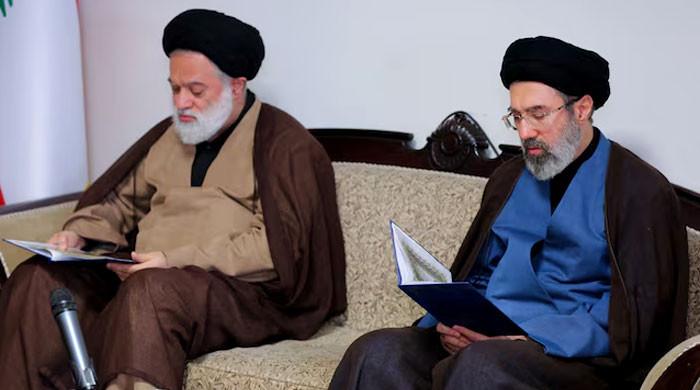
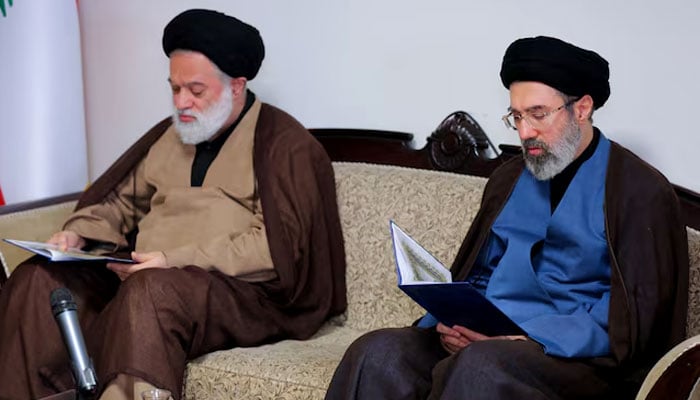
Ayatollah Ali Khamenei’s son Mojtaba has emerged as a frontrunner to succeed his late father as Iran’s supreme leader after years spent forging close ties with the elite Revolutionary Guards and building influence in the clerical establishment.
Mojtaba Khamenei, 56, has survived the US-Israeli air war on Iran and is seen by Iran’s establishment as a potential successor to his father, who was martyred in an airstrike on Saturday, two Iranian sources said on Wednesday.
A powerful mid-ranking cleric, Mojtaba has opposed reformers seeking to engage with the West as it tries to curb Iran’s nuclear programme, and has long greater freedoms.
His close ties with the Revolutionary Guards (IRGC) give him added leverage across Iran’s political and security apparatus and he has built up influence behind the scenes as his father’s “gatekeeper”, sources familiar with the matter said.
“He has strong constituency and support within the IRGC, in particular amongst the younger radical generations,” said Kasra Aarabi, head of research on the IRGC at United Against Nuclear Iran, a US-based policy organisation.
“So if Mojtaba is alive, there is a high chance that he will succeed (his father),” he said, describing Mojtaba as already operating as a “mini supreme leader”.
Decision on supreme leader expected soon
The Assembly of Experts that will select the new leader is “close to a conclusion” and will announce its decision soon, Assembly member Ayatollah Ahmad Khatami told state TV on Wednesday, without naming the candidates.
The supreme leader has the final say on matters of state, including foreign policy and Iran’s nuclear programme. Western powers want to prevent Tehran from developing nuclear arms. Iran says its nuclear programme is for civilian purposes only.
If elected, Mojtaba will face pressure from US sanctions that have hammered the economy and could face opposition from Iranians who have shown they are ready to stage mass protests to press their demands for greater freedoms despite bloody crackdowns by the authorities.
Mojtaba was born in 1969 in the city of Mashhad and grew up as his father was helping lead the opposition to the Shah. As a young man, he served in the Iran-Iraq war.
Mojtaba studied under religious conservatives in the seminaries of Qom, Iran’s center of theological learning, and has the clerical rank of Hojjatoleslam.
He has never held a formal position in the Islamic Republic’s government, despite being widely seen as the gatekeeper to his father. He has appeared at loyalist rallies, but has rarely spoken in public.
His role has long been a source of controversy in Iran, with critics rejecting any hint of dynastic politics in a country that overthrew a US-backed monarch in 1979.
US sanctions
The US Treasury Department imposed sanctions on Mojtaba in 2019, saying he represented the supreme leader in “an official capacity despite never being elected or appointed to a government position” aside from working in his father’s office.
Mojtaba was a particular target for criticism by protesters during unrest over the death of a young woman in police custody in 2022, after she was arrested for allegedly breaching the Islamic Republic’s strict dress codes.
In 2024, a video was widely shared in which he announced the suspension of Islamic jurisprudence classes he was teaching at Qom, fuelling speculation about the reasons.
Mojtaba bears a strong resemblance to his father, and wears the black turban of a sayyed, indicating his family traces its lineage to the Prophet Mohammad.
Critics say Mojtaba lacks the clerical credentials to be supreme leader — Hojjatoleslam is a notch below the rank of Ayatollah, the position held by his father and Ruhollah Khomeini, who founded the Islamic Republic.
But he has remained in the frame, particularly after another leading candidate for the role — the former President Ebrahim Raisi — died in a helicopter crash in 2024.
A US diplomatic cable written in 2007 and published by WikiLeaks cited three Iranian sources describing Mojtaba as an avenue to reach Khamenei.
Mojtaba was widely believed to have been behind the sudden rise of hardliner Mahmoud Ahmadinejad, who was elected president in 2005.
Mojtaba backed Ahmadinejad in 2009 when he won a second term in a disputed election, which resulted in anti-government protests that were violently suppressed by the Basij and other security forces.
Mehdi Karroubi, a moderate cleric who ran in the election, wrote a letter to Khamenei at the time objecting to what he alleged was Mojtaba’s role in supporting Ahmadinejad. Khamenei rejected the accusation.
Mojtaba’s wife, who was killed in Saturday’s airstrikes, was the daughter of a prominent hardliner, the former parliament speaker Gholamali Haddadadel.


Trump’s War on Iran Could Screw Over US Farmers

MLB Rank 2026: Ranking baseball’s top 100 players

Disney launches its Adventure cruise ship — a new foothold in Southeast Asia

India Us Trade Deal: Fresh look at India-US trade deal? May be ‘rebalanced’ if circumstances change, says Piyush Goyal – The Times of India

Households set for lower energy bills amid price cap shake-up

What are Iran’s ballistic missile capabilities?

-
Business6 days ago
India Us Trade Deal: Fresh look at India-US trade deal? May be ‘rebalanced’ if circumstances change, says Piyush Goyal – The Times of India
-
Business1 week ago
Households set for lower energy bills amid price cap shake-up
-
 Politics6 days ago
What are Iran’s ballistic missile capabilities?
-
 Politics7 days ago
US arrests ex-Air Force pilot for ‘training’ Chinese military
-
 Business6 days ago
Attock Cement’s acquisition approved | The Express Tribune
-

 Fashion6 days ago
Policy easing drives Argentina’s garment import surge in 2025
-

 Sports1 week ago
Top 50 USMNT players of 2026, ranked by club form: USMNT Player Performance Index returns
-

 Sports7 days ago
Sri Lanka’s Shanaka says constant criticism has affected players’ mental health