

Sports
New Zealand defeat South Africa to reach T20 World Cup final

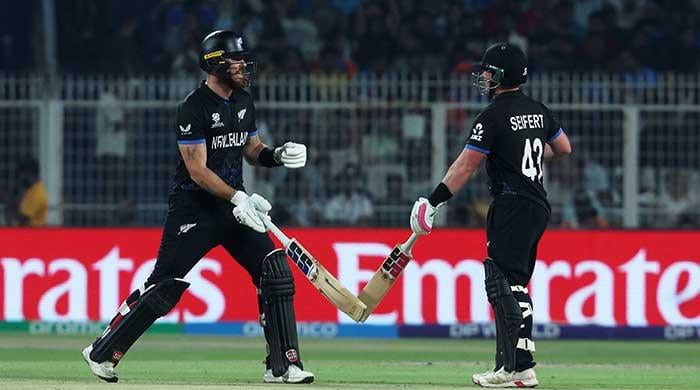
- Finn Allen smashes unbeaten 100 off 33 balls.
- Seifert adds 58 in 117-run opening stand.
- Allen declared Player of the Match
New Zealand secured their place in the T20 World Cup final after defeating South Africa by nine wickets in the ICC Men’s T20 World Cup 2026 semi-final at Eden Gardens, Kolkata, on Wednesday.
Set to chase 170, the Blackcaps comfortably struck the winning runs for the loss of just one wicket and 43 balls to spare, courtesy of a monumental opening partnership between centurion Finn Allen and Tim Seifert.
The opening pair laid a solid foundation for the pursuit by putting together 117 runs in nine overs before Kagiso Rabada cleaned up Seifert, who made a 33-ball 58 with the help of seven fours and two sixes.
Allen, on the other hand, stood his ground firm and eventually steered New Zealand over the line by smashing Marco Jansen for a four on the penultimate delivery of the 13th over, which also helped him bring up his third T20I century.
Allen remained the top-scorer for New Zealand with an unbeaten 100 off 33 deliveries, studded with 10 fours and eight sixes.
He also shared a one-sided 56-run partnership for the second wicket with Rachin Ravindra, who contributed with 13 not out from 11 deliveries.
Rabada remained the solitary wicket-taker for South Africa.
Put into bat first, South Africa accumulated 169/8 in their 20 overs, courtesy of a defiant sixth-wicket partnership between Jansen and Tristan Stubbs.
The Proteas, however, got off to a dismal start to their innings as they lost Quinton de Kock (10) and Ryan Rickelton (zero) in the second over with just 12 runs on the board.
Following the early stutter, captain Aiden Markram was joined by Dewald Brevis in the middle, and the duo batted cautiously to add 43 runs for the third wicket until the former fell victim to Rachin Ravindra in the eighth over after scoring a scratchy 18 off 20 deliveries.
Ravindra struck again in his next over, dismissing David Miller, who could score a run-a-ball six.
James Neesham inflicted another setback on South Africa in the next over as he dismissed set batter Brevis, who walked back after top-scoring with 34 off 27 deliveries with the help of three fours and two sixes, and brought the total down to 77/5.
Bowling all-rounder Marco Jansen and Tristan Stubbs then launched a spirited recovery for South Africa as they put together 73 runs for the sixth off just 46 deliveries until Lockie Ferguson cleaned up the latter on the first delivery of the penultimate over.
Stubbs scored an anchoring 29 off 24 deliveries with the help of two fours and a six.
Jansen, on the other hand, carried his onslaught until the end and returned after top-scoring with an unbeaten 55 off just 30 deliveries, studded with five sixes and two fours.
For New Zealand, Cole McConchie, Matt Henry and Ravindra bagged two wickets each, while Neesham and Ferguson made one scalp apiece.
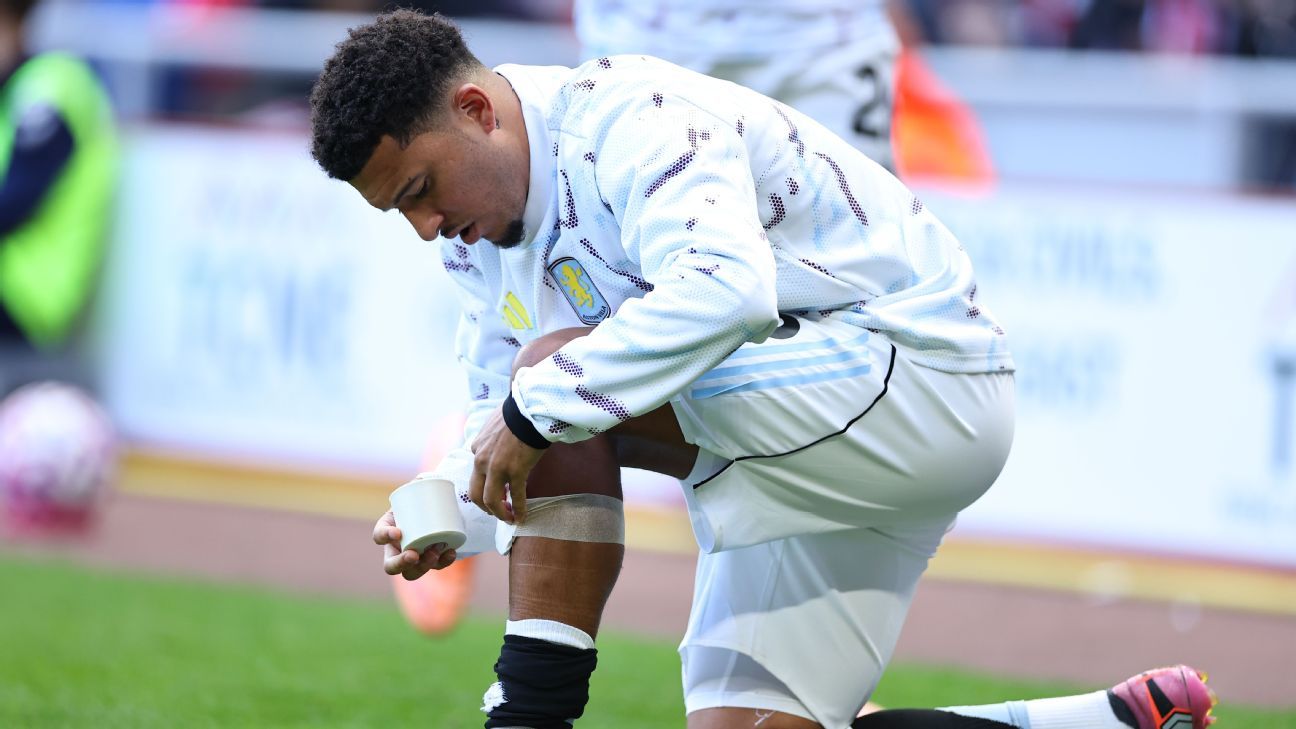
It is an issue that is dividing football, a classic example of one generation questioning the choices of another, but the sight of a former Tottenham and Germany player rolling on the pitch in agony with a severely gashed leg earlier this month might end up changing opinions about the ever-decreasing size of shin guards.
Until recently, shin guards covered the entire shin — sometimes up to 9 inches long — and they were made of foam or rubber with a hard plastic shell. But in recent years, some players have abandoned the protective element completely, wearing only tiny pieces of foam under their socks, and it seems only a matter of time before a serious injury leads to a rethink in what players are wearing.
Lewis Holtby‘s injury, sustained while playing for Dutch team NAC Breda against Fortuna Sittard in the Eredivisie on April 12, looks to have ended the 35-year-old’s season due to the depth of the wound on his left shin following a challenge with an opposition defender. It also led to a blame game centered on Holtby’s shin guards.
“I think it’s ridiculous that the referee [Jeroen Manschot] says something about it,” Breda coach Carl Hoefkens said after the game. “In the tunnel, it was said [by Manschot] that Holtby should just wear shin guards, or better shin guards. The officials also check the shin guards before the match, so it’s their responsibility as well.”
La aparatosa lesión de Lewis Holtby este fin de semana. 😬
Vía ESPNnl/X pic.twitter.com/WgHl4PL5xo
— ESPN Deportes (@ESPNDeportes) April 14, 2026
Breda defender Denis Odoi spoke about Holtby’s “small shin guards” and said “You’re never too old to learn,” when asked about players wearing “normal” shin guards again, while ESPN NL analyst, former Ajax and PSV Eindhoven winger Kenneth Perez, was more critical.
“They [players] are now wearing those tiny things, or basically toilet paper, just to have something there,” Perez said. “I have absolutely no sympathy for injuries that result from that.
“As a club, you can simply say: We require our players to wear proper shin guards.”
Watch any top-level fixture this season and you’re likely to see players with socks rolled down almost to their ankles — Everton‘s Jack Grealish and Tyler Dibling wear them low, covering tiny shin guards. Others have their socks just below the knee, but still sport shin guards half the size of a cellphone, as shown by Burnley midfielder Marcus Edwards during a game against West Ham in February. Arsenal forward Bukayo Saka has spoken this season about his preference for tiny shin guards — “I’m a fan of them; I don’t like big shin pads” — though Liverpool defender Virgil van Dijk harbors a more cautious approach to protecting his lower leg.
“If you get kicked on your shin and your shin pad is that size of an AirPod, then obviously that’s a big problem,” Van Dijk said.
Brighton forward Danny Welbeck has said that his younger teammates ridicule his old-school shin guards — “They say to me ‘Your shinnies are massive,’ but you need a bit more safety, you know?” — but just like Saka, Fulham winger Alex Iwobi prefers the small, lightweight guards because “I just don’t like having something heavy on my shin.”
Former England and Liverpool forward Peter Crouch regularly raises the shin guard issue on his podcast, That “Peter Crouch Podcast,” under the light-hearted “Make Shin Pads Great Again” banner, with Fulham midfielder Harry Wilson saying this season that some of his teammates “cut up the sponge you get from the physio and use that.”
If a high-profile player sustains this type of injury thanks to tiny shin guards, the kind of injury that forces them to miss the World Cup or that happens on the biggest stage this summer — the debate about the shrinking move towards smaller pads will likely increase in volume.
The trend toward smaller shin guards — and away from larger models that would also include ankle protectors — is rooted in many things, including the game becoming less physical with fewer tackles and players wanting to feel as light as possible to boost their sprinting speed. But it is also a result of a change in the Laws of the Game in July 2024 when IFAB (the International Football Association Board) amended the rule covering shin guards (Law 4) to place the responsibility on the player rather than the match officials to ensure sufficient shin protection was worn.
Prior to the change, the responsibility was on referees to police the rule, but many were being ignored by players and clubs and then criticized — or even sometimes challenged in court — for failing to impose the rules if a player was subsequently injured. But the Law remains vague and open to interpretation. There is no minimum size required, only that the shin guards are “covered entirely by the socks, are made of suitable material (rubber, plastic or similar substances) and provide a reasonable degree of protection.”
“The reason we changed the Law was because it is impossible to legislate and say a shin pad must be a certain size,” David Elleray, IFAB technical director and former Premier League referee told ESPN. “So two years ago, we put the responsibility on the players that they should wear something which they believe protects them.
“The challenge we had was partly legal. If we left the responsibility with the referees and the referees said, “Okay, that shin guard is okay,” then the player got injured, the player might decide to take action. So we put that very firmly in the court of the players and the coaches, and for young players, the parents.”
The change of the Law has led to players placing speed and aesthetics — many dislike the bulk of larger shin pads — above safety, however, and Elleray admits it has not led to a sensible approach by players and clubs.
“We [IFAB] had hoped, or expected, that they would take a responsible attitude to it, but there was one recently [Marcus Edwards] that was almost like a sticking plaster,” Elleray said. “The pressure needs to go on the individual players, the coaches and the clubs to make sure their players are protected because it’s impossible to legislate for.”
Former leading referee Pierluigi Collina, now the Chair of the FIFA referees’ committee, has urged players to be more mindful of their well-being when choosing their shin guards. “At the end of the day, the shin pad rule is for their own safety,” Collina told ESPN. “So they should care of what is really safe for them.”
But as shocking as Holtby’s injury was, it perhaps generated such attention because of the rarity of such incidents. Broken legs and deep cuts and gashes seem less prevalent despite the reduction in shin pad sizes, with muscle tears and ligament injuries to ankle and knee more likely to sideline a player.
The argument put forward by those who favor small shin guards is that players no longer suffer serious impact injuries, and that might be a valid point. In a recent example of a bad impact injury, Liverpool’s Alexander Isak was wearing small — but not tiny — shin guards when he suffered a fractured leg in a challenge with Tottenham’s Micky van de Ven last December, but it would be difficult to argue that larger shin pads would have diminished the severity of Isak’s injury.
Sources at the Professional Footballers’ Association (PFA) have told ESPN that “primary decisions around safety are taken by players in consultation with their club and medical teams” and that players ultimately “feel comfortable with different shapes and sizes of shin pads.” There is certainly no drive within the game to force players to re-think the protection being offered by their shin pads.
Football trends have changed since larger and heavier shin pads were the go-to model for top players. The Umbro Armadillo, which was manufactured during the early-2000s, was a large plastic guard with ankle protectors and was worn by Michael Owen and Alan Shearer, while Brazil forward Ronaldo wore Nike’s T90 model. Both designs were significantly larger, heavier and stronger than the pads now being preferred.
Today’s younger players prefer small, lightweight pads and the shifting trend led two brothers — Kaizer Chiefs midfielder Ethan Chislett and Zack, who plays for UAE-based Palm City — to develop their brand of Joga shinpads, which are tiny, much lighter and softer than traditional shin guards. The Joga Shinpad Sleeve, worn by Chelsea‘s João Pedro, is a cellphone-sized soft pad within a fabric sleeve that’s worn to cover the shin. Everton midfielder Grealish wears Joga’s Breathe pads that measure just 6 centimeters x 10 centimeters (2 inches x 4 inches).
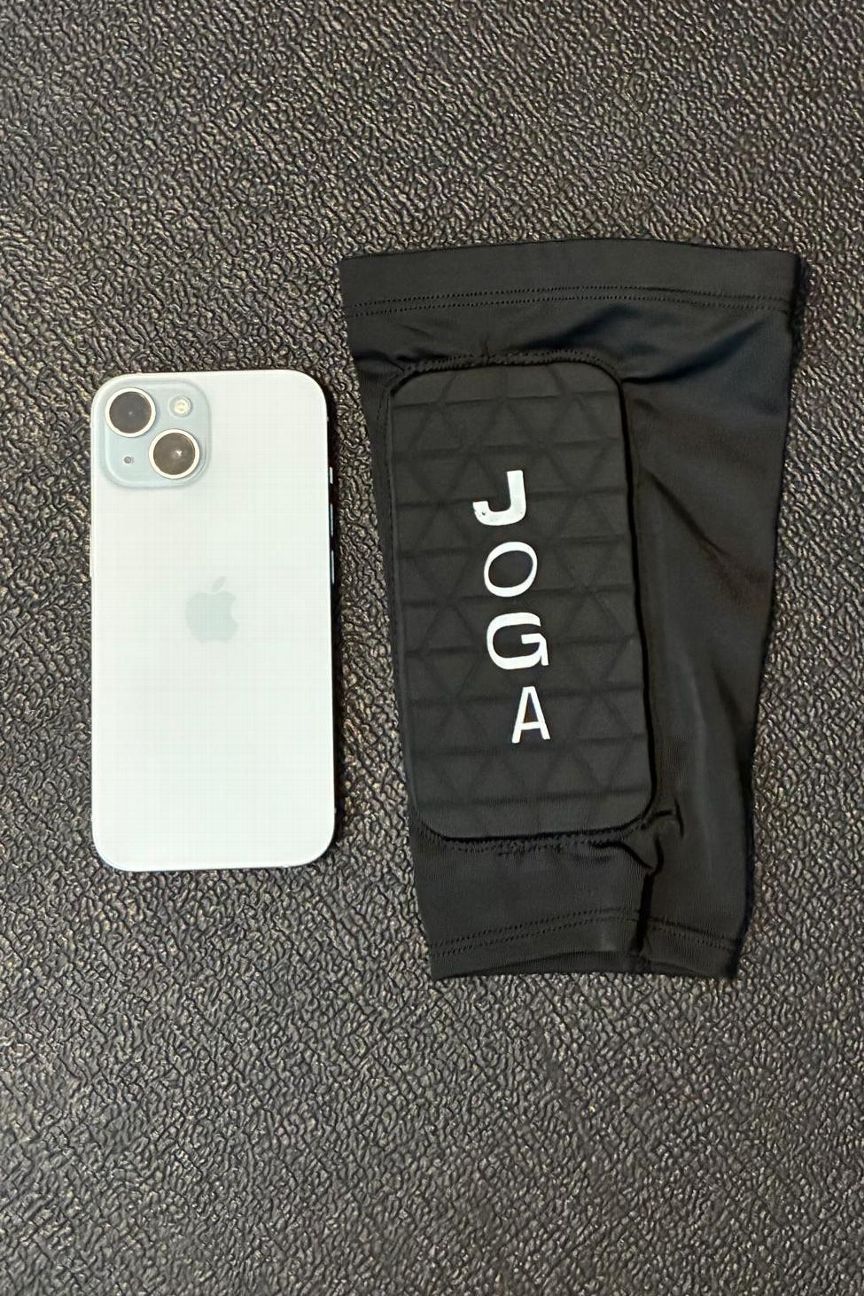
“We were the first ones to make a mini shin pad that you could buy,” Zack Chislett told ESPN. “I was playing nonleague at the time, my brother Ethan was playing for AFC Wimbledon, and we noticed that pads were getting smaller and smaller, but there was no-one giving players an option to buy them. They were just using anything they could find in the physio’s bag, so the demand was obviously there.”
But why do young players want their shin guards to be so small and lacking in protection?
“When you’re training the whole week without shin pads and you then put the big pad on, sometimes with ankle pads, on a Saturday, it doesn’t feel natural like when you’re training,” Zack said. “Some players will feel better with the big shin pad, but a lot of the younger, more attacking players don’t feel that way and they don’t want to feel as restricted when they go on the pitch.
“And the game has changed, 100%. The tackles aren’t coming in like they used to, it isn’t as aggressive or as physical. I’m 23, and players of my generation just don’t want to wear big shin pads — it would be like wearing old, heavy leather boots. It just isn’t going to happen.”
The likes of Welbeck and Van Dijk are being usurped by players such as Saka, Iwobi, Grealish and Joao Pedro when it comes to the size and protective elements of their shin pads.
Perhaps Holtby’s injury will prompt some players to think about the risks of playing without suitable protection and a high-profile injury at this summer’s World Cup could also lead to FIFA imposing stricter guidelines on what can, and can’t, be worn by players. But right now, footballers are putting risk to one side in favour of speed and freedom of movement, so shin pads could get smaller and smaller.

More than 100,000 fans gathered in the streets of San Sebastian, Spain, on Monday to celebrate Real Sociedad‘s Copa del Rey win over the weekend — a first major trophy for the Basque team since 2021.
Real Sociedad defeated Atlético Madrid on penalties Saturday to secure the title, marking a historic milestone for American coach Pellegrino Matarazzo, who earned his first trophy just four months after taking over the squad. In doing so, he became the first U.S.-born manager to win a major European tournament.
Matarazzo received one of the loudest ovations of the day. He further endeared himself to the local supporters by attempting a speech in Euskera, the Basque regional language.
“We are champions! I will try to do this in Basque, so I apologize for any mistakes I may make,” Matarazzo said from the balcony of San Sebastian’s town hall. “What a wonderful start on this path we are taking together. I feel that this is just the beginning! With your help, these players can achieve many great things.”
The “Blue and White” crowd chanted “Rino, Rino, Rino Matarazzo,” to which the New Jersey native responded that no one lifted the trophy as “high as I have,” due to his 6’6″ height and the proudness he feels.
Another moment of peak euphoria occurred when club captain Mikel Oyarzabal raised the trophy. The Spain striker thanked the fans for their unwavering support, while being frequently interrupted by the crowd chanting “Ballon d’Or” in his honor.
“Firstly, thank you very much for being here with us. It’s great to see how happy you look,” Oyarzabal said. “Here we are again, saying we are the champions of the Copa del Rey.”
Matarazzo — who previously coached Stuttgart and Hoffenheim in Germany — took charge of Real Sociedad as they struggled last December and has lifted them to seventh in LaLiga, and now a major trophy.
Information from The Associated Press was used in this report.
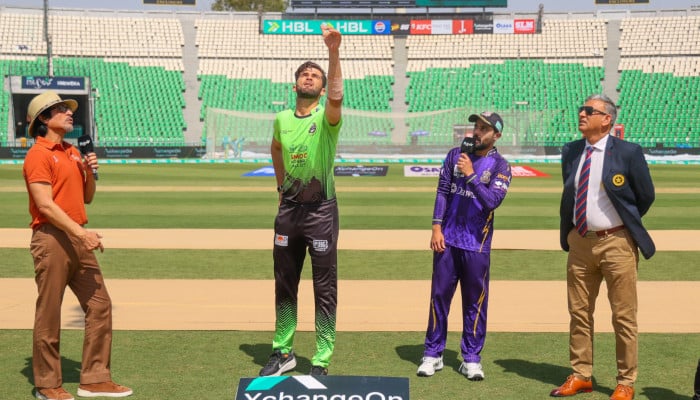
Lahore Qalandars opted to bat first after winning the toss against Quetta Gladiators in the 30th match of the Pakistan Super League (PSL) 11 at Gaddafi Stadium in Lahore on Tuesday.
The two sides have a closely contested head-to-head record, having faced each other 22 times. Lahore Qalandars hold a slight edge with 11 wins, while Quetta Gladiators have 10 victories; one match ended with no result.
Playing XIs
Lahore Qalandars: Mohammad Farooq, Fakhar Zaman, Abdullah Shafique, Charith Asalanka, Haseeb Ullah (wk), Sikandar Raza, Daniel Sams, Shaheen Afridi, Usama Mir, Ubaid Shah and Haris Rauf.
Quetta Gladiators: Shamyl Hussain, Saud Shakeel (c), Rilee Rossouw, Hassan Nawaz, Brett Hampton, Bevon Jacobs, Khawaja Nafay (wk), Khalil Ahmed, Alzarri Joseph, Abrar Ahmed and Usman Tariq.
This is a developing story and is being updated with further details.


Soccer’s incredible shrinking shin guards could be a big problem

Matarazzo celebrates Real Sociedad Copa title: ‘Just the beginning’

Germany firms raise investment plans, uncertainty persists: ifo

-

 Fashion5 days ago
France’s LVMH Q1 revenue falls 6%, shows resilience amid Iran war
-

 Sports1 week ago
The case for Man United’s Fernandes as Premier League’s best
-

 Entertainment1 week ago
Palace left in shock as Prince William cancels grand ceremony
-
 Business1 week ago
UK could adopt EU single market rules under new legislation
-

 Entertainment6 days ago
Is Claude down? Here’s why users are seeing errors
-

 Fashion1 week ago
Energy emerges as biggest cost driver in textile margins
-
 Business1 week ago
Delta Air Lines unveils first new Delta One suite in premium cabin arms race
-

 Fashion1 week ago
Asia claims largest share of markets on Kearney FDI Confidence Index