

Entertainment
Reclaiming Iqbal’s vision

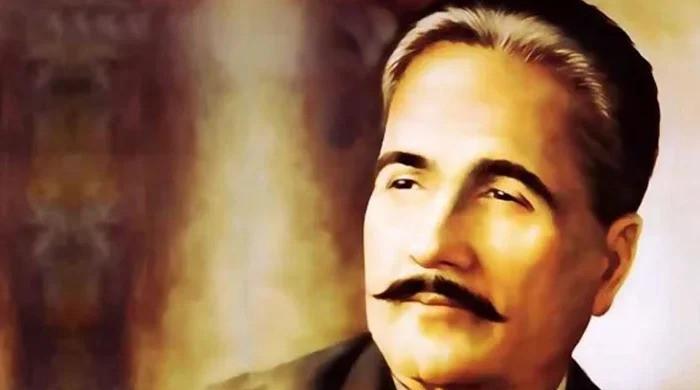
Allama Muhammad Iqbal, poet–philosopher, jurist and one of the most original Muslim thinkers of the 20th century, remains a towering guide for nations seeking moral and economic renaissance. For Iqbal, progress was never a matter of material accumulation alone; it was the unfolding of human potential and the strengthening of collective dignity. He saw poverty as more than economic deprivation; he saw it as a condition that corrodes the self, suppresses creativity and weakens the spirit.
In ‘Ilmul Iqtisad’, his early Urdu treatise on economics, Iqbal argues that economic strength depends upon intellectual courage and moral purpose. He believed that the decline of nations begins when they lose their capacity for inquiry and their belief in their own creative mission. More than a century later, Pakistan’s moment of reckoning echoes this insight: our crisis is not only fiscal but civilizational.
Pakistan faces significant challenges – fiscal stress, debt overhang, low productivity and institutional inertia. Yet the deeper challenge is a crisis of confidence: a collective loss of belief in our own agency. We are a young nation – among the youngest in the world – with a youth cohort exceeding 140 million. Yet too many of our young stand suspended between aspiration and disillusionment.
To move forward, we must reclaim what Iqbal called ‘khudi’: a disciplined, responsible, and creative selfhood driven by purpose and rooted in moral autonomy. Khudi is not egoism; it is self-respect and self-transformation. It is the belief that human beings have the power to reshape their destiny through effort, courage and conviction.
Iqbal’s intellectual brilliance lies in his ability to engage the modern world without losing his identity. His dialogue with Kant taught him moral autonomy; with Nietzsche, the courage to affirm life; with Bergson, the idea of creative evolution. But Iqbal did not imitate these thinkers – he challenged them, absorbed them and wove them into a vision anchored in Islamic spirituality and human unity.
His approach offers a model for Pakistan today. We must neither freeze ourselves in rigid traditions nor surrender to imported technocratic models. We must instead embrace a framework that is ethical, evidence-based, future-oriented and authentically our own. This intellectual courage is essential as Pakistan navigates a world shaped by disruptive technologies, shifting geopolitics and rapid social change.
Our challenge is not economic alone; it concerns the moral energy with which this young nation defines its purpose. Iqbal’s universal humanism – his belief that every individual carries an infinite creative spark – remains the foundation of an inclusive society. In a deeply diverse and plural Pakistan, unity must not erase difference; it must celebrate it. Development must reach all: every region, every class, every gender and every community. Justice is not the by-product of development; it is its moral compass.
It is on this ethical foundation that URAAN Pakistan has been conceived. URAAN is not a slogan or a list of projects – it is a paradigm for purposeful development. It begins with people, not infrastructure. It recognises that the true measure of progress is the expansion of the moral and material capabilities of citizens.
URAAN aims to equip youth with future skills, build a digital and innovation-driven economy, reform institutions for efficiency and empathy, strengthen public–private partnerships and anchor policy in equity, sustainability and inclusion. The core idea is simple yet transformative: economic revival must be intertwined with ethical renewal. Without moral purpose, development is directionless; without economic strength, purpose remains unfulfilled.
Iqbal’s symbol of the Shaheen holds a special power for Pakistan today. The Shaheen is not merely a poetic creature; it is an educational ideal and a model for national character. It represents independence of thought, strength of will, passion for discovery, discipline and dignity, and freedom from fear and dependence. In Bal-e-Jibril, Iqbal writes: “You are a falcon; flight is your vocation./ Beyond the skies you see lie skies yet unseen”.
For a country with one of the world’s largest youth populations, this is a call to awaken imagination and ambition. The youth bulge is Pakistan’s greatest asset – if empowered with knowledge, skills and purpose. If neglected, it becomes a source of frustration. Iqbal’s Shaheen does not chase comfort; it seeks height. It does not live on someone else’s mercy; it creates its own world. This is the ethic our youth must embrace if Pakistan is to compete in a knowledge-driven century.
Iqbal believed that the destiny of nations is determined by their capacity for knowledge. In his ‘Reconstruction of Religious Thought in Islam’, he argued that Islam is inherently dynamic, rational and future-oriented. It encourages inquiry, reflection and discovery. For Iqbal, revelation was not the end of thought; it was the beginning of an intellectual journey.
But he also lamented the decline of the scientific spirit in the Muslim world. In powerful verses, he captures a heavenly cry over the dulling of inquiry: “A cry descends from the heavens at dawn:/ How was your jewel of understanding lost?/ How did your blade of inquiry grow dull?/ Why do you no longer pierce the hearts of stars?” He continues: “You are meant for the stewardship of inner and outer worlds./ How can a flame become slave to dust?/ Why are the sun, moon, and stars not under your command?/ Why do the heavens no longer tremble at your gaze?” He distils civilisational renewal into one verse: “A new world dawns from new ideas./ Bricks and stones alone do not build civilisations”.
URAAN Pakistan integrates this insight by investing in AI, biotechnology, and frontier technologies; research universities and knowledge clusters; digital governance; STEM skills and innovation ecosystems; and creative industries and startups.
A nation that renews its spirit of inquiry renews its future. If inquiry is Iqbal’s method, love for the Prophet Muhammad (pbuh) is his engine. His intellectual courage, spiritual confidence, and civilizational imagination all rise from this foundation. Iqbal believed that fidelity to the Prophet (pbuh) is the gateway to human excellence, moral clarity and collective purpose.
He proclaims this with unmatched devotion: “If you remain faithful to Muhammad [pbuh], then everything is yours./ What is this world before you? Even the Tablet and the Pen become yours”.
This is not a poetic sentiment but Iqbal’s philosophy of empowerment. For him, love of the Prophet (pbuh) is not ritual attachment but alignment with his values: justice, knowledge, compassion, courage and service. It is this alignment that unleashes khudi, sharpens purpose and gives nations the moral energy to rise.
Iqbal’s ‘Reconstruction’ calls for reopening the gates of ijtihad, integrating scientific reasoning with spiritual values, aligning faith with progress and justice, and building an ethical, future-ready society. He believed that stagnation arises when religion loses its creative, ethical core. Governance inspired by Iqbal, therefore, demands institutions that are flexible, evidence-based, citizen-centred and future-oriented.
The doctrine of khudi has profound economic implications. A nation that depends on borrowed ideas and borrowed confidence cannot rise with dignity. Economic sovereignty begins with intellectual sovereignty – with the belief that we can think, innovate and build for ourselves. URAAN Pakistan aims to build this ecosystem by rewarding initiative, nurturing talent and honouring merit.
Iqbal envisioned a moral state grounded in justice and compassion, not a theocracy, but an ethical polity. Pakistan must shift from a control-based colonial administration to a performance-driven, technology-enabled, citizen-centred state. This transformation requires transparent governance, merit-based institutions, data-driven planning, accountability with empowerment and policy continuity.
Ultimately, the true measure of Pakistan’s progress will not be determined solely by GDP. Nations rise through conviction, character and cohesion. Our path to renewal begins with reclaiming khudi, reigniting inquiry, embracing the Shaheen spirit and drawing strength from the love of the Prophet (pbuh) that fueled Iqbal’s entire intellectual universe. Iqbal’s call echoes across time: Rise. Act. Reclaim tomorrow.
The writer is the federal minister for planning, development, and special initiatives. He tweets/posts @betterpakistan and can be reached at: [email protected]
Disclaimer: The viewpoints expressed in this piece are the writer’s own and don’t necessarily reflect Geo.tv’s editorial policy.
Originally published in The News

Saturday Night Live veteran Tina Fey reflected on her years at the NBC sketch institution, acknowledging that some of her jokes were “on the wrong side”.
Speaking at the History Talks event in Philadelphia, Fey said she’s realized with time that not every punchline was fair.
The two times Globe Globe winner added candidly, “I was pretty dumb.”
Fey joined SNL in 1997 and later became head writer.
She recalled navigating some of the show’s most difficult broadcasts, from the first episode after September 11 to the anthrax scare and even President George W. Bush’s visit to meet Will Ferrell.
Over time, she said, the line between comedy and current events grew thinner, with politicians and public figures often responding directly to the sketches.
One of her most memorable stretches came in 2008, when she teamed with Seth Meyers and Amy Poehler to craft the now iconic Sarah Palin sketches.
Fey explained that the team worked hard to make sure their material was “a fair hit,” grounded in truth rather than random exaggeration.
“If it’s not true, it will not be funny,” she noted.
Reflecting on the influence of SNL, Fey said it was both thrilling and intimidating to know that what she wrote could be taken seriously by people in power.
She emphasized that the show never set out to control politics or the national narrative, but admitted that some of her own jokes didn’t age well.
Fey appeared alongside Nicole Kidman, Ted Danson, Kate McKinnon, Colin Jost and others at the event, which marked the nation’s 250th anniversary.

Prince Harry and Meghan Markle appeared to completed a successful four-day tour to Down Under, as they received a warm welcome from the Aussies.
The optics of the visit worked in the Sussexes’s favour, having plenty of similarities to an official royal tour. However, there was one particular item on their to-do list which they were not able to accomplish after facing a major rejection.
The Irwin family is hugely popular in Australia and especially with Robert Irwin’s work and amplified fame after winning Dancing with the Stars, they hold a special prestige in the country. So much so, Prince William has made Robert one of the ambassadors of the Earthshot Prize, a deeply personal and important initiative William had taken over five years ago.
Hence, the Duke and Duchess of Sussex were hoping to get a meeting with the Irwins especially the celebrity conservationist at Australia Zoo in Queensland. However, it was not possible during the four-day trip, per New Idea magazine.
The source revealed that there is “no ill-will” towards the Sussexes from the Irwins and cited that it “wasn’t possible”. Although, it is key to note that they are all “staunch monarchists and fiercely loyal to The Firm”.
“Aligning with the Irwins’ worthy causes is something that Meghan and Harry could be on board with,” the source said. But, it seems that Robert may have played it safe as he did not want to upset William.
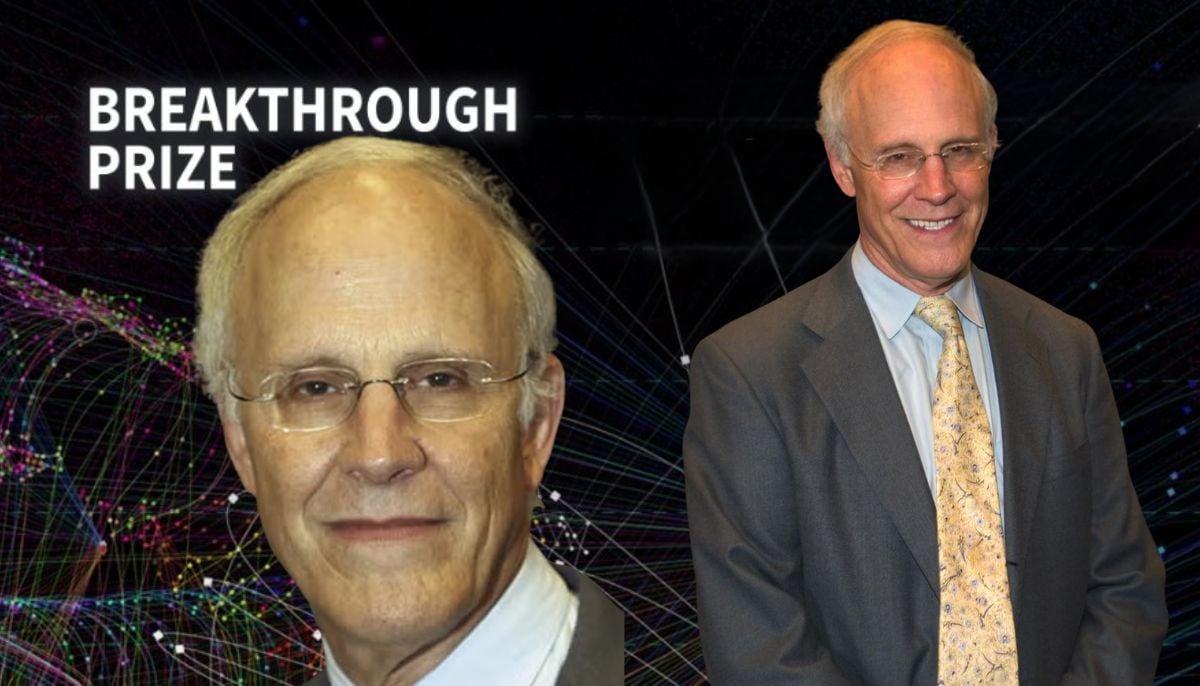
David Gross has won the Special Breakthrough Prize for Fundamental Physics with a whopping $3 million prize, as announced by the Breakthrough Prize Foundation on April 18, 2026.
The prize honors scientists whose discoveries have contributed significant advancement to the development of human knowledge.
The Breakthrough Prizes—commonly known as the ’Oscars of Science’—were established in 2012 to celebrate the wonders of the 21st century scientific age.
David Gross, who is a Nobel Prize laureate in Physics (2004), served as director at the Kavli Institute of Theoretical Physics at University of California, Santa Barbara for three decades.
What earned Gross winning Breakthrough Prize in Fundamental Physics?
In the early 1970s, there was a wide gap in quantum field theory, as it could not define the strong nuclear force, which holds the atom’s nucleus together.
But in 1973, Gross and his graduate student Frank Wilczek cracked the mystery.
They discovered that the strong force works the opposite way to familiar forces like gravity: it gets weaker as particles approach each other, but stronger as they move apart.
That discovery led to the development of quantum chromodynamics.
After taking home the Breakthrough Prize in Fundamental Physics, he drops a shocking prediction for humanity in an interview with LiveScience.
Gross, when asked if humanity will ever get to a place where we get rid of nuclear weapons.
Gross predicted, “We’re not recommending that. That’s idealistic, but yet, I hope so. Because if you don’t, there’s always some risk an AI 100 years from now, but chances of (humanity) living, with this estimate, 100 years, is very small, and living 200 years is infinitesimal.”
Gross became one of this year’s six awardees for his contributions to theoretical physics, earning the Special Breakthrough Prize in Fundamental Physics.
David Gross has remained an authority in fundamental physics for six decades.


‘Saturday Night Live’ alum Tina Fey admits past jokes missed the mark

There’s New Evidence for How Loneliness Affects Memory in Old Age

Prince William’s ally Robert Irwin rejects Prince Harry, Meghan offer

-

 Fashion4 days ago
France’s LVMH Q1 revenue falls 6%, shows resilience amid Iran war
-

 Sports7 days ago
The case for Man United’s Fernandes as Premier League’s best
-

 Entertainment1 week ago
Palace left in shock as Prince William cancels grand ceremony
-
 Business1 week ago
UK could adopt EU single market rules under new legislation
-

 Entertainment5 days ago
Is Claude down? Here’s why users are seeing errors
-

 Sports1 week ago
Lamar Jackson hits back at critics with faithful message on social media
-

 Fashion1 week ago
Energy emerges as biggest cost driver in textile margins
-
 Business1 week ago
Road accidents: a massive economic challenge | The Express Tribune