

Entertainment
Reclaiming Iqbal’s vision

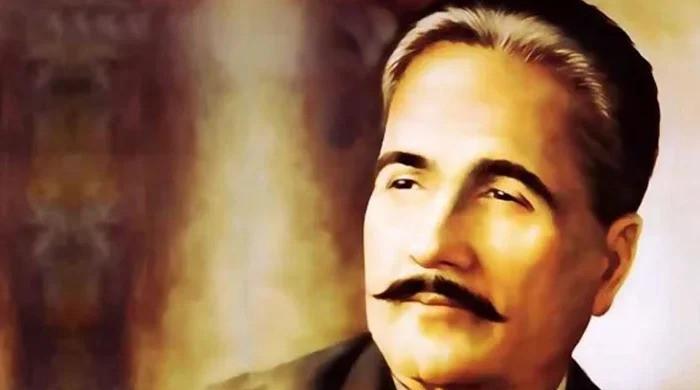
Allama Muhammad Iqbal, poet–philosopher, jurist and one of the most original Muslim thinkers of the 20th century, remains a towering guide for nations seeking moral and economic renaissance. For Iqbal, progress was never a matter of material accumulation alone; it was the unfolding of human potential and the strengthening of collective dignity. He saw poverty as more than economic deprivation; he saw it as a condition that corrodes the self, suppresses creativity and weakens the spirit.
In ‘Ilmul Iqtisad’, his early Urdu treatise on economics, Iqbal argues that economic strength depends upon intellectual courage and moral purpose. He believed that the decline of nations begins when they lose their capacity for inquiry and their belief in their own creative mission. More than a century later, Pakistan’s moment of reckoning echoes this insight: our crisis is not only fiscal but civilizational.
Pakistan faces significant challenges – fiscal stress, debt overhang, low productivity and institutional inertia. Yet the deeper challenge is a crisis of confidence: a collective loss of belief in our own agency. We are a young nation – among the youngest in the world – with a youth cohort exceeding 140 million. Yet too many of our young stand suspended between aspiration and disillusionment.
To move forward, we must reclaim what Iqbal called ‘khudi’: a disciplined, responsible, and creative selfhood driven by purpose and rooted in moral autonomy. Khudi is not egoism; it is self-respect and self-transformation. It is the belief that human beings have the power to reshape their destiny through effort, courage and conviction.
Iqbal’s intellectual brilliance lies in his ability to engage the modern world without losing his identity. His dialogue with Kant taught him moral autonomy; with Nietzsche, the courage to affirm life; with Bergson, the idea of creative evolution. But Iqbal did not imitate these thinkers – he challenged them, absorbed them and wove them into a vision anchored in Islamic spirituality and human unity.
His approach offers a model for Pakistan today. We must neither freeze ourselves in rigid traditions nor surrender to imported technocratic models. We must instead embrace a framework that is ethical, evidence-based, future-oriented and authentically our own. This intellectual courage is essential as Pakistan navigates a world shaped by disruptive technologies, shifting geopolitics and rapid social change.
Our challenge is not economic alone; it concerns the moral energy with which this young nation defines its purpose. Iqbal’s universal humanism – his belief that every individual carries an infinite creative spark – remains the foundation of an inclusive society. In a deeply diverse and plural Pakistan, unity must not erase difference; it must celebrate it. Development must reach all: every region, every class, every gender and every community. Justice is not the by-product of development; it is its moral compass.
It is on this ethical foundation that URAAN Pakistan has been conceived. URAAN is not a slogan or a list of projects – it is a paradigm for purposeful development. It begins with people, not infrastructure. It recognises that the true measure of progress is the expansion of the moral and material capabilities of citizens.
URAAN aims to equip youth with future skills, build a digital and innovation-driven economy, reform institutions for efficiency and empathy, strengthen public–private partnerships and anchor policy in equity, sustainability and inclusion. The core idea is simple yet transformative: economic revival must be intertwined with ethical renewal. Without moral purpose, development is directionless; without economic strength, purpose remains unfulfilled.
Iqbal’s symbol of the Shaheen holds a special power for Pakistan today. The Shaheen is not merely a poetic creature; it is an educational ideal and a model for national character. It represents independence of thought, strength of will, passion for discovery, discipline and dignity, and freedom from fear and dependence. In Bal-e-Jibril, Iqbal writes: “You are a falcon; flight is your vocation./ Beyond the skies you see lie skies yet unseen”.
For a country with one of the world’s largest youth populations, this is a call to awaken imagination and ambition. The youth bulge is Pakistan’s greatest asset – if empowered with knowledge, skills and purpose. If neglected, it becomes a source of frustration. Iqbal’s Shaheen does not chase comfort; it seeks height. It does not live on someone else’s mercy; it creates its own world. This is the ethic our youth must embrace if Pakistan is to compete in a knowledge-driven century.
Iqbal believed that the destiny of nations is determined by their capacity for knowledge. In his ‘Reconstruction of Religious Thought in Islam’, he argued that Islam is inherently dynamic, rational and future-oriented. It encourages inquiry, reflection and discovery. For Iqbal, revelation was not the end of thought; it was the beginning of an intellectual journey.
But he also lamented the decline of the scientific spirit in the Muslim world. In powerful verses, he captures a heavenly cry over the dulling of inquiry: “A cry descends from the heavens at dawn:/ How was your jewel of understanding lost?/ How did your blade of inquiry grow dull?/ Why do you no longer pierce the hearts of stars?” He continues: “You are meant for the stewardship of inner and outer worlds./ How can a flame become slave to dust?/ Why are the sun, moon, and stars not under your command?/ Why do the heavens no longer tremble at your gaze?” He distils civilisational renewal into one verse: “A new world dawns from new ideas./ Bricks and stones alone do not build civilisations”.
URAAN Pakistan integrates this insight by investing in AI, biotechnology, and frontier technologies; research universities and knowledge clusters; digital governance; STEM skills and innovation ecosystems; and creative industries and startups.
A nation that renews its spirit of inquiry renews its future. If inquiry is Iqbal’s method, love for the Prophet Muhammad (pbuh) is his engine. His intellectual courage, spiritual confidence, and civilizational imagination all rise from this foundation. Iqbal believed that fidelity to the Prophet (pbuh) is the gateway to human excellence, moral clarity and collective purpose.
He proclaims this with unmatched devotion: “If you remain faithful to Muhammad [pbuh], then everything is yours./ What is this world before you? Even the Tablet and the Pen become yours”.
This is not a poetic sentiment but Iqbal’s philosophy of empowerment. For him, love of the Prophet (pbuh) is not ritual attachment but alignment with his values: justice, knowledge, compassion, courage and service. It is this alignment that unleashes khudi, sharpens purpose and gives nations the moral energy to rise.
Iqbal’s ‘Reconstruction’ calls for reopening the gates of ijtihad, integrating scientific reasoning with spiritual values, aligning faith with progress and justice, and building an ethical, future-ready society. He believed that stagnation arises when religion loses its creative, ethical core. Governance inspired by Iqbal, therefore, demands institutions that are flexible, evidence-based, citizen-centred and future-oriented.
The doctrine of khudi has profound economic implications. A nation that depends on borrowed ideas and borrowed confidence cannot rise with dignity. Economic sovereignty begins with intellectual sovereignty – with the belief that we can think, innovate and build for ourselves. URAAN Pakistan aims to build this ecosystem by rewarding initiative, nurturing talent and honouring merit.
Iqbal envisioned a moral state grounded in justice and compassion, not a theocracy, but an ethical polity. Pakistan must shift from a control-based colonial administration to a performance-driven, technology-enabled, citizen-centred state. This transformation requires transparent governance, merit-based institutions, data-driven planning, accountability with empowerment and policy continuity.
Ultimately, the true measure of Pakistan’s progress will not be determined solely by GDP. Nations rise through conviction, character and cohesion. Our path to renewal begins with reclaiming khudi, reigniting inquiry, embracing the Shaheen spirit and drawing strength from the love of the Prophet (pbuh) that fueled Iqbal’s entire intellectual universe. Iqbal’s call echoes across time: Rise. Act. Reclaim tomorrow.
The writer is the federal minister for planning, development, and special initiatives. He tweets/posts @betterpakistan and can be reached at: [email protected]
Disclaimer: The viewpoints expressed in this piece are the writer’s own and don’t necessarily reflect Geo.tv’s editorial policy.
Originally published in The News
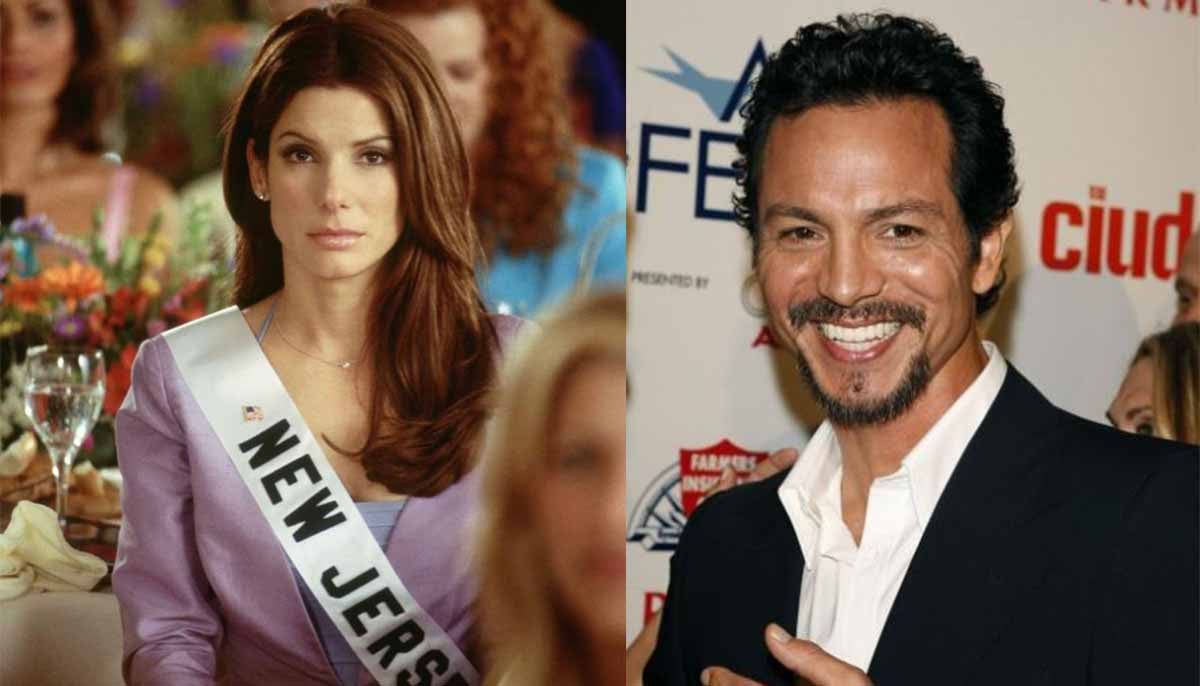
Benjamin Bratt looked back fondly on his time working with Sandra Bullock in the 2000 comedy, Miss Congeniality.
At the Los Angeles premiere of his new Prime Video film Balls Up, the actor shared with E! News that Bullock was “one of the loveliest people” he’s ever worked with.
“I remember Sandy at the helm as a producer and as the star of the film,” Bratt said.
“She was courageous and willing to go for anything.”
He noted that Bullock’s leadership created an environment where he and their costars, including Michael Caine, Candice Bergen, William Shatner, and Heather Burns, felt safe to take creative risks.
“That’s really the beauty of being in a situation where the safety net is built in,” Bratt explained. “It encourages you as a performer to just jump off the cliff and see what happens.”
The risks paid off, with Miss Congeniality becoming a box office hit and spawning the 2005 sequel Miss Congeniality 2: Armed & Fabulous.
Though Bratt did not return for the sequel, he credits Bullock’s comedic fearlessness for the franchise’s enduring popularity.
“It really endures because of Sandy and what she did with it,” he said, adding that her willingness to be silly and make a fool of herself set the tone for the cast and crew.
Reflecting on Bullock’s influence, Bratt concluded, “She leads from the top. If you start the work day with an essence of fun, then hopefully the result will fall into line.”

Khloé Kardashian pushed back against Lamar Odom’s latest remarks in his Netflix documentary Untold: The Death & Life of Lamar Odom.
The former NBA star suggested he married her for fame.
On the April 15 episode of her Khloé in Wonder Land podcast, the reality star addressed Odom’s comments head-on.
“You’re sitting on camera saying you married me for fame,” she said, adding that she too, along with fans, once believed their seven-year marriage was built on love.
“You, your friends, you guys are all saying how you were with me just for fame. That’s like some f–ked up s–t. I feel so dumb, I spent hours and time doing this documentary as a favor. I’m not paid one penny.”
Joined by longtime friend Malika Haqq, Kim Kardashian’s sister explained she initially agreed to participate in the project to ensure Odom’s story was portrayed positively.
“I wanted to make sure it was handled in the best way,” she noted. “He’s been through enough negative s–t. Let’s turn the tune here.”
But following the documentary’s release, Kardashian expressed frustration with Odom’s press appearances, where he appeared to downplay her role in his recovery after his near-fatal overdose in 2015.
“I don’t even need you to sing my praises,” she said. “But you’re not now going to s–t on me or play in my face because you don’t like the reaction and the response from the public.”
A source close to Odom told E! News that his press commitments were part of his agreement, not a personal choice.
The insider emphasized that Odom has consistently acknowledged Kardashian’s support during his most difficult years.
- 21-hour talks reflect seriousness of both delegations: FO.
- Pakistan maintains contact with global partners continuously: FO.
- Lebanon ceasefire seen vital for regional stability: FO.
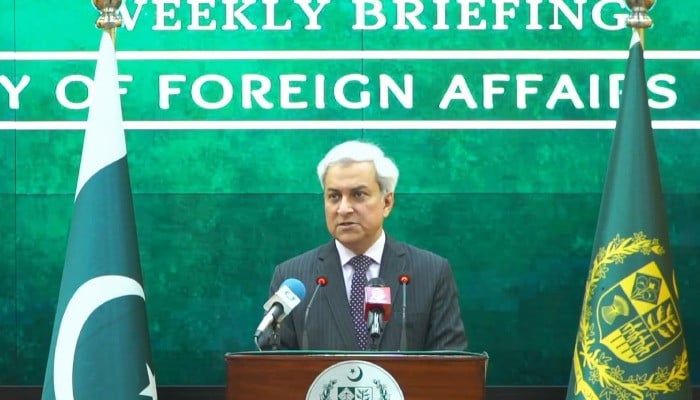
ISLAMABAD: Pakistan on Thursday urged the media against speculation regarding the schedule of the second round of negotiations between the United States and Iran, saying that the schedule for the upcoming talks has not been announced yet.
Addressing a weekly briefing, Foreign Office spokesperson Tahir Hussain Andarabi declined to share details of diplomatic engagements, emphasising the need for trust and confidentiality. “If we had shared such information, it would have been a breach of trust,” he said.
“The important thing is that both sides are willing to engage and dialogue continues,” he said, adding that details about delegations and participation were secondary and an internal matter of the concerned parties.
His remarks came amid reports that negotiating teams from the US and Iran could return to Islamabad later this week, five sources told Reuters, days after the highest-level inaugural talks between the two countries in decades ended inconclusively.
Meanwhile, US President Donald Trump said on April 14 that talks between Washington and Tehran could resume over the next two days and that “we’re more inclined to go” to Pakistan, reported The New York Post.
The previous meeting in Islamabad, held three days after last Wednesday’s ceasefire announcement, marked the first direct encounter between American and Iranian officials in more than a decade and the most senior engagement since Iran’s 1979 Islamic Revolution.
US Vice President JD Vance and Iranian Parliamentary Speaker Mohammad Baqer Qalibaf led their respective delegations in the last round of talks to work out a slew of issues, including the Strait of Hormuz, a major transit point for global energy supplies that Iran has effectively blocked but the US has vowed to reopen, as well as Iran’s nuclear programme and international sanctions on Tehran.
The trilateral ‘Islamabad Talks’ lasted nearly 21 hours after beginning on the afternoon of April 11, reflecting the complexity and high stakes involved.
Despite extensive discussions, the first round ended without a formal agreement. Officials in Islamabad, however, viewed the meeting as a significant step in opening direct channels of communication between Washington and Tehran.
Separately, a proposal has been shared with both Washington and Tehran to send delegations for the resumption of talks, Reuters reported, citing sources, as Islamabad continues coordinating with both sides on the timing of the next round, which could take place over the weekend.
These developments echo Prime Minister Shehbaz Sharif’s earlier remarks, in which he noted that although the first round of US-Iran talks in Islamabad remained inconclusive, Pakistan’s efforts to bridge differences between the two sides are continuing, with diplomatic channels actively engaged.
Pakistan’s push to get Iran and the United States to the negotiating table for their highest-level face-to-face talks in decades to end weeks of war has garnered international praise.
‘Neither breakthrough nor a breakdown’
Addressing the media today, FO spokesperson Andarabi said the negotiations between the United States and Iran continued in a “serious and constructive” manner, describing the outcome as neither a “breakthrough nor a breakdown”.
“There was neither a breakthrough nor a breakdown,” he said, adding that the two delegations engaged in 21 hours of continuous talks, while the overall negotiation process extended beyond 24 hours.
He added that nuclear issues remained among the key topics under discussion in the negotiations.
He noted that such prolonged engagement on complex issues reflected “extraordinary commitment” by both sides. “The seriousness, resolve and positive attitude of the participants should be appreciated,” he added, highlighting that leadership from both countries, along with mediating officials, remained present throughout.
Calling the round “historic in significance,” the spokesperson said the role played by the leadership of all three countries deserved recognition.
The spokesperson said Pakistan would continue to act as a mediator and facilitator, keeping communication channels open between Tehran and Washington.
“All diplomatic efforts, including the Islamabad talks, are part of a continuous process,” Andarabi said, noting that high-level engagements in Tehran and visits by delegations were also part of this broader effort.
He added that Pakistan had maintained contact with global leaders through telephone diplomacy ahead of the talks and would continue engaging international partners.
“Pakistan’s position remains in favour of peace, stability and prosperity,” he said, reiterating that Islamabad was taking its allies and friendly countries into confidence while welcoming support from global powers, including Russia.
Highlighting Pakistan’s broader diplomatic outreach, he said the country had actively participated in the Shanghai Cooperation Organisation’s Regional Anti-Terrorist Structure (SCO-RATS) and hosted a meeting of senior officials from Saudi Arabia, Turkiye and Egypt in Islamabad.
He also confirmed that the Chief of Army Staff (COAS) Chief of Defence Forces (COAS) Field Marshal Asim Munir was in Iran as part of ongoing engagements.
Lebanon situation
The spokesperson strongly condemned Israeli attacks in Lebanon, calling for an immediate end to hostilities.
He said the Lebanon ceasefire was part of the negotiations and was being viewed within the broader context of the regional peace process.
“Signs of improvement on the Israel-Lebanon front over the past two days are encouraging,” he said, adding that de-escalation would help create a conducive environment for dialogue.
“Peace in Lebanon and an end to armed actions are essential,” she noted, stressing that reduced tensions could support progress in negotiations.
The wider conflict in the region began with US-Israeli strikes on Iran on February 28. Hezbollah opened fire in support of Tehran on March 2, sparking an Israeli offensive that has killed more than 2,000 people and forced 1.2 million from their homes, according to Lebanese authorities.
Iran says Israel’s campaign against Hezbollah in Lebanon must be included in any agreement to end the wider war in the Middle East. Washington has pushed back, saying there is no link between the two sets of talks.


ICE cotton rallies to 22 month-high on weaker dollar, drought worries

UK prepares for food shortages in worst case scenario as Iran war continues

How the wealthy are planning to cut their 2026 tax bills

-

 Entertainment1 week ago
Queen Elizabeth II emotional message for Archie, Lilibet sparks speculation
-

 Tech1 week ago
Azure customers up in arms over ‘full’ UK South region | Computer Weekly
-

 Tech1 week ago
As the Strait of Hormuz Reopens, Global Shipping Will Take Months to Recover
-

 Fashion1 week ago
CII submits 20-pt agenda to Indian govt to back firms hit by Iran war
-

 Tech1 week ago
This AI Button Wearable From Ex-Apple Engineers Looks Like an iPod Shuffle
-

 Politics6 days ago
Indian airlines hit hardest after Dubai limits foreign flights until May 31
-

 Politics6 days ago
Chinese, Taiwanese will unite, Xi tells Taiwan opposition leader
-
 Business1 week ago
Women In Credit: Share of women in credit rising boosted by digital platforms – The Times of India