

Entertainment
Pakistan’s GDP growth to reach 3.5% by 2027: Fitch

- Pakistani banks see stronger growth opportunities ahead: Fitch.
- Global rating agency cites improving overall business conditions.
- Says Pakistan’s recovery follows tough period of crisis.
Global credit rating agency Fitch has forecasted Pakistan’s real GDP growth at 3.5% by 2027, up from 2.5% in 2024, according to Fitch Ratings.
“Pakistan’s improved sovereign credit profile reinforces this view,” Fitch noted, referring to the upgrade of the country’s Long-Term Issuer Default Rating (IDR) to ‘B-‘/Stable from ‘CCC+’ in April 2025. The rating improvement was underpinned by ongoing economic recovery, reforms and improving fiscal performance.
The recovery comes after a particularly turbulent period for Pakistan’s economy. Inflation, which peaked at 38% in May 2023, has since eased to 4.1% in July 2025, with Fitch expecting it to average around 5% for the year.
Meanwhile, monetary policy has shifted in response to easing inflationary pressures. Since May 2024, Pakistan’s central bank has halved the policy rate to 11%, while external stability has improved through reduced currency volatility and current account surpluses.
Fitch anticipates that this combination of lower interest rates and a more stable macroeconomic environment will boost demand for private credit.
“We expect the combination of lower interest rates and an improving macroeconomic environment to stimulate private credit demand,” Fitch said, adding that this should support “steadier loan and deposit growth, and banks’ financial performance.”
The agency noted that Pakistan’s banks are set to benefit from better opportunities to generate business volumes due to improving operating conditions amid receding macroeconomic headwinds.
“Private sector credit, which had dropped to a cyclical low of 9.7% of GDP in 2024, is expected to rebound, reducing banks’ reliance on public-sector lending. Continued economic and fiscal reforms could further support this shift,” the statement read.
However, Fitch also pointed to ongoing risks, stating that Pakistan’s improving, albeit still weak, operating environment and its low sovereign credit rating remain areas of concern.
The agency cautioned that the banks’ intrinsic creditworthiness will remain “closely linked to the sovereign and the pace of economic reform,” due to their significant exposure to sovereign securities and state-linked entities.
Despite past economic turbulence, Pakistani banks have demonstrated resilience. The sector’s impaired loan ratio improved to 7.1% by March 2025, down from 7.6% at the end of 2023, amid strong loan growth of 26%, largely fueled by inflation.
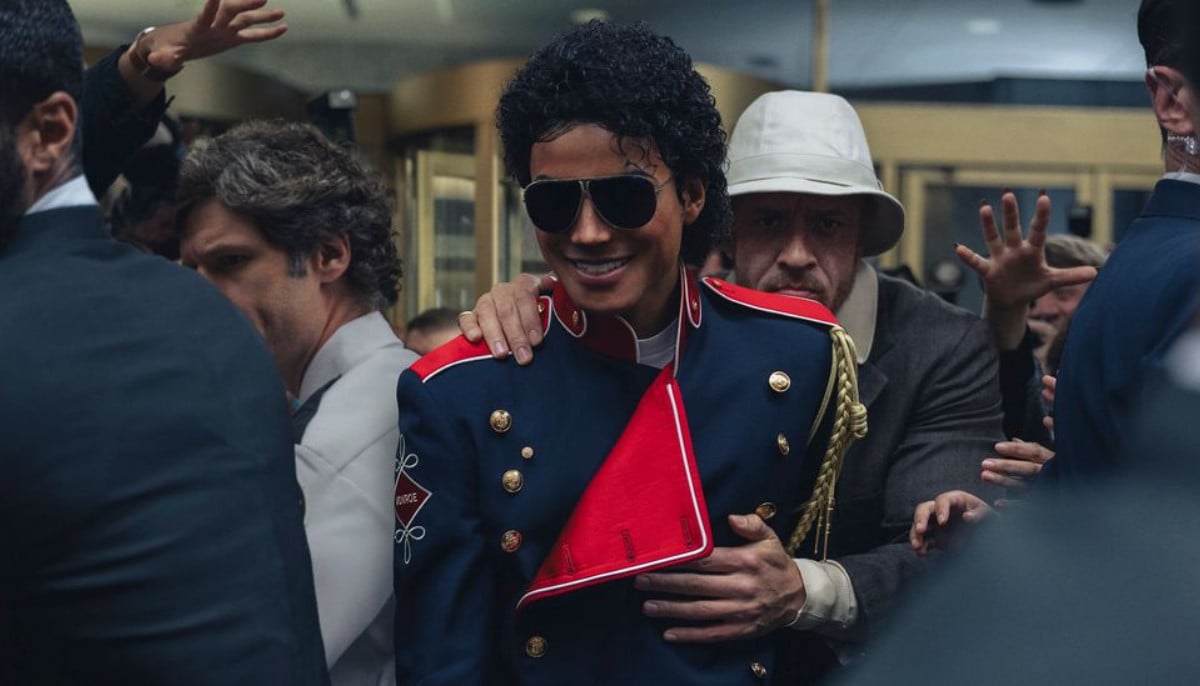
Michael has finally been released on April 24 and it is already getting a lot of attention, with people discussing how the story of Michael Jackson has been shown on screen.
The project has been in talks for a long time. It was first discussed in 2019 and later confirmed in 2022, so fans have been waiting for years to see it.
One of the biggest reasons for interest is that Jackson’s real life nephew Jaafar Jackson is playing him, which made people even more curious about how the film would turn out.
The producer Graham King shared that the goal was to show a fair and balanced version of Michael’s life, explaining the idea was to show him as a real person, not just focus on fame but also his struggles and personal side.
Before the release, some parts of the story got to be changed because of legal restrictions.
That means a few planned scenes were removed or adjusted before the final cut.
Even with all the debate and discussion around the film, early reactions suggest strong interest from audiences.
Many fans around the world are still excited to watch Michael and decide for themselves after seeing it, which is why expectations at the box office remain high.

(Spoilers ahead) “CBS Mornings” speaks with the latest eliminated contestant from “Survivor 50” about exiting the game, strategy and transitioning to the jury.
Source link

Summer House is starting to feel a bit uncertain for fans, as talk of big changes around the show continues to spread.
Many people thought the show might be getting cancelled but that is not exactly what is happening.
Instead, it looks like the makers are thinking of changing things in a big way rather than ending it completely.
The house in the Hamptons, which has always been at the centre of the show, might no longer be used and there are talks about shifting to a new place with a different setup.
There is also a chance that the cast could change, which means the show may not feel the same as before.
At the same time, some familiar faces like Kyle Cooke, Amanda Batula and Lindsay Hubbard are already moving towards a new Bravo show called In the City, which is set to come out soon.
Because of all this, fans are unsure about who will return and what the show will look like next.
For now, it is not cancelled, but it is clearly going through a big change and things may not be the same as before.


How ‘Michael’ continues to smash the box office despite backlash

Ministers urged to stick to ticket tout ban amid fears of delay
Warner Bros shareholders approve Paramount’s $111bn takeover

-

 Fashion1 week ago
France’s LVMH Q1 revenue falls 6%, shows resilience amid Iran war
-

 Entertainment1 week ago
Is Claude down? Here’s why users are seeing errors
-

 Sports1 week ago
PSL 11: Peshawar Zalmi win toss, opt to field first against Quetta Gladiators
-

 Tech1 week ago
The Deepfake Nudes Crisis in Schools Is Much Worse Than You Thought
-
 Business1 week ago
Standard Life buys rival in £2b deal to create savings giant
-

 Tech1 week ago
CYBERUK ’26: UK lagging on legal protections for cyber pros | Computer Weekly
-

 Sports1 week ago
World Cup kit ranking: Which teams will look best in 2026?
-

 Tech1 week ago
Cyber Essentials closes the MFA loophole but leaves some organisations adrift | Computer Weekly