

Business
Key economic data and trends that will shape Rachel Reeves’ Budget

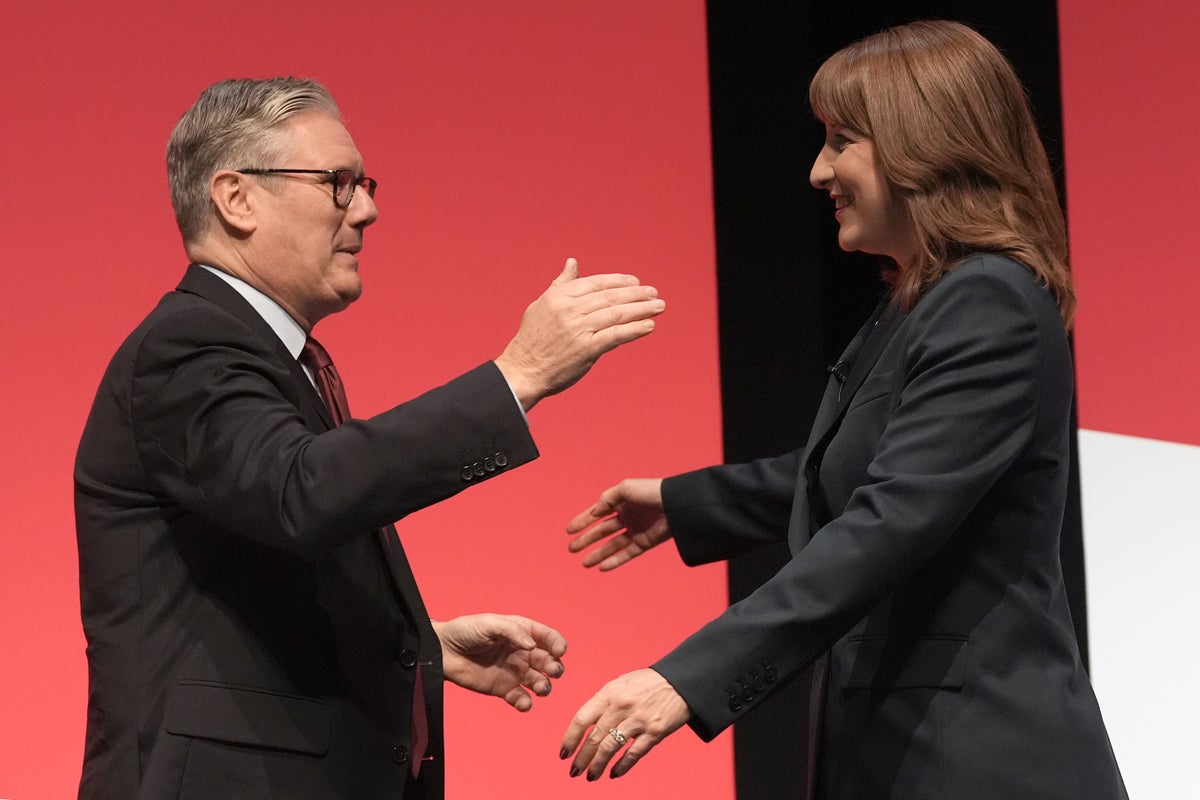
Chancellor Rachel Reeves will deliver her Budget on Wednesday against a backdrop of rising unemployment and higher-than-forecast Government borrowing, but amid signs this year’s spike in inflation may have peaked.
Here, the PA news agency looks at five key economic indicators that are likely to shape both the content and the tone of Ms Reeves’ speech.
– Borrowing
Government borrowing for the current financial year is running at a higher level than forecast and is the highest on record outside the Covid-19 pandemic.
Borrowing stood at £116.8 billion for the seven months from April to October 2025, according to figures published last week by the Office for National Statistics (ONS).
This is £9.9 billion more than the £106.9 billion forecast for this period by the Office for Budget Responsibility (OBR) in March.
It is also the second-highest borrowing figure for April-October since comparable data began in 1993, behind only 2020.
The Government has overshot forecasts this year due to “a combination of lower-than-expected tax receipts and higher-than-expected borrowing by councils and other bodies outside of central government control”, according to the Institute for Fiscal Studies think tank.
It means that when the OBR publishes its new economic forecasts alongside the Budget on Wednesday, total borrowing for the current financial year is likely to be revised up, as it may be for subsequent years.
It is not unusual for a government to borrow in order to spend more than it receives in taxes and other income.
The last time the government spent less than it received was 25 years ago, in 2000/01.
However, borrowing is now running at a comparatively high level and the latest figures are a reminder of how economic forecasts can be subject to a lot of uncertainty.
Should borrowing continue to be higher than expected, Rachel Reeves may need to find additional ways to ensure she has enough “headroom” in her Budget to balance the nation’s finances.
– Economic growth
The OBR’s new forecasts on Wednesday are also likely to include revised estimates for economic growth in the UK.
Growth in 2025 has slowed as the year has gone on.
The size of the economy grew by 0.7% in January-March, by 0.3% in April-June and by just 0.1% in July-September, according to estimates by the ONS.
In addition, the economy is estimated to have contracted by 0.1% in September, driven by a fall in motor manufacturing due partly to the cyber attack on Jaguar Land Rover.
The OBR’s current forecast for growth across the whole of 2025 – published back in March – is 1.0%, rising to 1.9% in 2026.
The UK has recorded annual growth of less than 1% only five times in the past 30 years: in 2008 and 2009 (zero and -4.6% respectively, during the financial crash); 2011 (0.9%), 2020 (-10.0%, during the pandemic) and 2023 (0.3%).
The Chancellor already knows the new GDP forecast for 2025 and this will undoubtedly shape some of the tone of her Budget speech.
Responding earlier this month to the GDP figures for July-September, Ms Reeves said: “We had the fastest-growing economy in the G7 in the first half of the year, but there’s more to do to build an economy that works for working people.
“At my Budget later this month, I will take the fair decisions to build a strong economy that helps us to continue to cut waiting lists, cut the national debt and cut the cost of living.”
– Inflation
The UK’s overall rate of inflation stood at 3.6% last month, down from 3.8% in September, but above the Bank of England’s target of 2%.
It was the first time the rate had fallen month on month since May, suggesting inflation this year may have peaked.
The figure – based on the ONS Consumer Prices Index – is a measure of how much prices have risen on average year on year.
A fall from 3.8% to 3.6% means prices are not rising quite as fast as they were.
Any evidence that the cost of living is easing is good news for the Government and the latest figures will almost certainly be welcomed by Ms Reeves during her speech.
It could also mean the Bank of England is more likely cut interest rates from their current level of 4%, when it makes its next decision in December.
The Bank of England’s own forecasts suggest inflation is on track to fall to the 2% target by 2027.
This would mark a return to relatively low inflation in the UK and the end of a turbulent few years that saw the rate hit 11.1% in autumn 2022.
– Unemployment
Estimates of unemployment in the UK are produced by the ONS but are currently not classed as official statistics.
This is because the figures are based on a survey that has had a low response rate since the pandemic, meaning the data is unreliable and has to be treated with caution.
The trend suggested by the latest figures is that unemployment has risen over the past year, from 4.3% of people aged 16 and over in July-September 2024 to 5.0% in July-September 2025.
This is the highest rate outside the Covid-19 pandemic since 2016.
The OBR’s current forecast for the unemployment rate across 2025 is 4.5% and, given the data from the ONS, it seems likely this figure will be revised upwards on Wednesday.
Rising unemployment is not a backdrop any chancellor would choose for a Budget speech, especially given the confusion over how many people may or may not be out of work.
The unreliability of the unemployment figures has been criticised by many economists and statisticians – including Bank of England governor Andrew Bailey.
Ms Reeves is also facing other signs that point to a weakening jobs market, with the number of people on employee payrolls falling in most of the last 12 months, along with a slowdown in wage growth.
However, the proportion of the workforce classed as economically inactive – who are of working age and not in employment but not currently looking for work – has fallen slightly.
It stood at an estimated 21.0% in July-September 2025, down from 21.6% in the same period a year earlier.
– Retail sales
Lastly, the Chancellor is sure to have noted the latest retail sales figures.
The volume of sales fell 1.1% in October, the first monthly drop since May, according to the ONS.
It follows a strong rise of 0.7% in September, but the fall was larger than economists had forecast and could point to consumers being cautious with their money ahead of the Budget.
There was some feedback from retailers that people were waiting for November’s Black Friday deals, the ONS added.
Rob Wood, chief UK economist at Pantheon Macroeconomics, said: “We expect retail sales volumes growth to remain subdued in November as pre-Budget speculation reaches a fever pitch.
“We still think consumers should return to the high street when the Budget is passed and there is a little more clarity over fiscal policy.”
Some clarity should come on Wednesday, when the Chancellor gets to her feet in the House of Commons to deliver one of the most keenly-awaited Budgets in recent years.
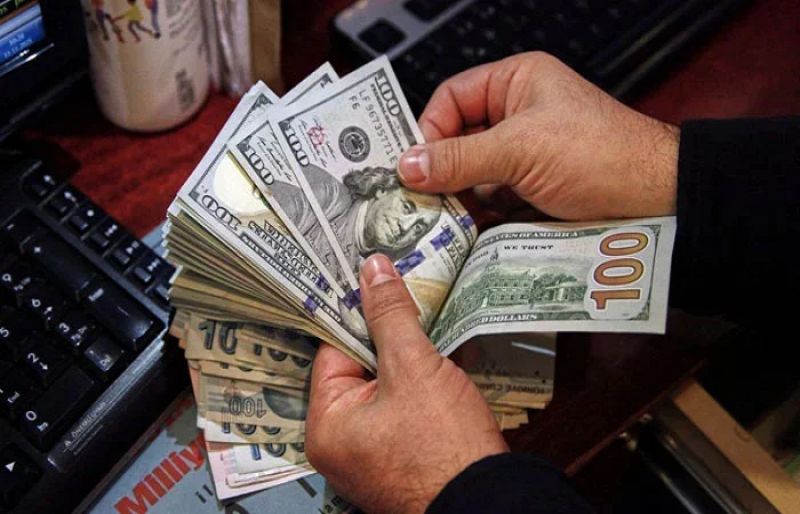
The State Bank of Pakistan (SBP) has received $1 billion from the Ministry of Finance of the Kingdom of Saudi Arabia, marking the second tranche of a $3 billion deposit agreed recently, the central bank said on Tuesday.
According to the statement issued by the central bank, the second tranche was received with a value date of April 20, 2026.
The first tranche of $2 billion had already been received on April 15, 2026, bringing the total inflows under the arrangement to $3 billion.
The development comes days after Prime Minister Shehbaz Sharif’s visit to Saudi Arabia, where he engaged in diplomatic efforts aimed at promoting regional peace.
During his visit, the premier met Crown Prince Mohammed bin Salman in Jeddah and expressed appreciation for the Kingdom’s continued support for Pakistan’s economic stability. He also conveyed solidarity with Saudi Arabia in light of recent regional developments.
Earlier on April 16, Finance Minister Muhammad Aurangzeb had announced that Saudi Arabia would provide $3 billion in additional financial support, with disbursement expected shortly.
He also noted that Riyadh had extended the tenure of its existing $5 billion deposit, removing the earlier annual rollover requirement.
The Saudi funding has strengthened Pakistan’s external position as it repaid $2 billion in debt to the United Arab Emirates (UAE).
The amount was kept with the central banks as a safe deposit.
Saudi Arabia has been a key financial partner for Pakistan, having provided support packages during previous economic challenges, including a $6 billion assistance programme in 2018 comprising deposits and oil facility arrangements.

Advocates attend a news conference about the “impact of incarcerating those charged with marijuana-related offenses,” and policy reform ideas, outside the U.S. Capitol on April 20, 2026.
Tom Williams | CQ-Roll Call, Inc. | Getty Images
A White House executive order on psychedelics, signed by President Donald Trump on Saturday, aims to speed up research on drugs like psilocybin, MDMA and ibogaine, helping to legitimize an industry that’s long lived largely underground.
But it also raises a broader question: Will psychedelics fall victim, like cannabis has, to a slow-moving federal process?
The latest executive order comes roughly four months after an effort by President Trump to reschedule cannabis, opening the door to greater research and investment opportunities. But since that directive, progress to reclassify cannabis has largely stalled, with the Drug Enforcement Administration review still ongoing and no final decision on moving marijuana from Schedule I to the lesser Schedule III.
The delay reflects how drug policy often slows once it enters interagency review, where scientific evaluation, legal standards and politics meet.
“The process has certainly been slow and frustrating for stakeholders when you consider they have spent decades fighting marijuana’s outrageous 1970s-era misclassification,” said Shawn Hauser, partner at cannabis law firm Vicente LLP.
Vicente LLP also serves as legal counsel for the National Compassionate Care Council, or NCCC, a coalition of health-care stakeholders focused on evidence-based cannabis policy.
The psychedelics order, however, focuses on research acceleration rather than legalization. It directs agencies like the U.S. Food and Drug Administration to expand clinical trials and “Right to Try” access for patients with serious mental health conditions, while leaving drug scheduling unchanged.
AtaiBeckley is among a number of psychedelics-focused drug developers whose stock is rallying since the order was signed over the weekend, up roughly 25% Monday. Several smaller-market cap stocks also jumped, including Compass Pathways, Definium Therapeutics and U.S.-listed shares of Cybin.
Hauser said the recent psychedelics order reflects a broader shift in Washington toward a medical-first framework and could mark a path forward for cannabis rescheduling.
“The science-, patient-, health-care-first approach is winning in Washington right now,” she said.
“The psychedelic pathway — built on physician-led protocols, clinical research and compassionate use frameworks — is actually a model cannabis advocates should be studying and adopting more aggressively,” Hauser said.
Safety first
Trump’s psychedelics measure has drawn particular attention for its inclusion of ibogaine, a powerful, naturally occurring psychoactive compound with long-standing safety concerns.
The drug is being studied for its applications with post-traumatic stress disorder, depression and addiction, but cardiac risks flagged by Nora Volkow of the National Institute on Drug Abuse remain a major barrier.
That tension is heightened by the expansion of “Right to Try” access, a federal law allowing patients diagnosed with life-threatening diseases or conditions to try experimental drugs when no other treatments work. This distinction typically applies only after Phase I trials are successful.
Ibogaine has struggled to meet that criteria, since most of the research into the drug has been conducted outside the U.S.
Psychedelic industry leaders say the order is meaningful, but the full impacts are still unknown until implementation catches up to prove scientific value.
“The opportunity now is not hype, it’s execution: rigorous science, disciplined safety standards, physician-led protocols and real-world outcome data,” said Tom Feegel, CEO of clinical neurohealth center Beond.
Beond, based in Cancun, Mexico, specializes in ibogaine therapy.
Feegel added that while the executive order signals legitimacy at the highest level of government, the next phase is critical.
Psychedelics still lack a commercial market, though clinical-stage developers, like AtaiBeckley, Compass and GH Research, are emerging. Many prioritize research around less controversial psychedelics like psilocybin and MDMA derivatives for mental health treatment.
U.S. states have been weighing the space, too. Colorado advanced regulated psychedelic access for its residents in 2022, while a Massachusetts ballot measure failed in 2024 with 56% of voters rejecting the access.
Cannabis, by contract, already has a multibillion-dollar adult-use industry across dozens of states, giving it a significant head start even as federal rescheduling remains unresolved.
Hauser argued the two industries are ultimately reinforcing one another.
“The two regulatory tracks aren’t in conflict,” she said. “Both are advancing the broader legitimacy of plant-based alternative medicines, and the infrastructure being built for one will inevitably support the other.”

Christmas is still eight months away, but artificial tree maker Lou Liping is already worried about a bad holiday season due to the Iran war.
Lou’s company, Kitty Christmas Factory, has been making artificial trees for the U.S. and European markets for nearly three decades. Her facility is based in the city of Yiwu, known as China’s Christmas capital.
“Many customers … are holding off on orders,” she told CNBC last Friday at her showroom in the city’s international expo center. The center houses hundreds of manufacturers that contribute to the country’s vast production of the world’s artificial trees, tinsel, ornaments and other decorations.
An estimated 87% of Christmas decor sold in the U.S. is sourced from China, according to the American Christmas Tree Association, with much of it from Yiwu.
Lou said the disrupted shipping in the Strait of Hormuz and high oil prices due to the Iran conflict have raised her costs per tree by 10%. The base material of her trees is PET plastic derived from oil. The price of the PET in her artificial pine needles is up 5%, and the cost of the plastic used as packaging for shipments is up 15%, she said.
Lou said her revenue is down roughly 12% because of the lost orders.
Yiwu’s factories normally gear up in the spring to make sure that their products are on store shelves for the Christmas shopping season.
“The war happened at a bad time — right when we need to get our shipments out,” tinsel maker Yun Zhuomei told CNBC from her booth at the expo center. “It’s very painful for us manufacturers.”
Yun said plastic prices for her tinsel are up as much as 40%.
Chen Lian, who makes Christmas lights, said she fears further price increases, with suppliers all moving up delivery schedules to accommodate customers worried about transport delays.
“Everyone needs to deliver between May and August so demand is concentrated,” Chen said. “Material prices are bound to go up.”
To adjust, artificial tree maker Lou said she has accelerated shipments. And when her contracts with customers allow, she passes on some cost. For next year, she said she aims to design a wider variety of lower-end trees so more people can afford her products.
But for this season, Lou said American shoppers will likely be stuck paying at least 15% more.
“The price of Christmas trees in the U.S. will definitely go up,” she said. “It is unavoidable.”


India, US to resume BTA talks today
SBP receives final $1bn from Saudi Arabia, bringing total deposit reaches $3bn – SUCH TV

Six people hurt but no serious damage from powerful Japan quake

-

 Fashion5 days ago
France’s LVMH Q1 revenue falls 6%, shows resilience amid Iran war
-

 Sports1 week ago
The case for Man United’s Fernandes as Premier League’s best
-

 Entertainment1 week ago
Palace left in shock as Prince William cancels grand ceremony
-
 Business1 week ago
UK could adopt EU single market rules under new legislation
-

 Entertainment6 days ago
Is Claude down? Here’s why users are seeing errors
-

 Fashion1 week ago
Energy emerges as biggest cost driver in textile margins
-
 Business1 week ago
Delta Air Lines unveils first new Delta One suite in premium cabin arms race
-

 Tech1 week ago
A Lot of Shops Won’t Fix Electric Bikes. Here’s Why