

Business
FM Sitharaman Holds First Pre-Union Budget Consultations With Leading Economists

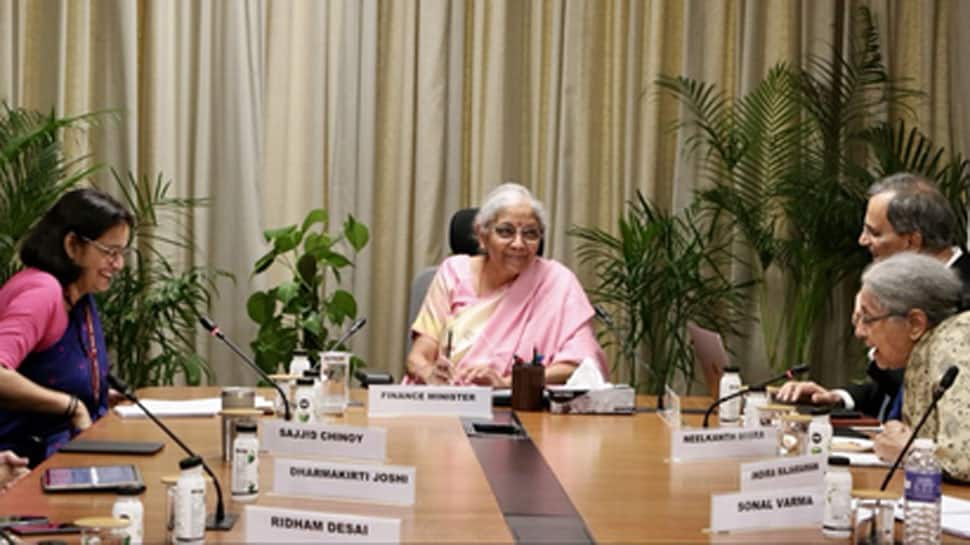
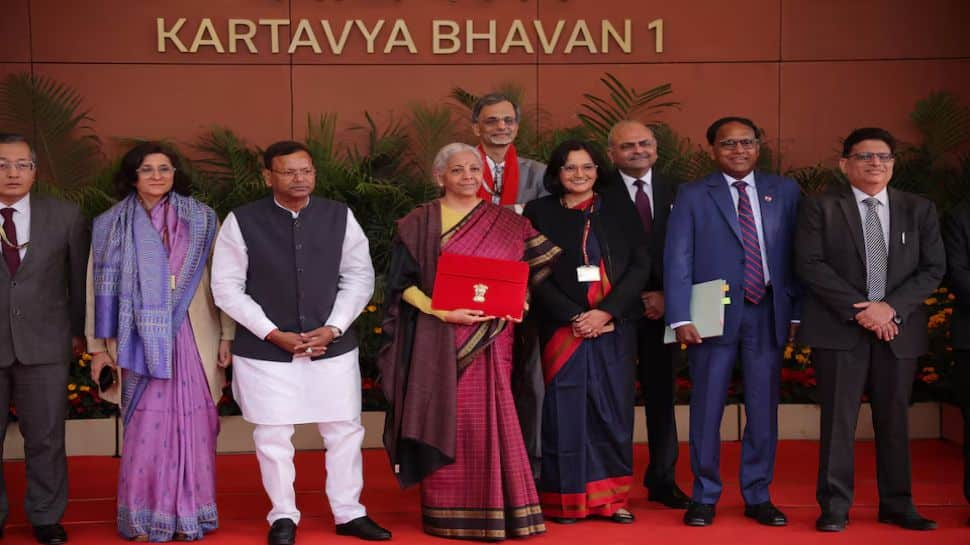
New Delhi: Finance Minister Nirmala Sitharaman on Monday held first pre-budget consultations with leading economists ahead of the upcoming Union Budget 2026-27.
The meeting was attended by Chief Economic Adviser (CEA) V. Anantha Nageswaran, besides other economists and senior officers from the Department of Economic Affairs (DEA).
“Union Minister for Finance and Corporate Affairs @nsitharaman chairs the first Pre-Budget Consultation with leading economists in connection with the upcoming Union Budget 2026-27, in New Delhi, today,” said an X post from Ministry of Finance.
“The meeting was also attended by Secretary, Department of Economic Affairs (DEA) @FinMinIndia; and Chief Economic Adviser, Government of India, besides senior officers from the DEA,” the ministry added.
As part of the ongoing pre-budget consultations, the government has been holding a series of meetings with industry representatives to gather inputs for the upcoming Union Budget.
The discussions are centred on enhancing the ease of doing business and extending tax benefits to the last mile.
Late last month, senior officials from the PHD Chamber of Commerce and Industry (PHDCCI) on Wednesday met Revenue Secretary Arvind Srivastava to present the industry’s recommendations on direct and indirect tax policies.
PHDCCI CEO and Secretary General, Dr Ranjit Mehta, said the discussions focused on both taxation and business facilitation. “We also discussed ease of doing business, which is the government’s focus,” he noted, adding that the Chamber had shared specific suggestions to ease liquidity challenges faced by micro, small, and medium enterprises (MSMEs).
Meanwhile, the Confederation of Indian Industry (CII) has called for comprehensive tax reforms in the Union Budget 2026-27, including expedition of dispute resolution, simplification of TDS regime and digitised customs systems.
The apex industry body emphasised the need to move towards a “compliance system rooted in trust, simplicity, and technology,” and accountable for administrative delays.
CII Director-General Chandrajit Banerjee said that India’s tax system needs to shift from being dispute-driven to dispute-preventive. “The tax system must ensure that taxation not only raises revenue efficiently but also acts as a catalyst for investment, innovation and competitiveness. The Budget can be a pivot for a truly modern, transparent and globally benchmarked tax regime,” Banerjee said.
The government is expected to continue engaging with various industry bodies in the coming weeks before finalising its proposals for the Union Budget.

The Reserve Bank of India (RBI) on Monday decided against activating the countercyclical capital buffer (CCyB), indicating that current financial and credit conditions do not warrant an additional capital requirement for banks, PTI reported.The central bank said the decision followed a review and empirical assessment of indicators used under the CCyB framework.“Based on review and empirical analysis of CCyB indicators, it has been decided that it is not necessary to activate CCyB at this point in time,” RBI said in a statement.Under the RBI (Commercial Banks – Prudential Norms on Capital Adequacy) Directions, 2025, the CCyB framework is activated when financial conditions indicate rising systemic risks linked to excessive credit growth.The framework primarily relies on the credit-to-GDP gap as a key indicator, along with supplementary metrics.According to the RBI, the CCyB mechanism is intended to serve two broad objectives.Firstly, it requires a bank to build up a buffer of capital in good times, which may be used to maintain the flow of credit to the real sector in difficult times.Secondly, it achieves the broader macro-prudential goal of restricting the banking sector from indiscriminate lending in the periods of excess credit growth that have often been associated with the building up of system-wide risk.The framework was introduced globally after the 2008 financial crisis as part of measures proposed by the Group of Central Bank Governors and Heads of Supervision (GHOS) under the Basel framework to strengthen financial system resilience.
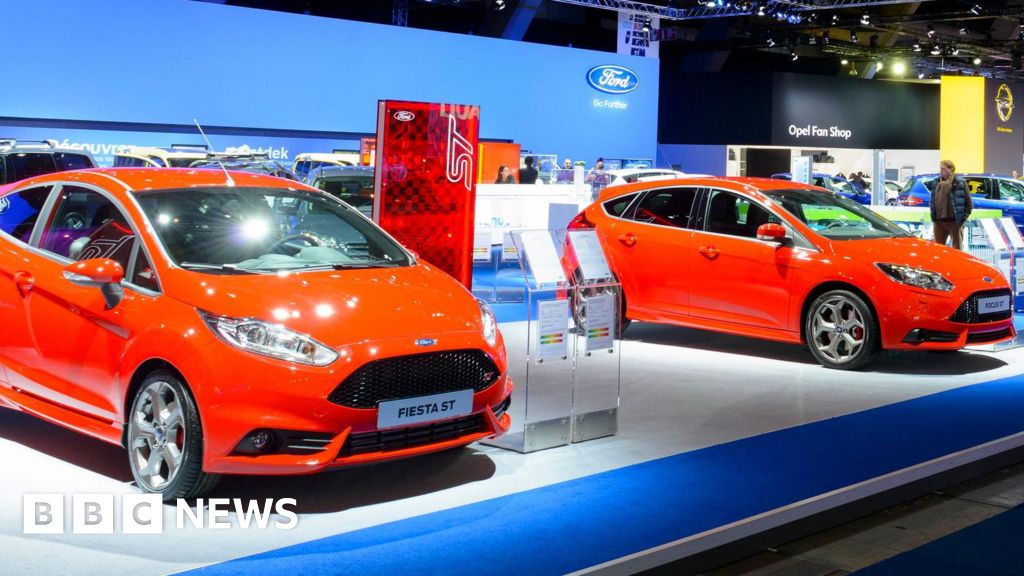
The company has announced plans to build seven new models in Europe including a small electric hatchback.
Source link

“Today’s policymaking is constrained by a more volatile external environment with more frequent and overlapping shocks, a rising public interest bill, in part reflecting market concerns with countries’ elevated debt, and the long-standing challenge of weak productivity growth,” he said.


Turkiye’s current account deficit expected to widen in 2026: Minister

UK’s clothing imports fall 3% in Q1, sharply lower than Q4 2025
RBI sees no signs of excess credit risk, keeps countercyclical capital buffer inactive

-

 Entertainment6 days ago
Conan O’Brien hat tricks as Oscar host
-

 Tech1 week ago
Could Contact-Tracing Apps Help With the Hantavirus? Not Really
-

 Fashion5 days ago
Italy’s Zegna Group’s Q1 growth boosted by strong organic performance
-

 Sports1 week ago
Bobby Cox, legendary Atlanta Braves manager who led 1995 World Series champions, dead at 84
-

 Entertainment1 week ago
Martin Short: Facing tragedy with joy
-

 Entertainment1 week ago
Tom Brady gets back at Kevin Hart during Netflix roast
-

 Sports1 week ago
Jacob Fatu unleashes vicious assault on Roman Reigns after World Heavyweight Championship loss at WWE Backlash
-

 Entertainment1 week ago
Martha Stewart: How to make an omelet