

Business
FM signals Covid-style relief, asks industries to make in India – The Times of India


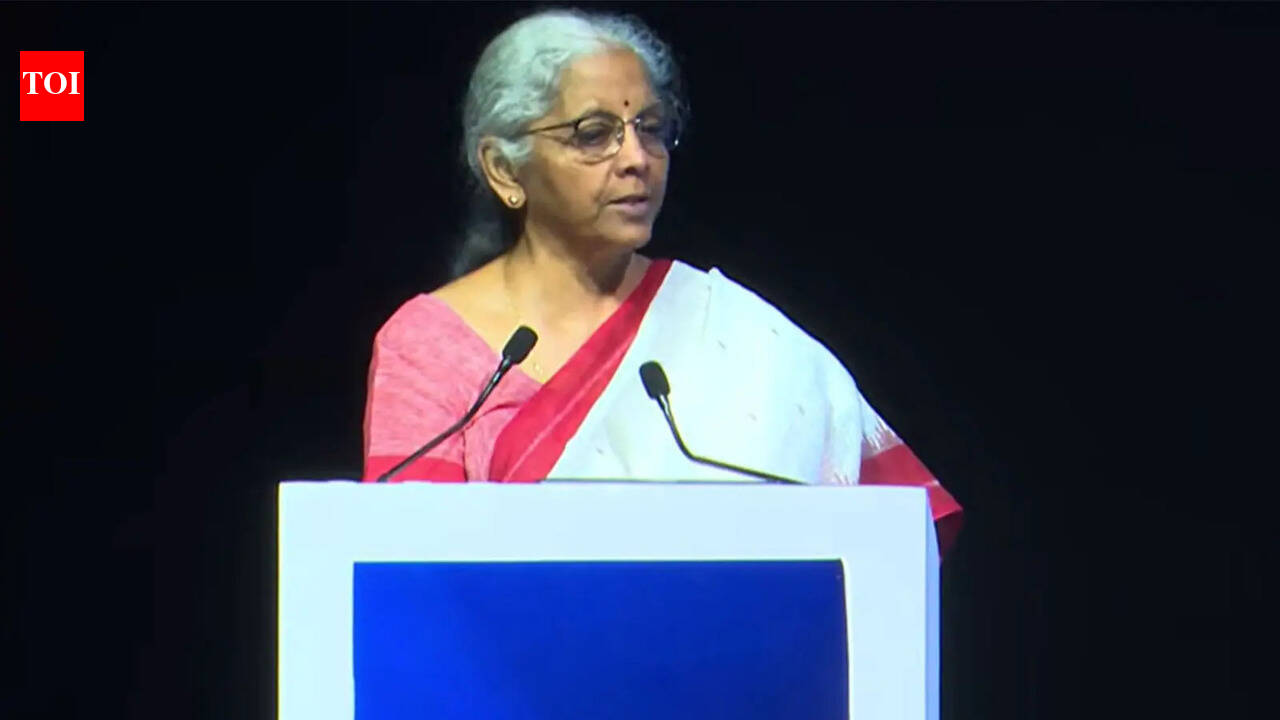
Mumbai: Finance minister Nirmala Sitharaman on Saturday signalled fresh Covid-era style policy support to cushion the impact of the West Asia conflict, while urging India Inc to step up investment and replace imports with domestic manufacturing.At the ET Awards for Corporate Excellence, Sitharaman said the govt is working on support measures for sectors hit by supply disruptions and rising input costs due to West Asia conflict.“There is also a discussion on support similar to what was given during Covid under the emergency liquidity credit guarantee scheme, something of that order for most units that have been affected by raw material supply disruptions, rising prices and insurance risk,” she said.On FDI, FM acknowledged recent outflows and some weakness in inflows, arguing that investment decisions are not driven purely by economic indicators but also by “other considerations,” including global and strategic factors, even as India is the fastest-growing major economy with stable indicators. On changes to capital gains tax and securities transaction tax, demanded by some businesses, Sitharaman said strong inflows were recorded even when both taxes were in place and stressed she was “neither saying yes nor no”, indicating it is under review.‘Will ensure availability of fertilisers, energy even at cost of fiscal pressures’The Union finance minister said the govt would prioritise ensuring availability of critical inputs such as energy and fertilisers, even at the cost of fiscal pressures, drawing upon its pandemic playbook.“When fertilizer prices abroad shot up, we still bought them at those prices and ensured that supply disruptions did not happen. Above all, the price was not passed on to farmers. Farmers continued to pay the same price,” Sitharaman said, indicating a similar approach if the current crisis intensifies.On energy security, Sitharaman reiterated that India would continue to source crude pragmatically to protect domestic needs. “What suits India’s interest will be our top priority. We will source from wherever it is available, wherever it is cheaper, and wherever it can be supplied on time to meet our requirements,” she said.The minister stressed that the policy approach would not involve trade-offs between growth, inflation and stability. “We have to work on all three simultaneously, remaining constantly vigilant and alert to changes,” Sithraman said, pointing to emerging risks including cyber threats to financial systems. At the same time, FM made it clear that govt support must be matched by stronger action from industry, particularly in boosting domestic manufacturing and reducing import dependence. “India’s domestic market still needs many goods to be manufactured within the country. Every import presents an opportunity for domestic manufacturing,” the Union minister said.Framing import substitution as a business opportunity rather than a policy mandate, Sitharaman added: “Why should we import when industry in India can produce these goods? Wouldn’t you want to produce for Indian consumers? That is a huge market.”The minister also called for greater agility and investment from corporates, including in new technologies.



Business
Gold price prediction today: Will gold prices continue to be volatile? Key levels to watch out for April 27, 2026 week – The Times of India

Gold price prediction today: Gold prices will closely track movements on the rate decisions by several central banks, including the US Federal Reserve, this week, says Manav Modi, Senior Analyst, Commodity Research at Motilal Oswal Financial Services Ltd.Gold is currently consolidating after sharp swings in a broad range, indicating a pause rather than a reversal. Price action shows a higher-high structure intact, but the recent sideways movement suggests indecision near the upper supply zone around 158,000–160,000. The formation resembles a short-term flag/triangle continuation pattern, where a breakout on either side will define the next directional move. Volume has tapered slightly, reinforcing the consolidation narrative.Gold prices recently moved from the upper band toward the mid-band (20 DMA), and are now attempting to stabilize. The bands have started to contract, signaling a potential volatility expansion ahead. Sustaining above the mid-band (~150,500–151,000 zone) keeps bullish bias intact, while a breakdown below this could trigger a deeper mean reversion toward the lower band.For the week, immediate support for gold prices is placed at around Rs 150,500, which is followed by stronger support near Rs 148,500. On the upside, the resistance stands at around Rs 155,500, and after that the key supply zone is at Rs 158,000. A decisive close for gold above Rs 158,000 levels can then resume the broader uptrend. However, a break in gold prices below levels of Rs 148,500 may shift the momentum to bearish in the near term.The economic docket is filled with data points and events this week as the focus will be on FED, BOJ, ECB and ECB policy meetings. US consumer confidence, GDP, inflation and durable goods orders data will also be in radar.(Disclaimer: Recommendations and views on the stock market, other asset classes or personal finance management tips given by experts are their own. These opinions do not represent the views of The Times of India)

British families tell BBC Panorama how the Iran war is affecting their monthly budgets.
Source link
Business
Oil Prices: Oil prices today: Crude jumps nearly 2% as US-Iran talks stall, Hormuz disruptions tighten supply – The Times of India

Oil prices extended their rally on Monday, climbing nearly 2% as stalled peace talks between the United States and Iran and continued disruptions in the Strait of Hormuz kept global supply under pressure.Brent crude futures rose $2.16, or 2.05%, to $107.49 a barrel, the highest since April 7, while US West Texas Intermediate (WTI) gained $1.77, or 1.88%, to $96.17 a barrel.The latest surge follows sharp gains last week, when Brent and WTI climbed nearly 17% and 13%, respectively, their biggest weekly rise since the war began, reported Reuters.
Peace talks falter, tensions rise
Hopes of reviving diplomatic efforts weakened over the weekend after US President Donald Trump scrapped a planned Islamabad visit by envoys Steve Witkoff and Jared Kushner, even as Iranian foreign minister Abbas Araqchi arrived in Pakistan.“This move puts the ball squarely back in Iran’s court, and the clock is now ticking loudly,” IG market analyst Tony Sycamore said, adding that Iran could face pressure to shut production at ageing oil fields if storage capacity runs out, as per Reuters.
Supply squeeze intensifies
The supply outlook remains tight as Tehran has largely closed the Strait of Hormuz, while Washington continues its blockade of Iranian ports.Shipping data from Kpler showed that traffic through the key waterway remains severely restricted, with just one oil products tanker entering the Gulf on Sunday.The Strait of Hormuz, a critical global chokepoint, typically handles about a fifth of the world’s oil flows, making any disruption highly sensitive for markets.
Forecasts revised amid uncertainty
Reflecting the tightening supply scenario, Goldman Sachs raised its fourth-quarter oil price forecasts to $90 per barrel for Brent and $83 for WTI.“The economic risks are larger than our crude base case alone suggests because of the net upside risks to oil prices… and the unprecedented scale of the shock,” analysts led by Daan Struyven said in an April 26 note, reported Reuters.The combination of geopolitical uncertainty, restricted shipping routes and limited output is keeping oil markets on edge, with prices expected to remain volatile in the near term.

Gold price prediction today: Will gold prices continue to be volatile? Key levels to watch out for April 27, 2026 week – The Times of India

Iran proposes deal to reopen Strait of Hormuz, defer nuclear talks: report

Iran FM Araghchi arrives in Russia for high-talks with Putin

-

 Sports1 week ago
WWE WrestleMania 42 Night 2: Live match results and analysis
-

 Sports1 week ago
NCAA men’s gymnastics championship: All-time winners list
-

 Fashion1 week ago
UK’s Sosandar returns to profitability amid robust FY26 performance
-

 Entertainment1 week ago
Ruby Rose old essay resurfaces detailing night of alleged Katy Perry assault
-

 Politics6 days ago
UK’s Starmer seeks to deflect blame over Mandelson appointment
-

 Entertainment1 week ago
Nathalie Baye, low-key legend of French cinema, dies aged 77
-

 Entertainment6 days ago
Lee Anderson, Zarah Sultana kicked out of UK Parliament for calling PM ‘liar’
-
 Business1 week ago
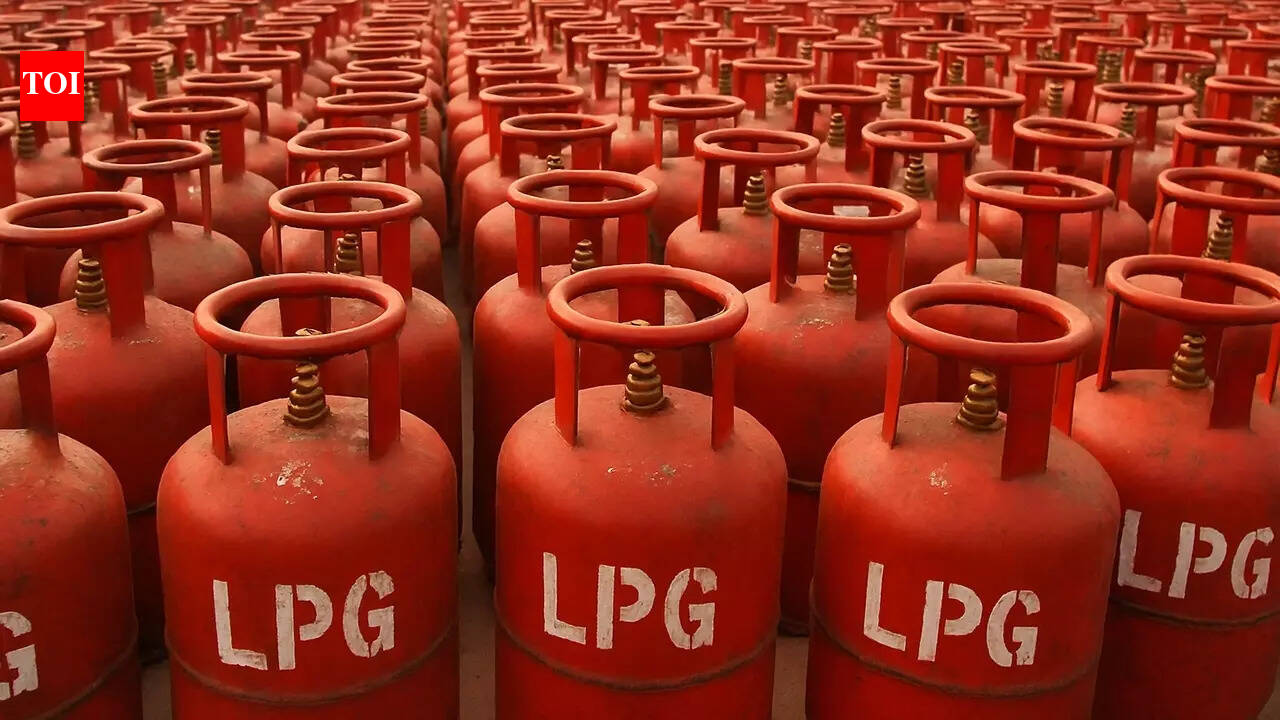
No fuel shortage: Govt assures 100% domestic LPG, PNG, CNG supply amid Hormuz energy crunch – The Times of India