

Fashion
Hugo Boss joins Brands at M&S, retailer partners with Circulose on sustainability


Published
November 13, 2025
M&S continues to expand its ‘Brands at M&S’ portfolio and Hugo Boss is the latest big name to sign up, starting with a collection of men’s premium underwear, loungewear, vests and tees.
The retailer’s research shows that male shoppers across all age groups rank ‘a wide range of brands’ among their top priorities when shopping, “with this factor particularly important for the 18-34 and 35-54 cohorts – key demographics for M&S”.
Stephanie Macleod, head of category for Third Party Brands at the business, said Hugo Boss’s arrival and generally growing portfolio “complements our strong own-brand proposition and reinforces our ambition to make M&S more relevant, more often”.
It also supports M&S’s deeper focus on menswear and the category’s director at the retailer, Mitch Hughes, added: “We’re serious about growing menswear and being the go-to destination for men with a stylish, relevant and reliable offer. Having a credible branded offer alongside a confident own-brand proposition is central to our strategy to deliver choice and style, quality & value in one trusted destination.”
In August, the company launched M&S Man – a channel dedicated to men’s style. That came on the back of social media now being the number one influence on men aged 18-34 when buying clothing and footwear and over 60% of all male consumers prefer to browse and shop online.
M&S is the market-leader in men’s underwear with one in five men purchasing their underwear from it. Other brands on the platform include Calvin Klein and Tommy Hilfiger, that offer underwear and loungewear.
Meanwhile, Swedish sustain-tech company Circulose has announced a partnership with M&S, which becomes the first UK brand to join it as a Scaling Partner.
The retailer will integrate a significant volume of Circulose into its collections, “helping drive broader adoption of next-generation circular materials across the industry”.
Circulose is made entirely from textile waste and its use helps fashion brands reduce their dependence on virgin fibres derived from trees. It also helps reduce emissions.
Katharine Beacham, head of materials and Sustainability at M&S, said: “Partnering with Circulose allows us to put the concept of circular design into action and will be an example of how the industry can move from small-scale pilots to incorporating next-generation materials at a greater scale. By integrating circular materials into our sourcing strategy, we will be… helping to build a fashion industry that’s fit for the future.”
Copyright © 2025 FashionNetwork.com All rights reserved.







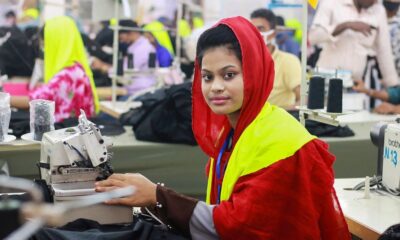



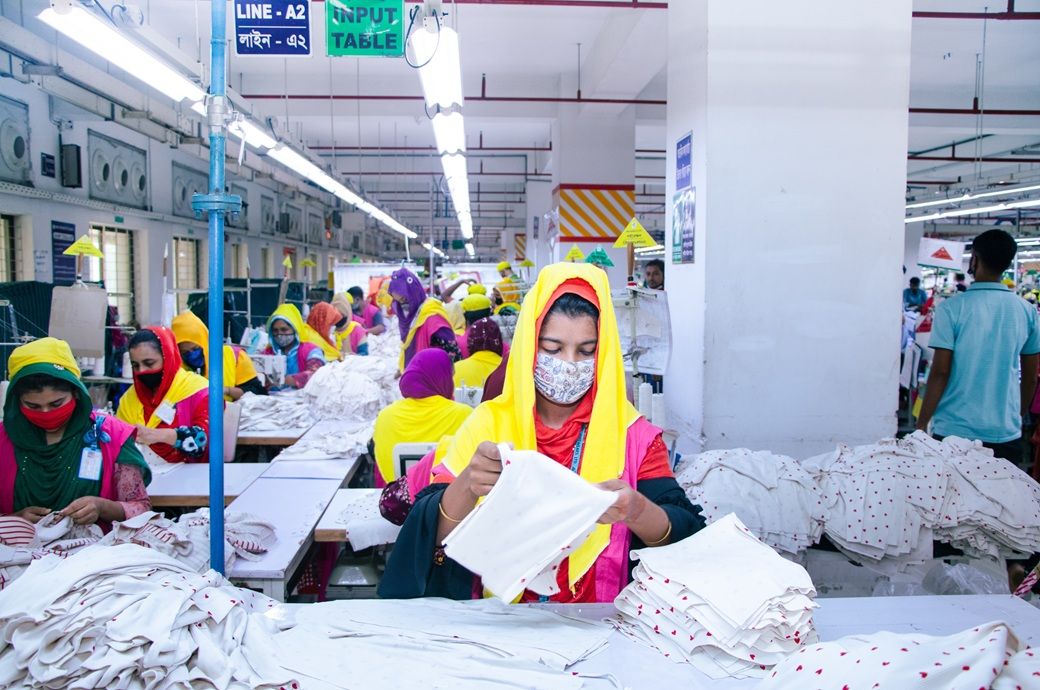
Foreseeing a ‘cautiously moderate’ near-term outlook for the RMG industry, Bangladesh Bank (BB) projected a combination of external demand uncertainty and emerging opportunities in key export markets.
Bangladesh’s RMG exports performance in the next few quarters will depend on the pace of economic recovery in major buying nations, stabilisation of global supply chains and the sector’s ability to diversify products and markets, the central bank noted.
Foreseeing a ‘cautiously moderate’ near-term outlook for the sector, it projected external demand uncertainty and emerging opportunities in key markets.
“Strengthening logistics, enhancing productivity and expanding into higher value apparel segments might be critical for maintaining the competitiveness of Bangladesh in the global garment market,” the bank’s ‘Quarterly Review of Readymade Garments (RMG): October-December of FY26’ noted.
The sector continued to occupy the dominant share in the country’s export basket, accounting for 80.36 per cent of total export earnings during the October-December period of fiscal 2025-26 (FY26).
Amid continuing demand uncertainty globally, the sector contracted during the quarter, with earnings reaching $9.74 billion, a 5.99 per cent year-on-year (YoY) decline.
Global demand conditions, inflationary pressures in importing countries, shifts in consumer spending patterns and supply chain adjustments continue to influence order volumes and export receipts, the bank observed.
In addition, production costs, exchange rate movements, and logistical conditions play a considerable role in shaping the competitiveness of Bangladesh’s garment exports.
These show a large and resilient industry providing the bulk of export earnings and employment facing growing short-term headwinds as it moves into the rest of FY26, the bank added.
Fibre2Fashion News Desk (DS)
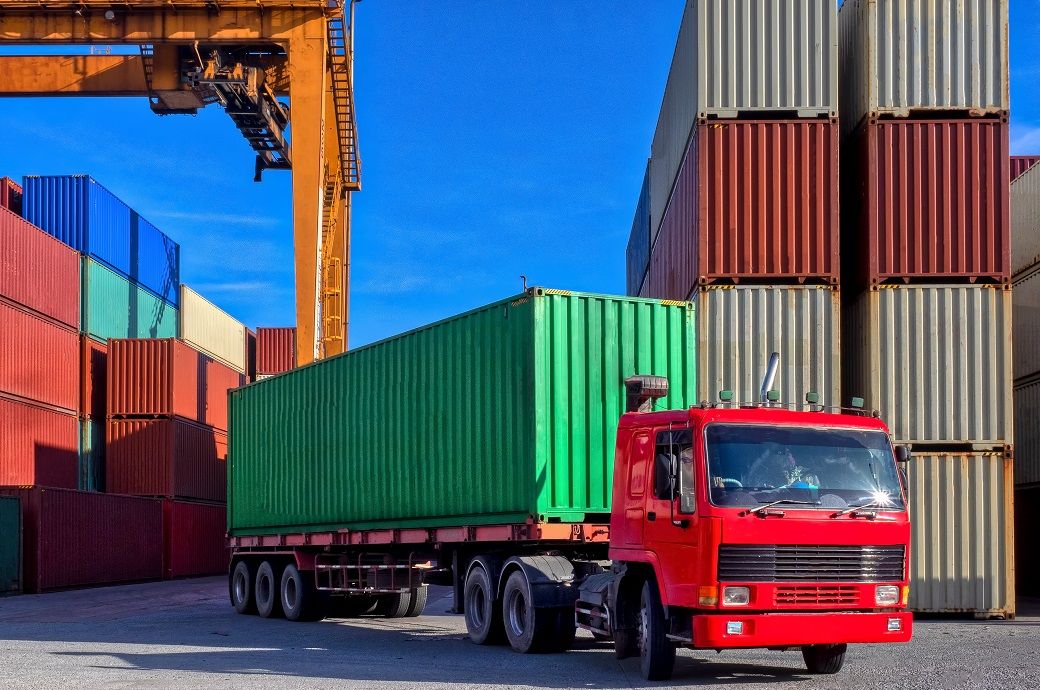
Rates on Asia–Europe trades have remained relatively stable despite ongoing tensions in the Middle East. Spot rates on Shanghai–Genoa inched up 2 per cent to $3,529 per 40ft container, while Shanghai–Rotterdam stayed unchanged at $2,543 per 40ft container. According to Drewry’s Container Capacity Insight, only 4 blank sailings have been announced for next week on the Asia–Europe trade, suggesting stable capacity. Meanwhile, Drewry expects spot rates to increase in the coming weeks as higher bunker fuel costs prompt carriers to implement emergency bunker fuel surcharges.
The Drewry WCI rose marginally to $2,287 per FEU, marking a fifth weekly gain, though overall freight trends remain stable across key routes.
Asia–Europe and Transpacific lanes saw limited movement, while bunker fuel surcharges may push rates higher.
Middle East-linked routes show sharper spikes, but disruption remains contained versus COVID-19 peaks.
On the Transpacific route, spot rates from Shanghai to New York increased 1 per cent to $3,434 per 40ft container, while those to Los Angeles decreased 1 per cent to $2,663. Maersk is seeking US regulatory approval to waive the 30-day notice period and introduce an emergency bunker surcharge, citing elevated and volatile fuel costs amid Middle East tensions. The proposed surcharge is $200 per Twenty-foot Equivalent Unit (TEU) for head-haul and $100 per TEU for backhaul dry shipments. With carriers continuing to push for rate increases, Drewry expects spot rates to increase further in the coming weeks.
Rates from New York to Rotterdam increased 3 per cent to $1,001 per FEU, while Rotterdam-New York increased 2 per cent to $1,579 per FEU. Rotterdam-Shanghai rose 2 per cent to $605 per FEU, and Los Angeles–Shanghai grew 2 per cent to $742 per 40-foot container.
Ongoing disruptions in the Strait of Hormuz, a key route for nearly 20 per cent of global oil, have tightened bunker fuel availability and pushed prices higher. In Asia, fuel supplies in key hubs like Singapore and China are starting to tighten, prompting carriers to adopt operational measures such as slow steaming, alternative refuelling strategies and emergency fuel surcharges to manage costs. These measures are expected to keep freight rates elevated in the short term.
A recent analysis by Drewry suggests not to panic as freight rates have surged amid the Middle East conflict but the situation remains relatively contained compared to the COVID-era spike. Capacity has largely held steady across most global routes, barring disruptions in Gulf-linked lanes, helping prevent extreme volatility. However, routes connected to the Middle East are witnessing sharper fluctuations, with elevated bunker surcharges adding to cost pressures.
Drewry data indicated that freight rate increases vary sharply by route. On non-Middle East routes, spot rates rose a relatively moderate 16 per cent between February and March 2026, far below the 35 per cent spikes seen during the COVID-19 peak. However, Middle East-linked routes have seen far steeper increases, with some lanes surging by as much as 316 per cent in March, alongside earlier gains of nearly 49 per cent. This divergence highlights a concentrated disruption, with bunker surcharges and route-specific risks significantly inflating logistics costs for affected trade corridors.
Fibre2Fashion News Desk (KUL)

The West Asia conflict has triggered a multi-layer disruption across India’s textile value chain, with sharp input cost inflation, logistics shocks, and production cuts converging simultaneously.
As demand weakens and margins tighten, the sector faces a critical inflection, with April likely to set the tone for sustained operational and export challenges.
Source link


The Trajectory of the Artemis II Moon Mission Is a Feat of Engineering

Netflix renews ‘Love on the Spectrum’ for season 5

China moves to regulate digital humans, bans addictive services for children

-

 Entertainment1 week ago
Lee Sang-bo dies at 45: Funeral details revealed
-

 Sports1 week ago
Illinois defense gets tough, ousts Houston to reach Elite Eight
-

 Sports6 days ago
USMNT handed reality check by Doku, Belgium ahead of World Cup
-

 Sports6 days ago
2026 NCAA men’s hockey tournament: Schedule, results
-
 Business1 week ago
How do you spot a fake online review?
-

 Fashion1 week ago
China rolls out tariff cuts on Congo imports from April 1
-

 Fashion1 week ago
EU apparel imports slump 15.48% YoY in Jan; Bangladesh hardest hit
-

 Sports6 days ago
Man City show why they are worthy WSL title winners as tired United wilt