

Business
Second US crude oil cargo arrives | The Express Tribune


Private sector-led initiative strengthens energy infrastructure, signals renewed investment under SIFC reforms
ISLAMABAD:
The second US crude cargo has landed in Pakistan, opening a new area of cooperation between Pakistan and the United States (US).
Pakistan has traditionally imported oil from the Middle East, with Saudi Arabia being the largest crude oil exporter to the country. The arrival of the second US crude oil cargo at Cnergyico’s Single Point Mooring (SPM) marks another milestone in Pakistan’s energy and industrial journey.
Commissioned in 2012 with an investment of $120 million, the SPM was an ambitious project that initially faced scepticism from many industry observers, particularly within the public sector. Since its commissioning, over 150 million barrels of crude oil have been imported through Cnergyico’s SPM. It remains Pakistan’s only facility capable of receiving large vessels such as Suezmax and VLCC tankers.
The second ship carrying US crude oil was berthed at the SPM on Wednesday.
When the United States imposed global tariffs, Pakistan faced a pressing challenge of a trade imbalance exceeding $3 billion. The government sought to address this by boosting exports and exploring opportunities for energy imports. While the US administration extended relatively low tariff rates for Pakistan, the burden to balance trade still fell largely on the private sector.
Pakistani exporters responded by expanding market reach, while energy imports, an essential component of trade realignment, were spearheaded by private enterprises.
“Cnergyico’s initiative to independently import US crude oil is a case in point, demonstrating that national resilience often begins with private enterprise rather than bureaucracy,” industry officials say.
In recent years, Pakistan’s refining industry has faced uncertainty, particularly around the brownfield refinery policy. This policy vacuum created operational and investment hurdles for local refineries. The establishment of the Special Investment Facilitation Council (SIFC) changed that dynamic by introducing coordination, policy clarity, and a focus on removing bureaucratic bottlenecks.
Recognising refineries as strategic national assets, the SIFC, along with the current Minister for Petroleum, took concrete steps to stabilise and support the sector. This proactive approach has been critical, especially amid regional tensions and shifting global energy dynamics.
The refinery upgrade initiative will not only save foreign exchange but also bring investment of over $6 billion into the sector.
“From Cnergyico’s SPM to exporters, manufacturers, and IT firms, private enterprises are expanding capacity, replacing imports, and earning foreign exchange despite institutions like the FBR and other regulators treating them with hostility,” said an industry official. “Despite challenges, the private sector remains the true engine of national progress.”







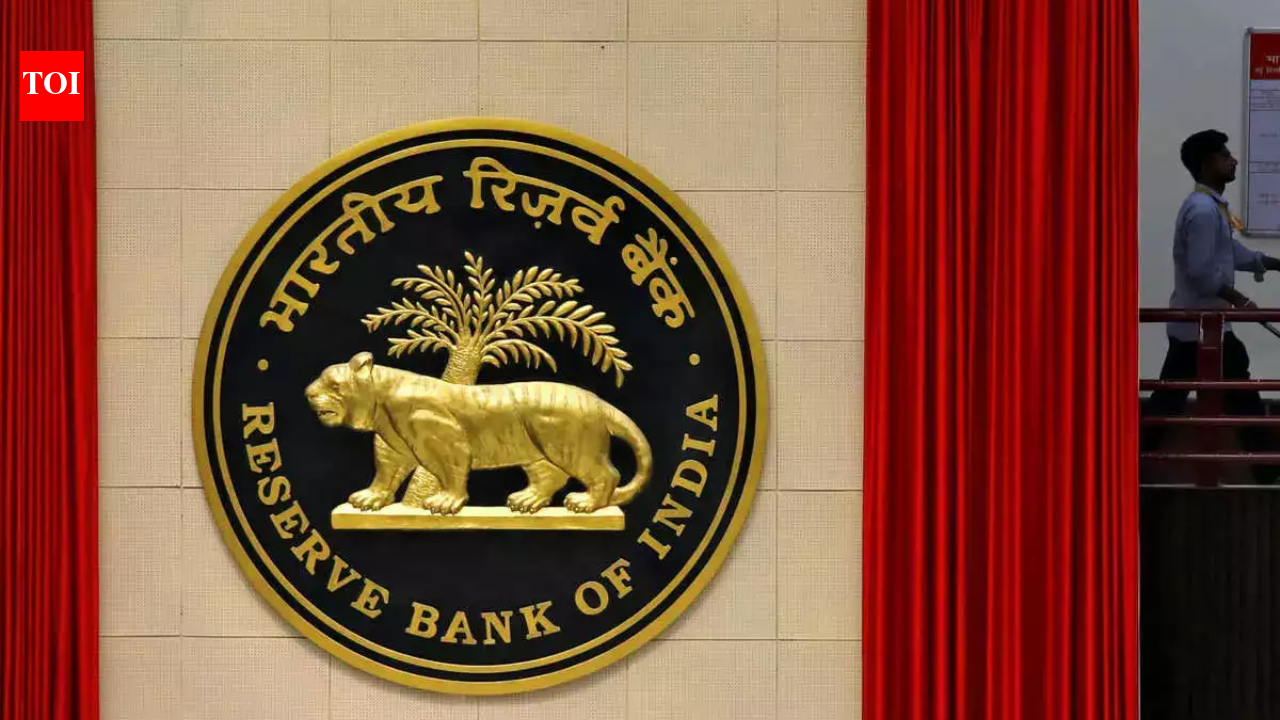
The Reserve Bank of India (RBI) on Monday decided against activating the countercyclical capital buffer (CCyB), indicating that current financial and credit conditions do not warrant an additional capital requirement for banks, PTI reported.The central bank said the decision followed a review and empirical assessment of indicators used under the CCyB framework.“Based on review and empirical analysis of CCyB indicators, it has been decided that it is not necessary to activate CCyB at this point in time,” RBI said in a statement.Under the RBI (Commercial Banks – Prudential Norms on Capital Adequacy) Directions, 2025, the CCyB framework is activated when financial conditions indicate rising systemic risks linked to excessive credit growth.The framework primarily relies on the credit-to-GDP gap as a key indicator, along with supplementary metrics.According to the RBI, the CCyB mechanism is intended to serve two broad objectives.Firstly, it requires a bank to build up a buffer of capital in good times, which may be used to maintain the flow of credit to the real sector in difficult times.Secondly, it achieves the broader macro-prudential goal of restricting the banking sector from indiscriminate lending in the periods of excess credit growth that have often been associated with the building up of system-wide risk.The framework was introduced globally after the 2008 financial crisis as part of measures proposed by the Group of Central Bank Governors and Heads of Supervision (GHOS) under the Basel framework to strengthen financial system resilience.

The company has announced plans to build seven new models in Europe including a small electric hatchback.
Source link
“Today’s policymaking is constrained by a more volatile external environment with more frequent and overlapping shocks, a rising public interest bill, in part reflecting market concerns with countries’ elevated debt, and the long-standing challenge of weak productivity growth,” he said.


Two Americans arrested at Japanese zoo

Turkiye’s current account deficit expected to widen in 2026: Minister

UK’s clothing imports fall 3% in Q1, sharply lower than Q4 2025

-

 Entertainment6 days ago
Conan O’Brien hat tricks as Oscar host
-

 Tech1 week ago
Could Contact-Tracing Apps Help With the Hantavirus? Not Really
-

 Fashion5 days ago
Italy’s Zegna Group’s Q1 growth boosted by strong organic performance
-

 Sports1 week ago
Bobby Cox, legendary Atlanta Braves manager who led 1995 World Series champions, dead at 84
-

 Entertainment1 week ago
Martin Short: Facing tragedy with joy
-

 Entertainment1 week ago
Tom Brady gets back at Kevin Hart during Netflix roast
-

 Sports1 week ago
Jacob Fatu unleashes vicious assault on Roman Reigns after World Heavyweight Championship loss at WWE Backlash
-

 Entertainment1 week ago
Martha Stewart: How to make an omelet