

Business
RDA inflows rise by $205m to $11.3b | The Express Tribune

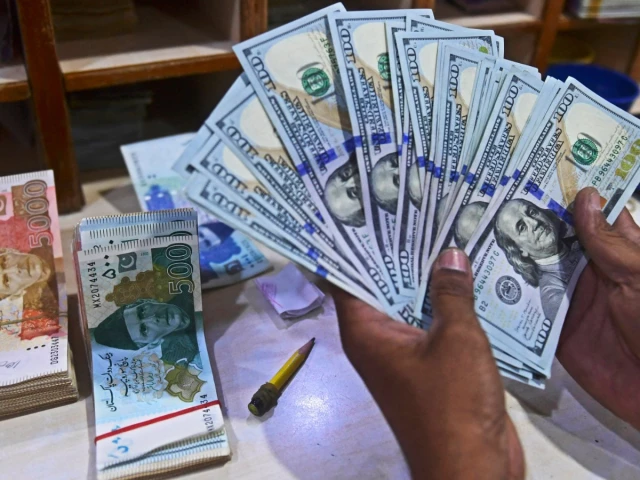
SBP raises Rs493b in T-bills auction drawing heavy participation; gold softens; rupee firm
KARACHI:
Pakistan received gross inflows of $205 million under the Roshan Digital Account (RDA) scheme in October 2025, taking the cumulative funds received since its launch in September 2020 to a robust $11.313 billion, according to latest statistics from the State Bank of Pakistan (SBP).
The investment of $205 million in October marked an improvement compared to the six-month average of $189 million and the long-term average of $182 million since the programme’s launch, according to Topline Research. Meanwhile, net inflows – representing gross inflows minus repatriated funds – stood at $180 million during the month, also higher than the six-month average of $165 million and the overall average of $152 million since inception, reflecting sustained confidence of overseas Pakistanis in the scheme.
Furthermore, the SBP conducted a Treasury Bill (T-bill) auction, raising Rs493 billion against the target of Rs550 billion, which indicated robust investor appetite despite a slight shortfall in acceptance. Bids totalled Rs1,562 billion across different tenures, underscoring sustained liquidity in the market.
In the three-month segment, the auction drew Rs347 billion in bids against a Rs150 billion target, with Rs318 billion accepted at a cut-off yield of 11.04% – marginally lower than the secondary market’s close at 11.05% in the previous session. One-month bills mirrored a similar trend, where Rs112 billion was accepted out of total bids of Rs791 billion at 10.99%, a one-basis-point dip from last week’s levels. However, the six-month paper saw lighter acceptance, with only Rs15 billion raised from bids of Rs357 billion at 11.05%, flat when compared with secondary market yields.
Weighted average yields held steady across the board – 10.97% for one-month, 11.02% for three- and six-month tenors, and an overall auction average of 11.32%.
In a parallel auction, the 10-year Pakistan Investment Bonds (PIB) Floating Rate Semi-Annual (PFL-SA) notes attracted Rs728 billion in bids against a Rs500 billion target, but only Rs55 billion was accepted at a cut-off price of 95.1, implying an effective rate of 11.75%. This represented a modest tightening of two basis points from the prior session’s 11.77%, with spreads over the benchmark narrowing to 0.85% from 0.87%.
Separately, the SBP held a buyback auction of five- and 10-year PFL bonds to manage secondary market liquidity, accepting bids worth Rs122.1 billion at cut-off prices ranging between 98.76 and 100.48, and covering maturities between September 2028 and April 2029.
The Pakistani rupee inched up against the US dollar in the inter-bank market on Wednesday, closing at 280.77, an appreciation of one paisa compared with the previous day’s rate of 280.78. Meanwhile, gold prices in Pakistan edged lower, despite a slight rise in the international market, where the yellow metal gained ahead of a US House of Representatives vote to reopen the government, a move that could restart the flow of key economic data and pave the way for a possible Federal Reserve rate cut in December.
According to data released by the All-Pakistan Gems and Jewellers Sarafa Association (APGJSA), the price of gold fell by Rs1,000 per tola, bringing it down to Rs434,762, while the 10-gram rate dropped by Rs857 to Rs372,738. In contrast, silver prices increased by Rs81, reaching Rs5,434 per tola.
Commenting on international price movements, Adnan Agar, Director at Interactive Commodities, noted that gold had broken its upper resistance level. “Gold has moved to the upside. It broke the $4,155 resistance and was trading around $4,170 at its high. The $4,100 level has formed a strong support over the last two days. If this holds, there’s a chance prices could reach $4,200 to $4,220,” he said, adding that the reopening of the US government would bring back critical data releases that could influence next direction of the gold market.






The Reserve Bank of India (RBI) on Monday decided against activating the countercyclical capital buffer (CCyB), indicating that current financial and credit conditions do not warrant an additional capital requirement for banks, PTI reported.The central bank said the decision followed a review and empirical assessment of indicators used under the CCyB framework.“Based on review and empirical analysis of CCyB indicators, it has been decided that it is not necessary to activate CCyB at this point in time,” RBI said in a statement.Under the RBI (Commercial Banks – Prudential Norms on Capital Adequacy) Directions, 2025, the CCyB framework is activated when financial conditions indicate rising systemic risks linked to excessive credit growth.The framework primarily relies on the credit-to-GDP gap as a key indicator, along with supplementary metrics.According to the RBI, the CCyB mechanism is intended to serve two broad objectives.Firstly, it requires a bank to build up a buffer of capital in good times, which may be used to maintain the flow of credit to the real sector in difficult times.Secondly, it achieves the broader macro-prudential goal of restricting the banking sector from indiscriminate lending in the periods of excess credit growth that have often been associated with the building up of system-wide risk.The framework was introduced globally after the 2008 financial crisis as part of measures proposed by the Group of Central Bank Governors and Heads of Supervision (GHOS) under the Basel framework to strengthen financial system resilience.
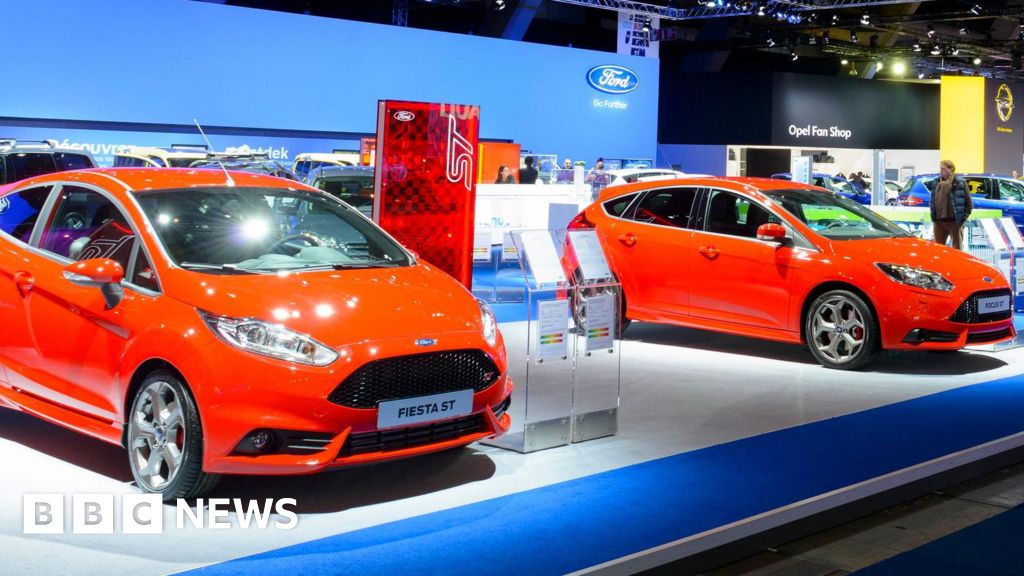
The company has announced plans to build seven new models in Europe including a small electric hatchback.
Source link

“Today’s policymaking is constrained by a more volatile external environment with more frequent and overlapping shocks, a rising public interest bill, in part reflecting market concerns with countries’ elevated debt, and the long-standing challenge of weak productivity growth,” he said.


Turkiye’s current account deficit expected to widen in 2026: Minister

UK’s clothing imports fall 3% in Q1, sharply lower than Q4 2025
RBI sees no signs of excess credit risk, keeps countercyclical capital buffer inactive

-

 Entertainment6 days ago
Conan O’Brien hat tricks as Oscar host
-

 Tech1 week ago
Could Contact-Tracing Apps Help With the Hantavirus? Not Really
-

 Fashion5 days ago
Italy’s Zegna Group’s Q1 growth boosted by strong organic performance
-

 Sports1 week ago
Bobby Cox, legendary Atlanta Braves manager who led 1995 World Series champions, dead at 84
-

 Entertainment1 week ago
Martin Short: Facing tragedy with joy
-

 Entertainment1 week ago
Tom Brady gets back at Kevin Hart during Netflix roast
-

 Sports1 week ago
Jacob Fatu unleashes vicious assault on Roman Reigns after World Heavyweight Championship loss at WWE Backlash
-

 Entertainment1 week ago
Martha Stewart: How to make an omelet