

Business
Sheffield breakfast club for parents helps with high cost of food


Lucy AshtonSouth Yorkshire political reporter
 BBC
BBCDawn Hayes is cooking sausages and hash browns in the kitchen of Shirecliffe Community Centre in Sheffield.
She is helping out at an adult breakfast club where parents and grandparents who have children at the adjoining Meadows nursery can have a hot meal for £1.
“It stops a lot of people going home and being lonely and it makes sure single parents get a meal,” she says.
The club is unusual in catering for adults at a time when many families are struggling with the cost of food – and parents may go without full meals to ensure their children are fed.


Ms Hayes, 47, explains: “I originally started coming to the centre when I brought my daughter to the nursery. When we looked at what people wanted within the community, we decided to set up a breakfast club.
“As parents drop off their children, we decided they needed somewhere to go rather than just going straight home.”
She has been the cook since it began and says it was set up to provide both food and company.
“It stops a lot of people from going home and just being alone. There are a lot of single parents around here and as a single parent, you often don’t get time to eat for yourself as you get up, get the kids ready and give them breakfast.
“We’re a bit of a social activity but we also make sure parents are eating as well.”
Parents can have a breakfast butty, along with hot drinks and cereal. A nearby Tesco store donates tea and coffee but the club does not receive any grants. It relies on occasional community events for fundraising and on the £1 contributions.
Many schools and nurseries now operate breakfast clubs for pupils, often with sponsorship from the major supermarket chains and brands.
The government has also launched an “early adopter” scheme for 750 schools, which will be given funding to offer free breakfast clubs lasting 30 minutes.
Lina, 34, has three children. Her two eldest boys were born during the pandemic so she struggled to meet other parents when playgroups were closed.
“I was feeling so lonely with nobody to speak to, and trying to deal with my two little boys, but the breakfast club gave me chance to build my confidence and make friends.
“The hot meal is a bonus for everyone. When it’s Thursday, I know I’m going to have my coffee and breakfast and it’s like a treat.
“I don’t have the chance to go to cafes because of the cost and also because the kids will be crying, but I know all these people, they are my friends. We are not just a breakfast club, not even a community, we are a family now.”
Jane Clark, 61, is a grandmother now but also enjoys the club.
“I’ve got a lot of time on my hands now and I like having a chat with people, learning stuff from them and maybe them learning stuff from me,” she says, nursing a cup of tea.
“Being around children keeps you young. Happy kids, happy mums, happy grannies!”

Last Updated:
India’s Sensex and Nifty correct 6-7%, with 80% of stocks in bear territory. Monarch AIF reports 64% of stocks over Rs 1,000 crore market cap has fallen 30%.




Hundreds of midcap and smallcap companies have quietly lost significant value.
India’s benchmark indices may not show it, but a large part of the market is already in deep correction. According to a report by Monarch AIF, while the Sensex and Nifty have corrected only about 6-7 per cent from their record highs, nearly 80 per cent of listed stocks are already in bear market territory.
The data highlights a sharp divergence between headline indices and the broader market.
Majority of Stocks Deep In Correction
The report analysed companies with a market capitalisation above Rs 1,000 crore.
It found that over 64 per cent of these stocks have fallen more than 30 per cent from their all-time highs. Nearly 78 per cent have declined over 20 per cent.
In simple terms, most stocks in the market have already seen a brutal correction even though benchmark indices remain relatively elevated.
This unusual divergence has been playing out for the past 18 months.
Why Indices Are Still Holding Up
According to the report, Indian markets are witnessing a rare phase of simultaneous time and value correction.
A narrow set of large-cap stocks has kept the benchmark indices elevated. Meanwhile, hundreds of midcap and smallcap companies have quietly lost significant value.
This has created a misleading picture where the indices appear stable but the broader market has been under sustained pressure.
Now A New Shock: Middle East War
The situation has become more complicated after the recent escalation in West Asia.
Following US-Israel strikes on Iran, global markets have turned volatile and crude oil prices have surged.
Amid these developments, the Sensex recently fell over 1,000 points, while the Nifty slipped below the 24,900 level.
For investors, the challenge is that a market already weakened by months of selling is now facing geopolitical risks and a potential oil shock.
Should Investors Buy Or Wait?
Aakash Shah, Technical Research Analyst at Choice Equity Broking, advised caution. “Amid persistent global uncertainties and elevated volatility, market participants are advised to maintain discipline and adopt a selective approach, focusing on fundamentally strong stocks during corrective phases. Fresh long positions should ideally be considered only after a decisive and sustained breakout above the 25,000 mark on the Nifty, which would signal improving sentiment and confirm the development of a stronger bullish structure,” he said.
Key Risk For India: Rising Oil
V K Vijayakumar, chief investment strategist at Geojit Investments, said the biggest concern for India is rising crude prices.
“With the war escalating and crude rising, markets are going into a period of heightened uncertainty. Nobody knows how long this conflict will go on and what will be the extent of the havoc it could wreck. From the perspective of India, which relies on imports for around 85% of her oil requirements, the real concern is the potential inflation and its consequences on economic growth. From the market perspective, the impact of potentially widening trade deficit, depreciating currency, higher inflation and perhaps lower growth is the real issue. If this fear materialises, corporate earnings will be impacted,” he said.
However, he added that the impact may be temporary if the conflict ends quickly.
“If it ends in, say 3 to 4 weeks, things will be back to normal,” he said.
Don’t Panic, Use Corrections
Despite the volatility, Vijayakumar advised investors not to panic. “Experience tells us that panicking and getting out of the market during uncertain times like these is not the right thing to do. Markets have an uncanny ability to surprise and climb all walls of worries,” he said.
According to him, investors with a long investment horizon and higher risk appetite can gradually accumulate quality stocks during corrections.
He added that sectors such as banking, pharmaceuticals, automobiles and defence may offer attractive long-term opportunities.
 Click here to add News18 as your preferred news source on Google.
Follow News18 on Google. Join the fun, play games on News18. Stay updated with all the latest business news, including market trends, stock updates, tax, IPO, banking finance, real estate, savings and investments. To Get in-depth analysis, expert opinions, and real-time updates. Also Download the News18 App to stay updated.
March 04, 2026, 13:39 IST
Read More
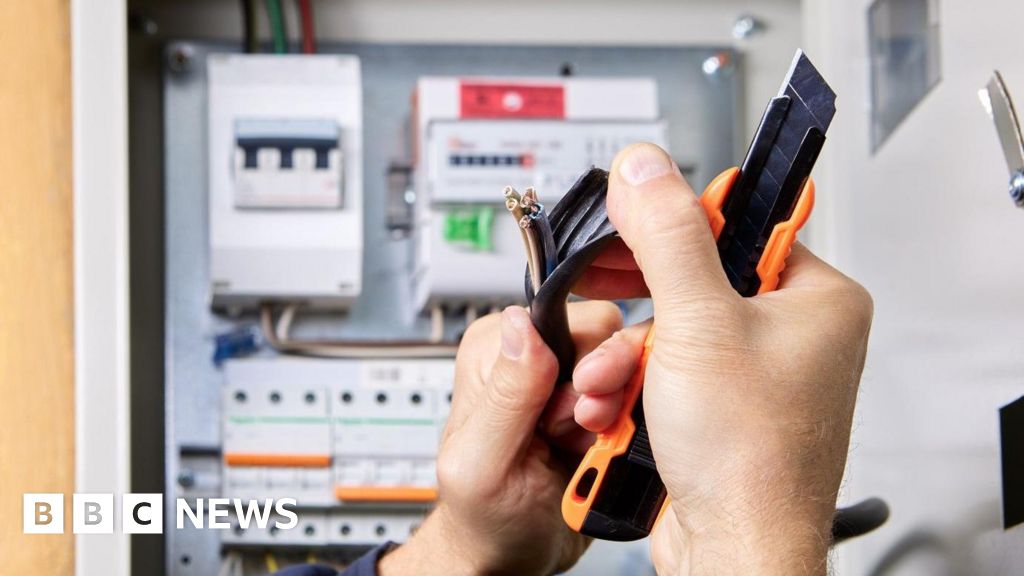
A BBC investigation speaks to electricians and families setting up illegal meter bypasses to steal power.
Source link
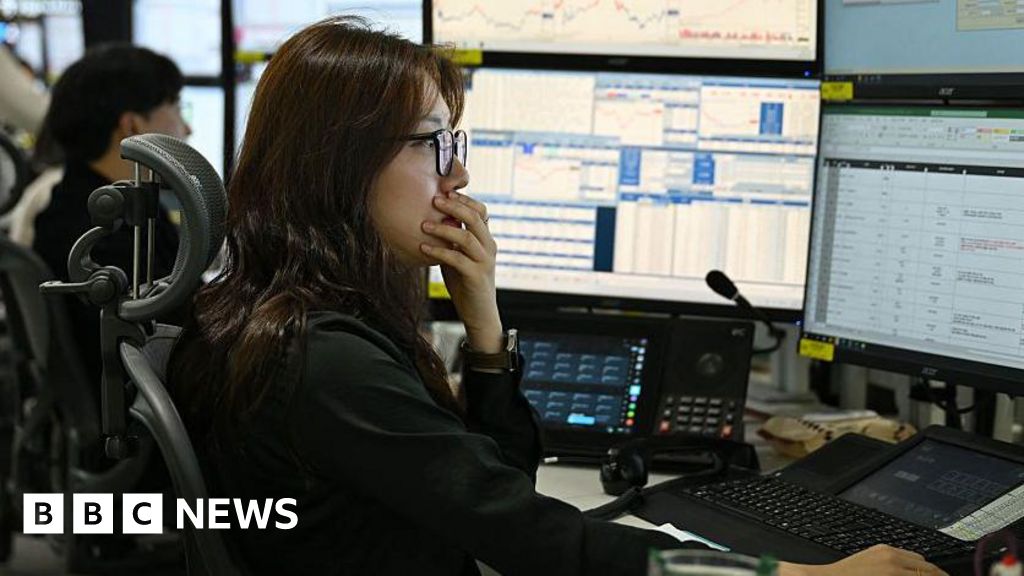
The conflict in the Middle East has rattled financial markets and global energy prices have soared.
Source link


Transfer rumors, news: Man Utd, Chelsea, Liverpool eye USMNT star Adams
80% Stocks Already In Bear Market; Should You Buy The Dip Or Run For Safety?
‘I fiddled the meter for a mate – and the shop burnt down’

-
 Business1 week ago
Households set for lower energy bills amid price cap shake-up
-
 Politics6 days ago
What are Iran’s ballistic missile capabilities?
-

 Politics6 days ago
US arrests ex-Air Force pilot for ‘training’ Chinese military
-

 Sports1 week ago
Top 50 USMNT players of 2026, ranked by club form: USMNT Player Performance Index returns
-
 Business6 days ago
Attock Cement’s acquisition approved | The Express Tribune
-

 Fashion6 days ago
Policy easing drives Argentina’s garment import surge in 2025
-

 Sports6 days ago
Sri Lanka’s Shanaka says constant criticism has affected players’ mental health
-
 Business1 week ago
Lucid widely misses earnings expectations, forecasts continued EV growth in 2026