

Business
80% Stocks Already In Bear Market; Should You Buy The Dip Or Run For Safety?


Last Updated:
India’s Sensex and Nifty correct 6-7%, with 80% of stocks in bear territory. Monarch AIF reports 64% of stocks over Rs 1,000 crore market cap has fallen 30%.




Hundreds of midcap and smallcap companies have quietly lost significant value.
India’s benchmark indices may not show it, but a large part of the market is already in deep correction. According to a report by Monarch AIF, while the Sensex and Nifty have corrected only about 6-7 per cent from their record highs, nearly 80 per cent of listed stocks are already in bear market territory.
The data highlights a sharp divergence between headline indices and the broader market.
Majority of Stocks Deep In Correction
The report analysed companies with a market capitalisation above Rs 1,000 crore.
It found that over 64 per cent of these stocks have fallen more than 30 per cent from their all-time highs. Nearly 78 per cent have declined over 20 per cent.
In simple terms, most stocks in the market have already seen a brutal correction even though benchmark indices remain relatively elevated.
This unusual divergence has been playing out for the past 18 months.
Why Indices Are Still Holding Up
According to the report, Indian markets are witnessing a rare phase of simultaneous time and value correction.
A narrow set of large-cap stocks has kept the benchmark indices elevated. Meanwhile, hundreds of midcap and smallcap companies have quietly lost significant value.
This has created a misleading picture where the indices appear stable but the broader market has been under sustained pressure.
Now A New Shock: Middle East War
The situation has become more complicated after the recent escalation in West Asia.
Following US-Israel strikes on Iran, global markets have turned volatile and crude oil prices have surged.
Amid these developments, the Sensex recently fell over 1,000 points, while the Nifty slipped below the 24,900 level.
For investors, the challenge is that a market already weakened by months of selling is now facing geopolitical risks and a potential oil shock.
Should Investors Buy Or Wait?
Aakash Shah, Technical Research Analyst at Choice Equity Broking, advised caution. “Amid persistent global uncertainties and elevated volatility, market participants are advised to maintain discipline and adopt a selective approach, focusing on fundamentally strong stocks during corrective phases. Fresh long positions should ideally be considered only after a decisive and sustained breakout above the 25,000 mark on the Nifty, which would signal improving sentiment and confirm the development of a stronger bullish structure,” he said.
Key Risk For India: Rising Oil
V K Vijayakumar, chief investment strategist at Geojit Investments, said the biggest concern for India is rising crude prices.
“With the war escalating and crude rising, markets are going into a period of heightened uncertainty. Nobody knows how long this conflict will go on and what will be the extent of the havoc it could wreck. From the perspective of India, which relies on imports for around 85% of her oil requirements, the real concern is the potential inflation and its consequences on economic growth. From the market perspective, the impact of potentially widening trade deficit, depreciating currency, higher inflation and perhaps lower growth is the real issue. If this fear materialises, corporate earnings will be impacted,” he said.
However, he added that the impact may be temporary if the conflict ends quickly.
“If it ends in, say 3 to 4 weeks, things will be back to normal,” he said.
Don’t Panic, Use Corrections
Despite the volatility, Vijayakumar advised investors not to panic. “Experience tells us that panicking and getting out of the market during uncertain times like these is not the right thing to do. Markets have an uncanny ability to surprise and climb all walls of worries,” he said.
According to him, investors with a long investment horizon and higher risk appetite can gradually accumulate quality stocks during corrections.
He added that sectors such as banking, pharmaceuticals, automobiles and defence may offer attractive long-term opportunities.
 Click here to add News18 as your preferred news source on Google.
Follow News18 on Google. Join the fun, play games on News18. Stay updated with all the latest business news, including market trends, stock updates, tax, IPO, banking finance, real estate, savings and investments. To Get in-depth analysis, expert opinions, and real-time updates. Also Download the News18 App to stay updated.
March 04, 2026, 13:39 IST
Read More


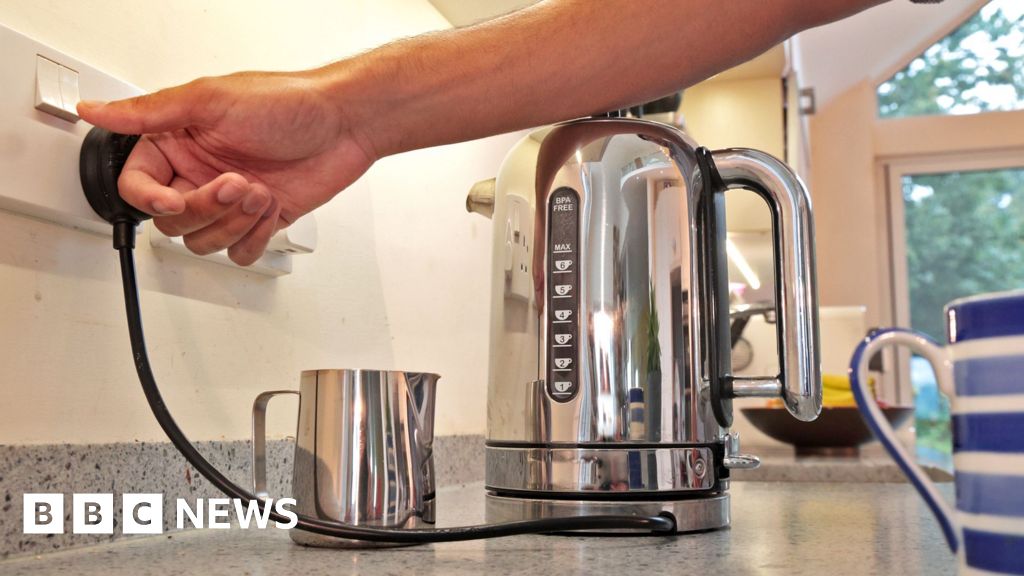
The war in the Middle East has brought renewed attention to Britain’s vulnerability to energy price shocks.
Source link
Business
Gadkari urges shift to 100% ethanol blending, flags energy security and import risks – The Times of India
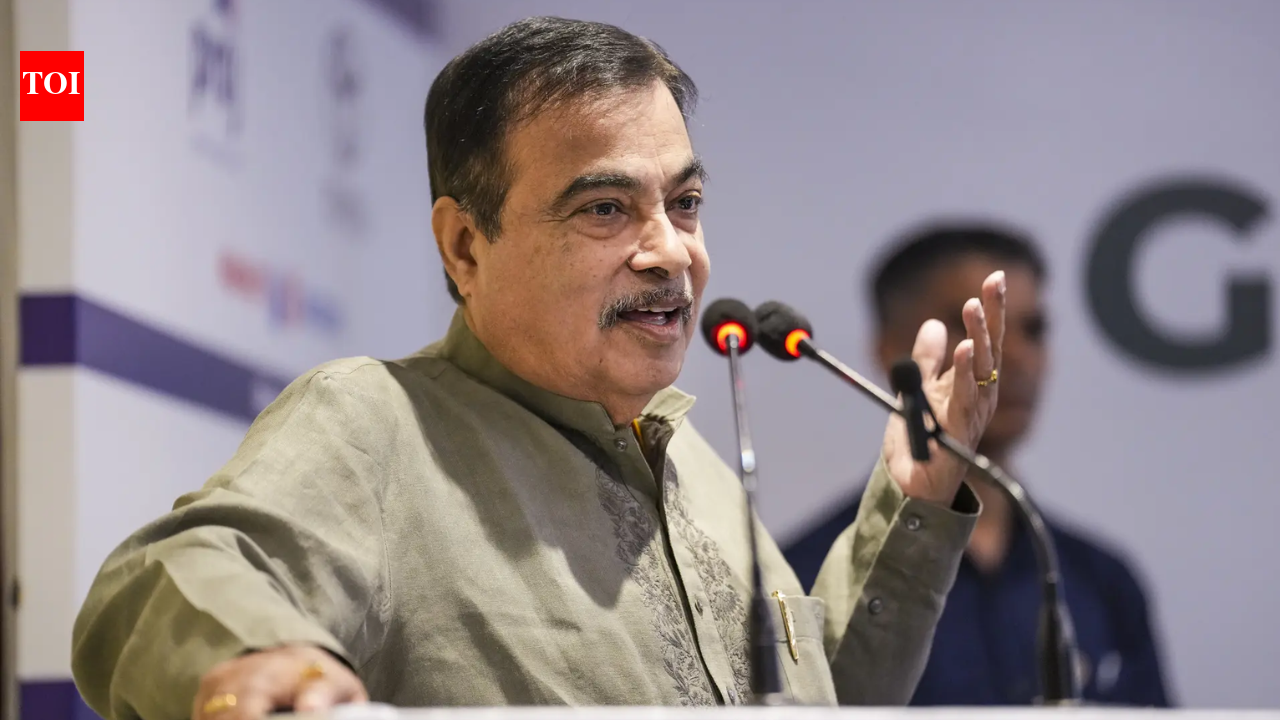
India should aim for 100 per cent ethanol blending in the near future to strengthen energy self-reliance, road transport and highways minister Nitin Gadkari said on Tuesday. He said that vulnerabilities in oil supplies due to the ongoing crisis in West Asia have made it essential for the country to reduce dependence on imports.Speaking at the Indian Federation of Green Energy’s Green Transport Conclave, Gadkari said, “In the near future, India should aspire to achieve 100 per cent ethanol blending… Today, we are facing an energy crisis due to the war in West Asia, so it is necessary for us to become self-reliant in the energy sector,” as quoted by PTI.India currently allows vehicles to run on E20 petrol, which contains 20 per cent ethanol, with minor engine modifications to avoid corrosion and related issues. In 2023, PM Modi launched petrol blended with 20 per cent ethanol. Countries such as Brazil have already achieved 100 per cent ethanol blending.Gadkari noted that India imports 87 per cent of its oil requirements, adding, “We import fossil fuels worth Rs 22 lakh crore, which is also causing pollution… so we need to work on increasing production of alternative fuel and bio-fuel.”On future energy solutions, he stressed the importance of green hydrogen but pointed out challenges in cost and transport. “Transport of hydrogen fuel is a problem. Also, we need to produce 1 kg of hydrogen at $1 dollar, to make India an exporter of energy,” he said, adding that hydrogen production from waste should be explored.The minister also emphasised the role of a circular economy in generating employment opportunities. While calling for reduced reliance on petrol and diesel vehicles, he clarified, “But we can not force people to stop buying petrol and diesel vehicles.”Addressing concerns about E20 fuel, Gadkari said the petroleum sector is lobbying against the move. He also urged automobile manufacturers to prioritise quality over cost to expand into new markets.Last year, Gadkari dismissed criticism against E20 (ethanol-blended petrol), saying a “paid” social media campaign is being run to “target me politically.” He said Society of Indian Automobile Manufacturers and Automotive Research Association of India have shared their findings on ethanol blending in petrol. He added that India’s ethanol programme has benefited farmers, noting that ethanol made from maize has helped them get better prices and led to gains of Rs 45,000 crore.

One petrol retailer says he is experiencing about five drive-offs a week at each forecourt, costing him thousands.
Source link

Electricity bills targeted in planned shakeup to energy pricing

Here’s what Jamaican legend told teen phenom?

I’ve Tested Gaming Laptops for Over a Decade. This Is What I Think You Should Buy

-

 Fashion5 days ago
France’s LVMH Q1 revenue falls 6%, shows resilience amid Iran war
-

 Sports1 week ago
The case for Man United’s Fernandes as Premier League’s best
-

 Entertainment1 week ago
Palace left in shock as Prince William cancels grand ceremony
-
 Business1 week ago
UK could adopt EU single market rules under new legislation
-

 Entertainment6 days ago
Is Claude down? Here’s why users are seeing errors
-

 Fashion1 week ago
Energy emerges as biggest cost driver in textile margins
-
 Business1 week ago
Delta Air Lines unveils first new Delta One suite in premium cabin arms race
-

 Tech6 days ago
The Deepfake Nudes Crisis in Schools Is Much Worse Than You Thought