

Business
Fiscal roadmap: Finance Commission submits report for 2026-31; formula for Centre-state tax share sent to President Murmu – The Times of India


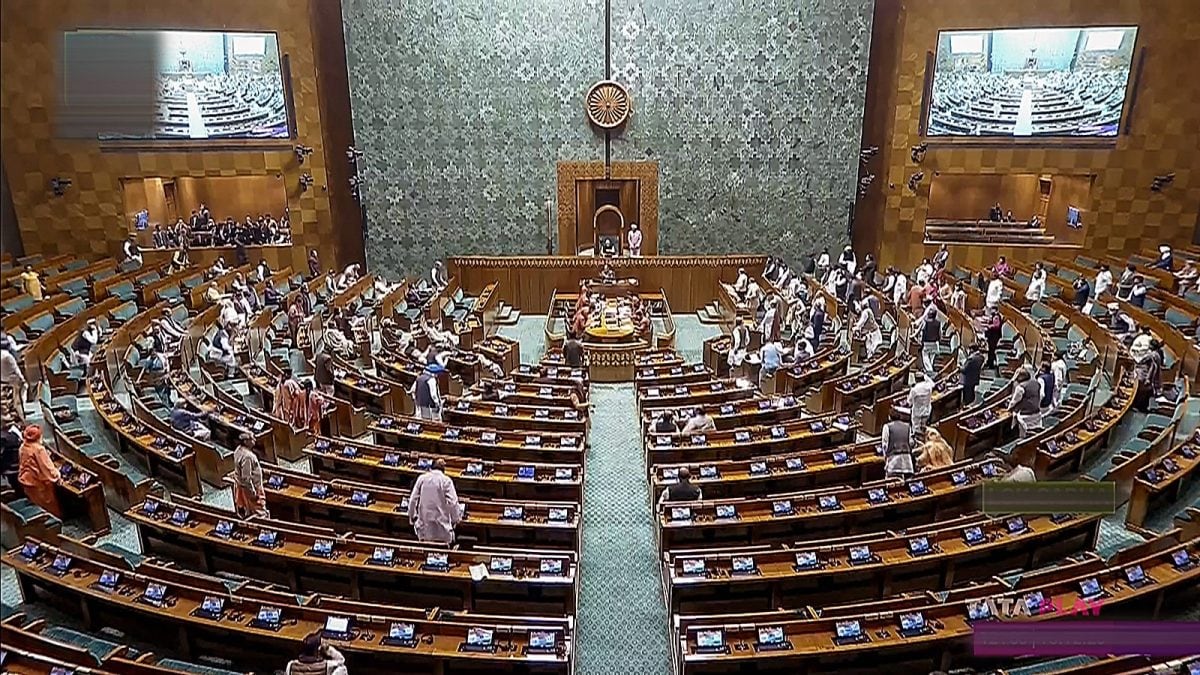
The 16th Finance Commission on Monday submitted its report for the five-year period 2026-31 to President Droupadi Murmu, marking a key step in finalising the formula that will determine how central taxes are shared with states, PTI reported.The panel, chaired by Arvind Panagariya, had been granted a one-month extension from its original October 31 deadline. “Members of the 16th Finance Commission, led by its Chairman, Dr Arvind Panagariya, called on President Droupadi Murmu and submitted the Commission’s report for 2026-31,” Rashtrapati Bhavan said in a post on X.Mandated to recommend the devolution formula and grants-in-aid beginning 2026-27, the commission travelled across all states and Union Territories before finalising its views on tax sharing, revenue augmentation and fiscal needs.
The panel includes full-time members Annie George Mathew and Manoj Panda, while SBI Group Chief Economic Advisor Soumya Kanti Ghosh and RBI Deputy Governor T. Rabi Sankar serve as part-time members.Along with tax devolution, the commission has examined the framework for financing disaster management, reviewing the funds created under the Disaster Management Act, 2005.Set up on December 31, 2023, the constitutional body succeeds the 15th Finance Commission headed by N.K. Singh, which had recommended that states receive 41% of the divisible pool between 2021-22 and 2025-26 — the same share proposed earlier by the 14th Finance Commission.According to Budget 2025-26 estimates, the Centre is expected to transfer Rs 14.22 lakh crore to states as their tax share out of a budgeted Rs 42.70 lakh crore in total tax receipts.Successive commissions have relied on weighted criteria such as population, area, income distance, demographic performance, fiscal effort and forest cover to determine state shares — an issue that has often triggered friction between the Centre and Opposition-ruled states. Southern states, in particular, have objected to population-linked weightage, arguing that it disadvantages them for achieving lower population growth.For 2021-26, the 15th Finance Commission had assigned 15% weightage to population, 15% to area, 12.5% to demographic performance, 10% to forest cover and ecology, and 2.5% to tax and fiscal effort.
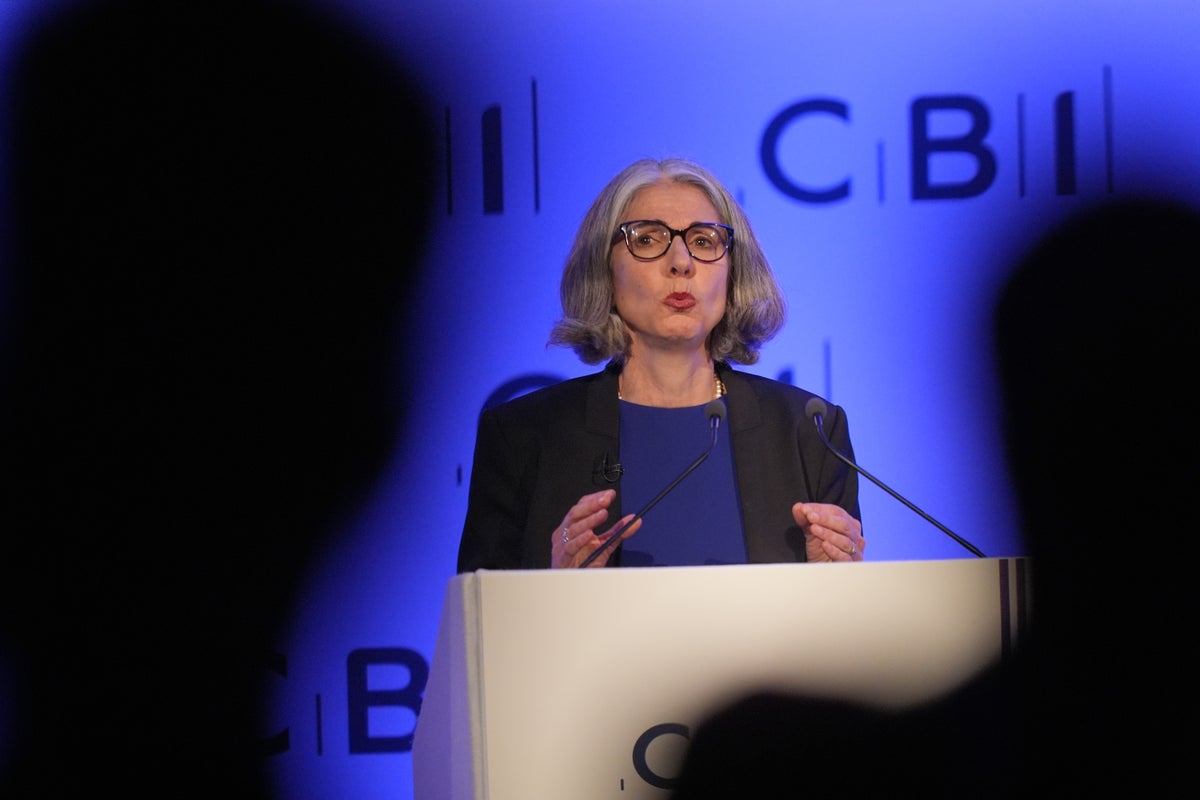
The UK must not “cut ourselves off” from trade opportunities in China despite security and business risks, the head of the Confederation for British Industry has warned.
CBI chief Rain Newton-Smith highlighted that British businesses see increased trade with Chinese firms as an opportunity to drive growth.
Her remarks came as business leaders were questioned by MPs on Parliament’s Business and Trade Select Committee regarding the UK’s economic relationship with China.
Last December, Prime Minister Sir Keir Starmer admitted China poses security threats to the UK but urged for greater business ties.
Ms Newton-Smith, chief executive of one of the UK’s largest business groups, was positive about the Government’s engagement with China.
“You can’t have a growth strategy without a strategy for China,” she said.
“China has the biggest contribution to global growth, is the third largest trading partner, and the world’s largest consumer market.
“The UK is second largest exporter of trade and services.
“We are mindful as all businesses are of security risks but it is really important that we have a strategy towards China.
“This Government has increased the economic engagement with China and including business within this does help us as a country.”
She added: “If we think about the future economy, there is a huge market in China and I think we mustn’t cut ourselves off from some of the opportunities there, even if in some areas there are difficult conversations and negotiations that need to be had.”
Peter Burnett, chief executive of the China-Britain Business Council, told the committee: “There are risks associated with technology advancement, AI, industrial development that they need to assess.
“Increasingly you will find them saying that they need to engage more in China to understand those risks and to develop some of the technologies along some of those risks themselves.”
Business
Trump says he’d be disappointed if Fed pick doesn’t cut rates; Warsh vows to be ‘independent actor’ – The Times of India
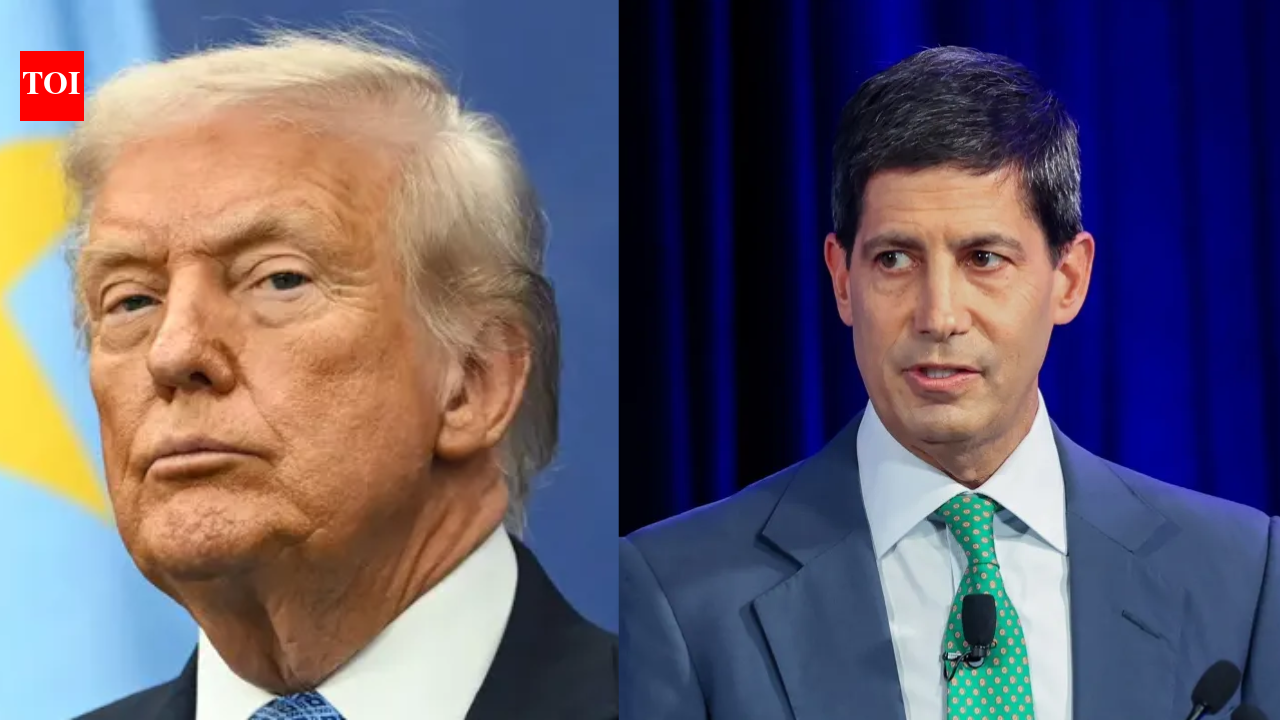
US President Donald Trump on Tuesday said he would be disappointed if his nominee for Federal Reserve chair, Kevin Warsh, does not cut interest rates right away after taking office if confirmed by the Senate. Trump, during an interview with CNBC’s “Squawk Box,” also said “we have to find out” about the construction costs of the new Federal Reserve building.Warsh, a former Federal Reserve official and financier, is currently facing Senate confirmation hearings where he has stressed his independence from political pressure.“The president never once asked me to commit to any particular interest rate decision, and nor would I agree to it if he had,” Kevin Warsh said under questioning by the Senate Banking Committee, as quoted by LA Times. “I will be an independent actor if confirmed as chair of the Federal Reserve.”Warsh told lawmakers that fighting inflation would be one of his main priorities if confirmed.“Congress tasked the Fed with the mission to ensure price stability, without excuse or equivocation, argument or anguish,” Warsh said. “Inflation is a choice, and the Fed must take responsibility for it.”The comments come as investors closely watch his confirmation hearing, with inflation remaining at 3.3% annually and global tensions, including the war in Iran pushing up gas prices, adding pressure on the economy. Higher inflation typically leads the Federal Reserve to keep interest rates steady or raise them rather than cut them, as rate changes affect mortgages, auto loans, and business borrowing.Democrats on the Senate Banking Committee accused Warsh of shifting his stance on interest rates over time, supporting higher rates under Democratic presidents and lower rates during Trump’s presidency.Warsh, if confirmed, would take over at a time when inflation pressures make it difficult for the Federal Reserve to cut rates, even as Trump continues to push for lower borrowing costs. Trump has repeatedly urged rate cuts and has long clashed with current Fed chair Jerome Powell over monetary policy. Powell has also been the subject of a Department of Justice criminal probe after refusing Trump’s requests for faster rate cuts. Trump told CNBC that he does not plan to pressure the Justice Department to end that probe.
NEW DELHI: Nestle India reported a 26% increase in net profit to Rs 1114 crore on its highest ever domestic sales of Rs 6,445 crore for the fourth quarter ended March 31, 2026, led by premiumisation, penetration and higher ad spends.“This performance was powered by double-digit volume growth, driven by over 50% increase in advertising spends, whilst delivering a healthy EBITDA margin of 26%’’, Manish Tiwary, chairman and managing director, Nestlé India said.Total sales and domestic sales for the quarter increased by 23% each, while all product groups contributed to the performance, he said.For FY26, total sales increased by nearly 15% to Rs 23,071 crore, while the net profit jumped nearly 7% year-on-year to Rs 3545 crore. The company on Tuesday also declared a final dividend of Rs 5 per equity share.The West Asia conflict is likely to have a limited impact on most packaged food companies’ Q4 performance, as it was confined to March. However, companies have flagged higher input costs driven by the rise in crude oil prices.Elaborating on the commodities outlook, he said “Edible oil prices are firm and have moved higher in line with global crude oil prices, supported by increased diversion to biodiesel’’.Meanwhile, unseasonal rains have impacted wheat production, resulting in a delayed harvest and lower quantity and quality.Commenting on coffee prices, the company said it expects prices to continue to trend lower, supported by a favourable crop in Vietnam and the forthcoming crop in Brazil.


Duke lands John Blackwell, top guard in transfer portal

Museum heist mystery ends as Romania’s 2,500-year-old Golden Helmet returns home

Ranking the Top 20 Players in the Men’s College Basketball Transfer Portal

-

 Fashion6 days ago
France’s LVMH Q1 revenue falls 6%, shows resilience amid Iran war
-

 Sports1 week ago
The case for Man United’s Fernandes as Premier League’s best
-

 Entertainment1 week ago
Palace left in shock as Prince William cancels grand ceremony
-
 Business1 week ago
UK could adopt EU single market rules under new legislation
-

 Entertainment6 days ago
Is Claude down? Here’s why users are seeing errors
-

 Fashion1 week ago
Energy emerges as biggest cost driver in textile margins
-
 Business1 week ago
Delta Air Lines unveils first new Delta One suite in premium cabin arms race
-
 Fashion1 week ago
Asia claims largest share of markets on Kearney FDI Confidence Index