Connect with us

Business

India Eyes Seafood Export Revival As EU, Russia, Australia Open Doors Amid US Tariff Shock

Published

on

India Eyes Seafood Export Revival As EU, Russia, Australia Open Doors Amid US Tariff Shock

Last Updated:

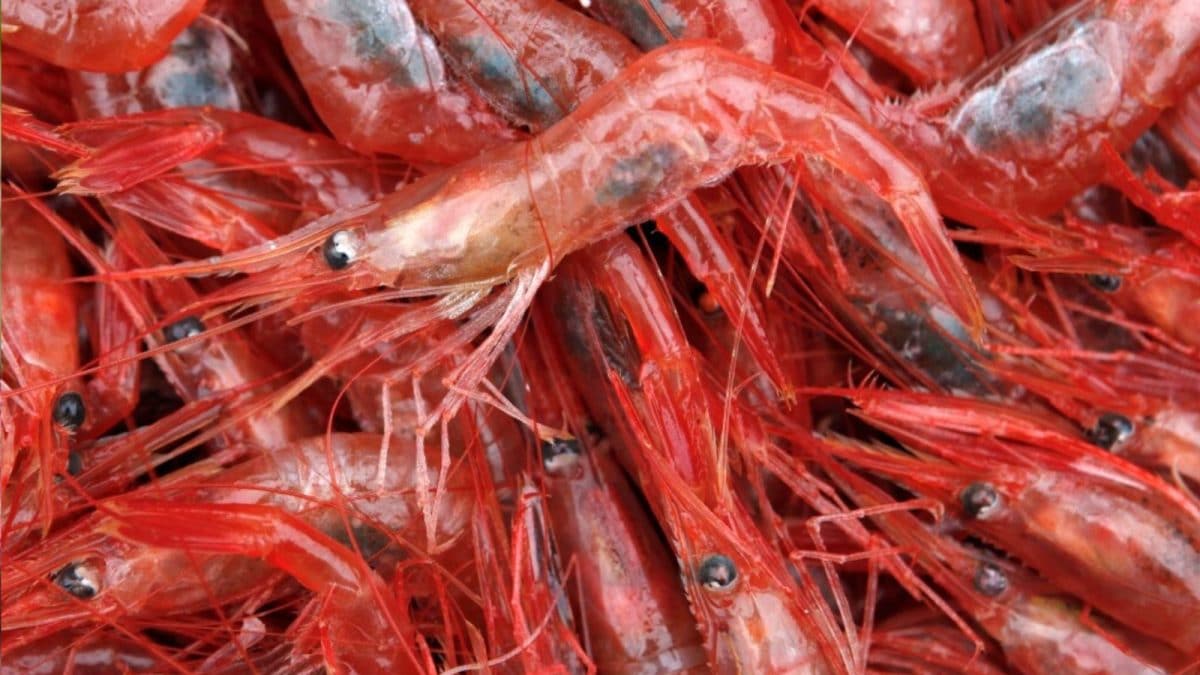
Australia, which had restricted imports due to white spot virus concerns, has now permitted unpeeled shrimp from Andhra Pradesh for the first time in 8 years

The EU remains a premium market for shrimp and fish, and renewed access is expected to raise earnings for farmers and exporters. (AP Photo)

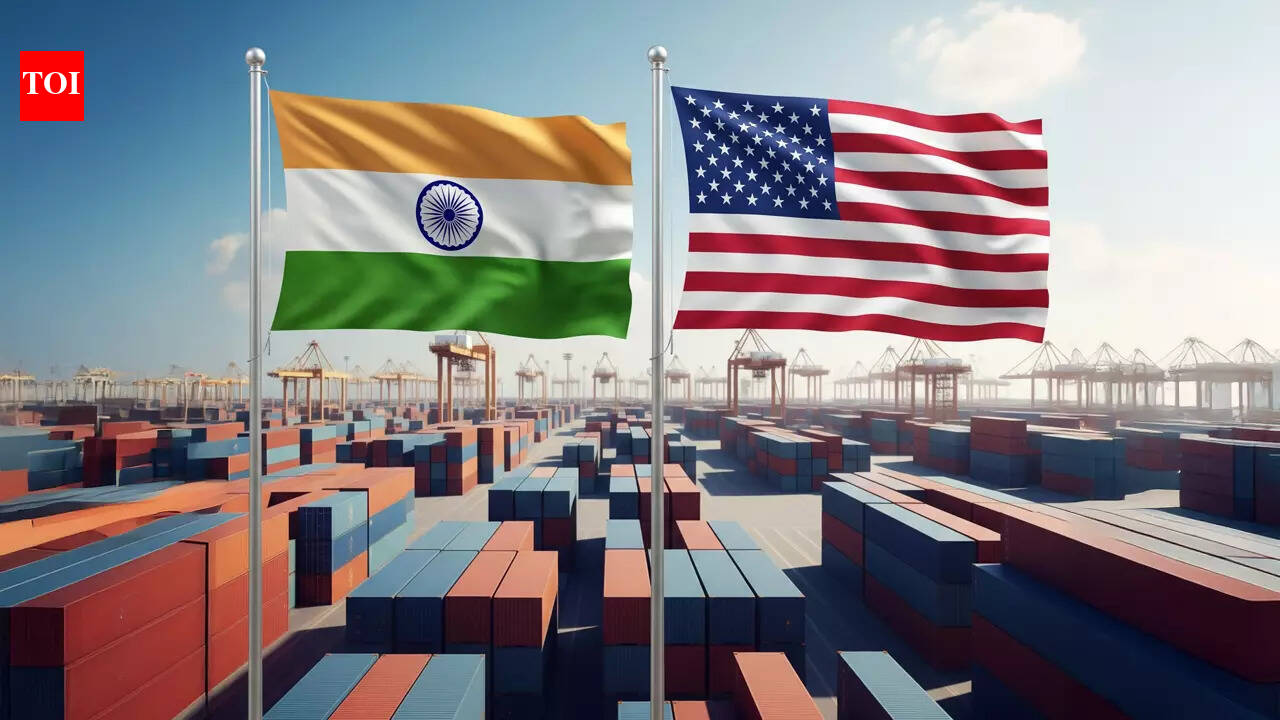
Indian seafood exporters, particularly those in Andhra Pradesh, are set for a significant boost as the government resolves longstanding trade issues with major international markets, offering relief after a sharp US tariff hit earlier this year.

In August 2025, the United States imposed nearly a 50% tariff on Indian seafood, including shrimp, effectively curbing exports from states like Andhra Pradesh, which account for nearly 80% of India’s total shrimp shipments. The tariffs, which touched as high as 59.72%, were partially in response to India’s continued imports of Russian crude oil, and posed a serious threat to the livelihoods of farmers and exporters alike.

Union Commerce and Industry Minister Piyush Goyal said that the government has proactively addressed these challenges by reopening access to alternative markets. Speaking to the Economic Times on the sidelines of the CII Partnership Summit in Visakhapatnam, Goyal noted that India had “ironed out problems with the European Union”, which had imposed a 9-year ban on Indian seafood over quality control concerns.

“Now, 102 fisheries have received approval to export to the EU,” he said, highlighting growing confidence in India’s food safety and quality assurance systems. The EU remains a premium market for shrimp and fish, and renewed access is expected to raise earnings for farmers and exporters.

Russia: Strategic Expansion

Russia has emerged as a key alternative market. Goyal stated that final approvals are underway for 25 Indian fisheries, with further approvals expected. Expanding trade with Russia not only offsets losses from the US market but also strengthens geopolitical and energy ties, reinforcing India’s diversified trade strategy.

Australia Reopens After 8 Years

Australia, which had restricted imports due to white spot virus concerns, has now permitted unpeeled shrimp from Andhra Pradesh for the first time in eight years. This move is expected to enhance India’s brand image in premium seafood markets and open avenues for processed seafood exports.

Economic Implications

With these new openings, India’s $7.4 billion seafood sector could see a 20-30% increase in exports. The government aims to raise overall exports to $12-14 billion by FY26, boosting foreign exchange earnings and reinforcing the sector’s contribution to GDP. For Andhra Pradesh, where the bulk of shrimp production is concentrated, the diversification of export markets is expected to stabilise prices and protect millions of jobs.

Geopolitical Resilience

The recent developments underline India’s ability to navigate international pressure. Faced with punitive US tariffs, the country has successfully leveraged alternate markets, strengthening trade ties with Russia, re-establishing access to Australia, and resolving longstanding EU barriers. These steps not only safeguard the domestic seafood sector but also highlight India’s strategic approach to global trade amid shifting geopolitical dynamics.

Follow News18 on Google. Join the fun, play QIK games on News18. Stay updated with all the latest business news, including market trendsstock updatestax, IPO, banking finance, real estate, savings and investments. To Get in-depth analysis, expert opinions, and real-time updates. Also Download the News18 App to stay updated.
News business economy India Eyes Seafood Export Revival As EU, Russia, Australia Open Doors Amid US Tariff Shock
Disclaimer: Comments reflect users’ views, not News18’s. Please keep discussions respectful and constructive. Abusive, defamatory, or illegal comments will be removed. News18 may disable any comment at its discretion. By posting, you agree to our Terms of Use and Privacy Policy.

Read More


Source link

Continue Reading
Click to comment

Leave a Reply

Your email address will not be published. Required fields are marked *

Business

Why India’s Next Growth Story Will Come From Rail Connectivity and Mid-Sized Cities

Published

on

Why India’s Next Growth Story Will Come From Rail Connectivity and Mid-Sized Cities


Last Updated:

Growth will increasingly follow connectivity lines rather than only city size.

Future growth is being built around stronger rail networks and the rise of mid-sized cities, not just big metros.

Future growth is being built around stronger rail networks and the rise of mid-sized cities, not just big metros.

Written By Parveen Jain:

India’s development has long been centred on a few large metros. These cities attracted capital, talent and infrastructure, but they also accumulated congestion, rising costs and uneven regional progress. A different pattern is now taking shape. The Union Budget 2026-27 and recent infrastructure spending show a clear shift in approach. Future growth is being built around stronger rail networks and the rise of mid-sized cities, not just big metros.

This course correction was needed. For urban development, industry and real estate, the implications are significant.

A Budget Framework Focused on Regional Capacity

The Union Budget 2026–27 sets out three clear priorities: accelerating growth and competitiveness, strengthening people’s capacity to participate in prosperity, and ensuring access to opportunity across regions and sectors. These goals are backed by targeted allocations and structural measures.

A Rs 5,000 crore allocation for City Economic Regions over five years introduces a challenge-based, reform-linked funding model for urban clusters. Instead of treating cities as isolated units, the framework recognises that economic activity spreads across connected districts and satellite towns. Planning and financing are being aligned to this reality.

Support for municipal bond issuances above Rs 1,000 crore, alongside financial sector reviews and reforms in investment rules, is intended to widen funding channels for urban infrastructure. Mid-sized cities that build credible governance systems and project pipelines can now access larger pools of capital.

Rail Corridors as Economic Infrastructure

Transport policy is often discussed as mobility reform. In practice, it is economic policy.

The seven announced high-speed rail corridors — including Mumbai–Pune, Pune–Hyderabad, Hyderabad–Bengaluru, Hyderabad–Chennai, Chennai–Bengaluru, Delhi–Varanasi and Varanasi–Siliguri — are designed to connect production centres, service hubs and population clusters.

Reduced travel time changes business behaviour. Companies can operate across multiple cities without duplicating full headquarters functions. Professionals can travel for same-day meetings across regions. Education, healthcare and specialised services become accessible beyond one metro catchment.

Freight rail investments and multimodal logistics planning under the national infrastructure platform are lowering transit uncertainty and costs. The East–West Dedicated Freight Corridor and related rail upgrades will influence where manufacturing, storage and distribution facilities are located. Many of these will prefer mid-sized cities where land parcels are available and approvals are faster.

Railways’ capital expenditure allocation of ₹2.93 lakh crore underscores the scale of this commitment. This is core infrastructure, not a side programme.

The Changing Role of Mid-Sized Cities

Tier-2 and Tier-3 cities are no longer peripheral markets. Their economic weight is rising. Current estimates place their contribution at roughly 40–45% of national GDP.

Startup and MSME activity is widely distributed across these locations, supported by lower operating costs and local talent pools.

Employment trends show faster growth in job openings in mid-sized cities than in Tier-1 metros. Companies are expanding delivery centres, back offices, manufacturing units and digital operations in these locations. Remote and hybrid work models have reinforced this movement.

Urban consumption patterns also support expansion. Rising household incomes, formalisation of retail and digital access are deepening demand in non-metro markets. This is visible in housing absorption, organised retail growth and office leasing outside the largest cities.

Stations, Corridors and Urban Land Use

Rail investments are reshaping city form, not just intercity travel.

Station redevelopment programmes covering more than 1,300 stations are turning transit points into commercial and civic nodes. Mixed-use development around stations increases land value and creates new business districts.

Cities with improved rail links and faster train services have already recorded steady property value growth in the range of 10–20% annually in several micro-markets. The effect is strongest where last-mile connectivity and urban planning support higher density near transit.

For urban authorities, this calls for tighter land-use planning, transit-oriented zoning and integrated infrastructure provision. For developers, station influence zones and rail corridors are becoming priority investment locations.

Financing and Institutional Support

Infrastructure and urban expansion require long-term capital.

Budget proposals to review the banking sector structure for the next growth phase, restructure key public sector finance institutions and simplify foreign investment rules are meant to strengthen credit delivery and investor confidence.

Municipal bond incentives reward cities that achieve scale in market borrowing. This encourages better financial reporting, project structuring and governance standards at the city level. Over time, this can reduce funding gaps in water, transport, housing and social infrastructure in mid-sized cities.

For real estate and urban projects, diversified financing sources reduce dependence on short-term funding and improve project completion timelines.

Balanced Growth and Environmental Gains

Concentrating growth in a few megacities has environmental and social costs. Distributed urbanisation spreads demand for land and infrastructure across regions, reducing pressure on overstretched metros.

Mid-sized cities can plan expansion with better layouts, infrastructure sequencing and environmental safeguards if growth is anticipated early.

Rail-based passenger and freight movement consumes less energy per unit than road transport. A higher rail share in mobility supports emission reduction goals while improving logistics efficiency.

What This Means for the Next Decade

Rail connectivity and mid-sized cities are moving to the centre of India’s growth strategy. The policy direction is visible in corridor planning, regional urban funding, municipal finance incentives and logistics investments.

Private capital and industry response is already underway.

For planners, developers and investors, the opportunity map is widening. Growth will increasingly follow connectivity lines rather than only city size. Regions that combine rail access, urban governance reform and infrastructure readiness will attract the next wave of investment.

India’s expansion story is entering a networked phase. The tracks are being laid now.

(The author is the president of NAREDCO. Views are personal.)

Disclaimer: Comments reflect users’ views, not News18’s. Please keep discussions respectful and constructive. Abusive, defamatory, or illegal comments will be removed. News18 may disable any comment at its discretion. By posting, you agree to our Terms of Use and Privacy Policy.

Read More


Source link

Continue Reading

Business

Middle East war risk: Iran threat to target US tech infrastructure in Gulf raises fears of global digital disruption – The Times of India

Published

on

Middle East war risk: Iran threat to target US tech infrastructure in Gulf raises fears of global digital disruption – The Times of India


Escalating tensions in West Asia are casting a shadow over global technology networks, with experts warning that threats by Iranian forces to target US-linked digital infrastructure in the Gulf could expose billions of dollars of investments to conflict-related risks.On Wednesday, Iranian forces warned they could strike facilities linked to major technology companies including Google, Microsoft, Palantir, IBM, Nvidia and Oracle across the Middle East and Israel. The region hosts more than 70 operational data centres with an estimated 557-738 megawatts of live IT capacity, alongside 10 cloud regions run by Amazon Web Services, Microsoft Azure, Google Cloud, Oracle and Alibaba. Projects worth an additional $30 billion are also under development.

Microsoft, Google At Iran’s Crosshairs? US Tech Giants Named In IRGC’s Hit list Amid War

Recent incidents have already highlighted the vulnerability of such infrastructure. Reports of a March 3 drone attack on two AWS facilities disrupted operations for businesses including Emirates NBD, Snowflake and Policybazaar UAE, while also affecting banking applications and stock market activity in the UAE. “Incidents of this scale typically generate tens of millions of dollars in combined operational losses when infrastructure repair, service downtime, and mitigation costs are included,” said Matvii Diadkov, technology investor and advisor to Gulf businesses. “Cloud operators must repair damaged equipment and restore systems, while customers absorb the cost of interrupted digital services.”Amid growing uncertainty, hyperscale cloud operators such as Microsoft Azure and AWS are exploring the possibility of shifting workloads from data centres in Dubai, Abu Dhabi and Oman to relatively safer hubs like India and Singapore, according to earlier reports. Industry executives say such disruptions could also have indirect effects on Indian firms that depend on globally hosted digital systems. “Consumer and FMCG firms such as HUL or Nestlé rely heavily on globally hosted ERP (enterprise resource planning), supply-chain, finance and analytics platforms,” said an executive at a global advisory firm. “Disruption to cloud availability or regional data-centre operations can interrupt forecasting, procurement, billing and distribution systems, with downstream effects in India.”The Gulf also serves as a critical conduit for global internet traffic, with about 90 per cent of Europe-Asia data flows passing through submarine cable routes supported by around 20 undersea cable systems and 13 active internet exchange points. “Undersea cables and regional network hubs represent latent risk, not because of constant attack, but because temporary outages or rerouting can degrade performance, increase latency and destabilise time-sensitive digital services across continents,” the same executive said.Experts caution that workforce and cyber-security challenges may add to operational vulnerabilities. Siddharth Vishwanath, partner and risk consulting leader at PwC India, said even traditional companies face exposure in a highly interconnected digital ecosystem. “What is at stake is service availability, data integrity and trust in shared digital platforms that underpin global commerce,” he said.Analysts also see the threats as a reminder of the growing geopolitical dimension of technology infrastructure. “US tech vendors should treat these threats as a signal that digital infrastructure is now part of geopolitical conflicts,” said Ashish Banerjee, senior principal analyst at Gartner. “They should ensure critical workloads can fail over to other cloud regions if disruptions occur.”Supply chain dependencies may further complicate the outlook. Diadkov noted that around one-third of global helium production is concentrated in Qatar, a key input for semiconductor manufacturing. “If supply from the region is disrupted, it could affect chip production, equipment repair, and the ability to build new semiconductor devices,” he said.


Source link

Continue Reading

Business

US-Iran war: How Indian industry is being impacted by LPG issues, rising oil prices, Strait of Hormuz closure – explained in 10 points – The Times of India

Published

on

US-Iran war: How Indian industry is being impacted by LPG issues, rising oil prices, Strait of Hormuz closure – explained in 10 points – The Times of India


India’s manufacturing sector is on high alert as the war involving Iran threatens to disrupt key maritime routes used for global trade. (AI image)

US-Iran war impact: The ripple effects of the ongoing Middle East tensions, LPG supply issues, rising oil prices and closure of Strait of Hormuz are being felt across industries in India. India’s manufacturing sector is on high alert as the war involving Iran threatens to disrupt key maritime routes used for global trade. For factories whose operations depend heavily on raw material supply chains, energy flows and shipping routes that pass through volatile regions, the situation has turned into a cautious wait-and-watch phase.The scarcity of commercial LPG has emerged after shipments from the Gulf region were disrupted amid the ongoing conflict in West Asia. India relies heavily on imports from this region for its LPG requirements.

India Negotiates Safe Passage For Tankers At Hormuz With Iran As Concerns Over LPG Supply Increase

How is the ongoing US-Israel-Iran war impacting India Inc? We take a look:1. Auto industryThe escalating crisis has prompted automobile manufacturers and component suppliers to urgently evaluate their dependence on supply chains connected to the Gulf region.Leading car and two-wheeler manufacturers have circulated advisories to their vendor networks, urging them to review exposure to critical inputs that pass through Gulf ports. These include aluminium alloys, copper, petrochemical derivatives, PVC resins, lubricants, adhesives and electronic components.The energy shortage is creating difficulties for automakers and their supplier networks, including foundries, forging units and paint shops. Switching from gas to oil as a fuel source requires additional capital investment, regulatory approvals and time, which many smaller units do not have.2. Consumer goods & electronicsExporters in consumer goods and electronics have already begun facing direct disruptions, with shipments suspended and production lines halted as rising war-risk surcharges erode profit margins. Industry associations have started approaching the government for urgent assistance to ensure adequate supplies of industrial fuel.Electronics contract manufacturers have paused production lines meant for overseas markets. Godrej Appliances and Haier Appliances India have also revised their production plans. Consumer goods producers have started reducing output tied to exports after suspending shipments to the Gulf and certain European markets. 3. Gas distributorsCity gas distributor Adani Total Gas has directed commercial and industrial customers to restrict natural gas consumption to 40% of their contracted volumes. The company warned that any usage beyond that threshold would be billed at significantly higher spot market rates, said an ET report. Contracted prices stand at about ₹40 per standard cubic metre, compared with spot LNG prices of nearly ₹120.Last week, Gujarat Gas declared force majeure on certain gas supply agreements after supplies of regasified LNG tightened sharply. 4. MedicinesAccording to an ET report, medicine prices could rise following a sharp increase in the cost of essential raw materials, or active pharmaceutical ingredients (APIs), which have surged about 30% over the past two weeks. The spike has largely been attributed to a shortage of container vessels after the Iran war disrupted global shipping.Senior industry executives said the scarcity of ships has slowed the movement of raw materials from China, the largest supplier to Indian pharmaceutical manufacturers. This disruption could affect domestic production and may also lead to higher medicine prices if companies pass the increased input costs on to consumers.Prices of several important inputs have risen sharply, with some increasing by more than 60%. For example, glycerine prices have climbed 64% since December, while the cost of paracetamol has increased by 26%.5. Ceramics industryIndian Oil Corp has also stopped supplying propane, a decision that could severely affect the ceramics industry, where 70–80% of manufacturers rely on propane.6. FMCGFast-moving consumer goods companies such as Parle Products, Emami and Marico, which have operations in the Gulf region, are also experiencing the impact.Packaged food manufacturers across India have either suspended or scaled back production at facilities that depend on LPG due to a severe shortage of the fuel. Some companies have also reported disruptions in the availability of alternatives such as piped natural gas.“Manufacturing in plants that use LPG has been stopped because there is no supply,” said Mayank Shah, vice president at biscuits and confectionery major Parle Products. He added that concerns are now extending to other fuels as well, with rationing being imposed even on PNG and other options that are also becoming difficult to obtain.Deepak Agarwal, managing director of Bikaji Foods, said the snacks and sweets manufacturer is trying to shift production wherever possible away from gas-based burners toward equipment such as induction systems, kettles and fryers.“For sweets and cookies which rely on cooking gas, we are reducing stocks,” he said.7. FertilizersSeveral fertiliser producers in India are bringing forward their annual plant maintenance shutdowns as supplies of LNG have been disrupted due to the ongoing conflict in West Asia, according to industry executives.“As supplies of LNG have been cut down, we are moving our annual shutdown for repair and maintenance work from April to mid-March,” a leading urea manufacturer told ET. The executive added that the company had originally planned to use March to build up inventories and prepare stock for the upcoming kharif season.LNG serves as the primary input for producing ammonia, which is a key component in the manufacture of urea.8. Paint makersProducts derived from crude oil are widely used in the manufacture of paints and make up roughly one-third of the industry’s overall input costs. Domestic paint manufacturers, which had been anticipating a stabilisation in earnings after a phase of intense competition, are now encountering new challenges as rising input costs threaten to put pressure on margins.“Retaining profitability guidance becomes more challenging if crude oil remains elevated,” said Poonam Upadhyay, director at Crisil Ratings. “While the impact will be with a lag, higher raw-material costs would gradually start feeding into the cost structure,” she said.Several key materials used in paint production, including solvents, binders, resins and titanium dioxide, are derived from crude oil.9. Restaurants and caterersWith LPG supplies directed more for domestic use, commercial LPG cylinders are facing a supply issue. Restaurants around the country have said that they are being forced to curtail operations.The shortage of LPG is also beginning to disrupt a wide range of social and hospitality events, including large weddings, iftar gatherings and high-end hotel banquets. Hotels, catering services and banquet venues are rushing to arrange additional cylinders, often paying higher prices or switching to alternative fuels in order to continue operations. Some businesses have also started reducing the scale of their menus in response to the supply constraints.10. Positive impact: Induction cooktops gainQuick commerce platforms have witnessed a sharp rise in demand for induction cooktops. “We have seen a 10x spike in induction sales today compared to business-as-usual,” an Instamart executive said. The company has also been pushing targeted notifications to users to highlight the offers.Tata-owned BigBasket reported a similar surge in demand, noting that sales of induction cooktops had increased fivefold.Ecommerce platforms have also recorded a rise in purchases as LPG supply constraints and higher prices prompt consumers to seek alternatives.


Source link

Continue Reading

Trending