

Fashion
Compass-backed Lugano files for bankruptcy after ex-CEO sued


By
Bloomberg
Published
November 17, 2025
Lugano Holdings Inc., an operator of high-end jewelry boutiques owned by Compass Diversified, has filed for bankruptcy months after it accused its former chief executive of stealing millions of dollars from the business and misrepresenting investment deals with high net worth clients.
The retailer sought court protection Sunday in Delaware saying it has an offer to sell the business to Enhanced Retail Funding, a deal that must be approved by a bankruptcy judge and is subject to better offers at a Chapter 11 auction. Lugano listed at least $100 million in assets and more than $500 million in liabilities on its Chapter 11 petition.
The bankruptcy filing comes months after the departure of former Lugano Chief Executive Officer Mordechai Haim Ferder, who established the business in 2004. Following an internal investigation by Compass, Lugano filed a civil lawsuit in June accusing Ferder of forging invoices and sale documents.
“With Lugano’s decision in place, there is now a defined and orderly process to bring the Lugano matter toward resolution,” Compass Chief Executive Officer Elias Sabo said in a statement.
Compass acquired a majority interest in the business in 2021 at a $256 million valuation, according to court papers.
The complaint alleges Ferder concealed the nature of transactions he entered into with high net worth individuals related to financing the purchase of diamonds that investors were told would be sold for a higher price, according to the lawsuit. Investors were told they’d get a stake in a diamond and would be repaid at a “substantially above market, interest rate,” the lawsuit alleged.
Ferder is accused of disguising these transactions as ordinary sales and recording the incoming funds as revenue rather than liabilities, according to the complaint. As a result, he misled Lugano’s stakeholders and auditors about the company’s actual performance and valuation, the lawsuit alleged.
Ferder resigned as chief executive officer in May and has not formally responded in court to the June lawsuit. He couldn’t be reached for comment Monday. Lugano said in the June lawsuit that Ferder was residing in Tel Aviv “and appears to be in the process of moving his assets out of the United States and to Israel.”
Lugano Chief Restructuring Officer J. Michael Issa said in a Sunday court filing that other lawsuits have been filed against the company and Ferder since the summer.
Ferder and his affiliated entities retained about 40% of the business following the Compass acquisition, a deal that fueled the opening of additional boutiques and a private social club for its clients called Lugano Privé, Issa said.
The company had believed it generated $470 million in revenue and $180 million in operating income in 2024 but now “those amounts are being revised to reflect actual revenues and operating income at substantially lower levels,” he said.
Compass has agreed to provide Lugano with $12 million in Chapter 11 financing to fund the bankruptcy and related sale process. Lugano said its stores remain open and are operating normally.
The case is Lugano Diamonds & Jewelry Inc., number 25-12055, in the US Bankruptcy Court for the District of Delaware.












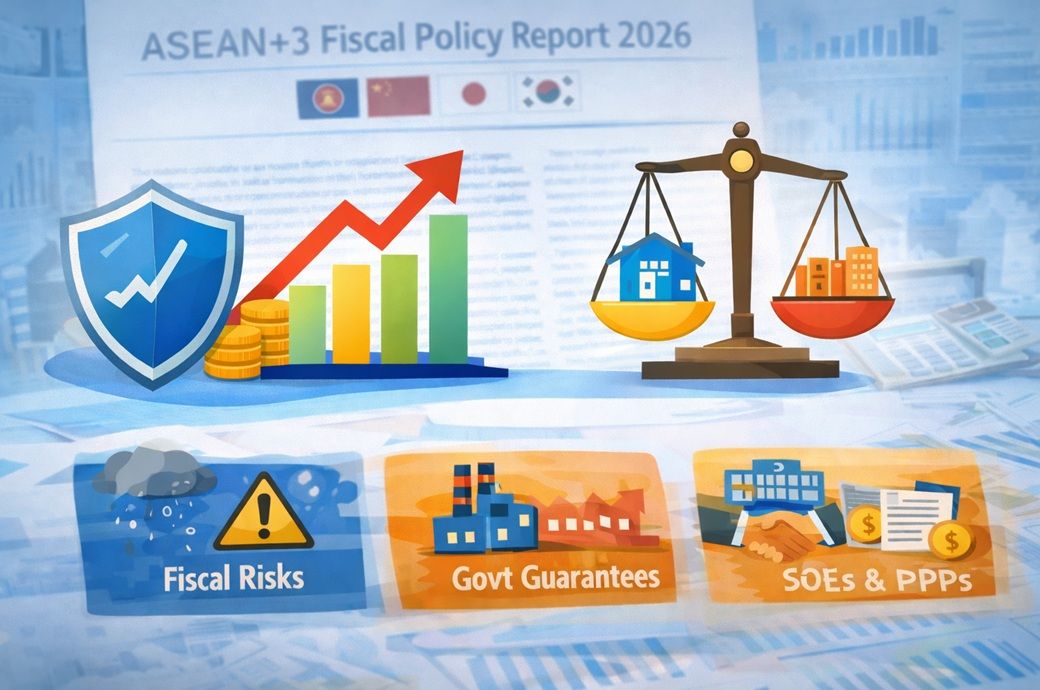
At the same time, growing demands on fiscal policy require governments not only to respond to immediate shocks, but also to support growth, facilitate structural transformation and reduce poverty and inequality over the medium to long term, it noted.
With fiscal positions weakened and policy space narrowed, ASEAN+3 policymakers must safeguard fiscal sustainability and rebuild buffers, the ASEAN+3 Fiscal Policy Report 2026 said.
Governments should also support growth, facilitate structural transformation and reduce poverty and inequality over the medium to long term, it noted.
Particular attention should be given to liabilities outside the budget.
ASEAN+3 comprises members of the Association of Southeast Asian Nations, along with China, South Korea and Japan.
These competing demands are compounded by sluggish revenue growth and rigid budget structures. Addressing these challenges will require stronger fiscal management frameworks, including improvements in risk management, fiscal aggregate management, strategic resource allocation, spending efficiency and revenue mobilisation.
The report also highlights the importance of comprehensive fiscal risk management, urging policymakers to strengthen the identification, assessment and disclosure of fiscal risks.
Particular attention should be given to liabilities outside the budget, including borrowing by off-budget public entities and government arrears.
Systematic monitoring and proactive management of contingent liabilities are essential, especially those related to government guarantees, public-private partnerships, state-owned enterprises and social security obligations, the report remarked.
Enhancing fiscal aggregate management, alongside improving strategic resource allocation and spending efficiency, will be critical to meeting rising expenditure demands in line with national priorities, while safeguarding fiscal sustainability and rebuilding buffers, it added.
The report further encourages policymakers to implement comprehensive and durable revenue-enhancing measures, including strengthening tax administration—particularly through digitalisation—rationalising tax expenditures and advancing structural reforms to major taxes.
Fibre2Fashion News Desk (DS)

The piece of legislation, aimed at addressing long-standing challenges to the enforcement of intellectual property rights (IPR) at US borders, was reported with unanimous, bipartisan support from the House Ways and Means Committee.
AAFA along with 18 other trade bodies recently wrote to Congressional leadership in the US House of Representatives seeking support to move HR 4930 forward in the legislative process.
The piece of legislation, aimed at addressing long-standing challenges to the enforcement of IPR at US borders, was reported with unanimous, bipartisan support from the House Ways and Means Committee.
“We encourage you to move swiftly in bringing the bill to the Floor,” the letter noted.
In fiscal 2023-2024, US Customs & Border Protection (CBP) seized over 32 million counterfeit and pirated items, valued in excess of $5 billion, across more than 300 ports of entry, the letter noted.
“More disconcerting though is the rate at which those figures are increasing. In just the past five years, the number of illicit goods seized by CBP has more than doubled, while the value of those goods has grown by more than 400 per cent,” the letter said.
“The cost of this criminal trafficking cannot be measured in dollars alone though, but in the injuries caused by often dangerous fakes that put consumers’ health and safety at risk, in diminished investments to drive the next wave of innovation by American businesses, in jobs lost
to unfair competition, and increasingly, by the threats such products pose to our national security,” the letter said.
The overwhelming volume of trade passing through U.S. ports, and the speed at which it moves, presents a significant obstacle to effective border enforcement, it noted.
While Congress has expressed a clear desire in recent years for greater partnership between the public and private sectors on these issues, CBP has raised concerns over both the scope of its authority to share information with, and to seek assistance from, its partners in the private sector in carrying out its IP enforcement mission, it said.
HR 4930 clarifies and expands the agency’s authority, offering practical tools to safeguard consumers and legitimate businesses.
“It is essential that CBP has the ability to work with relevant stakeholders throughout the supply chain, both to avoid the siloing of information that has often hindered the agency’s efficiency, and to ensure that the private sector can offer effective and timely assistance on matters of trade enforcement, thereby ensuring that bad actors and trade cheats are held accountable,” the letter added.
The trade associations which signed the letter include Baby Safety Alliance, International AntiCounterfeiting Coalition, International Intellectual Property Association, Personal Care Products Council and Transnational Alliance to Combat Illicit Trade.
Fibre2Fashion News Desk (DS)

This marks the first comprehensive revision in decades, with the last fee increases recorded in 1998 for trademarks, 2016 for designs, and 2018 for patents. The IPO stated that the changes aim to address a 32 per cent rise in inflation since 2016 while supporting continued investment in digital systems and services.
The UK IPO has increased fees for trademarks, designs and patents from April 1, 2026 under new rules, marking the first major revision in years.
The move reflects a 32 per cent rise in inflation since 2016 and aims to support continued investment in digital systems and services, with transitional provisions applicable for certain filings and payments.
The updated fees apply to all applications and payments made on or after April 1, 2026. Transitional provisions have also been outlined for certain cases. For designs, deferred registration requests submitted from April 1 onwards will be subject to the new fees, even if the original application was filed earlier.
For trademarks, applicants using the permitted period of grace may still be eligible to pay the previous fee, provided the application was filed before April 1 and any outstanding payment is completed within the IPO’s deadline.
Separately, UKFT has submitted industry feedback to the IPO regarding the UK’s updated Design Framework, which is expected to be announced later this year.
Fibre2Fashion News Desk (JP)

[CinePlex360] Please moderate: “Brighten Your D

Pakistan to receive $3bn additional support from Saudi Arabia: finance minister
[CinePlex360] Please moderate: “King Charles, Q

-

 Fashion1 week ago
India’s exports face reset as EU links trade to carbon metrics: EY
-

 Entertainment7 days ago
Queen Elizabeth II emotional message for Archie, Lilibet sparks speculation
-

 Tech6 days ago
As the Strait of Hormuz Reopens, Global Shipping Will Take Months to Recover
-

 Entertainment1 week ago
Lamar Odom shocking response to Khloé Kardashian account of his overdose
-

 Tech7 days ago
Azure customers up in arms over ‘full’ UK South region | Computer Weekly
-

 Fashion7 days ago
CII submits 20-pt agenda to Indian govt to back firms hit by Iran war
-

 Tech6 days ago
This AI Button Wearable From Ex-Apple Engineers Looks Like an iPod Shuffle
-

 Tech1 week ago
A Single Strike Won’t Shut Off the Gulf’s Desalination System