

Business
Bioethanol plant begins shut-down process

Business reporter, BBC News
Reporter, BBC Radio 5 Live
 BBC
BBCVivergo, one of two UK bioethanol plants, has ceased production and will start laying off its 160 employees on Tuesday.
After weeks of talks, the government said on Friday it would not be providing financial support for the bioethanol sector, which is facing increased competition from imported US ethanol.
Vivergo, owned by Associated British Foods, said that would have meant continuing as a “heavily loss-making” business. As a result it is closing, with all staff due to be gone and the site ready for demolition by end of the year.
The government said it had decided a rescue would not provide value for taxpayers or solve the industry’s long-term problems.
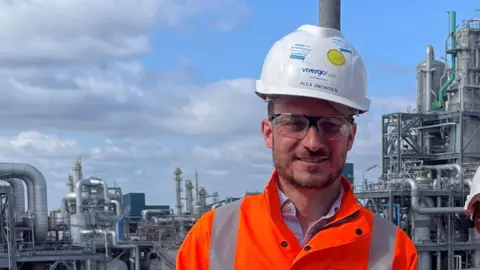
Alex Snowden, Vivergo’s operations director, said the closure was “heartbreaking”.
“I’m from the local area, I live 10 minutes away from site,” he said. “It’s a huge part of my life.”
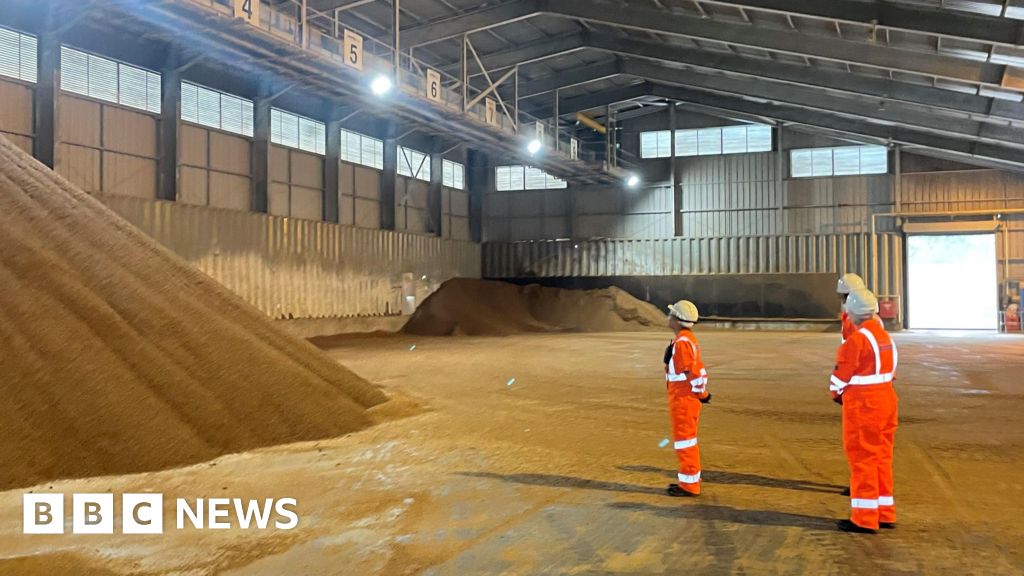
“What we’re doing effectively now is emptying the last of our brewery as we’re winding down the plant,” he told the BBC.
The plant, based near the Humber estuary, takes locally grown wheat, uses it to distil alcohol for bioethanol and then makes the residue into high protein feed pellets, primarily for dairy cattle.
The operation has been through ups and downs and required “a lot of hard work”, Mr Snowden said, but is now in very good shape, which he added makes the closure even more frustrating.

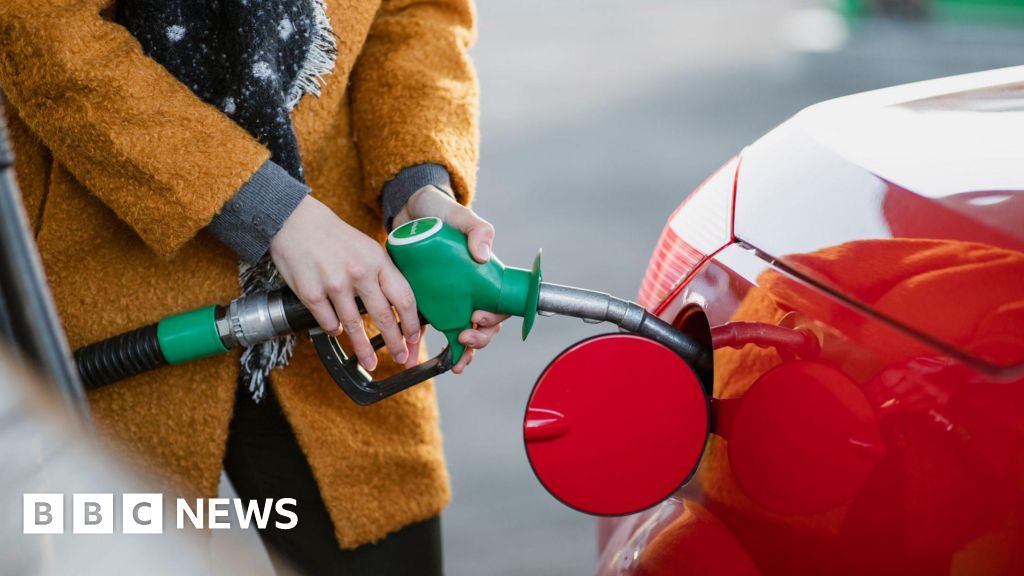
Bioethanol, can be made from waste oil or grains and is used as an additive to fuels, to reduce climate-damaging emissions. For example it is added to E5 and E10 petrol and sustainable aviation fuel.
In May the UK signed a trade deal which removed 19% tariffs on US-imported ethanol up to a quota of 1.4bn litres, roughly eqivalent to the size of the UK market.
It was one of the concessions made by the UK as part of a broader trade pact, that eased the tariffs that President Donald Trump had said he would impose on UK car and steel being imported across the Atlantic to the US.
‘Unfair competition’
Even before that trade agreement, the UK sector had complained that US imports had an unfair financial advantage as their ethanol is certified as a waste byproduct in the UK, whereas domestically-produced bioethanol is not.
UK producers have argued this leads to US rivals being able to undercut them, and would be at an even greater advantage once tariffs were removed.
Vivergo is one of two bioethanol sites in the UK which has said without support it will be forced to close.
The BBC understands that the other plant in Redcar, Teesside, which is owned by German firm Ensus, is waiting to hear whether the government will provide support to protect its CO2 production, a product widely used in industry, food production and healthcare.
Vivergo had also been planning to start capturing CO2 produced as part of the bioethanol making process, but had not yet started.
Ripple effect
Ben Hackett, Vivergo’s managing director described the government’s decision not to provide a rescue package as a “massive blow to Hull and the Humber”.
He said the government had decided the bioethanol sector was something that could be “traded away” and that it amounted to a “flagrant act of economic self-harm”.
As well as the loss of its own staff, Vivergo warned there would be a knock-on effect on suppliers and customers.
Paul Temple, a farmer situated less than 30 miles from Vivergo, has not only sold his wheat to the plant, but also purchased feed for his livestock.
“As a result of trade negotiations – making a plant effectively uneconomic… this is really frustrating,” he said.
Louise Holder, director of a local haulage firm, added the closure would have a “massive” impact on the local economy.
“People [will be] out of work,” she said. “Obviously there’s an impact then on the hospitality industry, because people aren’t going out, because they can’t afford to. It just has a rippling effect on everybody, every business.”
Andrew Symes, the chief executive of OXCCU, which makes sustainable aviation fuel, told the BBC’s Today programme that the closure would make the UK reliant on imports for CO2 and for ethanol, which he described as “risky”.
“I think that was probably what wasn’t realised when the trade deal was done,” he said.
The government said it had taken the decision “in the national interest” and that the tariff deal with the US had protected “hundreds of thousands of jobs in sectors like auto and aerospace”.
A government spokesperson said it would work to support the companies through the closure process and that it was continuing to work on proposals that would “ensure the resilience of our CO2 supply in the long-term”.
Charlotte Brumpton-Childs, GMB National Officer, said the government’s commitment to green policies should mean a commitment to green jobs.
“A clean energy industrial strategy means nothing if we cannot protects plants long enough to deliver clean energy jobs here in the UK,” she said.
Motorists are facing higher fuel prices ahead of Easter break due to the conflict in the Middle East, the RAC says.
Source link
Business
E-cheques coming soon? RBI unveils Payments Vision 2028, plans wider oversight of digital players – The Times of India
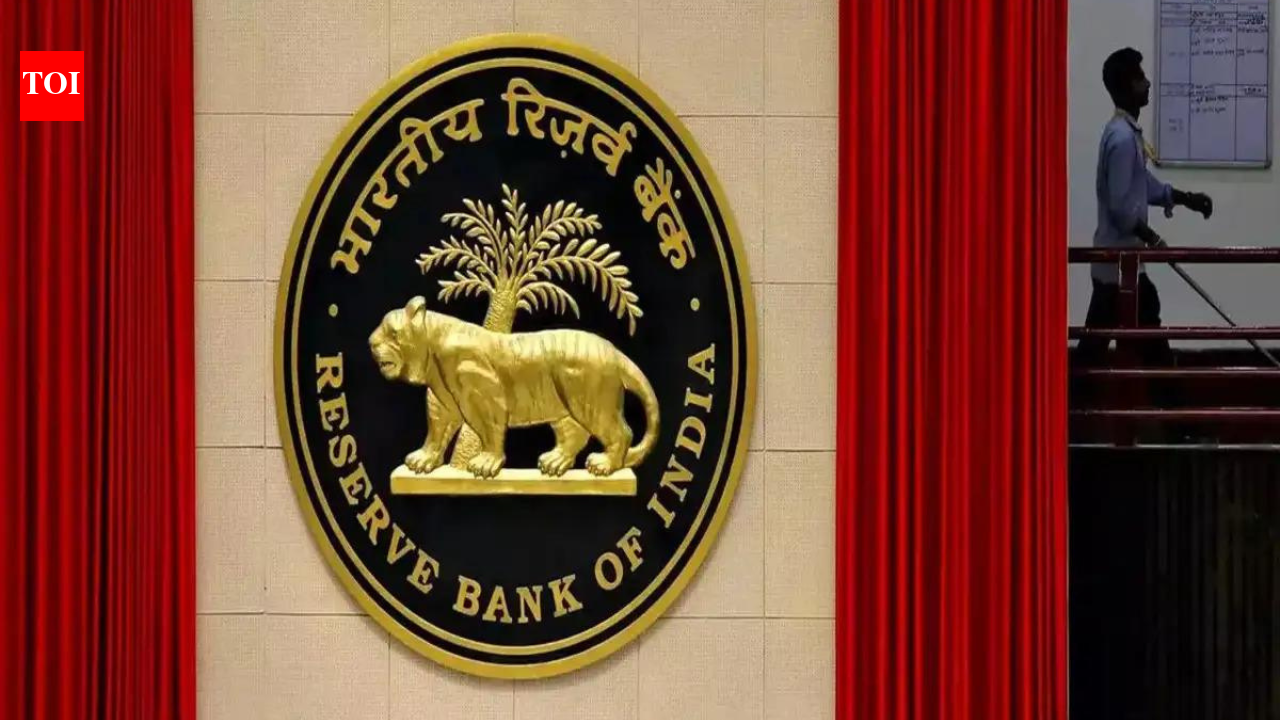
The Reserve Bank of India (RBI) on Friday unveiled its ‘Payments Vision 2028’ document, outlining a roadmap that includes exploring electronic cheques, expanding regulatory oversight to digital platforms, and strengthening safeguards in the fast-growing payments ecosystem, PTI reported.The central bank said it will examine the introduction of e-cheques to combine the advantages of paper instruments with the speed and reliability of digital payments. “To leverage the unique benefits of paper-based instruments and the speed and reliability of electronic payments, and cater to new business use cases, the introduction of electronic cheques in India shall be explored,” the RBI said.Alongside, the RBI is considering widening the regulatory ambit to include entities such as e-commerce marketplaces and centralised platforms that play a growing role in facilitating digital transactions.“In addition, e-commerce marketplaces and centralized platforms have been assuming significant responsibilities that could have implications on the orderly functioning of the payments ecosystem. These aspects shall be examined in detail and, if required, the scope of direct regulations shall be extended to cover such entities,” the document said.The vision document also proposes allowing users to enable or disable transactions across digital payment modes, similar to controls available for card transactions.To address fraud risks, the RBI is exploring a “shared responsibility framework” under which both the issuing bank and the beneficiary bank would share liability in cases of unauthorised digital transactions.The central bank also plans to review cheque design and security features, introduce a Domestic Legal Entity Identifier (DLEI) framework for better transaction traceability, and bring in a Cyber Key Risk Indicators (KRI) framework for non-bank payment system operators.Other initiatives include exploring white-label solutions in the Aadhaar Enabled Payment System (AePS), developing interoperability in the Trade Receivables e-Discounting System (TReDS), and introducing a ‘Payments Switching Service’ to ease customer migration across platforms.The RBI said it will also review the cross-border payments ecosystem to improve efficiency and streamline authorisation processes, alongside publishing periodic reports on global and domestic payment trends.Additionally, the central bank aims to enhance access to payment data and reimagine the card payments ecosystem by promoting secure tokenisation, improved transparency in pricing, and greater choice for users and merchants.

Hyderabad: Pharma player Hetero on Friday said it has rolled out exports of its generic semaglutide injection portfolio as part of a multi-year plan to widen access to treatments for type 2 diabetes and obesity in more than 75 countries.The Hyderabad-based pharmaceutical company said initial rollouts are under way in Africa, Asia and the Middle East, with additional launches planned in other markets subject to regulatory approvals.The injectable therapies will be sold under the brand names Truglyx, Rolmodl and Moto G. Semaglutide belongs to the GLP-1 class of medicines, which are used in diabetes care and weight management.Hetero said the export launch is part of its broader strategy to improve access to advanced cardio-metabolic therapies, particularly in emerging markets.The company said the products will be offered in multi-dose disposable pen devices designed in line with innovator formats and will be available in several strengths, including 0.25 mg, 0.5 mg, 1 mg, 2 mg, 1.7 mg and 2.4 mg, allowing dosing flexibility for both diabetes and obesity treatment.Hetero said it is also awaiting approval from India’s Central Drugs Standard Control Organisation (CDSCO) after completing clinical trials in type 2 diabetes and obesity and plans an India launch after regulatory clearance.Hetero managing director Dr Vamsi Krishna Bandi said the company aims to provide high-quality, affordable generic semaglutide through a single global product platform backed by its manufacturing and development capabilities.He said Hetero would use its commercial networks across Asia, the Middle East, Africa and Latin America to support supply and access. The Hyderabad-headquartered Hetero operates in more than 145 countries and employs over 30,000 people.


Iranian Hackers Breached Kash Patel’s Email—but Not the FBI’s

Tiger Woods involved in rollover crash in Florida less than 2 weeks before Masters: reports

Backstreet Boys AJ McLean shows support to Britney Spears after DUI arrest

-
 Business7 days ago
Flipkart group CFO to leave co amid IPO plans – The Times of India
-

 Fashion7 days ago
China’s textile & apparel exports surge 17% to $50 bn in Jan-Feb 2026
-
 Business1 week ago
Video: The Effects of High Oil Prices
-

 Sports1 week ago
Rating Adidas’ 2026 World Cup away shirts: Argentina, Spain, Mexico and more
-

 Fashion1 week ago
The hidden $1.62 war tax now embedded in every garment you source
-

 Sports7 days ago
American Conference Commissioner Tim Pernetti thanks Trump for Army-Navy game executive order
-

 Tech1 week ago
‘Uncanny Valley’: Nvidia’s ‘Super Bowl of AI,’ Tesla Disappoints, and Meta’s VR Metaverse ‘Shutdown’
-
Tech1 week ago
The Corsair 4000D RS PC Case Keeps Your System Cool