

Business
Bioethanol plant begins shut-down process

Business reporter, BBC News
Reporter, BBC Radio 5 Live
 BBC
BBCVivergo, one of two UK bioethanol plants, has ceased production and will start laying off its 160 employees on Tuesday.
After weeks of talks, the government said on Friday it would not be providing financial support for the bioethanol sector, which is facing increased competition from imported US ethanol.
Vivergo, owned by Associated British Foods, said that would have meant continuing as a “heavily loss-making” business. As a result it is closing, with all staff due to be gone and the site ready for demolition by end of the year.
The government said it had decided a rescue would not provide value for taxpayers or solve the industry’s long-term problems.
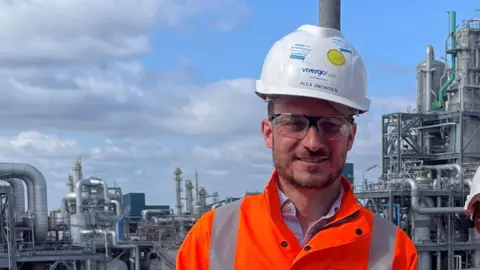
Alex Snowden, Vivergo’s operations director, said the closure was “heartbreaking”.
“I’m from the local area, I live 10 minutes away from site,” he said. “It’s a huge part of my life.”
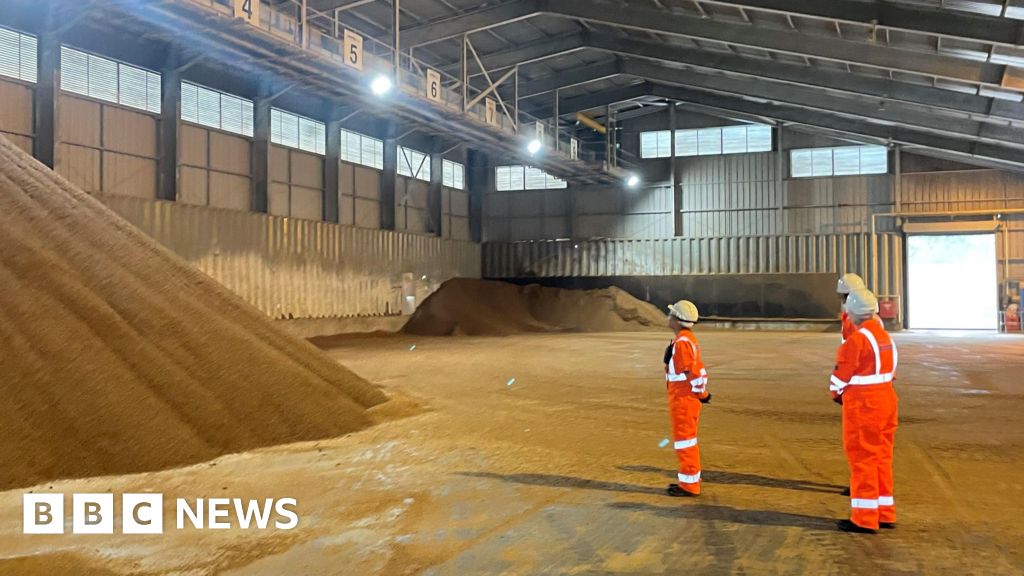
“What we’re doing effectively now is emptying the last of our brewery as we’re winding down the plant,” he told the BBC.
The plant, based near the Humber estuary, takes locally grown wheat, uses it to distil alcohol for bioethanol and then makes the residue into high protein feed pellets, primarily for dairy cattle.
The operation has been through ups and downs and required “a lot of hard work”, Mr Snowden said, but is now in very good shape, which he added makes the closure even more frustrating.

Bioethanol, can be made from waste oil or grains and is used as an additive to fuels, to reduce climate-damaging emissions. For example it is added to E5 and E10 petrol and sustainable aviation fuel.
In May the UK signed a trade deal which removed 19% tariffs on US-imported ethanol up to a quota of 1.4bn litres, roughly eqivalent to the size of the UK market.
It was one of the concessions made by the UK as part of a broader trade pact, that eased the tariffs that President Donald Trump had said he would impose on UK car and steel being imported across the Atlantic to the US.
‘Unfair competition’
Even before that trade agreement, the UK sector had complained that US imports had an unfair financial advantage as their ethanol is certified as a waste byproduct in the UK, whereas domestically-produced bioethanol is not.
UK producers have argued this leads to US rivals being able to undercut them, and would be at an even greater advantage once tariffs were removed.
Vivergo is one of two bioethanol sites in the UK which has said without support it will be forced to close.
The BBC understands that the other plant in Redcar, Teesside, which is owned by German firm Ensus, is waiting to hear whether the government will provide support to protect its CO2 production, a product widely used in industry, food production and healthcare.
Vivergo had also been planning to start capturing CO2 produced as part of the bioethanol making process, but had not yet started.
Ripple effect
Ben Hackett, Vivergo’s managing director described the government’s decision not to provide a rescue package as a “massive blow to Hull and the Humber”.
He said the government had decided the bioethanol sector was something that could be “traded away” and that it amounted to a “flagrant act of economic self-harm”.
As well as the loss of its own staff, Vivergo warned there would be a knock-on effect on suppliers and customers.
Paul Temple, a farmer situated less than 30 miles from Vivergo, has not only sold his wheat to the plant, but also purchased feed for his livestock.
“As a result of trade negotiations – making a plant effectively uneconomic… this is really frustrating,” he said.
Louise Holder, director of a local haulage firm, added the closure would have a “massive” impact on the local economy.
“People [will be] out of work,” she said. “Obviously there’s an impact then on the hospitality industry, because people aren’t going out, because they can’t afford to. It just has a rippling effect on everybody, every business.”
Andrew Symes, the chief executive of OXCCU, which makes sustainable aviation fuel, told the BBC’s Today programme that the closure would make the UK reliant on imports for CO2 and for ethanol, which he described as “risky”.
“I think that was probably what wasn’t realised when the trade deal was done,” he said.
The government said it had taken the decision “in the national interest” and that the tariff deal with the US had protected “hundreds of thousands of jobs in sectors like auto and aerospace”.
A government spokesperson said it would work to support the companies through the closure process and that it was continuing to work on proposals that would “ensure the resilience of our CO2 supply in the long-term”.
Charlotte Brumpton-Childs, GMB National Officer, said the government’s commitment to green policies should mean a commitment to green jobs.
“A clean energy industrial strategy means nothing if we cannot protects plants long enough to deliver clean energy jobs here in the UK,” she said.
Business
Petrol and diesel prices may rise if Middle East crisis persists, says RBI Governor Sanjay Malhotra – The Times of India
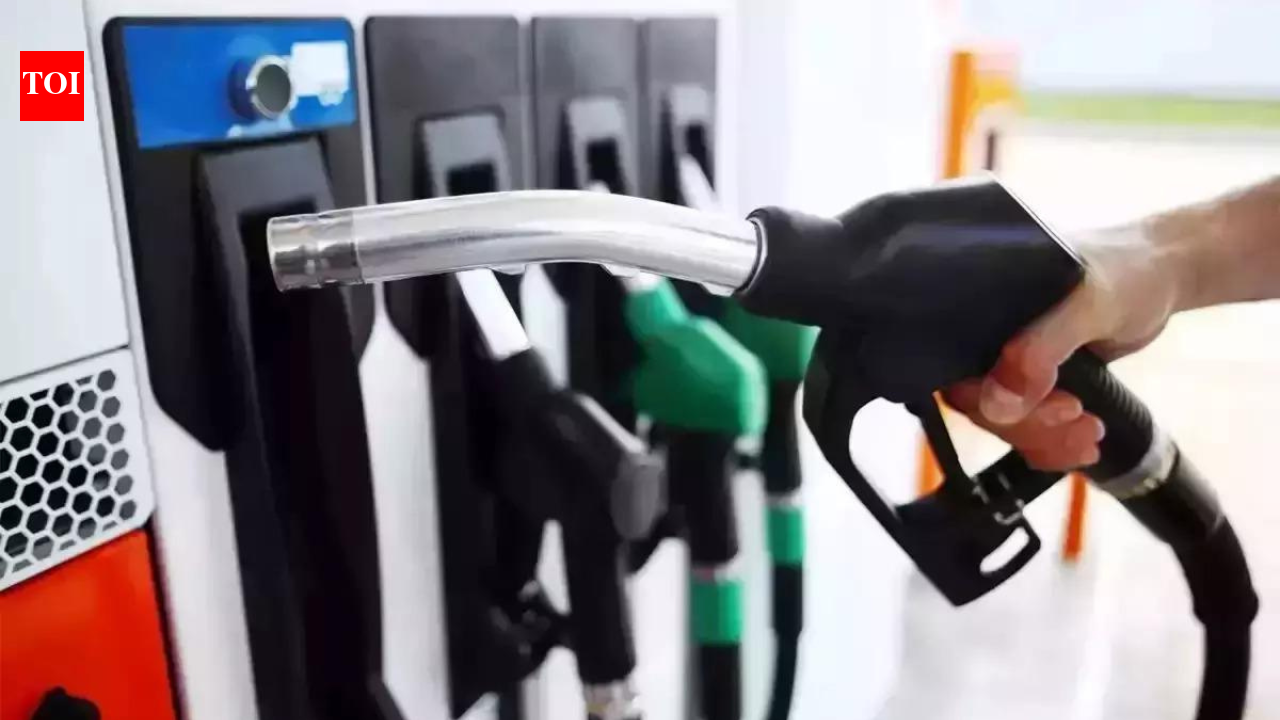
Reserve Bank Governor Sanjay Malhotra has said the government may eventually have to raise petrol and diesel prices if the ongoing Middle East crisis continues for a prolonged period, PTI reported on Wednesday.Speaking at a conference in Switzerland on Tuesday, Malhotra said the disruption in oil and gas supplies due to the conflict and blockade of the Strait of Hormuz has begun impacting India, which remains heavily dependent on energy and fertiliser imports.Referring to the crisis, the RBI governor said if it continues for a longer duration, it is a “matter of time that the government will actually pass on some of these price increases”.The government has so far not increased retail petrol and diesel prices despite the conflict in West Asia that began on February 28.Malhotra also said the government has remained fiscally prudent and continues on the path of fiscal consolidation.The comments come amid rising pressure on India’s external sector due to elevated crude oil prices and a weakening rupee, which has slipped below the 95 mark against the US dollar.Prime Minister Narendra Modi had earlier called for measures such as reducing fuel consumption and lowering edible oil usage to help conserve foreign exchange reserves.As global crude oil prices surge amid the prolonged Middle East conflict and disruptions around the Strait of Hormuz, India has so far avoided major increases in petrol and diesel prices, choosing instead to absorb the pressure through state-run oil marketing companies (OMCs), tax adjustments and supply management measures.The Centre has repeatedly asserted that there is no fuel shortage in the country and no plan to introduce rationing of petrol, diesel or LPG despite disruptions in global energy shipments linked to the Iran conflict and the Strait of Hormuz crisis.“There is no need to panic. There are sufficient supplies. There is no rationing in place. It’s not going to happen,” Oil Secretary Neeraj Mittal said recently at the CII Annual Business Summit.Officials said India currently maintains around 60 days of fuel stocks and nearly 45 days of LPG inventories despite continuing volatility in global energy markets.
OMC losses mount as crude prices surge
The government’s decision to hold retail fuel prices steady despite rising international crude rates has increased pressure on state-run oil companies.According to official discussions reviewed during recent government briefings, OMCs are estimated to be losing between Rs 1,000 crore and Rs 1,200 crore every day because of elevated crude prices and unchanged pump rates.Under-recoveries are estimated to have approached nearly Rs 2 lakh crore during the first quarter of 2026.The current crisis intensified after shipping movement through the Strait of Hormuz — a key global oil transit route handling nearly one-fifth of global crude flows — came under severe disruption during the Iran conflict.Brent crude prices surged above $110 per barrel during the latest phase of the crisis, sharply increasing import costs for major oil-consuming countries like India. India imports nearly 90 per cent of its crude oil requirements, making the economy highly vulnerable to global energy price shocks.
Govt focuses on supply stability, inflation control
The Centre has simultaneously attempted to prevent inflationary shocks and avoid panic in domestic fuel markets.Officials said India has increased procurement from alternate suppliers and secured additional energy cargoes to maintain uninterrupted supplies.“We have procured from other sources. We have procured from other countries. We have increased procurement from existing countries and that has kept us going in terms of supply management in the short run,” Mittal said.The government has also absorbed part of the global price shock through excise duty adjustments on petrol and diesel. Officials estimate the revenue impact of fuel-related tax reductions at nearly Rs 1.6 lakh crore.Prime Minister Narendra Modi on Sunday (May 10) urged citizens to conserve fuel, reduce unnecessary imports and avoid wasteful consumption as rising oil prices increase pressure on India’s import bill and foreign exchange reserves. The Prime Minister also encouraged greater use of public transport, carpooling, electric vehicles and work-from-home arrangements wherever possible. The government has described these as precautionary steps rather than emergency restrictions.
Pressure likely to continue
Fuel prices remain among the most politically sensitive economic issues in India because increases in petrol and diesel rates directly affect transport costs, food prices and household budgets.While the Centre has so far avoided large retail fuel price increases, analysts say prolonged suppression of prices could further strain OMC finances if crude prices remain elevated for a longer period.

Containers at the Port of Oakland in Oakland, California, US, on Thursday, March 26, 2026.
David Paul Morris | Bloomberg | Getty Images
Months after the Supreme Court ruled some tariffs were unconstitutional, the first round of tariff refunds has begun flowing in.
Oshkosh Corporation CFO Matt Field confirmed to CNBC that the company has started receiving tariff refunds as of Tuesday.
“Following acceptance of our initial filing, we have begun receiving payments on our tariff refund claims, representing an initial portion of our total claims submitted,” Field said.
The company has not yet verified its total refund amount, Field added.
Basic Fun, the company behind Care Bears and Tonka trucks, also told CNBC it began receiving tariff refunds on Tuesday.
CEO Jay Foreman said the refunds so far have only represented 5% of the company’s total claim on its early invoices.
“We will utilize the refund dollars to help support our 2026 cash flow and invest in our team. This is the toughest time of the year for toy companies,” Foreman said in a statement. “We’ll also be announcing to our staff that we will be increasing salaries to help offset cost of living increase, announcing promotions and larger merit increases. We are reinvesting the funds in our business and people.”
Logistics companies UPS, FedEx and DHL have previously said that they will file for tariff refunds on behalf of their customers, requiring no further action from them. The first phase of tariff refunds only covers requests for entries that CBP finalized within the past 80 days, though that process could take months to reach customers.
The U.S. Customs and Border Protection said in a court filing that it anticipated paying refunds of $35.46 billion on 8.3 million shipments, as of Monday morning.
In February, the Supreme Court invalidated President Donald Trump‘s tariffs imposed under the International Emergency Economic Powers Act of 1977. In the months that followed, companies began filing for tariff refunds in a portal, called the Consolidated Administration and Processing of Entries.
In a radio interview with WABC on Tuesday morning, Trump called the tariff refund situation “crazy.”
“In theory, you have to pay the tariffs back. We’ll fight that,” Trump said. “We were taking in fortunes from people that hate us, countries and companies that hate us.”

A cyber security expert says deleting chat history could lead to a lack of accountability if things go wrong.
Source link


What It Will Take to Make AI Sustainable

Israel’s Netanyahu held meeting in UAE with president during Iran war: PM office

Army officer among five soldiers martyred, 7 terrorists killed in Balochistan operation

-

 Tech5 days ago
A new frontier: Identity stack evolves for agentic systems | Computer Weekly
-

 Tech5 days ago
‘Orbs,’ ‘Saucers,’ and ‘Flashes’ on the Moon: Pentagon Drops New UFO Files
-

 Tech5 days ago
Nick Bostrom Has a Plan for Humanity’s ‘Big Retirement’
-
 Fashion5 days ago
New orders in German manufacturing up 5% MoM in Mar 2026: Destatis
-
 Business1 week ago
India among most resilient large EMs, better placed for future global shocks; policy reforms & strong buffers help: Moody’s – The Times of India
-

 Tech6 days ago
What Microsoft Executives Really Thought About OpenAI in 2018
-

 Sports5 days ago
Shaheen Afridi achieves landmark feat during opening Test against Bangladesh
-

 Tech6 days ago
The Canvas Hack Is a New Kind of Ransomware Debacle