

Entertainment
Meghan Markle spills Prince Harry bee harvesting job in confession

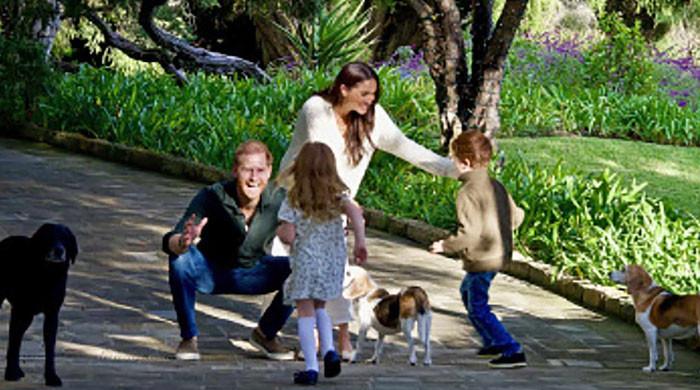
Meghan Markle has shared intimate details of her bee harvesting process as she introduces new ‘As Ever’ products
The Duchess of Sussex’s team, in a fresh ‘As Ever’ newsletter, has touched upon how Prince Harry, Princess Archie and Princess Lilibet help to harvest herbs for their holiday feast.
“When it comes to our founder’s favorites, the delicate, herbaceous flavor of sage ranks high on the list,” read the latest newsletter from Meghan’s lifestyle company.
“Why, you ask? Well, those photos you’ve seen this year on our Instagram of Meghan walking through what seems like lavender, with its gorgeous purple hue, actually share the beauty of flowering sage (Fun fact: the varietal is called Santa Barbara).”
“Those strolls, with Archie and Lili running in tow, her husband checking on the bees, Pula chasing the ball with Mia trying to keep up — those were the sun-drenched moments that made an everyday walk something a bit more magical. And that sage, that purple, that scent around the garden, was always there in the background,” said the newsletter.
“Here we are: a stunning sage honey, aromatic and earthy, epicurean in its depth of flavor and elegant simplicity, inspired by the treats she enjoys at her home with her family,” the newsletter shared. “Our Sage Honey is now available for your holiday table, to beautifully dress your Thanksgiving feast—either on the bird or on the vegetables. Or in a vinaigrette. Or as a spoonful in your tea. This special honey is the top holiday tip you’ll want to share. Enjoy!”
Entertainment
Unruly passenger tries to open United Boeing 737 door at 36,000 ft: Here’s what happened
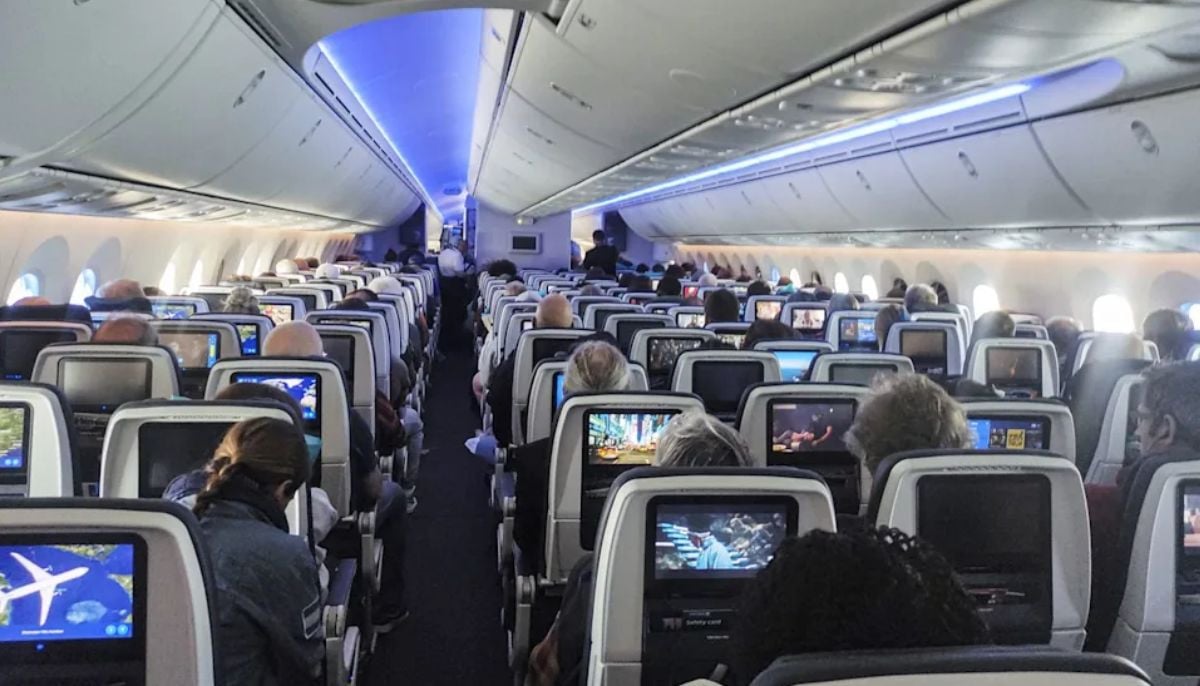
A United Airlines flight from Newark Liberty International Airport was forced to divert on Thursday, May 21, after an unruly passenger allegedly attempted to open a plane door while the aircraft was at 36,000 ft.
The United Airlines flight 1551, a Boeing 737 Max 8 with an estimated 145 passengers and 6 crew members on board, departed Newark at approximately 7 p.m., bound for Guatemala City, according to United Airlines officials. However, the plane was “forced to land at Washington Dulles International Airport due to a disturbance by one of its passengers.”
The air traffic control audio revealed a tense exchange between officials. A crew member confirmed that the passenger tried to open “Door 2L at 36,000 ft.”
Later, he also assaulted another person on board.
According to United Airlines, the flight touched down safely and was “met by law enforcement.” The person responsible for the disturbance is under arrest by the authorities.
The flight was later cancelled following the incident. United Airlines announced that passengers were provided overnight accommodations and that a new flight departed on Friday morning.
As per the FAA’s rules, the agency can impose up to $43,658 per violation.
One event can lead to several violations being committed. It is not known at this point if the passenger will be charged criminally.
This incident comes after several others involving United Airlines’ planes from Newark. This was due to a complaint by passengers who were left stranded on one of the airline’s planes in Newark, bound for Chicago, for about seven hours.
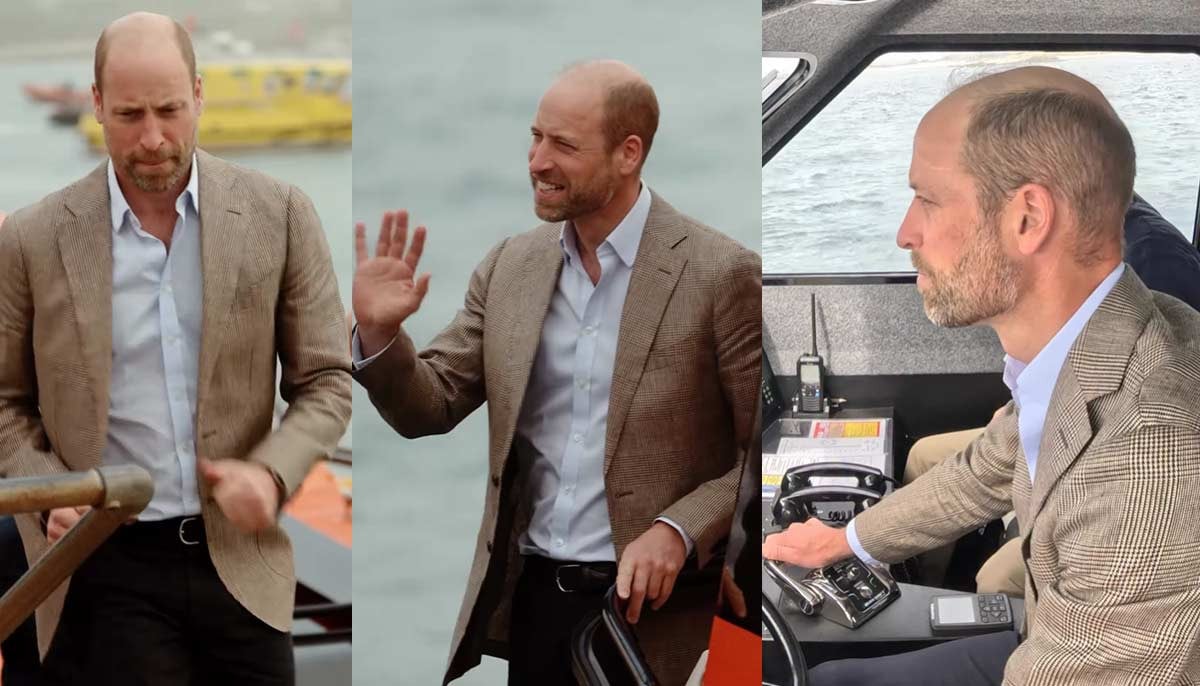
The British future monarch, Prince William, surprised locals as he travelled to the Isles of Scilly by a new pilot boat to attend a series of engagements.
The Prince and Princess of Wales sahred the details of William’s trip on their official IInstagram account as William, known The Duke of Cornwall in the region, arrived at the harbour in Hughtown on its new pilot boat, John Guy, named in memory of a long-serving Scillonian-born Duchy worker.
The vessel, funded by the Duchy of Cornwall, plays a vital role in keeping island waters safe and supporting daily life for the Scillonian community.
A crowd of excited tourists had gathered to greet the royal on the quayside.
William’s opened a new facility at the Isles of Scilly Hospital, where he also met staff and patients, sharing a laugh and a cup of tea with care home residents.
He has taken close interest in the development of healthcare provision on Scilly since he took over the Duchy when he became Prince of Wales and is keen to increase medical capacity to the Isles.
The upgraded facility combines NHS services with social care provision under one integrated model, allowing for more efficient use of staff and shared resources.
William also toured the near-complete construction site where the Duchy is delivering 10 new sustainable homes designed to address the islands’ severe housing shortage.
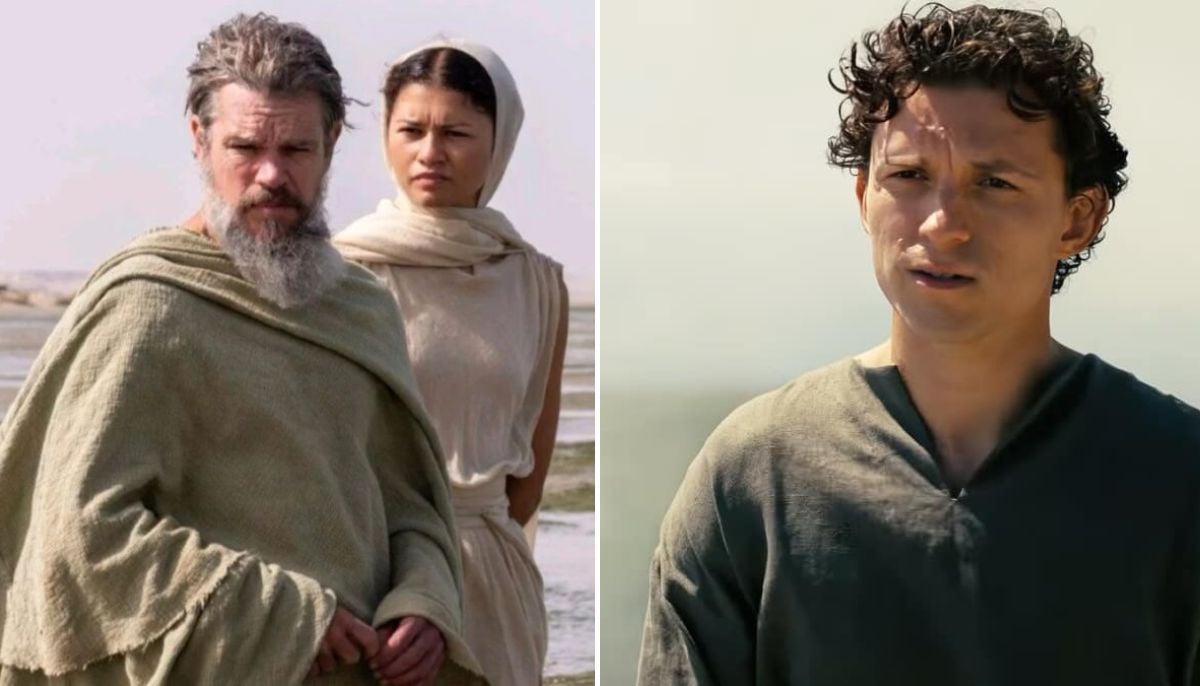
Zendaya apparently had two of her The Odyssey co-stars feeling a little jealous on set.
According to Matt Damon, director Christopher Nolan handed Zendaya praise so rare that both Damon and Tom Holland couldn’t stop talking about it.
Speaking to Elle for Zendaya’s latest cover story on May 21, Damon explained that Nolan is famously reserved when reacting to scenes. “Yep, good. Okay,” is apparently about as enthusiastic as the Oscar-winning director gets after a successful take.
But Zendaya managed to earn something far more elusive: a “perfect” take.
“Tom [Holland] and I were obsessed with this. She got a ‘perfect’? I’ve never even gotten a ‘great.’ She got a ‘perfect’?” Damon, 55, recalled.
The actor, who plays Odysseus in the upcoming epic, admitted the compliment sparked ongoing jokes between him and Holland, who plays Odysseus’ son Telemachus. “He and I bi*ched about it for the entire rest of the film. ‘Did you get anything today?’ ‘No, I got a ‘good’ – moving on.’”
The feat becomes even more impressive given that Zendaya was juggling four different projects at the time of filming: The Odyssey, Euphoria Season 3, Dune: Part Three, and The Drama.
“I remember being on set for Euphoria; it was a night shoot at a ranch. I was so tired, but I was also learning my Chakobsa lines for Dune,” the actress, 29, said. “It’s not like I have a lot of lines in The Odyssey, but I was working with Christopher Nolan! The most embarrassing thing in life would be messing up my lines, which did happen once,” she admitted.
Luckily, Nolan had nothing but praise for Zendaya’s professionalism and “grace” during the demanding shoot, calling her “a true movie star, but also an incredible actor.”
Zendaya portrays the goddess Athena in the upcoming film, which is based on Homer’s ancient Greek epic. The ensemble cast also includes Robert Pattinson, Lupita Nyong’o, and Charlize Theron.
The Odyssey is set to hit theatres on July 17, 2026.


Unruly passenger tries to open United Boeing 737 door at 36,000 ft: Here’s what happened

Trump says he will not attend son Donald Trump Jr’s wedding

The Best Memorial Day Tech Deals Worth Checking Out

-

 Entertainment6 days ago
Where Pete Davidson, Elsie Hewitt stand after breakup: Details revealed
-
 Entertainment1 week ago
Emilia Clarke recalls near-death incident while filming ‘Game of Thrones’
-
 Business1 week ago
Jersey Election 2026: Cost of living concern in St Helier Central
-

 Politics6 days ago
Rising diesel costs from Iran war strain US school budgets
-

 Politics1 week ago
UK’s Starmer faces survival battle as potential rivals circle
-
 Tech1 week ago
Greg Brockman Officially Takes Control of OpenAI’s Products in Latest Shakeup
-
 Entertainment1 week ago
Drake drops highly anticipated "Iceman" album, plus two surprise albums
-
 Politics1 week ago
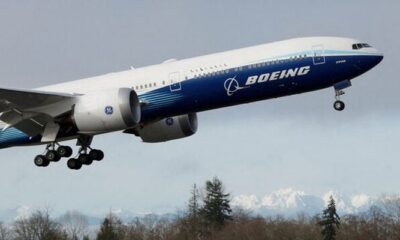
Trump says China will order 200 Boeing jets