

Fashion
Mulberry turnaround on track, H1 sales still dip but losses narrow sharply


Published
November 19, 2025
Mulberry delivered its half-year results on Wednesday and the luxury leathergoods business said the 26 weeks to the end of September showed “strong momentum” with the company executing its strategy “at pace”.
Not that this means its numbers were all positive. In fact its revenue fell 4% to £53.9 million but with a strong reaction from Wholesale (+36%) “aligned to the strategic emphasis”.
Overall like-for-like Retail & Digital revenue declined 2%, but in Retail Stores, both full-price and off-price, like-for-like revenue increased 4% in the key markets (UK, Europe and US), with positive momentum building since Q2.
Asia Pacific revenue was down 17% versus last year, driven by like-for-like declines in stores (-14%) and store closures (-3%) as the strategy of structure simplification continued.
The gross margin increased to 69% from 67% by it maintaining a full price, non-discounted offering in Retail and Digital.
Meanwhile, gross profit was only flat at £37.3 million. That said, the operating loss improved by 63% going from £13.1 million a year ago to a much narrower loss of £4.9 million this time. And the loss before tax also narrowed by 56% hitting £6.9 million in the latest period. That includes adjusting items of a net credit of £1 million for the closure of five retail stores and UK head office restructuring costs.
That was all on a reported basis. The group’s underlying loss for the period of £7.4 million was smaller than the £15.2 million of a year earlier and “was delivered through stable gross profit, enhanced by the results of the review of the operating cost base in implemented in FY25 and continuing cost control”.
Trading was in line with the board’s expectations and the focus during the period was on executing the ‘Back to The Mulberry Spirit’ strategy previously outlined, and on “operational discipline to improve margins and cost control”.
New products
The half saw the first product launch under the new creative team with the Roxanne family and continued evolution of key families including the Bayswater 9 to 5. It also saw strong engagement with new marketing campaigns to connect with new and existing customers, including Cynthia Erivo as a brand ambassador in September 2025.
The optimisation of the store network including closure of six stores in Asia, and new wholesale agreements in the UK with John Lewis, Liberty and Harvey Nichols.
The company also said the positive trading momentum is continuing in H2, despite ongoing external headwinds and inflationary pressures for the sector.
The second half also sees the launch of new products — the Hackney, the Lennox and the Boston — and the company is “well set for the key festive trading period”.
CEO Andrea Baldo said that “this has been an encouraging first half as we continue to deliver our ‘Back to the Mulberry Spirit’ strategy. We’re still early in the turnaround, but the foundations we’ve put in place are working, and we’re starting to see that reflected in performance.
“We’re strengthening our margin and improved our cash position through a greater focus on full-price sales and disciplined cost management, while our refreshed product offer and creative direction are reconnecting the brand with customers. The strong response to new icons the Roxanne and Hackney shows that Mulberry’s distinctive spirit continues to resonate”.
Copyright © 2025 FashionNetwork.com All rights reserved.











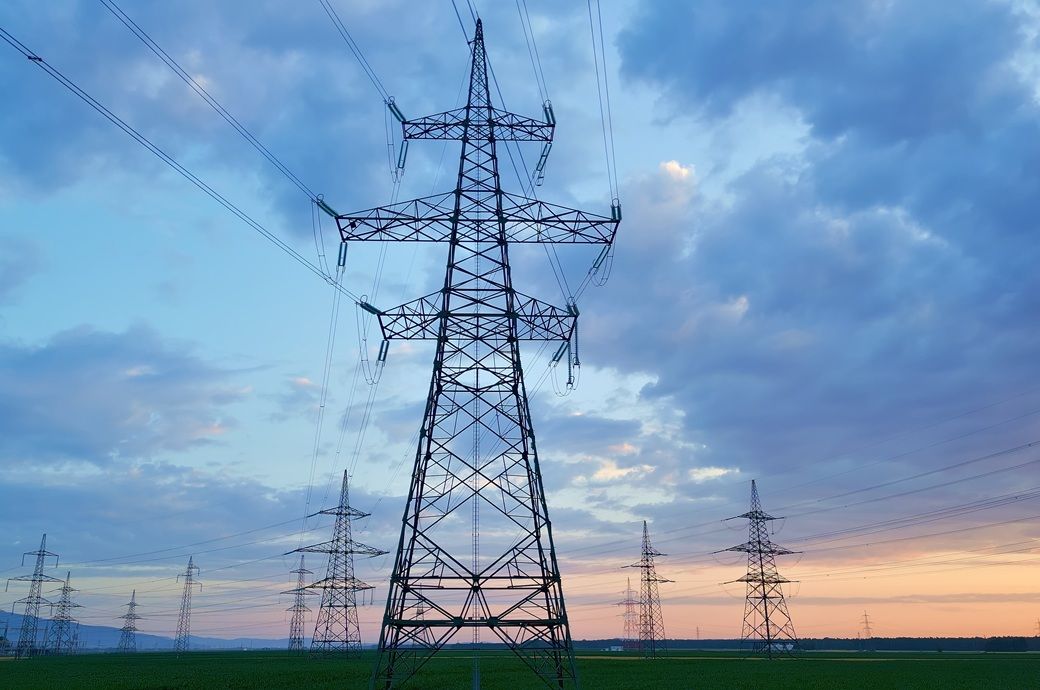
The report highlighted that although overall energy demand growth slowed compared with 2024 and remained slightly below the previous decade’s average, electricity demand rose by around 3 per cent, driven by increased usage across buildings, industry, electric vehicles, and data centres.
Global energy demand growth slowed to 1.3 per cent in 2025, while electricity demand rose around 3 per cent, driven by EVs, industry, and data centres, according to IEA.
Solar PV led supply growth for the first time.
Oil demand grew modestly, and coal growth slowed.
CO2 emissions rose slightly.
Renewables and nuclear expansion highlighted an accelerating shift towards cleaner energy systems.
Solar photovoltaic (PV) emerged as the largest contributor to global energy supply growth for the first time, accounting for over 25 per cent of the increase. Natural gas followed with a 17 per cent share, while renewables and nuclear together met nearly 60 per cent of additional demand.
Global oil demand rose modestly by 0.7 per cent, reflecting the continued expansion of electric vehicles, with sales surpassing 20 million units in 2025. Coal demand growth slowed overall, with declines in China offset by increases in the United States due to high natural gas prices.
“Global energy demand continued to increase in 2025 against a complex economic and geopolitical backdrop, with one trend unmistakeable: the expanding electrification of economies,” said Fatih Birol, IEA executive director.
He added that electricity consumption was growing much faster than overall energy demand, with one energy source outpacing all others. He noted that solar PV accounted for over a quarter of global energy demand growth for the first time, followed by natural gas, and added that countries prioritising resilience and diversification would be better placed to manage volatility and ensure secure, affordable energy.
Regional trends varied significantly. Energy demand growth in the United States rose sharply, supported by industrial activity, data centre expansion, and colder weather, while China’s growth slowed to 1.7 per cent due to rising renewable adoption and improved efficiency.
Global energy-related CO2 emissions increased marginally by around 0.4 per cent. Emissions declined in China and remained flat in India, aided by renewable deployment and favourable weather conditions, while advanced economies recorded higher emissions growth due to colder winter conditions.
In the power sector, solar PV generation surged by a record 600 terawatt-hours, marking the largest annual increase for any electricity generation technology. Battery storage emerged as the fastest-growing segment, with around 110 gigawatts of new capacity added, while nuclear energy also saw renewed momentum with over 12 gigawatts of new reactors under construction.
The IEA noted that cumulative deployment of low-emissions technologies since 2019 now offsets fossil fuel consumption equivalent to the entire energy demand of Latin America, underscoring the accelerating transition towards cleaner energy systems.
Fibre2Fashion News Desk (SG)
In a blog post, Alfred Kammer, director of the IMF’s European department, said his organisation sees growth slowing down in the continent. Initial data point already to weaker private investment and consumption.
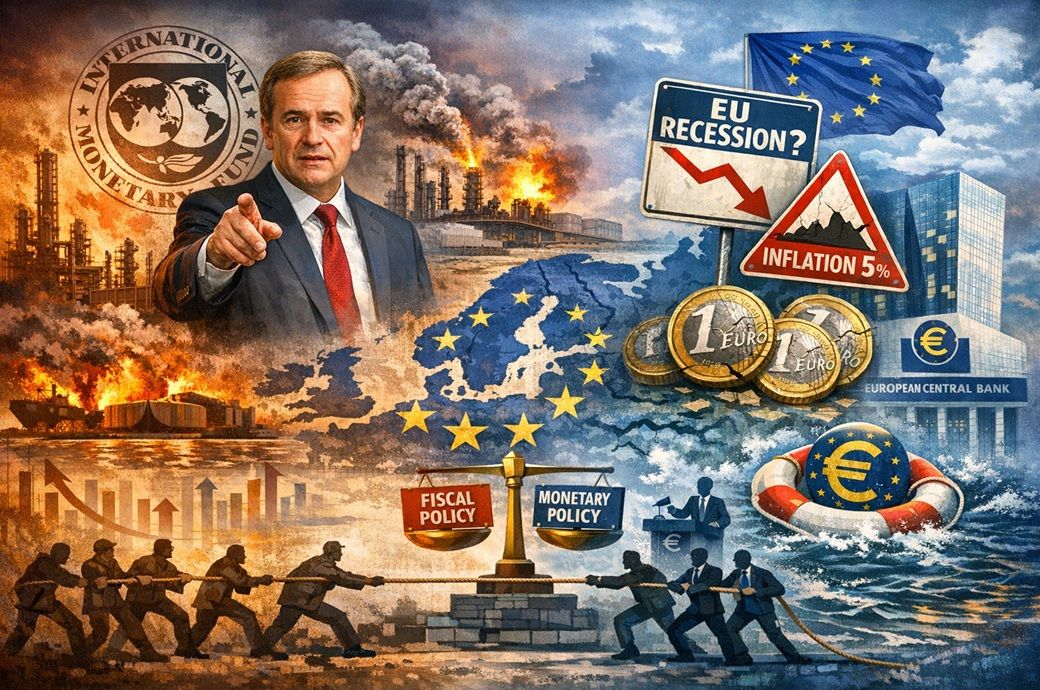
The energy shock that has hit Europe due to the Middle East conflict, though smaller than in 2022, is weighing on growth and pushing inflation higher, an IMF expert recently cautioned.
IMF sees growth slowing down in the continent.
Initial data point already to weaker private investment and consumption.
Central banks must remain laser focused on keeping inflation expectations anchored, he wrote.
The outlook for euro area growth is projected at just 1.1 per cent in 2026, for the European Union it is 1.3 per cent; and this forecast comes with a high degree of uncertainty.
In a more severe scenario as described in the World Economic Outlook—a persistent supply shock compounded by tightening financial conditions—the EU could come close to recession with inflation approaching 5 per cent. No European country is spared, Kammer observed.
Policymakers face intense pressure—to act fast, visibly and for all, which results in policies that have more long-term downsides than short-term benefits, he wrote.
Targeted support is much more effective. Europe’s response to this shock should be shaped by two imperatives, he suggested. First, robust macroeconomic policy that is fit for a world with unpredictable and frequent shocks, and second, resilience built without wasting fiscal resources or getting in the way of markets.
The first imperative involves getting monetary and fiscal policy right. Central banks must remain laser focused on keeping inflation expectations anchored, the IMF expert wrote.
In the euro area, where inflation is close to target and medium-term expectations are broadly anchored, the European Central Bank has some scope to wait and observe the shock evolve before acting. IMF now expects a cumulative 50 basis point increase in the policy rate by the end of this year, maintaining a broadly neutral monetary stance in light of higher near-term inflation expectations, Kammer noted.
A rise in core inflation or increasing medium-term expectations would warrant a more restrictive stance, he wrote.
“Europe must reform under pressure. The current shock is not an argument for delay. It is all the more reason to push forward the reform agenda,” Kammer added.
Fibre2Fashion News Desk (DS)

The text of the agreement was released on February 7.
India and the US will today resume talks on the first phase of their bilateral trade agreement in Washington, DC.
The three-day talks will discuss the situation that has evolved under the changed US tariff regime.
The two unilateral probes launched by the USTR against India may also be discussed at the meeting.
Darpan Jain, additional secretary in the department of commerce, is leading the Indian team.
Darpan Jain, additional secretary in the department of commerce, is leading the Indian team.
The three-day talks will discuss the situation that has evolved under the changed US tariff regime, according to Indian media reports.
Following the US Supreme Court decision against the sweeping tariffs imposed by President Donald Trump on several countries, the US administration imposed a 10-per cent tariff on all countries beginning February 24 for 150 days.
This led to a meeting between chief negotiators of both sides scheduled in February getting postponed to this month.
The two unilateral investigations launched by the US Trade Representative (USTR) against India may also be discussed at the meeting. India has rejected allegations made by the USTR in these two probes under its Section 301 of Trade Law and has called for termination of the probes as the initiation notice has failed to provide cogent rationale to substantiate the claims.
Fibre2Fashion News Desk (DS)


Global energy growth slows to 1.3% in 2025: Report

How to Watch the Lyrids Meteor Shower at Its Peak

Spike in petrol thefts after Iran war pushed up fuel prices

-

 Fashion5 days ago
France’s LVMH Q1 revenue falls 6%, shows resilience amid Iran war
-

 Sports1 week ago
The case for Man United’s Fernandes as Premier League’s best
-

 Entertainment1 week ago
Palace left in shock as Prince William cancels grand ceremony
-
 Business1 week ago
UK could adopt EU single market rules under new legislation
-

 Entertainment6 days ago
Is Claude down? Here’s why users are seeing errors
-

 Fashion1 week ago
Energy emerges as biggest cost driver in textile margins
-
 Business1 week ago
Delta Air Lines unveils first new Delta One suite in premium cabin arms race
-

 Tech1 week ago
A Lot of Shops Won’t Fix Electric Bikes. Here’s Why