

Entertainment
Long road from idea to ignition as Punjab’s green transit begins to breathe

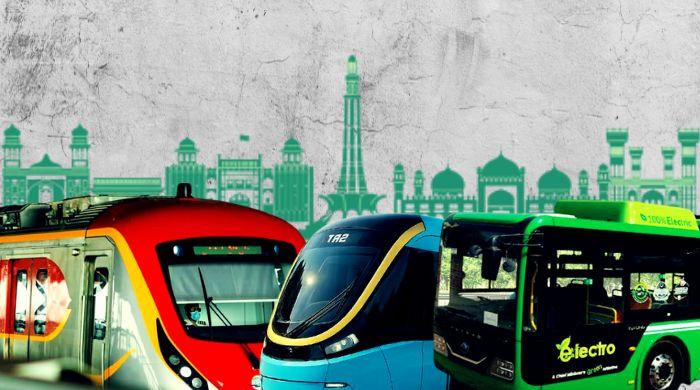
Where there is will, there is a way. This proverb fits well in the resolve of the execution of the green urban transport system in Punjab under Pakistan-China synergic cooperation to promote a green vehicular traffic environment.
A few years back, it was just a dream to let the public experience new modes of commutation. But now, the dream has been translating into a tangible reality with robust will and fast implementation of making things happen.
Given such tenacity and determination, various dimensions of carbon-free urban commutation systems featuring smart digital technologies and the evolution of commuting patterns are currently on the roll in Punjab. High-tech urban travel experiences and modern transportation models are set to play a pivotal role in shaping urban cities into smart cities, facilitating people to enjoy modern commutation.
Understanding the importance of the China-Pakistan Economic Corridor (CPEC) as the cornerstone of economic cooperation between the two strategic partners, as well as a transport-driven project, both nations have jointly maintained their pursuit of CPEC’s Five Corridors, namely Growth, Livelihoods, Innovation, Green Transport, and Openness.
Interplay of the China-built Orange Line Metro Train Lahore (OLMT), China-made electric buses, and the upcoming Chinese “Super Autonomous Rapid Transit (SRT) Metro” is changing the commutation experience of all and sundry in Punjab, the home of more than 100 million people.
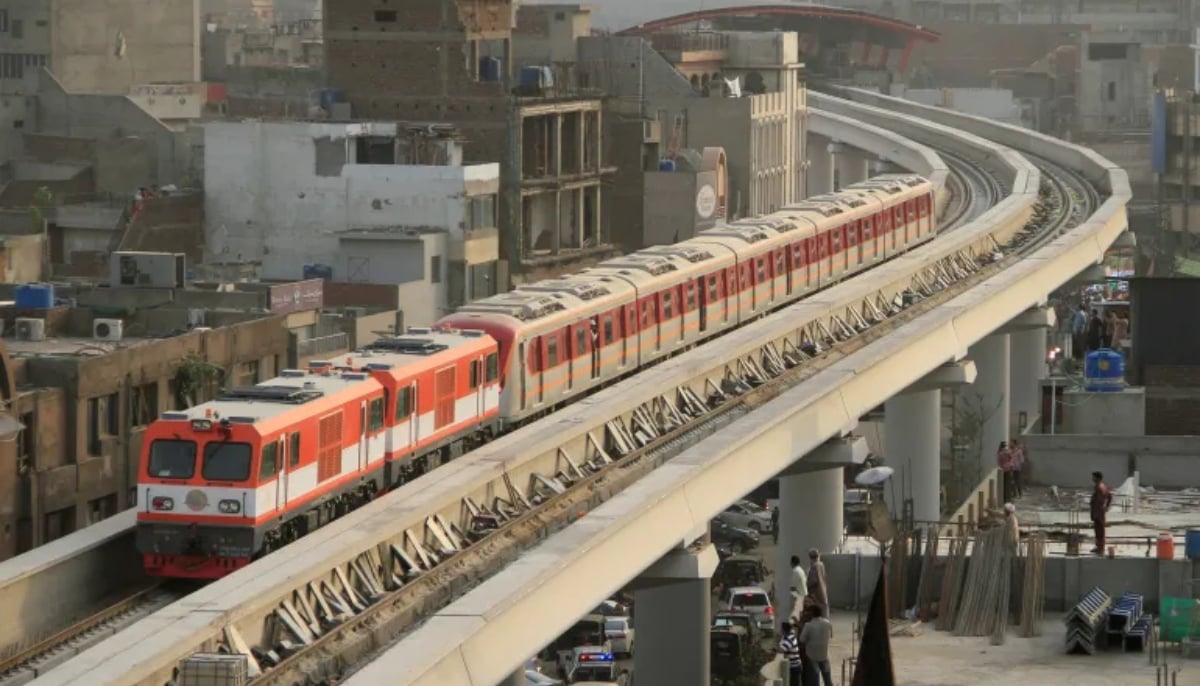
Lahore OLMT, being the first CPEC project in Pakistan, became operational on October 26, 2020. More than 1,100 electric buses have been put into operation in various cities of Punjab for the travel facilitation of people of the province since last year.
Now charged up with the spirit of the Belt and Road Initiative (BRI) vision, the Chinese SRT Metro is all set to enter Pakistan’s transport landscape. The high-tech commuting service will debut in Lahore, the economic hub and capital of Punjab, in the coming days.
The SRT, known as a trackless, ticketless and battery-powered electric tram, came here after the Chinese company, NORINCO International Cooperation Ltd, brought it to Pakistan on July 21, 2025.
The company is already credited with introducing a modern and top-notch transport system in Pakistan by unveiling, operating, and maintaining OLMT.
The SRT tram, also called the metro on road, was showcased at the Lahore Expo in September 2025 and allowed spectators to see the top model of transportation being practised in urbanised cities.
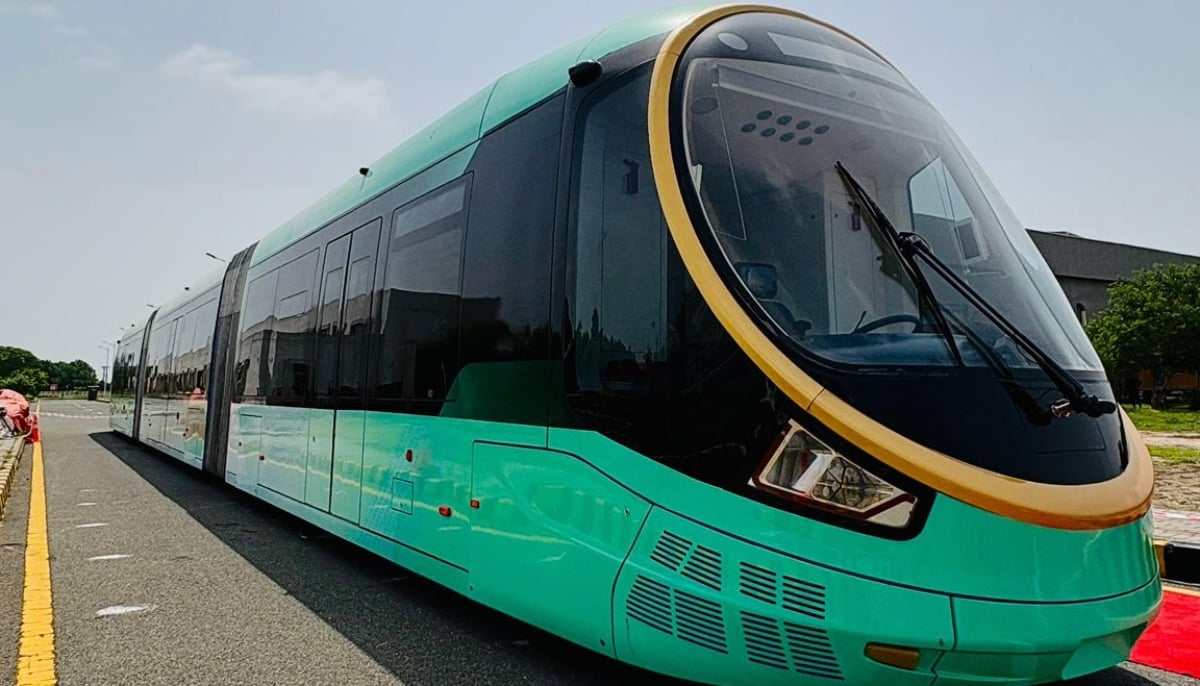
The test run came into effect on the routes of Lahore recently. According to the proposed route, it will ply from Thokar Niaz Baig to Harbanspura. Meanwhile, Gulberg locality will be marked as the second route.
In an exclusive interview, when asked, the company’s CEO, Tan Zidong, said the Super Autonomous Rapid Transport system is a highly innovative and eco-friendly initiative that will greatly enhance Punjab’s public transport network.
“It offers faster, safer, and cleaner mobility while being more cost-effective, as it does not require traditional rail tracks or overhead power lines. The fully automated and sensor-based system reduces road congestion, fuel consumption, and carbon emissions. Most importantly, it provides affordable, comfortable, and sustainable travel options for local communities, improving connectivity and overall quality of life,” he mentioned.
The increasing trend of motorised vehicles for commuting has emerged as one of the city’s biggest reasons behind frequent traffic chaos, traffic jams, and road bottlenecks. In routine practice for intracity movements, local people use various vehicles such as two-wheelers like motorcycles, four-wheelers like cars, three-wheelers like rickshaws, besides taxis and buses. In the form of SRT, commuters are going to cherish a superior-quality travelling experience.
A trip from Thokar Niaz Baig to Harbanspura, about 24 km, usually takes, I don’t know, 45, 50 minutes, sometimes more if the traffic is just… awful. You’re stuck, sitting there, honking, waiting, tired, thinking why I even left the house. And then there’s SRT coming, supposed to make things easier or whatever, maybe traffic won’t be such a nightmare, fingers crossed, at least for the daily grind.
According to the Punjab Mass-Transit Authority (PMA), personalised transportation consumes almost 8% of the per capita income of the country. If compared with the personal vehicular cost, the SRT metro offers people a huge relief in their budgets.
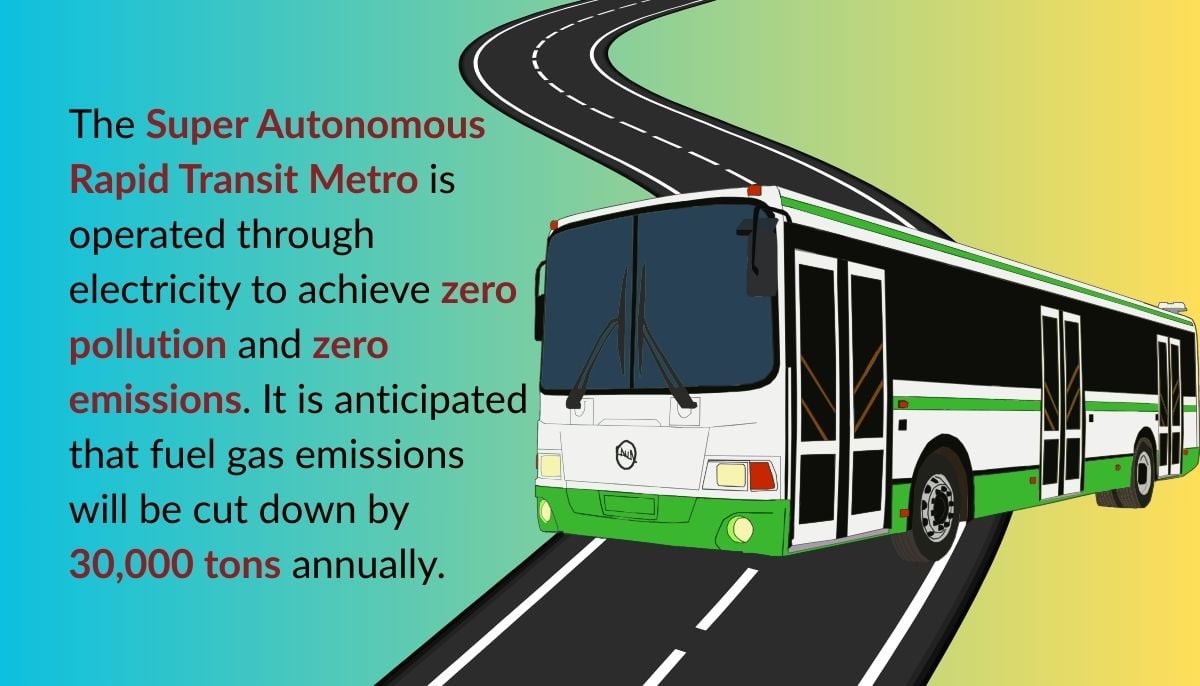
Moreover, the use of the Chinese subway metro will help reduce the number of cars on city roads, which will have a positive impact on the environment with minimal gas emissions. Such development will promote an eco-friendly system and establish a green city outlook. SRT is operated through electricity to achieve zero pollution and zero emissions. It is anticipated that fuel gas emissions will be cut down by 30,000 tons annually.
NORINCO International spokesperson Taha Khan Aziz said that the upcoming operation of the SRT metro line would help enable Pakistan to have the most advanced urban subway transit operating system in South Asia, and would greatly improve the traffic conditions in Lahore and become a new landmark of the city.
“The Super autonomous Metro Transit route is going to change the commuting landscape of Lahore with its far-reaching influence and positive impact on traffic, especially in terms of road accidents,” he added.
According to data from the Punjab Emergency Service (Rescue 1122), speeding is marked as one of the main reasons for accidents. Data revealed that transport accidents cause approximately 1.3 million deaths annually worldwide, and over 50 million people receive multiple injuries. Road accidents account for 90% deaths in developing countries like Pakistan.
With the operationalisation of the SRT tram in Lahore, Pakistan will be well-positioned to meet the UN 2030 Agenda for Sustainable Development, which sets the target of reducing 50% global number of deaths and injuries due to traffic accidents.
First introduced in Yancheng, Jiangsu Province, China, in April 2021, the SRT system has already won the prestigious Zhan Tianyou Award by the China Civil Engineering Society (CCES), recognising its innovative contribution to public transport. Its operation in Pakistan will be a breath of fresh air for local commuters.
Similar technologies are already in use in countries including Malaysia, the UAE, and Türkiye. The introduction of the trackless metro meets the merits of the five-year transport master plan envisioned by Punjab Chief Minister Maryam Nawaz. If all goes well, the initiative will be deployed in 30 cities across the province.
Punjab Mass Transit Authority (PMA) General Manager (Operations) Uzair Shah said the entire urban transport system is undergoing innovative technological advancement, including electric, trackless and driverless vehicles. Punjab is also becoming a beneficiary of such high-tech public transport models offering local people easy, affordable and smart mobility by resolving their daily transportation woes.
Meanwhile, Lahore OMLT has another value addition in the public transport system that has been blessing people of Lahore with affordable, effective, swift and eco-friendly commutation since its launch in 2020.
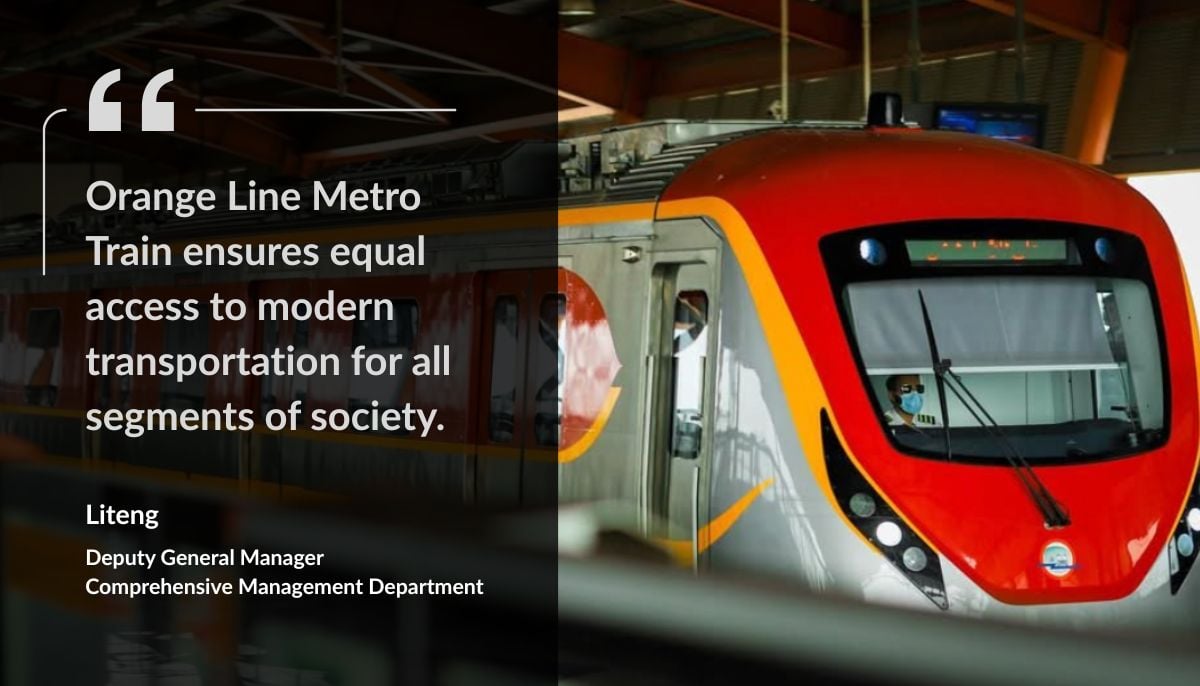
South Asia’s 1st electric-run railway transportation initiative under the CPEC framework, OLMT, is going to successfully complete its five-year operation on October 25, putting healthy impacts on local commutation and environmental protection in Lahore, home of more than 10.3 million people.
It is is Pakistan’s first urban railway system as well as the first implemented large-scale public infrastructure project of the China-Pakistan Economic Corridor under the “Belt & Road Initiative”.
The project’s Comprehensive Management Department Deputy General Manager Liteng told Geo.tv that “the Orange Line provides a modern, punctual, and safe mode of transport for the people of Lahore, significantly reducing travel time across the city’s key routes”. As an electric-powered mass transit system, he said, “OLMT helps reduce air pollution and carbon emissions, contributing to a cleaner and greener Lahore.”
Replying to a query, he revealed that with affordable fares, dedicated facilities for women, the elderly, and persons with disabilities, “OLMT ensures equal access to modern transportation for all segments of society.”
“The proposed solarisation of the Orange Line is a remarkable step toward sustainable urban transport, and by shifting to solar energy, we can significantly reduce electricity costs, lower carbon emissions, and ensure uninterrupted, eco-friendly operations.
“This initiative aligns perfectly with Pakistan’s green energy goals and demonstrates our commitment to environmental responsibility and long-term operational efficiency,” he added.
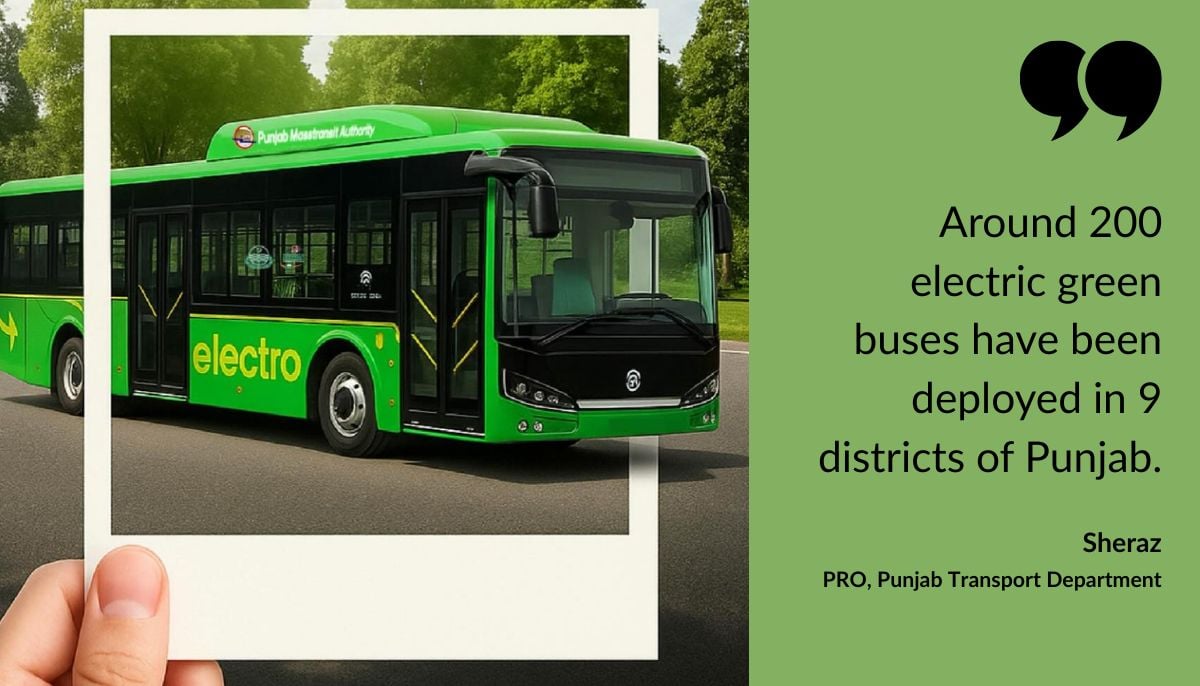
Urban mobility in Punjab is also upgraded with the induction of electric buses being brought from China in phases.
Punjab Transport Department PRO Sheraz said that around 200 electric green buses have been deployed in nine districts of Punjab, including Mianwali (15 buses), Wazirabad (15 buses), Sargodha (33 buses), Sahiwal (16 buses), DG Khan (24 buses), Faisalabad (30 buses), Pakpatan (15 buses), Lahore (40 buses), and Muzaffarabad (17 buses).
“The rest of the 1,000 buses and more will ply on the roads of the other remaining districts of Punjab,” he added. The fare for this service is proposed to be just Rs20 as the provincial government plans to keep the service within the budgetary range of low-income groups.
Each bus is furnished with air conditioning and free Wi-Fi. Other features are an automated ticketing system and a flexible design aligned to the needs of passengers with disabilities, along with safety and comfort measures. Similar projects are being put into play in Pakistan. In 2024, Islamabad became a beneficiary of first batch of 160 electric buses from China.
In the end, it all comes down to the same old thing: if the work keeps moving, people will start to feel the difference on the road. Maybe not today, maybe not this month, but slowly the city changes around you. A bit less noise in one corner, maybe a quicker ride somewhere else, a bus that shows up when it feels like it, it’s not some grand transformation.
Half the time it won’t even feel smooth, and something or the other will still break down because that’s just how things go here. But still, you can tell the ground is shifting a little. Small changes, tiny ones even, but noticeable if you bother to look. And for a place as packed and restless as Punjab, even that sort of half-step toward cleaner, calmer travel is something worth taking, or at least hoping it sticks.
Yasir Habib Khan is a freelance journalist based in Pakistan.
Header and thumbnail image by Geo.tv

“CBS Saturday Morning” sits down with Morgan Neville, the director of “Man on the Run,” a documentary about the life of Paul McCartney after the Beatles broke up.
Source link

Timothee Chalamet found himself embroiled in backlash on social media after he shared his controversial opinion on ballet and Opera as dying art forms.
The 30-year-old actor sparked an outrage with his comments as ballet and opera artists began to share their disappointment over the “tone deaf” joke he made.
The Marty Supreme star drew a response from the Metropolitan Opera itself as the organisation shared a TikTok video with the caption, “This one’s for you, Timothee Chalamet…”
The video showed people diligently working on costumes and wigs, as well as artists rehearsing, and the hustle bustle ahead of a performance, and the text over the video read, “All respect to the opera (and ballet) people out there,” taking a dig at Chalamet’s comment which he made after jokingly insulting the art forms.
The Metropolitan Opera’s response comes after many artists, as well as companies including the Royal Ballet and Opera in London critiqued the Dune actor for his disrespectful comments.
During the interview between Chalamet and Matthew McConaughey, the Beautiful Boy actor said, “I don’t want to be working in ballet, or opera, or things where it’s like, ‘Hey, keep this thing alive, even though like no one cares about this anymore.’ All respect to all the ballet and opera people out there.”
Although he immediately realised the nature of his remark, and said, “I just lost 14 cents in viewership. I just took shots for no reason,” it seems that had already been too late.
Entertainment
UAE president says country is well and ‘no easy prey’ in first public comments since Iran strikes
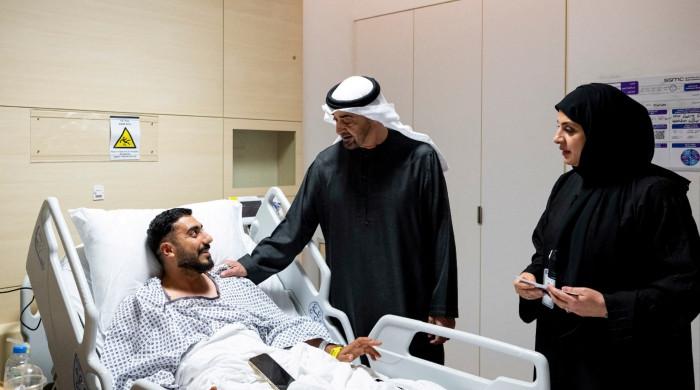
- UAE president vows to carry out duty towards country.
- Sheikh Mohammed says UAE “was no easy prey”.
- Will emerge stronger from war: Sheikh Mohammed.
The president of the United Arab Emirates has said his nation was in a time of war but was well and told his enemies it was no easy prey, in his first public comments since Iran launched missiles at its Gulf neighbour amid US-Israeli strikes.
“The UAE has thick skin and bitter flesh — we are no easy prey,” Sheikh Mohammed bin Zayed Al Nahyan, who is also ruler of Abu Dhabi, said in comments, made on Friday when visiting those injured in strikes, aired on Abu Dhabi TV on Saturday.
“We will carry out our duty towards our country, our people, and our residents who are also part of our family,” he said.
The UAE “is in a period of war”, Sheikh Mohammed said, emphasising that “we will emerge stronger”.
The UAE, which consists of seven emirates including Dubai, would protect everyone in the country, he said.
Separately, an Emirati official said that the UAE wanted the Iranian aggression against non-combatant states, the Gulf states, to end immediately.
“Any sort of escalation is worrying. We want to contain the war. We don’t want the war to expand. We want to start with the Iranians realising that they are not helping themselves by attacking their whole neighbourhood and to stop there and realise that,” the official said.
Earlier today, the country’s defence ministry said that it intercepted 15 ballistic missiles and 119 drones as Iran kept up its attacks on its Gulf neighbour.
“Today UAE air defence systems detected 16 ballistic missiles, of which, 15 were intercepted and destroyed, while one ballistic missile fell into the sea,” the defence ministry said in a post on X.
“Air defence systems also detected 121 UAVs (unmanned aerial vehicles), of which 119 were intercepted, while two fell within the territory of the UAE.”
The ministry stated that a total of 1,305 Iranian UAVs have been detected so far, of which 1,229 were intercepted, while 76 UAVs fell within the territory of the UAE. Eight cruise missiles were also detected and destroyed.
These attacks, it added, resulted in the death of three, including a Pakistani, Nepali and Bangladeshi national, while injuring 112 people of various nationalities.


Ball State fires Michael Lewis after 3 straight losing seasons

Iran Assures Neighbours of Non-Aggression Amid Regional Tensions

Paul McCartney's overlooked work

India Us Trade Deal: Fresh look at India-US trade deal? May be ‘rebalanced’ if circumstances change, says Piyush Goyal – The Times of India

LPGA legend shares her feelings about US women’s Olympic wins: ‘Gets me really emotional’

Bobby J. Brown, “The Wire” and “Law & Order: SUV” actor, dies of smoke inhalation after reported fire

-
Business1 week ago
India Us Trade Deal: Fresh look at India-US trade deal? May be ‘rebalanced’ if circumstances change, says Piyush Goyal – The Times of India
-
 Sports1 week ago
LPGA legend shares her feelings about US women’s Olympic wins: ‘Gets me really emotional’
-
 Entertainment1 week ago
Bobby J. Brown, “The Wire” and “Law & Order: SUV” actor, dies of smoke inhalation after reported fire
-

 Fashion1 week ago
South Korea’s Misto Holdings completes planned leadership transition
-

 Entertainment1 week ago
Pakistan’s semi-final qualification scenario after England defeat New Zealand
-
 Fashion1 week ago
Texwin Spinning showcasing premium cotton yarn range at VIATT 2026
-
 Business1 week ago
Greggs to reveal trading amid pressure from cost of living and weight loss drugs
-

 Politics1 week ago
Iran launches retaliation against Israel, launches ballistic missiles