

Business
Minimum wage to rise again from April to £12.71 for over-21s

Emer MoreauBusiness reporter
 Getty Images
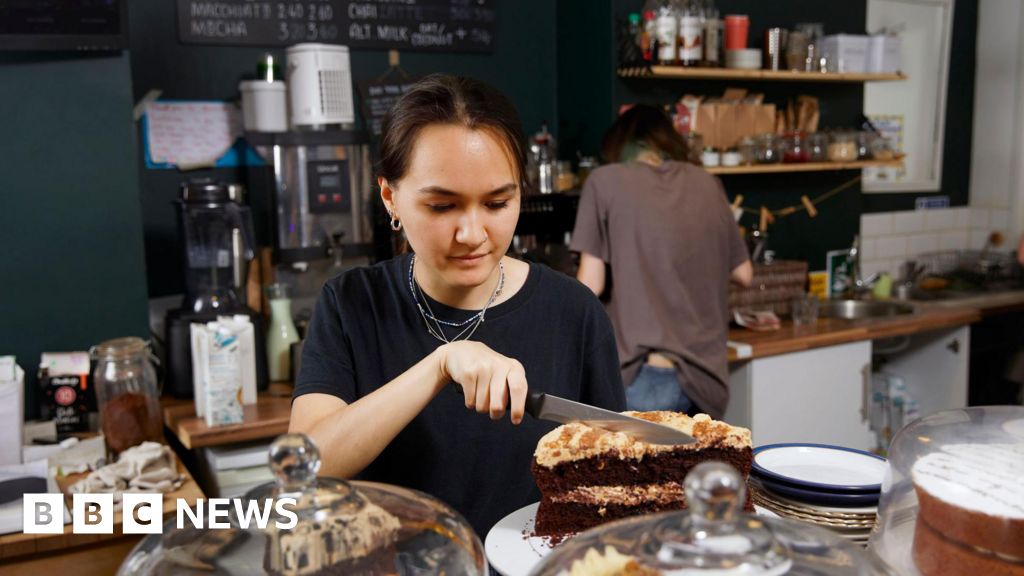
Millions of people are set to get a pay rise from April due to an increase in the minimum wage, the government has announced ahead of Wednesday’s Budget.
The hourly rate for over-21s will rise by 50p to £12.71, with workers aged 18-20 seeing an 85p rise to £10.85, and under-18s and apprentices getting 45p more to £8 an hour.
Chancellor Rachel Reeves said 2.7 million people will benefit from the increases, which will take effect from April next year.
However, businesses have warned that further increases to the minimum wages could result in hiring freezes.
The minimum wage increases are on top of a 6.7% for over-21s and 16.3% for 18 to 20-year-olds respectively last year, when there was also a rise in employers’ National Insurance contributions.
The Treasury said the new rates for 2026 struck a balance between “the needs of workers, the affordability for businesses and the opportunities for employment”.
But higher wages pushes up running costs for firms, which can react by reducing hiring, giving lower pay rises to other workers or raising prices for customers.
There widespread evidence that employers taken some or all of such steps in the last year, following previous hikes and tax rises.
However, Reeves said the cost of living was still the biggest issue for working people.
“The economy isn’t working well enough for those on the lowest incomes,” she added.
How much is the minimum wage going up by?
- The minimum wage for over 21s, known as the National Living Wage, will rise by 4.1%. For someone working full time (37.5 hours a week), that equates to £900 more a year to £24,784.50.
- The minimum wage for 18 to 20 year olds known as the National Minimum Wage will go up 8.5%. For someone that age working 20 hours a week, this would be £21,157.50. The government has said it wants to phase out a separate band for this age group, and establish a single rate for all adults
- 16 and 17 year olds and apprentices will see their minimum wage increase by 6%
The Real Living Wage, is an unofficial hourly rate of pay which is overseen by the Living Wage Foundation charity.
It is aimed at UK workers aged 18 and over, but is voluntary, and firms can choose whether or not to pay it. The wage increases every October.
Katherine Chapman, director of the Living Wage Foundation, welcomed the increase, but said it still fell short of covering the cost of living.
“It will still fall short of the voluntary real living wage which is the only wage rate based solely on the cost of living. The real living wage is currently £13.45 in the UK with a higher rate of £14.80 in London.”
Ms Chapman noted 16,000 employers had already committed to going beyond the legally required minimum.
The Resolution Foundation think tank, which focuses on low to middle income households, said the increase for 18 to 20 year olds was “unnecessarily big” and could make it harder for people in that age group to find a job.
“These steep increases risk causing more harm than good if they put firms off hiring and push up NEET [not in education, employment or training] rates.”
But the Trades Union Congress (TUC) said phasing out the separate rate for 18 to 20 year olds was “absolutely the right call”.
“With living costs stubbornly high, an above-inflation pay rise will make a real difference to the lowest-paid,” said TUC General Secretary Paul Nowak added.
“Young workers have bills like everyone else and deserve a fair day’s pay for a fair day’s work. It’s right they see a larger rise as youth rates are phased out.”
Kate Nicholls, the chair of UK Hospitality, a trade body which represents more than 700 companies and 123,000 venues in the hospitality industry, called on the chancellor to reduce the industry’s tax burden “if businesses are expected to sustain this level of annual wage increase”.
“Hospitality businesses have reached their limit of absorbing seemingly endless additional costs. They will simply all be passed through to the consumer, ultimately fuelling inflation.”
Jane Gratton, deputy director of public policy at the British Chambers of Commerce, added every above-inflation wage increase “leads to higher business costs, lower investment and fewer opportunities for individuals”.
“There’s a limit to how much additional cost employers can bear without something having to give,” she said.
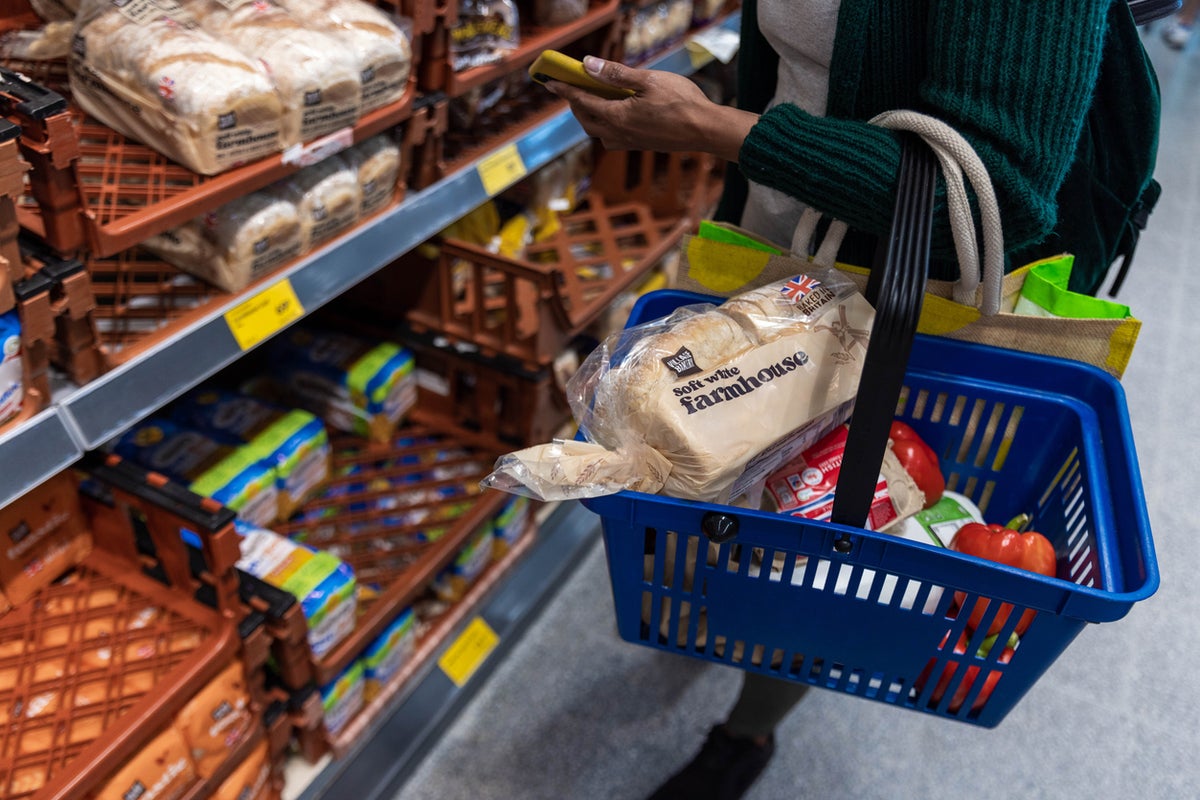
Food bills are set to soar as much as 10 per cent this year as a direct consequence of the Iran war, a key industry body has warned.
The Food and Drink Federation (FDF), which represents 12,000 food and drink manufacturers, has hiked its inflation forecast for the year from 3.2 per cent to between nine and 10 per cent.
During the 2022 cost of living crisis, food inflation rose at a rate of 10.9 per cent, figures from the Food and Drink Federation (FDF) show, while the following year was even worse at 14.6 per cent.
Since then, it had dropped back to 2.7 per cent (2024) and 4.2 per cent (2025), but while this year had originally been forecast to deliver food inflation of 3.2 per cent, the latest assessment is that it will instead see a huge rise in the second half of 2026.
The FDF said the current situation is “unprecedented and hard to predict”, but it’s “clear that food inflation is going to rise in the months ahead”.
How much that adds to the average bill depends on the size and frequency of a consumer’s usual grocery habits, but on average, bills could rise by around £588, according to some estimates.
Consumer rights and review site Which? frequently assesses UK supermarkets for cost, and at the start of 2026, an average basket of 89 shopping products cost £161.56 at Aldi and up to £217.02 at Waitrose.
Assuming food inflation lands at the mid-point of the FDF forecast, 9.5 per cent, and that all products and supermarkets applied that uplift equally, that would move the costs of those shops up to £176.91 and £237.64 respectively.
Research from confused.com suggested the average UK household spent £119 each week on food shopping, which is £6,188 each year; a 9.5 per cent uplift to that equates to an extra £588 annually, or a total of just over £130 per week and £6,775 annually.
Chancellor Rachel Reeves is due to meet with some supermarket chiefs on Wednesday, including Sainsbury’s and Tesco, over discussions to assess the upcoming impact of price rises on the cost of living. The Treasury has described it as a “fact-finding” conversation.
Last month, Asda boss Allan Leighton called on Labour to do more to help businesses after creating “a lot of constraints” for them.
For food manufacturers, there is both a concern now and another yet to come in terms of energy cost rises.
Diesel – used in farm machinery – is up by 80 per cent since the start of the war, while fertiliser costs could increase further, as well as supply being constrained. The FDF also points to lost sales due to cancelled shipments to the Middle East, with UK firms regularly exporting cheese, cereals, chocolate and more to the region.
Dr Liliana Danila, chief economist at The Food and Drink Federation, said: “The food and drink sector is already feeling the force of this geopolitical shock. As one of the UK’s energy-intensive industries, manufacturers are facing mounting energy bills, rising transport and packaging costs and disruption across key supply chains.
“These pressures are hitting simultaneously and are a significant challenge for businesses to absorb.
“The current situation is unprecedented and hard to predict; however, given the scale and speed of these cost increases, and despite companies’ best efforts not to pass price increases on, it’s clear that food inflation is going to rise in the months ahead.”
The FDF says its upgraded inflation figures were based on “assumptions that the Strait of Hormuz opens to cargo traffic within the next two to three weeks”, as has been suggested by Donald Trump this week, and that most commodities, including oil, gas and fertiliser production, return to normal within a year.
In the past few months, the FDF has repeatedly called for the government to offer support to businesses in the sector from rising energy bills in the same way as it does to those in some other manufacturing areas.

GST collections: India’s net Goods and Services Tax (GST) collections increased to Rs 1.78 lakh crore in March 2026, marking a rise of 8.2% compared to the previous month, according to official figures released on Wednesday.Gross GST revenue for March stood at Rs 2 lakh crore, which is an 8.8% increase over the same month last year.Abhishek Jain, Indirect Tax Head & Partner, KPMG says, “GST collections continue to show steady 9% annual growth, supported by strong import activity this month and consistent compliance. While export refunds have eased this month but remain healthy overall for the year”Refunds during the month totalled Rs 0.22 lakh crore, up 13.8% on a year-on-year basis, which resulted in net GST collections of Rs 1.78 lakh crore.Domestic GST revenue reached Rs 1.46 lakh crore, registering a growth of 5.9%, while revenue from imports was recorded at Rs 0.54 lakh crore, rising sharply by 17.8% during the period.Post-settlement GST figures across states presented a varied trend. While industrially advanced states recorded strong growth, several others reported a decline.Maharashtra contributed the highest amount to the overall collections at Rs 0.13 lakh crore on a pre-settlement basis, followed by Karnataka and Gujarat.Among states showing an increase in post-settlement SGST collections were Himachal Pradesh, Punjab, Uttarakhand, Haryana, Rajasthan, Uttar Pradesh, Bihar, Gujarat, Maharashtra, Karnataka, Kerala, Tamil Nadu, Telangana and Andhra Pradesh, among others.On the other hand, states such as Jammu and Kashmir, Chandigarh, Delhi, Arunachal Pradesh, Meghalaya, Assam, West Bengal, Jharkhand, Odisha, Chhattisgarh and Madhya Pradesh, among others, registered a decline in post-settlement SGST revenues.

A wave of bullishness swept the Pakistan Stock Exchange on Wednesday, pushing the 100 Index up by more than 5,000 points to reach 153,700.
The surge reflects increased investor confidence and strong trading activity across major sectors.


Apparel retailer Uniqlo signs landmark deal with Los Angeles Dodgers

New Zealand’s apparel imports down 11% to $216 mn in Jan-Feb

Brandy Norwood reveals truth about Wanya Morris relationship in new memoir

-

 Politics1 week ago
Afghanistan announces release of detained US citizen
-

 Tech1 week ago
Can a Home Appliance Fix the Problem of Soft-Plastic Waste?
-

 Sports1 week ago
Broadcast industry CEO says consolidation is ‘essential’ to compete for NFL soaring media rights prices
-
 Business1 week ago
Property Play: Home flippers see smallest profits since the Great Recession, real estate data firm says
-

 Entertainment1 week ago
UN warns migratory freshwater fish numbers are spiralling
-
 Business1 week ago
Gold prices soar in Pakistan – SUCH TV
-

 Fashion1 week ago
ICE cotton slips on weaker crude, profit booking
-
 Business1 week ago
More women are entering wealth management, but few are in advisory roles, study finds