

Business
China Supplied 26.6% Of Indias Auto Component Imports In FY25: Govt

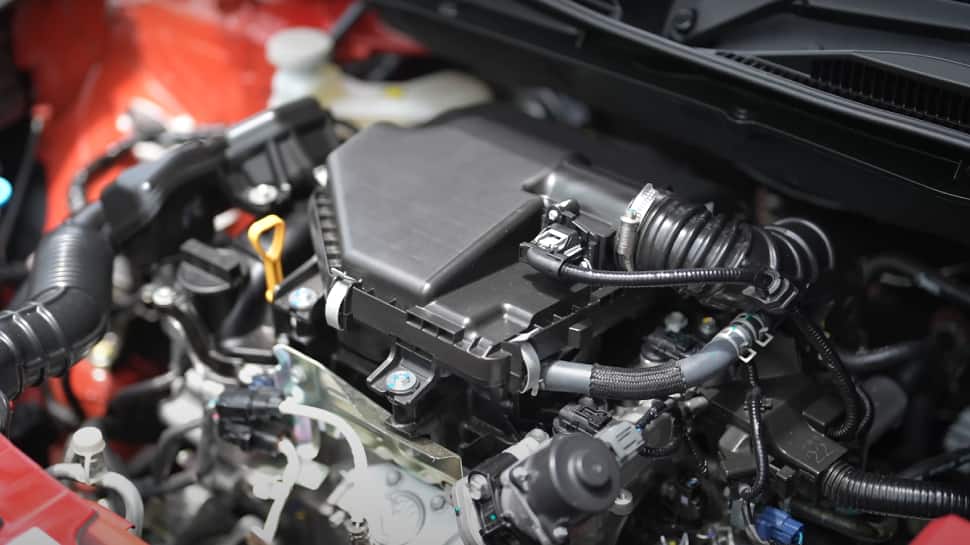
New Delhi: India imported auto components worth $7,174.73 million during the financial year 2024-25 (FY25), of which $1,912.82 million came from China, the Parliament was informed on Tuesday. This means China accounted for 26.66 per cent of India’s total auto component imports, Minister of State for Commerce and Industry Jitin Prasada said in a written reply to a question in the Lok Sabha.
India’s total imports from China stood at $98.50 billion in 2022-23 and $101.74 billion in 2023-24 — representing 13.76 per cent and 15 per cent of overall imports, respectively.
Electronics, telecom instruments, computer hardware, industrial machinery, organic chemicals, and bulk drugs are among the top categories of imports from China, with some showing dependency levels as high as 74 per cent, according to data tabled in the Lok Sabha.
The government acknowledged that much of India’s imports from China are raw materials, intermediate goods and capital goods, which are used for making finished products in fast-expanding sectors like electronics, pharma, telecom, and renewable energy.
To reduce strategic reliance on Chinese-origin products, several policy measures have been launched. These include the Production Linked Incentive (PLI) schemes covering 14 key sectors such as electronics, IT hardware, pharmaceuticals, bulk drugs, solar modules, and auto components, with a total outlay of Rs 1.97 lakh crore.
Additional steps like the Electronics Components Manufacturing Scheme (Rs 22,919 crore), PLI for bulk drugs (Rs 6,940 crore), solar PV module incentives (Rs 24,000 crore), and PLI for advanced automotive technologies (Rs 25,938 crore) are also in place to encourage domestic manufacturing.
The government further highlighted that initiatives like ‘Make in India’, PM Gati Shakti, National Logistics Policy, and Industrial Corridor projects are aimed at building competitive domestic supply chains.
Trade remedial actions through the Directorate General of Trade Remedies (DGTR) are also being used against unfair imports. Officials pointed out that progress is visible in some sectors. India has turned into a net exporter of mobile phones and bulk drugs in recent years, supported by PLI schemes.
Exports of mobile phones, for instance, have risen from Rs 1,500 crore in 2014-15 to over Rs 2 lakh crore in 2024-25 — making India the world’s second-largest mobile manufacturer.











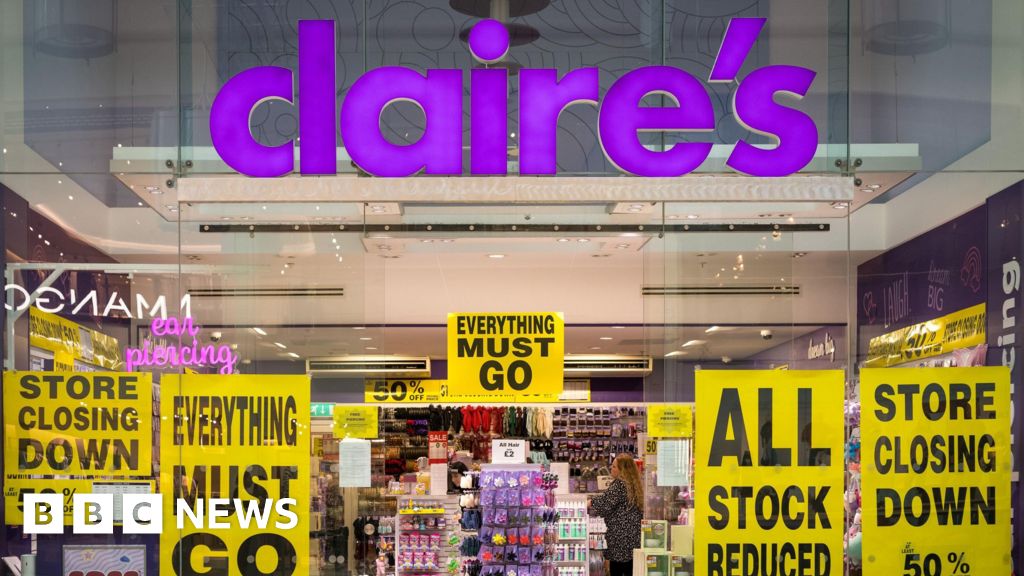
All of the chain’s standalone stores have stopped trading in the UK and Ireland.
Source link

A pedestrian walks by a Domino’s Pizza on Dec. 9, 2025 in San Francisco, California.
Justin Sullivan | Getty Images
Domino’s Pizza stock fell 10% in morning trading on Monday after it reported weaker-than-expected U.S. same-store sales growth.
The chain’s domestic same-store sales rose just 0.9%, lower than the 2.3% bump expected by Wall Street analysts, based on StreetAccount estimates.
“We’re not happy with it,” CEO Russell Weiner told CNBC.
The pizza chain also lowered its full-year U.S. same-store sales forecast to low-single digit growth, down from its prior projection that U.S. same-store sales will increase 3%.
Weiner said he expects more fast-food chains to report similar headwinds from winter weather and weak consumer sentiment, which took a dive in March due to spiking fuel prices caused by the U.S.-Israeli war with Iran.
“One of the bad things about reporting first is you don’t get to hear about anybody else,” Weiner said.
Domino’s kicked off the earnings season for restaurant chains. Starbucks is on deck after the bell on Tuesday, and Chipotle Mexican Grill and Pizza Hut owner Yum Brands are expected to share their results on Wednesday. Rival Papa John’s will report its earnings next Thursday.
During the quarter, Domino’s also faced stiffer competition from rival pizza chains. Papa John’s and Pizza Hut both matched Domino’s $9.99 “Best Deal Ever” with promotions at the same price point. And Little Caesars undercut Domino’s $6.99 Mix & Match deal with a $5.99 version.
“People are seeing what we’re doing, and they’re sick of losing share, and they’re coming at it,” Weiner said, adding that he still expects Papa John’s and Pizza Hut to report same-store sales declines for the quarter despite the new promotions.
Looking ahead, Weiner expressed confidence that Domino’s will prove itself in the long run.
“Domino’s has got a bigger advertising budget than our second two competitors combined,” he said. “And those competitors are both going up for sale, so we know things aren’t good there right now.”
Yum announced in November that it was exploring strategic options for Pizza Hut, which could include a sale. And Papa John’s is reportedly in talks with Qatari-backed Irth Capital to go private. Both chains have also announced plans to close hundreds of restaurants this year, which could further boost Domino’s dominant position in the pizza category.
And if either Pizza Hut or Papa John’s goes private, Weiner said he expects that a new owner would shutter even more locations — a win for Domino’s.
Shares of Domino’s have lost nearly a third of their value over the last year. The company’s market cap has fallen to roughly $11.2 billion.

United Airlines CEO Scott Kirby (L) and American Airlines CEO Robert Isom listen as U.S. Transportation Secretary Sean Duffy speaks to reporters outside the White House on October 30, 2025 in Washington, D.C.
Kevin Dietsch | Getty Images
United Airlines CEO Scott Kirby confirmed Monday that he contacted American Airlines about a potential merger, a possibility American rejected.
“I approached American about exploring a combination because I thought we could do something incredible for customers together,” Kirby said in a statement. He said he shared his “big, bold vision” because he was confident it could win regulatory approval.
American rejected the idea and its CEO, Robert Isom, last week said such a merger would be bad for customers and “anticompetitive.”
Kirby had floated the idea to the Trump administration earlier this year, according to people familiar with the matter who weren’t authorized to discuss the private conversation, in hopes that the combination would mean a big global airline to compete with foreign rivals
American declined to comment on Kirby’s Monday statement.
“I was hoping to pitch that story to American, but they declined to engage and instead responded by publicly closing the door,” Kirby said in his statement Monday. “And without a willing partner, something this big simply can’t get done.”
He said that “American’s public comments make it clear that a merger like this is off the table for the foreseeable future” but outlined his vision for a combined airline.
Kirby reiterated that the country has deficit with foreign airlines that fly more than half of the long-haul seats into the U.S., with most of the customers being Americans.
“The combined scale of United and American would be a better way to compete with foreign carriers,” he said.
President Donald Trump said he was against the idea of a combination last week.
“I don’t like having them merge,” he told CNBC’s “Squawk Box” on Tuesday morning. He said he would, however, like someone to buy struggling discount carrier Spirit but he also suggested that the federal government could “help that one out.”
Spirit and the Trump administration are in advanced talks for a rescue package.


Melania Trump says ABC should ‘take a stand’ on late-night host Kimmel

A Brain Implant for Depression Is About to Be Tested in Humans

UN proliferation meeting begins amid ‘looming’ risk of nuclear arms race

-

 Sports1 week ago
NCAA men’s gymnastics championship: All-time winners list
-

 Sports1 week ago
WWE WrestleMania 42 Night 2: Live match results and analysis
-
 Politics6 days ago
UK’s Starmer seeks to deflect blame over Mandelson appointment
-

 Fashion1 week ago
UK’s Sosandar returns to profitability amid robust FY26 performance
-
 Business7 days ago
How Trump’s psychedelics executive order could unlock stalled cannabis reform
-
 Business1 week ago
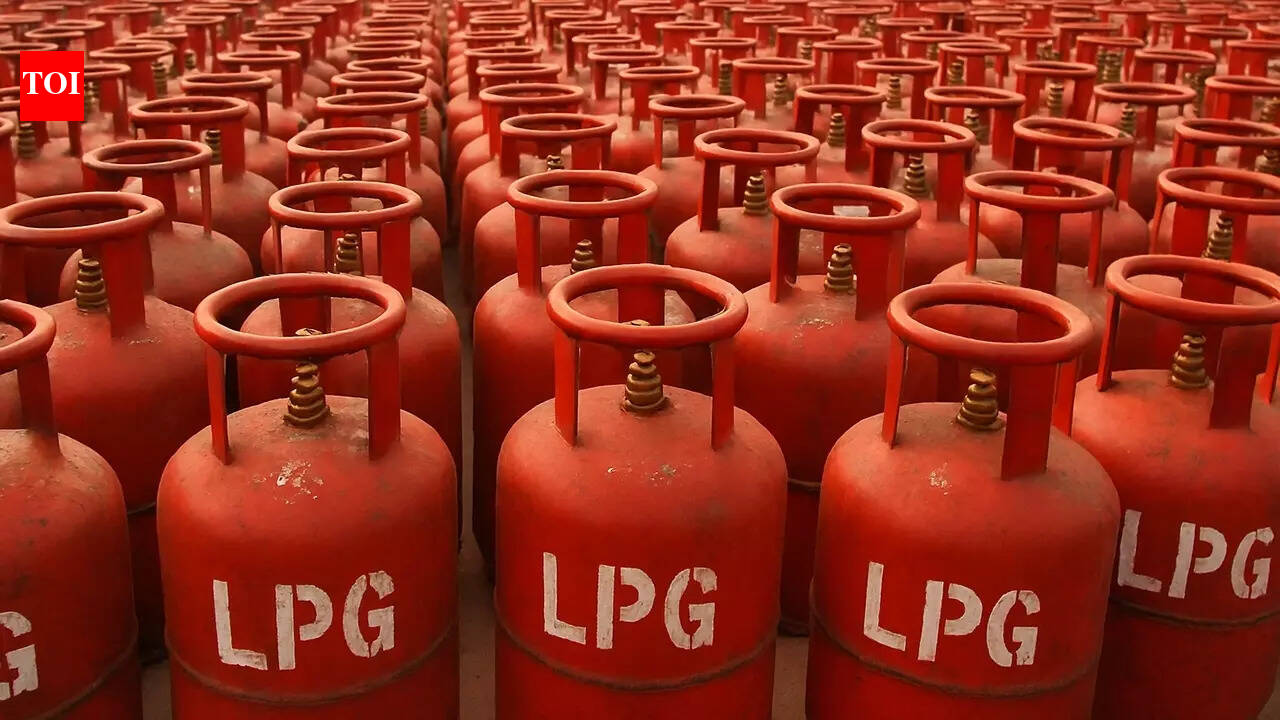
No fuel shortage: Govt assures 100% domestic LPG, PNG, CNG supply amid Hormuz energy crunch – The Times of India
-

 Entertainment7 days ago
Lee Anderson, Zarah Sultana kicked out of UK Parliament for calling PM ‘liar’
-

 Sports1 week ago
Quetta Gladiators opt to bowl after winning toss against Peshawar Zalmi in PSL 11 clash