

Fashion
Middle East tensions reignite Europe’s energy risks: S&P

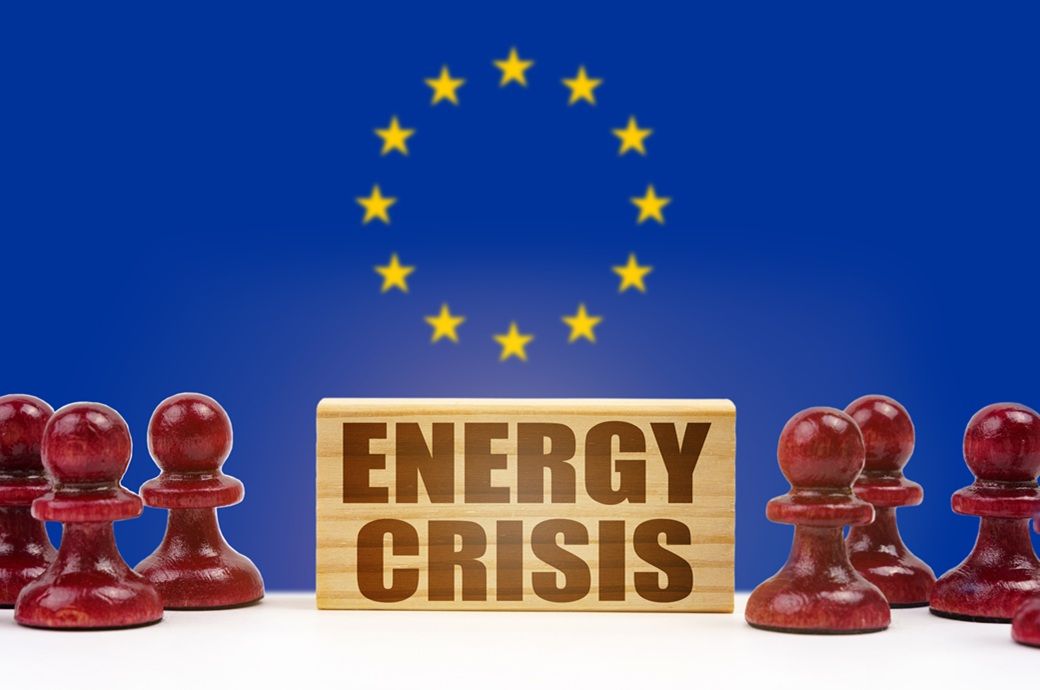
Energy shocks typically unfold in stages, beginning with a direct rise in oil and gas prices that increases costs for households and businesses. These pressures then spread across supply chains within a few quarters, raising prices in sectors such as transport, food, and metals. A further phase may emerge if trade disruptions intensify, creating bottlenecks in imports, S&P Global said in a report.
Middle East tensions are renewing energy risks for Europe, pushing up oil and gas prices and lifting inflation towards 3-3.5 per cent.
The EU imports about $110 billion from the region, with key supply chains exposed via the Strait of Hormuz.
While less vulnerable than in 2022, rising costs, supply disruptions, and tighter monetary policy could weigh on growth and confidence.
Europe’s exposure to the Middle East remains significant, with the EU importing around $110 billion worth of goods annually from the region, accounting for about 4 per cent of total imports. Nearly half of this comes from Saudi Arabia and Iraq, while about $40 billion in non-energy goods depend on safe passage through the Strait of Hormuz, a key global shipping route.
The impact is already visible in prices. Eurozone inflation is expected to rise to 3-3.5 per cent in April, up from 2.6 per cent in March, as higher energy costs filter into consumer prices. Business surveys indicate that companies are raising selling price expectations, signalling broader inflationary pressures beyond energy markets. Central banks may respond with tighter monetary policy, increasing borrowing costs and potentially dampening economic confidence, the report mentioned.
Europe’s energy structure presents a mixed picture. The region imports nearly two-thirds of its energy, with around 14 per cent sourced from the Middle East. Germany and Italy remain particularly exposed due to limited domestic resources, while France benefits from its nuclear capacity and the UK is relatively less dependent on Middle Eastern supplies. Overall, Europe’s vulnerability is lower than in 2022, when Russia accounted for up to 35 per cent of energy needs.
Supply chain risks are also emerging. Although energy shipments continue to reach major ports such as Rotterdam and Antwerp, critical dependencies remain. Products such as cyclohexane, polypropylene, polyethylene, and aluminium rely heavily on Middle Eastern supply routes, particularly through the Strait of Hormuz. Disruptions could affect industries ranging from packaging and petrochemicals to automotive and construction.
While some resilience exists, including alternative shipping routes from Saudi Arabia, analysts caution that supply chains are only as strong as their weakest link. Prolonged disruption in energy and trade flows could amplify economic strain across Europe in the months ahead, added the report.
Fibre2Fashion News Desk (SG)












They discussed ways to enhance cooperation in trade, investment, education, agriculture and cultural exchanges.
Bangladesh and Ethiopia recently stressed the need to strengthen bilateral ties, focusing on trade, investment, and sectoral cooperation, as the former’s Foreign Minister Khalilur Rahman met the latter’s President Taye Atskeselassie Made in Addis Ababa.
They discussed ways to enhance cooperation in trade, investment, education and agriculture.
Welcomed investment from Bangladesh in Ethiopia.
Adviser to Bangladesh Prime Minister for foreign affairs Humayun Kabir was present at the meeting.
Rahman stressed on expanding economic engagement and identified potential areas of cooperation that include readymade garments, pharmaceuticals and jute products. He requested Ethiopia to open its embassy in Dhaka to further strengthen ties.
Made welcomed investment from Bangladesh in Ethiopia, especially in the garments and pharmaceutical sectors, and stressed the need for closer interaction between the business communities of the two countries, according to a Bangladesh news agency.
Fibre2Fashion News Desk (DS)
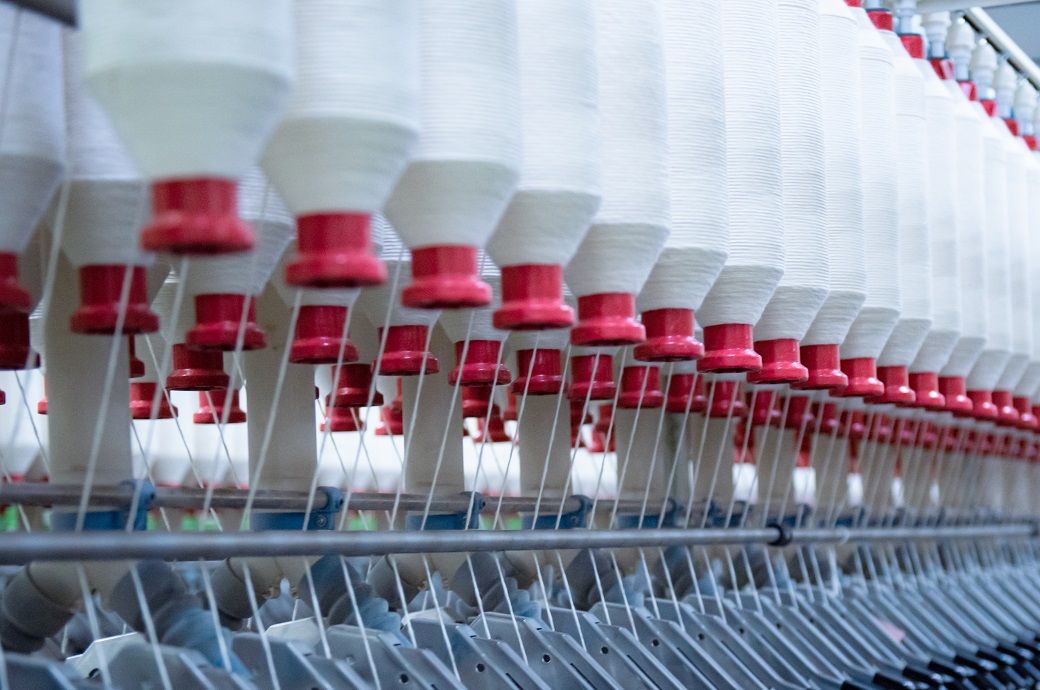
In the Tiruppur market, cotton yarn prices remained stable after rising earlier this week. Following the sharp increase, fabric producers remain uncertain about demand at higher production costs. A trader from the Tiruppur market told Fibre*Fashion, “Knitting yarn is facing weak demand due to its relatively limited applications compared to weaving yarn. Labour shortages have further added pressure, as workers mainly from North India and eastern states, return to their native places each year for farming activities. The West Bengal elections have also contributed to this trend. As a result, weaving and knitting units, along with garment manufacturers, have had to adjust their production schedules based on labour availability.”
In Tiruppur, knitting cotton yarn prices were noted as: ** count combed cotton yarn at ****;***–*** (~$*.**–*.**) per kg (excluding GST), ** count combed cotton yarn at ****;***–*** (~$*.**–*.**) per kg, ** count combed cotton yarn at ****;***–*** (~$*.**–*.**) per kg, ** count carded cotton yarn at ****;***–*** (~$*.**–*.**) per kg, ** count carded cotton yarn at ****;***–*** (~$*.**–*.**) per kg, and ** count carded cotton yarn at ****;***–*** (~$*.**–*.**) per kg.

Reporting entities need flexibility to explain why their boundary choice best reflects how the company manages operations, makes investment and operating decisions, and influences or implements emissions reductions.
AAFA, responding to the California Air Resources Board’s (CARB) request for feedback on GHG emissions reporting requirements under SB 253, urged CARB to align with existing emissions reporting frameworks and ensure flexibility in the use of standards.
AAFA recommended that CARB not mandate specific methods and allow flexibility to report using whichever method is the best fit for the reporting entity.
AAFA is also aligned with a 5 per cent de minimis Scope 3 reporting threshold and a sectoral phase-in approach to the implementing regulations and provides further context on the costs associated with reporting and related assurance engagements.
CARB has proposed two approaches for setting organizational boundaries—the equity share approach and the control approach—and has requested feedback on how entities should share their choice of organisational boundary.
AAFA recommended that CARB not mandate specific methods and allow flexibility to report using whichever method is the best fit for the reporting entity.
AAFA requested CARB to eliminate the emissions intensity per dollar of revenue, a release from AAFA said. This key performance indicator is dependent on industry, and it is not accurately comparable across businesses.
Further, for private businesses that are not required to disclose annual revenue, publication of this information could provide a method for competitors to circumvent an entity’s right to privacy.
CARB should also eliminate tedious and overly burdensome requirements to report all sources and all emission types in carbon dioxide equivalent, AAFA suggested. International businesses reporting will have hundreds of different sources for their scope 1 and 2 emissions because of all the different countries of operation and energy providers.
Given that up-to-date factors and sources are a foundational requirement of emissions assurance, relisting them is redundant and burdensome on reporting entities, according to AAFA.
Additionally, CARB should not require entities to list each emission type in carbon dioxide equivalent, AAFA noted in a release. If all emission types are to be reported in carbon dioxide equivalent, then all scopes 1 and 2 emissions should be reported as a gross carbon dioxide equivalent figure.
AAFA recommended that CARB should not dictate which specific factors can be used and instead require emission factors to be aligned with recognized standards such as the GHG Protocol, ISO 14040/44 and relevant product category rules to ensure consistency and credibility.
Critically, the list of acceptable sources should not be overly restrictive, as an exclusive approach would disrupt many entities’ existing accounting practices, it observed.
CARB should instead look for defensible methodology and transparency, relevance to the specific geography of operations, and reasonable age. Entities should briefly explain the methodology behind the factor, whether public or proprietary, note any adjustments made and demonstrate that the factor aligns with established standards such as the GHG Protocol and ISO 14040/44.
When changing emissions factors, reporters should document the reason for the update like access to better primary data, improved relevance or methodological refinement using a standardised format.
AAFA recommended that CARB align with the GHG Protocol and SBTi and allow entities to report certain Scope 3 categories as de minimis. A 5-per cent de minimis threshold at the category level is consistent with GHG Protocol and SBTi standards.
AAFA does not believe CARB’s estimated annual cost per reporting entity is accurate and undercounts the cost of reporting, it added.
Fibre2Fashion News Desk (DS)


Gold price prediction today: Will gold prices continue to be volatile? Key levels to watch out for April 27, 2026 week – The Times of India

Iran proposes deal to reopen Strait of Hormuz, defer nuclear talks: report

Iran FM Araghchi arrives in Russia for high-talks with Putin

-

 Sports1 week ago
WWE WrestleMania 42 Night 2: Live match results and analysis
-

 Sports1 week ago
NCAA men’s gymnastics championship: All-time winners list
-

 Fashion1 week ago
UK’s Sosandar returns to profitability amid robust FY26 performance
-

 Politics6 days ago
UK’s Starmer seeks to deflect blame over Mandelson appointment
-

 Entertainment1 week ago
Ruby Rose old essay resurfaces detailing night of alleged Katy Perry assault
-

 Entertainment1 week ago
Nathalie Baye, low-key legend of French cinema, dies aged 77
-

 Entertainment6 days ago
Lee Anderson, Zarah Sultana kicked out of UK Parliament for calling PM ‘liar’
-
 Business1 week ago
No fuel shortage: Govt assures 100% domestic LPG, PNG, CNG supply amid Hormuz energy crunch – The Times of India