

Business
Rate call: ECB signals steady stance; policy minutes hint at openness to cuts next year – The Times of India


The European Central Bank (ECB) sees interest rates as appropriately placed for now but has left room for potential cuts in 2026, according to minutes of its October meeting released on Thursday, AFP reported.The minutes showed that October’s unanimous decision to hold the key deposit rate at 2 per cent reflected broad agreement with Chief Economist Philip Lane’s view that inflation was under control. “Most measures of longer-term inflation expectations continued to stand at around two percent,” the minutes noted, adding that global economic activity showed signs of resilience.After two years of rate reductions, the ECB has kept rates unchanged for the past three meetings as inflation has retreated from a 2022 peak of 10.6 per cent to near the central bank’s two per cent target.However, concerns around slowing wage growth and subdued eurozone momentum — both weighing on inflation — have prompted some observers to anticipate rate cuts next year. The minutes confirmed that ECB members discussed the need to remain “entirely open-minded” about future easing.“While the economy was not so weak that it definitely implied an undershooting of the target over the medium term, it remained uncertain whether the economy had enough momentum to deliver the target,” the minutes said. They added that the governing council was “currently in a good place from a monetary policy point of view, though this should not be seen as a fixed place.”The ECB’s governing council will meet next on December 18, when it will unveil fresh economic projections extending for the first time to 2028.




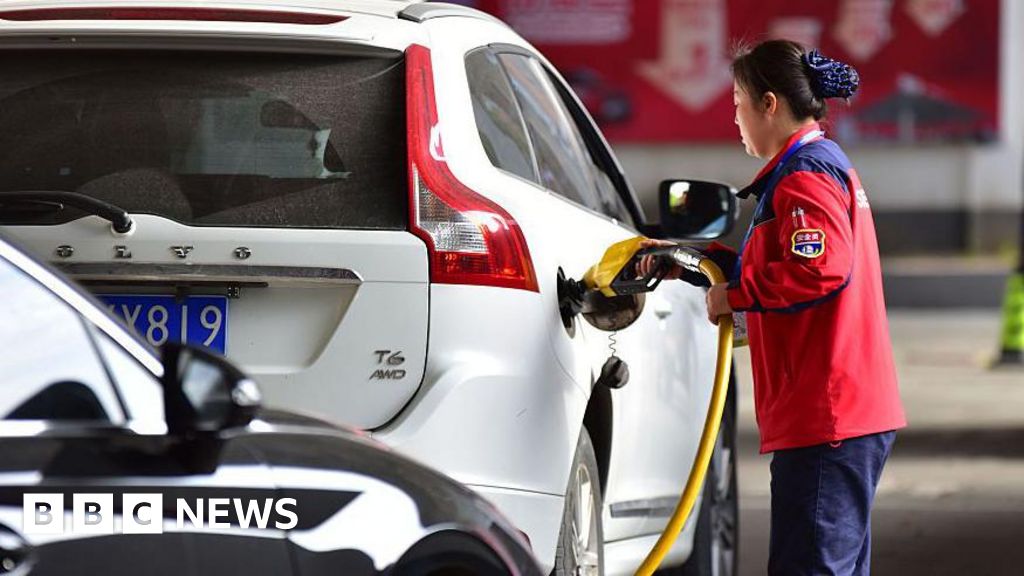
“It does seem as though escalation in the war is back on the table, be it in the guise of the US continuing its blockade in Iran, but also reports and rumours that in order to get out of this bind, Iran may start to strike again,” said Naveen Das, senior oil analyst at Kpler.
Business
Gold, silver price prediction: Will gold head down to Rs 1.40 lakh/10 grams & silver hit Rs 2.20 lakh/kg? – The Times of India

Gold and silver price prediction today: Gold and silver are exhibiting a slightly bearish bias, according to Abhilash Koikkara, Head – Forex & Commodities, Nuvama Professional Clients Group.
MCX Gold Price Outlook
MCX Gold, on the weekly timeframe, has retreated from its recent highs and remained under selling pressure over the past week. From a technical standpoint, prices have faced resistance at a significant trendline, with the daily chart now forming a sequence of lower lows, a classically bearish pattern. A sustained breakout above the trendline, however, could shift sentiment and invite fresh upside. For now, the intermediate trend remains rangebound to negative, reflecting a broader corrective structure, with a firm break below key support potentially accelerating the downside.Looking ahead to the coming week, the region around the weekly low of 140,000 is anticipated to emerge as a pivotal support zone, highlighting its importance from a technical perspective. As the ongoing correction runs its course, prices are expected to test this level making any short-term uptick a potential opportunity for fresh short positions rather than a cause for bullish conviction.Conversely, gold faces a notable resistance wall around the recent peak of 155,500 in the near term. Should prices manage a convincing breakout above this threshold, it would effectively invalidate the current bearish momentum and pave the way for a fresh upside move. A consistent hold above this level, moreover, would offer stronger confirmation that the corrective phase has run its course, and bullish sentiment has reclaimed control.To summarize, gold’s overall bias remains tilted to the downside, supported by a determined negative trend that keeps further losses on the table. The intermediate bearish framework is expected to stay intact so long as prices fail to reclaim the key resistance threshold of 155,500. With momentum indicators reinforcing the bearish case and market sentiment echoing the downside narrative, the metal looks poised to sustain its corrective momentum and press lower in the near term.
MCX Gold Trading Strategy
- CMP: 149,000
- Target: 140,000
- Stoploss: 155,500
MCX Silver Price Outlook
From a weekly standpoint, silver’s price action reflects a sideways to bearish bias, as the silver faces conflict at trendline resistance. The second straight week of negative closes reinforces the case for an intermediate bearish period taking hold. In this setting, we expect traders would be well-served to align their positions with the dominant trend while placing stop-loss levels around the prior weekly highs to effectively manage downside risk.The market opened the week on a weak footing, with prices trading below the 30-day Exponential Moving Average (EMA), a sign that the negative bias remains in force. The bearish outlook is likely to persist as long as prices stay capped under key weekly resistance levels. Immediate support and the near-term target converge around the recent swing lows at 220,000, and a decisive close below this level could further deepen bearish bias. In the interim, any short-term bounce back is expected to be treated as opportunities to sell.To the upside, silver appears poised to challenge the trendline resistance in the area of 255,000 in the coming sessions. If the prices manage a convincing and sustained close above this threshold, it will weaken the ongoing bearish trend, a view currently reinforced by momentum indicators. On balance, the bearish structure is likely to remain dominant as long as 255,000 continues to act as a ceiling, paving the way for additional downside corrections ahead.
MCX Silver Trading Strategy
- CMP: 240,500
- Target: 220,000
- Stoploss: 255,000
(Disclaimer: Recommendations and views on the stock market, other asset classes or personal finance management tips given by experts are their own. These opinions do not represent the views of The Times of India)

The price of Brent crude oil surged past $125 a barrel early Thursday as stalled US–Iran talks raised doubts over the reopening of the Strait of Hormuz and a permanent end to the Iran war.
Brent crude to be delivered in June jumped 6.2 per cent to $125.36 early Wednesday. Brent to be delivered in July rose 3.1 per cent to $113.85.
Before the start of the war in late February, Brent crude was trading around $70 per barrel.
The Iran war, which is in its ninth week, still sees no clear path to an end. The US has continued its blockade of Iranian ports while the Strait of Hormuz, is closed, pushing oil prices higher.
US West Texas Intermediate futures for June were up $2.42, or 2.3 per cent, at $109.30 a barrel, after climbing 7 per cent in the previous session, climbing in eight of nine sessions.
Both benchmarks are on track for their fourth month of gains.
US president Donald Trump is slated to receive a briefing on Thursday on plans for a series of military strikes on Iran in hopes it will return to negotiations on its nuclear programme, according to an Axios report late on Wednesday.
The US and Israel began air strikes on Iran on 28 February and it retaliated by closing off almost all shipping through the Strait of Hormuz, a chokepoint for energy supplies from Middle Eastern producers.
Amid a ceasefire that has paused active combat, the US has imposed a blockade on Iranian ports. Talks to resolve the conflict, which has killed thousands and caused what analysts say is the world’s biggest energy disruption ever, have deadlocked, with the US insisting on discussing Iran’s alleged nuclear weapons programme and Iran demanding some control over the strait and reparations for damage from the war.
“The oil market has moved from over-optimism to the reality of the supply disruption we are seeing in the Persian Gulf,” said ING analysts in a note.
In a sign the conflict and resulting energy supply disruptions are set to continue for longer, Mr Trump spoke on Wednesday with oil companies about how to mitigate the impact of a possible months-long US blockade, a White House official said.
“Prospects for any near-term resolution to the Iran conflict or a reopening of the Strait of Hormuz remain dim,” IG market analyst Tony Sycamore said in a note.
The Opec+ grouping of members of the Organisation of the Petroleum Exporting Countries and its allies is likely to agree a small increase of around 188,000 barrels per day in oil output quotas on Sunday, sources told Reuters.
The meeting comes just after the United Arab Emirates’ withdrawal from Opec, effective 1 May, which is expected to deal a blow to the oil producer group’s ability to control prices. Although the Gulf nation’s exit would allow it to raise production after exports restart, analysts say that is unlikely to affect market fundamentals this year, especially with the Hormuz closure and other production disruptions from the war.”
Gulf countries, including the UAE, will take months to return to pre-war production volumes,” Wood Mackenzie analysts said in a note.
(Additional inputs from Reuters)

Oil jumps to highest price since 2022 after report Trump to be briefed on new Iran options

Trützschler to showcase advanced textile tech at ITM 2026 in Istanbul
Gold, silver price prediction: Will gold head down to Rs 1.40 lakh/10 grams & silver hit Rs 2.20 lakh/kg? – The Times of India

-
 Business1 week ago
Us-India Trade Talks: US–India trade deal: Where do talks stand & what to expect – explained – The Times of India
-

 Fashion1 week ago
Global energy growth slows to 1.3% in 2025: Report
-
 Business1 week ago
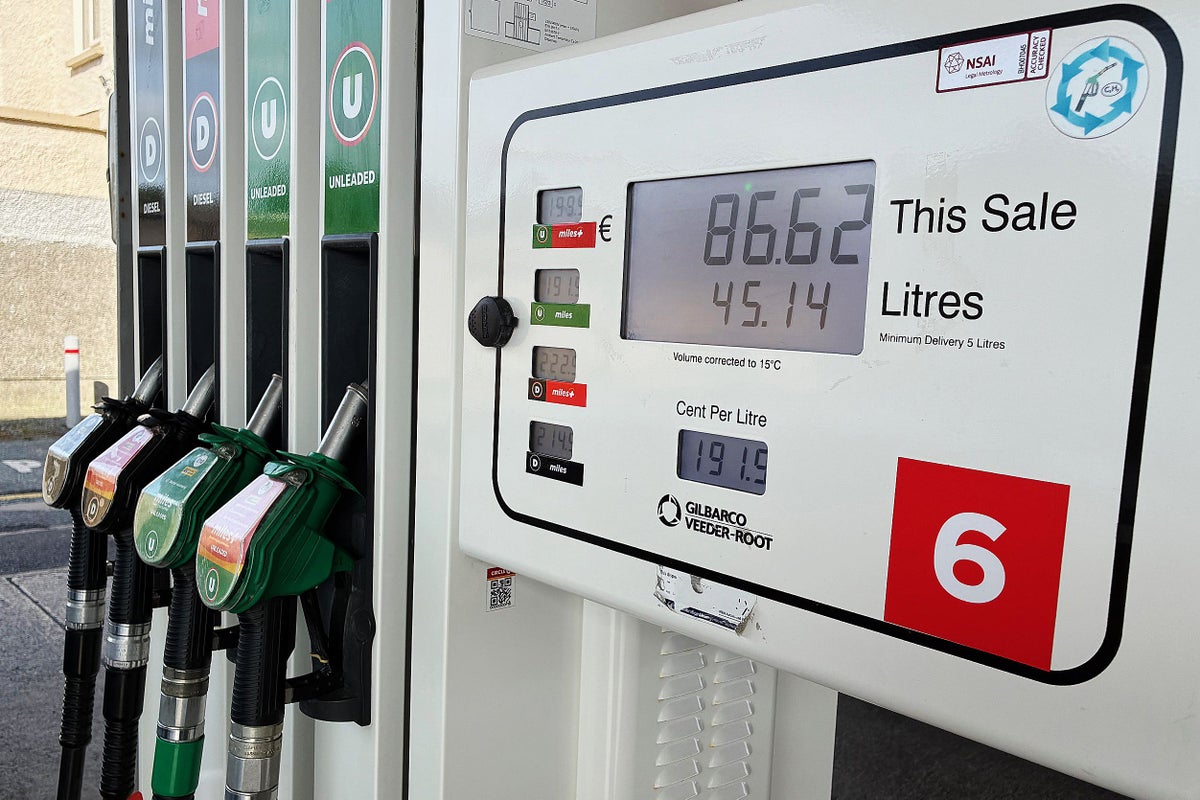
UK inflation accelerates after Iran war drives sharp rise in fuel prices
-

 Tech1 week ago
Nation states responsible for ‘nationally significant’ cyber attacks against UK, says NCSC chief | Computer Weekly
-

 Tech1 week ago
Microsoft faces court battle in £2bn Windows Server class action | Computer Weekly
-

 Sports1 week ago
PSL 11: Hyderabad Kingsmen opt to field after winning toss against Multan Sultans
-
 Business1 week ago
Trump administration in advanced talks for a rescue package for Spirit Airlines, source says
-

 Tech1 week ago
Blackbox replaces two racks of HPE storage with 8U of Everpure | Computer Weekly