

Sports
Inside weird and wonderful college football rivalry trophies

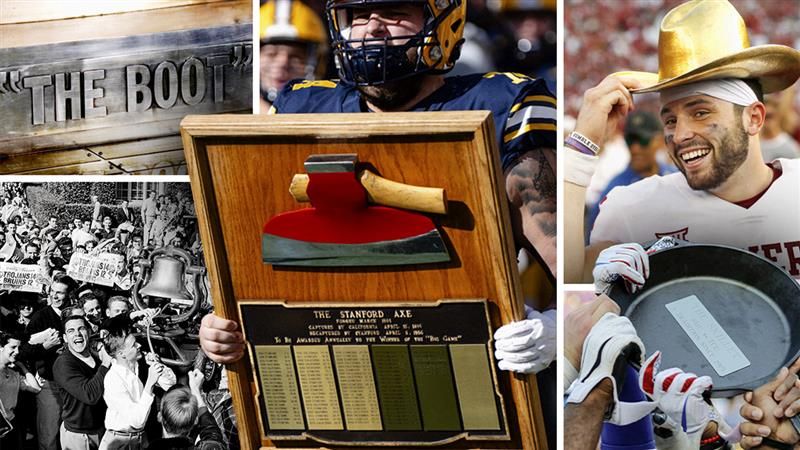
RIVALRY TROPHIES have been a part of college football lore for more than a hundred years. And we’ve reached the part of the season (Week 14) when rivals go head-to-head for the opportunity to hoist a trophy high and secure bragging rights for the year. Intense matchups such as the Egg Bowl and Stanford-Cal can take on greater significance when historical trophies such as the Victory Bell, Territorial Cup and a 24-karat-plated 200-pound boot are at stake. These celebrated traditions take center stage as the college football regular season enters its final week.
Let’s explore some of the most iconic rivalry trophies throughout college football history.
STANFORD AXE
Stanford vs. California:
In 1899, five Stanford students bought the original axe from a store in San Francisco. Stanford Yell leaders wanted a physical axe to accompany the “axe yell,” created three years earlier. The axe debuted on April 13, 1899, at a campus rally for the Stanford baseball team, which was in the middle of a series against Cal. Two days later in San Francisco, the axe was stolen by Cal students after the baseball game. A chase unfolded and the axe handle was cut off during the pursuit. The Cal students successfully escaped with the axe blade and kept it for 31 years. In 1930, a group known as the Immortal 21 pulled off an elaborate plan and recovered the axe and returned it back to Stanford. In 1933, both schools agreed to play for the axe. The trophy features an axe head mounted on a large wooden plaque that lists all the outcomes from the previous games. When Stanford possesses the axe after a win, it modifies the score from the infamous 1982 game known as “The Play.” The score on the trophy gets adjusted in Stanford’s favor to reflect a 20-19 win. Whenever Cal wins, it changes the score back to the true outcome 25-20. Cal and Stanford have gone on to play each other 128 times since 1892, making it the sixth-longest active rivalry in FBS history.
First meeting: March 19, 1892, Stanford 14-10
First trophy meeting: Nov. 24, 1933, Stanford 7-3
All-time record: Stanford leads 66-51-11
Record since trophy: Stanford leads 49-38-3
VICTORY BELL
USC vs. UCLA:
The Victory Bell has a storied past filled with vandalism and an elaborate heist. In 1939, the UCLA Alumni Association gifted the Bruins a 295-pound Bell that was originally mounted atop a Southern Pacific freight locomotive. UCLA rang the Bell after every point the Bruins scored during football games. The Victory Bell was stolen by six USC fraternity members after the Bruins’ 1941 season-opening victory over Washington State. Disguised as UCLA supporters, the frat members loaded the Bell into the bed of a truck postgame. The USC students successfully drove off with their booty. Search efforts continued for more than a year but went unsuccessful. The feud was reignited when a USC magazine published a photo of the Bell, which led to a series of retaliations and pranks between the crosstown rivals. School banners were stolen, Tommy Trojan was vandalized, and USC students branded their school letters across lawns at UCLA. School officials threatened to cancel the game if things continued to escalate. Ultimately, both student body presidents agreed to make the Victory Bell the prize for the rivalry. The winner keeps possession of the Bell until the following year. An agreement was signed in front of the Tommy Trojan statue on November 12, 1942. The USC Alumni Association also agreed to pay $150 to help cover their share of the Bell. UCLA captured the Victory Bell that year with a 14-7 win over USC.
First meeting: Sept. 28,1929, USC 76-0
First trophy meeting: Dec. 12, 1942, UCLA 14-7
All-time record: USC leads 51-34-7
Record since trophy: USC leads 46-34-4
The Bruins meet the Trojans on Saturday at 7:30 p.m. ET
PAUL BUNYAN TROPHY
Michigan vs. Michigan State:
Michigan Gov. G. Mennen Williams commissioned a rivalry trophy for the annual Michigan-Michigan State game in 1953. A Chicago-based artist crafted the 4-foot-tall Paul Bunyan figure, which stands atop a 5-foot wooden base with a $1,400 price tag, or $17,000 in 2025. The finished trophy featured a wooden lumberjack looming over an axe, his feet planted on a map of the state of Michigan. Two flags representing each school flank Bunyan. It is known as the Paul Bunyan — Governor of Michigan Trophy. Michigan State earned the inaugural honor in 1953 after defeating Michigan 14-6 in their first matchup as Big Ten opponents. Although the trophy held little prestige in the early years, things gradually changed. In 1999, the trophy drew praise from former Michigan head coach Lloyd Carr, calling it “the ugliest trophy in college football,” but added, “when you don’t have him you miss him.” In 2008, Michigan State snapped a six-game losing streak to Michigan. Following the win, Spartan players picked up the trophy from its base and hoisted it around the field in celebration. Previously, the trophy was presented in the locker room. Today, the winning teams continue to embrace this tradition.
First meeting: Oct. 12, 1898, Michigan 39-0
First trophy meeting: Nov. 14,1953, Michigan State 14-6
All-time record: Michigan leads 75-38-5
Record since trophy: Michigan leads 42-29-2
TERRITORIAL CUP
Arizona vs. Arizona State:
Arizona and Arizona State first met in front of fans on Thanksgiving Day in 1899. Both schools were a part of the Arizona Territorial Football League. Arizona State, then known as the Arizona Territorial Normal School, claimed the original Territorial Cup after going undefeated and winning the league championship in January 1900. After its debut, the Cup went missing for 83 years, only to be found in the basement of the First Congressional Church in Tempe. The trophy was returned to Arizona State. A few years later, Arizona alums spotted the cup on display at Sky Harbor International Airport in Phoenix. The cup was part of a Super Bowl XXX (1996) exhibit that showcased the history of football in Arizona. Attempts were made by Arizona to create a replica to display at its campus. In 2001, both school presidents signed an agreement designating the Territorial Cup as the traveling trophy for the rivalry. That same year, the NCAA authenticated the trophy as the oldest rivalry trophy in college football. The current Territorial Cup is a replica made of bronze with a silver overlay. The original cup weighs about 5 pounds and was manufactured by Reed & Barton with the inscription: “Arizona Foot League Championship 1899 Normal.” It was priced at $20 in 1910 which is now equivalent to roughly $680 in 2025.
First meeting: Nov. 30, 1899, Arizona State 11-2
First trophy meeting: Nov. 23, 2001, Arizona 34-21
All-time record: Arizona leads 51-46-1
Record since trophy: Arizona State leads 15-9
The Wildcats meet the Sun Devils on Friday at 9 p.m. ET
THE IRON SKILLET
TCU vs. SMU:
A skillet trophy was first proposed by the SMU student council in 1946. The idea behind the trophy was to redirect the SMU-TCU rivalry in a positive direction. Both school campuses, located just 40 miles apart, had experienced significant vandalism driven by the rivalry. According to the Dallas Morning News, these incidents in 1945 caused more than $1,000 in damages, roughly equivalent to $18,000 in 2025. The Mustangs won the inaugural Iron Skillet game 30-13. The original skillet, made of aluminum, was presented to SMU at a joint banquet attended by both student councils in Dallas. In the week leading up to the 1953 game, the skillet was stolen from TCU’s trophy case, only to be returned with a note implicating SMU students as the culprits. The tradition lasted for a few years but eventually faded in the late 1950s. The trophy’s whereabouts became unknown. In 1993, both student bodies agreed to revive it. A new skillet was introduced back into the rivalry. SMU won the second coming of the skillet 21-15. After years of wear and tear, a damaged Skillet was quietly replaced by TCU before the 2018 Iron Skillet game. The rivalry continued until 2023, when TCU announced it would pause the series after the 2025 season. In the final Iron Skillet game, the Horned Frogs were victorious 35-24. When asked about the future of the skillet, TCU head coach Sonny Dykes replied, “Our players have it right now, and they’re excited about it. We took a picture, now we’ll probably cook something in it.”
First meeting: Oct. 18, 1915, TCU 43-0
First trophy meeting: Nov. 30, 1946, SMU 30-13
All-time record: TCU leads 54-43-7
Record since trophy: TCU leads 42-31-3
JEWELED SHILLELAGH
Notre Dame vs. USC:
Notre Dame and USC began playing for the coveted Jeweled Shillelagh in 1952. According to both universities, a Shillelagh is a Gaelic war club made of oak or blackthorn saplings from Ireland. During halftime of the 1952 game, the Notre Dame Alumni Club of Los Angeles unveiled the Shillelagh to the athletic directors of both schools. Notre Dame upset USC 9-0. There are two versions of it: Shillelagh I and Shillelagh II. The original features medallions showing series results dating to the beginning of the rivalry in 1926. USC and Notre Dame currently play for Shillelagh II, a handcrafted Irish shillelagh crafted in County Leitrim — a county in Ireland — in 1997 and inscribed with the phrase “From the Emerald Isle.” After each matchup, a new medallion is added to the trophy. An emerald-studded shamrock represents a Notre Dame victory and a Trojan head with a ruby represents every USC win. If the result is a tie, then a half shamrock, half Trojan head is used in its place. The bronze medallions are made by Images Jewelers in Elkhart, Indiana, using a 3D printer. All the gems on the medallions are lab-grown.
First meeting: Dec. 4, 1926, Notre Dame 13-12
First trophy meeting: Nov. 29, 1952, Notre Dame 9-0
All-time record: Notre Dame leads 53-37-5
Record since trophy: Notre Dame leads 39-31-2
THE GOLDEN BOOT
LSU vs. Arkansas:
The Golden Boot trophy stands 4-feet and features a design that outlines the borders of Louisiana and Arkansas in the shape of a boot. Molded from 24-karat gold, the trophy weighs nearly 200 pounds and is recognized as one of the heaviest trophies in college football. The Golden Boot, valued at $10,000, was designed by former Arkansas linebacker David Bazzel. The former defensive star had previously worked with a noted sculptor to help create the Broyles Award, the annual trophy given to the best assistant coach in college football. Frank Broyles, the athletic director at Arkansas during the time, was impressed by Bazzel’s work. Fascinated by Arkansas’s rivalry with LSU, Bazzel eventually approached Broyles with a trophy idea for the rivalry. He envisioned the trophy as large but later considered using a Bowie knife as the final design. LSU and Arkansas each contributed $5,000 to fund the trophy. Eventually, he took his design to a jewelry shop in Little Rock, Arkansas. His proposed concept was passed on to a company in Boston. The trophy made its debut on Nov. 29, 1996. LSU took home the first Golden Boot with a 17-7 win. In 2015, Bazzel designed the Battle Line Rivalry trophy for the Arkansas-Missouri game.
First meeting: Nov. 22, 1901, LSU 15-0
Year created: Nov. 29, 1996, LSU 17-7
All-time record: LSU leads 46-23-2
Record since trophy: LSU leads 21-9
OLD BRASS SPITTOON
Indiana vs. Michigan State:
The Old Brass Spittoon was introduced in 1950. Entering Week 7 of that season, Michigan State had a 5-1 record and was preparing for Indiana. Following a 36-33 victory over Notre Dame the previous week, the Spartan fan base wanted to avoid a letdown against the Hoosiers. A rivalry trophy was suggested to add extra motivation. MSU junior class president Gene McDermott purchased a spittoon for $25 from an antique shop in East Lansing, using money from a class prom fund. A note found inside the spittoon claims it to be from a trading post in the 1800s. Indiana accepted Michigan State’s proposal by telegram and initiated the college football tradition. The engraving on the spittoon reads: “The Old Brass Spittoon Inaugurated by the students of Michigan State College and Indiana University November 4, 1950.”
First meeting: Oct. 28,1922, Indiana 14-6
First trophy meeting: Nov. 4, 1950, Michigan State 35-0
All-time record: Michigan State leads 50-20-2
Record since trophy: Michigan State leads 50-17-1
THE GOLDEN EGG
Ole Miss vs. Mississippi State:
The historic rivalry between Ole Miss and Mississippi State goes back to 1901 but the Golden Egg trophy was not awarded until Thanksgiving Day in 1927. After Ole Miss snapped a 13-game losing streak to Mississippi State in the 1926 game, several of their fans rushed the field and attempted to pull down the goalposts. This led to numerous fights between the fan bases on the field in Starkville. Mississippi State fans attempted to defend the goalposts from Ole Miss fans by using chairs as weapons. The postgame scene was described as a “chair brigade” by The Mississippian. Following these events, members of Sigma Iota, an honorary society from Ole Miss suggested the trophy to help calm things around the game. Just two weeks before the 1927 game, both schools agreed to play for the Golden Egg. The regulation-sized gold-plated football cost $250 and was split between the schools. The game was known as the Battle for the Golden Egg until 1978 after Tom Patterson of The Clarion-Ledger referred to it as the Egg Bowl.
First meeting: Oct. 28, 1901, Mississippi State 17-0
First trophy meeting: Nov. 24, 1927, Ole Miss 20-12
All-time record: Ole Miss leads 66-47-6
Record since trophy: Ole Miss leads 60-30-5
The Rebels visit the Bulldogs on Friday at noon ET on ABC and the ESPN App.
THE GOLDEN HAT
Texas vs. Oklahoma:
Texas and Oklahoma played for the first time in Austin, Texas, on Oct. 10, 1900. Nearly three decades after their first meeting, the two schools began playing annually at Fair Park in Dallas during the State Fair of Texas. No trophy was associated with the annual matchup until 1941, when the State Fair Association donated a 10-gallon bronze cowboy hat to serve as the official trophy for the rivalry. Days before the trophy was unveiled, the hat was rushed to New York by plane for a final bronze coating. The trophy, originally called the Bronze Hat, was displayed atop a wooden base. It was first awarded to Texas in 1941 following its 40-7 win over Oklahoma. Reports over the years suggested that the bronze hat got “ugly with age.” In an effort to improve its condition, the bronze hat was sent for restoration and later emerged as a gold hat. One reporter joked that the jeweler in charge of restoring the hat had painted it the wrong color. The finished product prompted the name change to the Golden Hat. After a win, the victorious players often take turns putting on the symbolic hat while parading around the field. Former Oklahoma quarterback Jason White once recalled wearing the Golden Hat after a win, noting: “It’s a small hat, and hard as a rock.”
First meeting: Oct. 10, 1900, Texas 28-2
First trophy meeting: Oct. 11, 1941, Texas 40-7
All-time record: Texas leads 65-51-5
Record since trophy: Texas leads 43-40-2
THE BAYOU CLASSIC TROPHY
Grambling State vs. Southern University:
Grambling and Southern University first played in 1932, but the two HBCU football programs first met in the Bayou Classic on Nov. 23, 1974, in New Orleans. Grambling sports information director Collie J. Nicholson was instrumental in relocating the rivalry game to New Orleans. The contest was first played at Tulane Stadium but moved to the newly built Superdome after construction wrapped the following year. For more than 25 years, the winning team was awarded the Waterford Crystal trophy. After the 2014 Bayou Classic, the traveling trophy was retired. In 2015, the trophy was donated to the National Museum of African American History and Culture in Washington, D.C. The Bayou Classic Trophy, designed by Ryan Rivas, was introduced just four days before the 2015 game during an awards ceremony at the Superdome. Grambling State secured a 34-23 comeback win in the first meeting for the trophy. The design features a silver-plated football that sits on top of a geometric platform. A Bayou Classic medallion highlights the black wooden base.
First meeting: Nov 11,1932, Southern 20-0
First trophy meeting: Nov. 28, 2015, Grambling State 34-23
All-time record: Southern leads 42-34
Record since trophy: Southern leads 6-4
The Jaguars play the Tigers on Saturday at 2 p.m. ET
Commander-in-Chief’s Trophy
Army vs. Navy vs. Air Force:
The Commander-in-Chief’s Trophy is a three-way rivalry trophy between the Army, Navy and Air Force. The three service academies have contested the trophy annually in a round-robin format since 1972. Gen. George B. Simler, who had previously served as the athletic director for the Air Force Academy, presented the idea to the USAFA Association of Graduates in 1972. The project was proposed to the Navy and Army alumni associations. Ultimately, all three alumni associations approved the project and worked together to fund the trophy. The three-sided trophy is 2½ feet tall and weighs 170 pounds. Three silver footballs are positioned on top of the trophy and align with the three military crests. Each academy has its own arc-shaped section on the trophy, featuring a silver figurine modeled after its mascot. The Army Mule, Navy Goat and Air Force Falcon stand at the center of their respective sides of the trophy. From 1989 to 1993, the winner of the Commander-in-Chief’s Trophy would receive an automatic bid to the Liberty Bowl. The trophy is named after the president of the United States, who serves as the nation’s Commander-in-Chief. President Richard Nixon was the first president to present the trophy, awarding it to the Army Black Knights. The trophy winner receives an invitation to the White House in the spring. If there is a three-way tie, then the reigning champion retains the trophy for another year but does not get to visit the White House.
Year trophy created: 1972, Army won
All-time records:
-
Air Force (66-41), 21 trophy wins. (Last win in 2022)
-
Navy (55-51-1), 17 trophy wins. (Last win in 2024)
-
Army (38-67-1), 10 trophy wins. (Last win in 2023)
-
Five three-way ties (last tie in 2021)
NEWYou can now listen to Fox News articles!
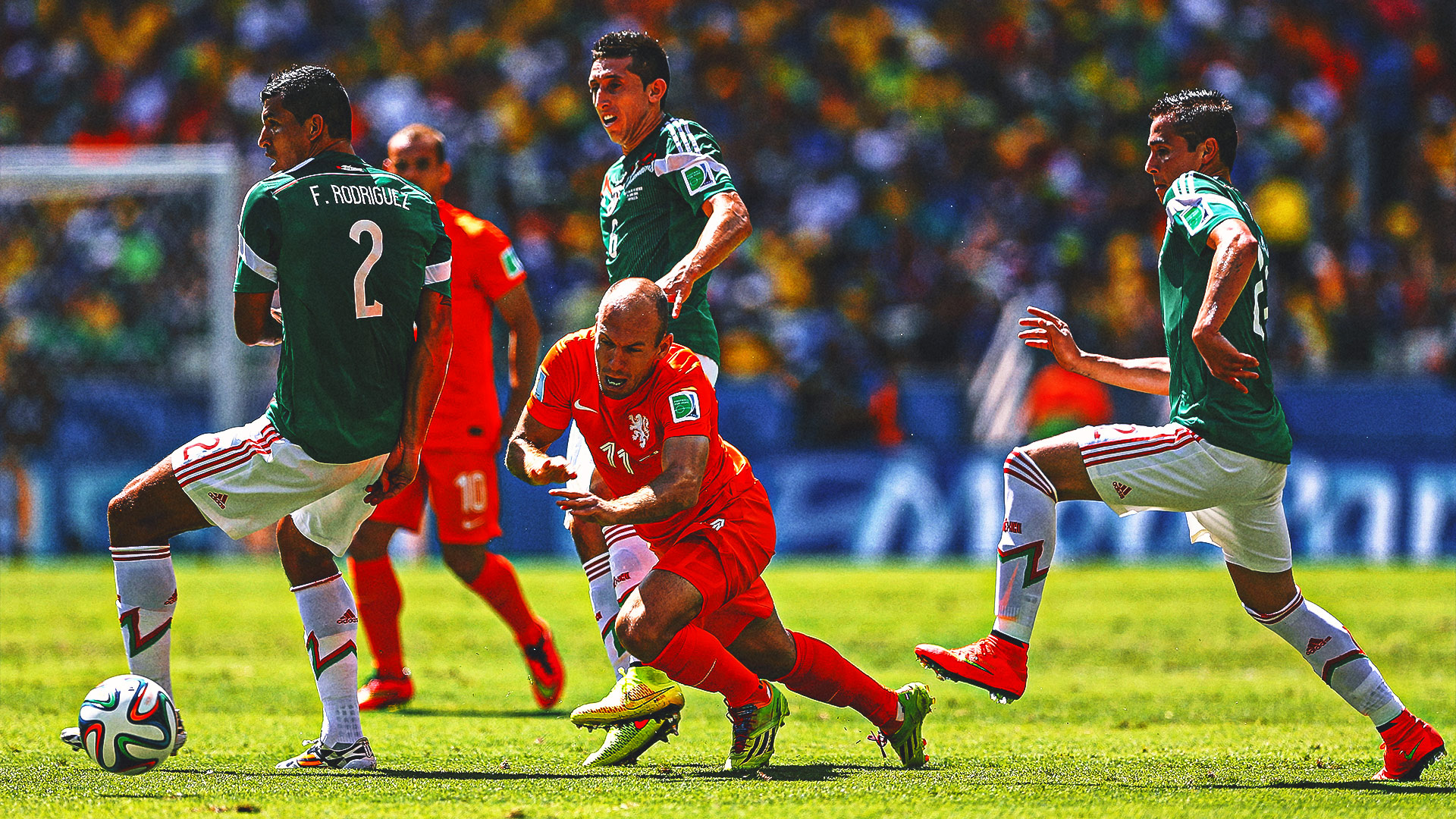
The most pressure-packed scoring opportunity in soccer might be the one where no one is defending: the penalty kick.
A goal is almost certain, so long as you keep a cool head and beat the goalkeeper. Simple enough, right?
But what exactly is a penalty kick, and how is it awarded? Here’s everything you need to know about the penalty kick ahead of the 2026 FIFA World Cup:
What Is A Penalty Kick?
A penalty kick — or “PK” — is a one-on-one duel between a field player and a goalkeeper in which the field player tries to score a direct kick from the penalty spot.
How Is A Penalty Kick Awarded?
A penalty kick is awarded when a player commits a foul — tripping, pushing or a handball — inside the penalty area, which is a large 18-yard box that extends from the goal line into the field of play. The total width of the box is 44 yards.
A penalty can be awarded in the run of play or during a Video Assistant Referee check.
Who Takes The Penalty Kick?
The designated penalty taker is usually predetermined based on a player’s proven ability to score, from the penalty spot or otherwise. For example, Harry Kane, the active leading goalscorer for England, is the designated penalty taker for the Three Lions.
How Far Is The Penalty Spot?
The penalty is 12 yards from the center of the goal line, meaning that there are just 12 yards that separate the penalty taker and the goalkeeper at the time of a penalty kick.
What Are The Rules For The Penalty Taker?
The penalty taker is given freedom to confuse the goalkeeper during their run-up to the kick so long as:
- The penalty taker doesn’t attempt a fake kick or a “feint” while attempting to strike the ball AND
- The penalty doesn’t make contact with the ball more than once during their attempt.
If a penalty taker participates in illegal feinting, they will be cautioned and an indirect free kick will be awarded to the opposing team.
If a penalty taker makes contact with the ball more than once during their attempt and the attempt is successful, the penalty kick will be retaken. If it isn’t, it will be recorded as a miss and play will resume.
What Are The Rules For The Goalkeeper?
The goalkeeper must follow three key rules during a penalty kick: face the kicker, stay between the goalposts and keep at least one foot on or over the goal line until the kick.
If a goalkeeper leaves their line during a penalty attempt and the attempt is unsuccessful, it will be retaken. If the attempt is successful, it will result in a goal.
Additionally, goalkeepers may not touch the goalposts, crossbar or netting as an intimidation tactic. Trash-talking is also not permitted.
How Often Are Penalty Kicks Awarded?
There were 23 penalty kicks awarded at the 2022 FIFA World Cup in Qatar, which was six fewer than in 2018. Argentina led all countries in penalty attempts with five, and its designated penalty taker, Lionel Messi, converted all five attempts.
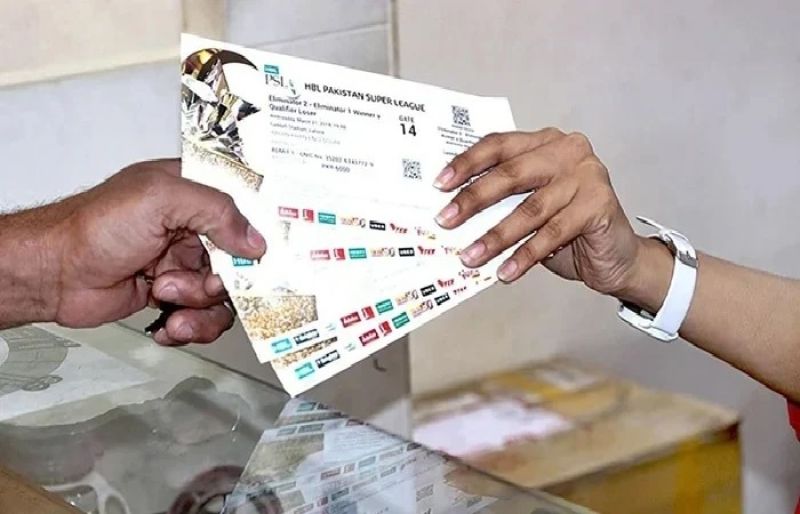
The Pakistan Cricket Board (PCB) has unveiled ticketing information for the Pakistan Super League (PSL) 11 Qualifier between Peshawar Zalmi and Islamabad United, set to take place at Karachi’s National Bank Stadium on Tuesday.
According to the cricket board, E-Tickets for the high-stakes fixture can be purchased from tonight, with prices for all enclosures of the aforementioned venue set at Rs500.
Furthermore, the physical tickets will be available for sale from Tuesday morning and can be bought at the TCS Express Centre at the China Ground situated opposite the venue.
The PCB further advised fans with tickets to reach the stadium “well before the start of play” to avoid any inconvenience. Notably, the coin toss for the Qualifier will take place at 6:30pm as per the Pakistan Standard Time (PST), with the first ball to be bowled at 7pm.
Meanwhile, the ticket details for the remaining two playoffs, set to be played in Lahore, will be announced in due course.
The cricket board announced the ticketing details hours after Prime Minister Shehbaz Sharif granted approval for public attendance in all three playoffs of the ongoing PSL 11.
Taking to X, PCB Chief Mohsin Naqvi said he had a meeting with the premier, during which the cricket board secured his approval for allowing fans in the stadia for the upcoming playoffs of the eight-team tournament.
“Just had a meeting with Prime Minister Shehbaz Sharif, and I’m pleased to share that we have secured his approval for public attendance in all three PSL playoff matches as well,” Naqvi wrote on the microblogging website.
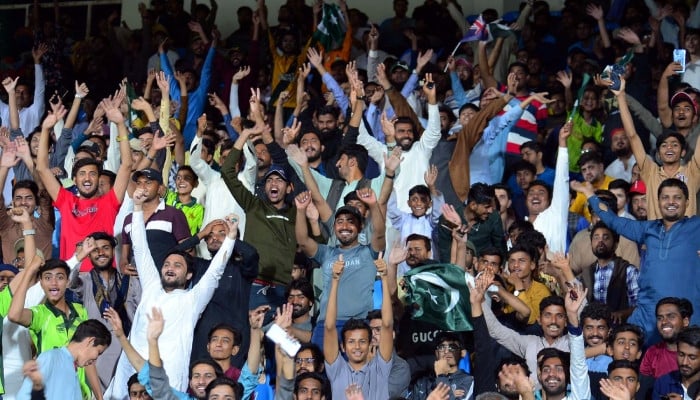
The Pakistan Cricket Board (PCB) has unveiled ticketing information for the Pakistan Super League (PSL) 11 Qualifier between Peshawar Zalmi and Islamabad United, set to take place at Karachi’s National Bank Stadium on Tuesday.
According to the cricket board, E-Tickets for the high-stakes fixture can be purchased from tonight, with prices for all enclosures of the aforementioned venue set at Rs500.
Furthermore, the physical tickets will be available for sale from Tuesday morning and can be bought at the TCS Express Centre at the China Ground situated opposite the venue.
The PCB further advised fans with tickets to reach the stadium “well before the start of play” to avoid any inconvenience. Notably, the coin toss for the Qualifier will take place at 6:30pm as per the Pakistan Standard Time (PST), with the first ball to be bowled at 7pm.
Meanwhile, the ticket details for the remaining two playoffs, set to be played in Lahore, will be announced in due course.
The cricket board announced the ticketing details hours after Prime Minister Shehbaz Sharif granted approval for public attendance in all three playoffs of the ongoing PSL 11.
Taking to X, PCB Chief Mohsin Naqvi said he had a meeting with the premier, during which the cricket board secured his approval for allowing fans in the stadia for the upcoming playoffs of the eight-team tournament.
“Just had a meeting with Prime Minister Shehbaz Sharif, and I’m pleased to share that we have secured his approval for public attendance in all three PSL playoff matches as well,” Naqvi wrote on the microblogging website.


World Cup FAQ: How Are Penalties Awarded And What Are The Rules?

Unicef warns Afghanistan could lose up to 25,000 female health workers, teachers
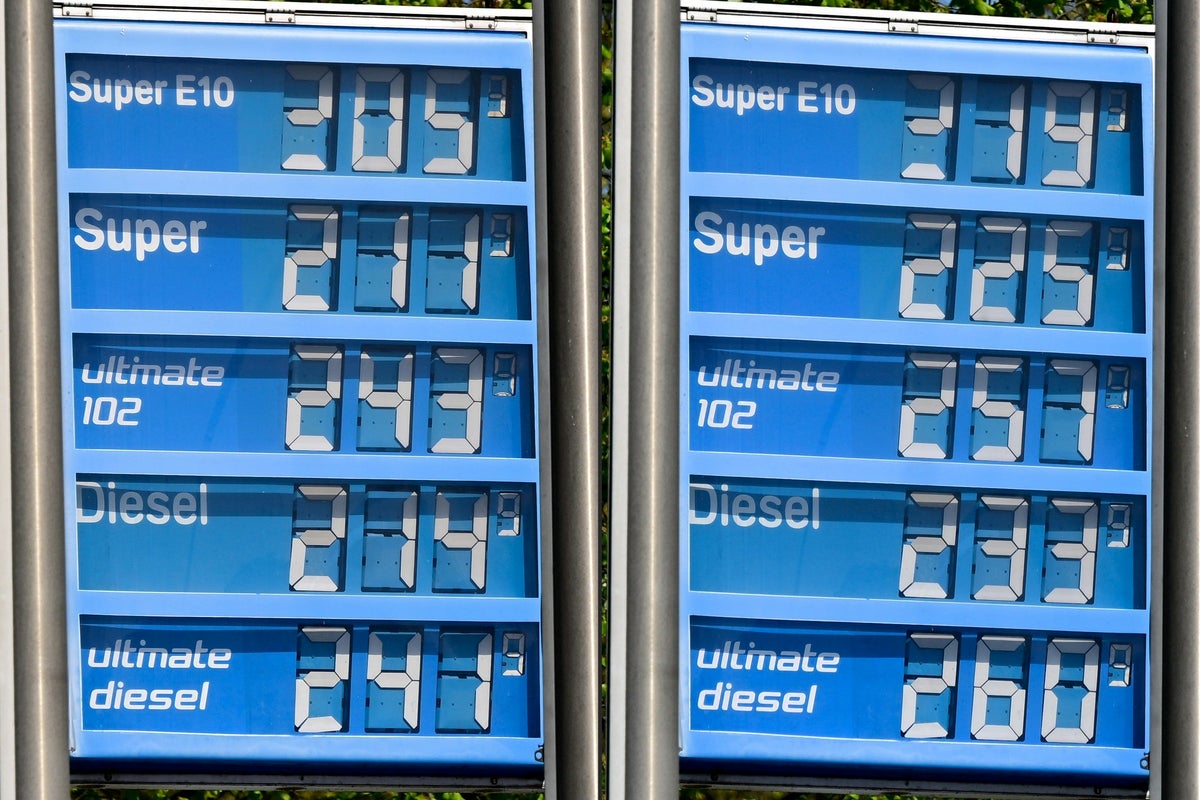
Oil prices edge higher as Trump weighs Iran’s latest proposal to open Hormuz

-

 Sports1 week ago
NCAA men’s gymnastics championship: All-time winners list
-

 Sports1 week ago
WWE WrestleMania 42 Night 2: Live match results and analysis
-

 Fashion1 week ago
UK’s Sosandar returns to profitability amid robust FY26 performance
-

 Politics7 days ago
UK’s Starmer seeks to deflect blame over Mandelson appointment
-

 Entertainment1 week ago
Lee Anderson, Zarah Sultana kicked out of UK Parliament for calling PM ‘liar’
-
 Sports1 week ago
Quetta Gladiators opt to bowl after winning toss against Peshawar Zalmi in PSL 11 clash
-
 Business1 week ago
No fuel shortage: Govt assures 100% domestic LPG, PNG, CNG supply amid Hormuz energy crunch – The Times of India
-
 Business1 week ago
How Trump’s psychedelics executive order could unlock stalled cannabis reform