

Politics
Here’s how Australian PM Anthony Albanese met his wife, Jodie Haydon



In March 2020, Australian Prime Minister Anthony Albanese was speaking at a dinner event about his favourite South Sydney Rabbitohs — a rugby league team — when he heard Jodie Haydon call out, “Up the Rabbitohs.”
Albanese introduced himself after that encounter, but the real step forward came from Haydon. She later reached out to the premier on X, with a “hey, we’re both single”.
The Woodford Folk Festival event at Young Henry’s brewery in Newtown became the place of their first proper meeting, where Haydon had been invited by the Australian PM.
The couple found the Covid 19 as an opportunity to know each other and gave them room to grow their relationship.
The couple suddenly came under the spotlight after their pictures were dropped on social media, which their close friends described as a friendly relationship.
Albanese was involved in a serious car accident in 2021, after which Haydon said in an interview that she realised she loved him.
The Australian PM proposed to his girlfriend on Valentine’s Day 2024, saying he had found a partner “who I want to spend the rest of my life with”.
Following a year of dating, they tied the knot with Jodie Haydon in a private ceremony held in his office.
Albanese planned the proposal date, location, and even designed a custom diamond ring by Cerrone Jewellers in his electorate, Leichhardt.
Haydon was born in 1979, grew up to her grandparents in Avoca.
She spent her childhood in Avoca, bonding with her grandparents and juggling netball, part-time work at a fish-and-chip shop, and studies at Kincumber High before her family relocated to Sydney, according to the Sydney Morning Herald.
Although she belonged to a family of educators, Haydon viewed herself as a “powerhouse in her own right.”
- Iran denied targeting UAE.
- Attacks disrupt inbound UAE flights.
- Attacks injure three, reignite ME tensions.
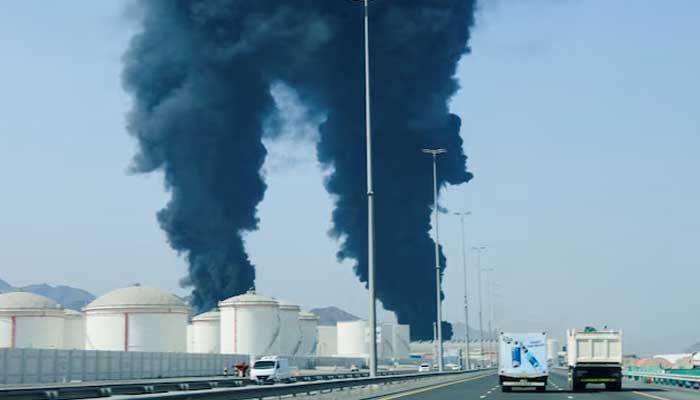
The United Arab Emirates (UAE) said its air defences were engaging missile and drone threats on Monday evening as firefighters battled a blaze at a major oil industry zone following a drone attack which authorities said had originated from Iran.
The Gulf Arab state’s foreign ministry said in a statement that the attacks marked a serious escalation and posed a direct threat to the country’s security, adding that the UAE reserved its “full and legitimate right” to respond.
Multiple flights bound for the UAE diverted to Muscat in Oman, while other inbound aircraft circled over Saudi Arabia, according to flight tracking service Flightradar24, as the attacks caused widespread disruption to air traffic.
Iranian state media, citing a senior military official, said Iran had no plan to target the UAE, whose defence ministry said earlier on X that it had intercepted three Iranian missiles over its territorial waters and a fourth crashed into the sea.
The drone attacks shattered a period of relative calm in the region since a Pakistani-mediated ceasefire between Washington and Tehran took effect on April 8, pausing more than a month of intense fighting in the Gulf region.
Civil defence teams were deployed immediately to contain the blaze at the Fujairah Oil Industry Zone, the Fujairah Media Office said in a statement, adding that three Indian citizens were moderately injured in the attack and taken to hospital.
By Monday evening, the ministry said air defence systems were actively engaging further missile and drone threats.
“All airports in the UAE are closed for the time (being),” the captain on one inbound flight to Dubai told passengers, adding that aircraft would be diverted to the Omani capital.
Iran’s Revolutionary Guards Navy issued a map it said showed an expansion of areas under Iranian control near the Strait of Hormuz, encompassing the UAE ports of Fujairah and Khorfakkan as well as the coast of the Umm Al Quwain emirate, Iranian news agencies reported.
During the period of intense conflict earlier this spring, the UAE said it had intercepted and destroyed thousands of drones and missiles.
UAE authorities on Monday issued mobile phone alerts in Dubai and Abu Dhabi warning of the possibility of missile attacks.
Monday’s strike was not the first time Fujairah’s energy infrastructure had been targeted. A drone attack on March 14 had previously hit the Port of Fujairah, triggering fires and the suspension of some oil-loading operations.
Fujairah has been critical to UAE oil exports during the Iran war as it sits at the end of the Abu Dhabi Crude Oil Pipeline, which carries crude from inland fields to the Gulf of Oman, bypassing the Strait of Hormuz.
This has allowed the UAE to continue shipping oil to global markets even as the waterway remained under threat.
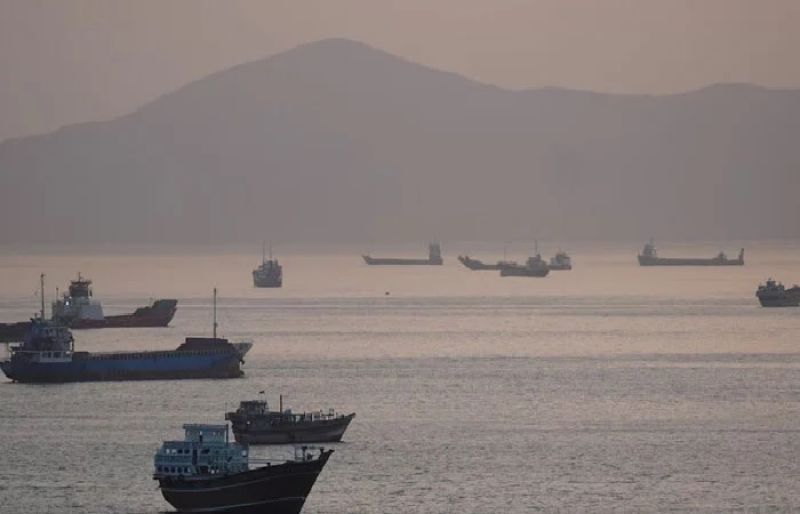
Iran said it had forced a US warship to turn back from entering the Strait of Hormuz on Monday, although US Central Command quickly denied a report of a missile strike.
A senior Iranian official told Reuters Iran had fired a warning shot and that it was unclear whether the warship had been damaged.
Oil prices jumped 5% on renewed concerns that the vital oil route, already shut for over two months at huge cost to the global economy, would remain blocked for considerably longer, with little sign of progress towards a negotiated resolution of Washington’s conflict with Iran.
Iran’s navy said it had prevented “American-Zionist” warships from entering the Strait area by issuing a “swift and decisive warning”.
Iran’s semi-official Fars news agency said two missiles had hit the warship near the port of Jask at the southern entrance to the strait, but Centcom denied that any warship had been struck.
It said its forces were supporting President Donald Trump’s “Project Freedom”, which aims to “guide out” commercial ships stranded in the Gulf by the US-Israeli war on Iran, and were enforcing a blockade of Iranian ports.
Trump gave few details of his plan to aid ships and their crews who have been confined to the vital waterway and are running low on food and other supplies. Shipping companies gave no sign of being ready to resume sailings.
“We have told these Countries that we will guide their Ships safely out of these restricted Waterways, so that they can freely and ably get on with their business,” Trump said in a post on his Truth Social site on Sunday.
Iranian military’s warning
In response to Trump’s announcement, Iran’s unified command told commercial ships and oil tankers to refrain from any movement that was not coordinated with Iran’s military.
“We have repeatedly said the security of the Strait of Hormuz is in our hands and that the safe passage of vessels needs to be coordinated with the armed forces,” Ali Abdollahi, head of the forces’ unified command, said in the statement.
“We warn that any foreign armed forces, especially the aggressive US Army, will be attacked if they intend to approach and enter the Strait of Hormuz.”
Iran has blocked nearly all shipping into and out of the Gulf apart from its own since the start of the war, cutting off around a fifth of the world’s oil and gas shipments and sending oil prices soaring by 50% or more.
Centcom said it would support Trump’s “Project Freedom” with 15,000 military personnel and more than 100 land- and sea-based aircraft, plus warships and drones.
“Our support for this defensive mission is essential to regional security and the global economy as we also maintain the naval blockade,” Admiral Brad Cooper, the Centcom commander, said in a statement.
‘Convoys not a solution’
Hundreds of commercial vessels and as many as 20,000 seafarers have been unable to transit the strait during the conflict, the International Maritime Organisation says.
Container shipping group Hapag-Lloyd said on Monday its risk assessment was unchanged and that transit through the strait was still not possible.
Numerous executives from the shipping and oil industries have said they need an end to hostilities and some form of peace deal because military convoys alone are not enough to allow normal traffic to resume safely.
The United Arab Emirates accused Iran of attacking an empty crude oil tanker belonging to the Abu Dhabi state oil firm ADNOC with drones as it attempted to pass through the strait.
In a rare piece of good news, Pakistan said the US had handed over 22 crew from an Iranian container vessel that American forces had seized last month.
Islamabad, which has been trying to broker a peace deal, described the US move as a “confidence-building measure”.
The Trump administration has been seeking help from other countries to secure shipping in the Strait. Centcom said the latest effort announced by Trump would combine “diplomatic action with military coordination”.
It was not immediately clear which countries the US operation would aid or how the operation would work. It will not necessarily include US Navy ships escorting commercial ships, Axios reporter Barak Ravid said in a post on X.
The White House did not immediately respond to a request for comment. Trump said any interference with the US operation would have to be “dealt with forcefully”.
Iran reviews US response to peace proposal
The United States and Israel suspended their bombing campaign against Iran four weeks ago, and US and Iranian officials held one round of face-to-face talks. But attempts to set up further meetings have failed.
Iranian state media said on Sunday Washington had conveyed its response to a 14-point Iranian proposal via Pakistan, and that Tehran was now reviewing it. Neither side gave details.
A senior Iranian official has confirmed that Tehran envisages ending the war on all fronts — including Israel’s attacks on Lebanon — and resolving the shipping standoff first, while leaving talks on Iran’s nuclear programme for later.
Washington wants Tehran to give up its stockpile of more than 400kg (900 pounds) of highly enriched uranium, which the United States says could power a bomb.
Iran says its nuclear programme is peaceful, although it is willing to discuss some curbs in return for the lifting of sanctions. It had accepted such curbs in a 2015 deal that Trump abandoned.
Trump is under pressure to break Iran’s hold on the Strait of Hormuz to try to prevent soaring gasoline prices, causing a voter backlash against his Republican Party in midterm congressional elections in November.
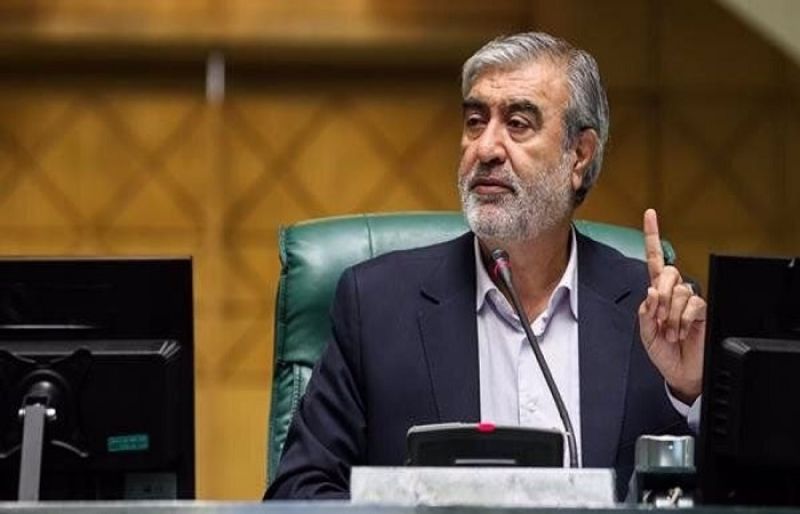
A senior Iranian parliamentarian has warned that any US interference in the new maritime regime of the Strait of Hormuz will be considered a direct violation of the ceasefire, dismissing President Donald Trump’s plan to escort ships through the waterway as “delusional.”
Ebrahim Azizi, head of the Iranian parliament’s foreign policy and national security commission, made the remarks in a social media post on Sunday.
“Any American interference in the new maritime regime of the Strait of Hormuz will be considered a violation of the ceasefire,” Azizi wrote.
“The Strait of Hormuz and the Persian Gulf would not be managed by Trump’s delusional posts! No one would believe blame game scenarios!”
Azizi’s warning came after Trump announced a plan for US forces to begin escorting ships through the strait on Monday, a waterway that has been largely blocked since the outbreak of the US-Israeli war of aggression against Iran on February 28.
Trump dubbed the maritime operation “Project Freedom,” describing it as a “humanitarian” gesture for crews aboard vessels that may be running low on food and other supplies due to the blockade.
He threatened that any interference with the US operation would “have to be dealt with forcefully.” It was not immediately clear which countries the operation would aid or how it would work.
Iran has maintained strict controls over the Strait of Hormuz since the US and Israel launched their unprovoked war on February 28, which included the assassination of Iran’s late Leader, Ayatollah Seyyed Ali Khamenei, and strikes on nuclear facilities, schools and hospitals.
Tehran has repeatedly stated that it has not closed the strait but has imposed a new regulatory framework requiring all vessels to obtain permission before transiting.
Iranian officials argue that the measures are a sovereign right to ensure maritime security in the face of aggression.
Iran has warned that it will not allow any ship affiliated with the aggressors or their supporters to exit the Persian Gulf without its permission.
While Iran has restricted passage, the United States has imposed a naval blockade on Iranian ports, a move Tehran considers illegal under international law and a violation of the ceasefire brokered by Pakistan in early April.
Iranian officials have consistently called the blockade an act of “maritime piracy” and warned that any attempt to force the strait militarily would be met with a decisive response.
Trump claims ‘positive discussions’
Despite the heightened rhetoric, Trump claimed that the United States was conducting “very positive discussions” with Iran.
His statement made no mention of what Tehran described as a 14-point plan “focused on ending the war,” which Iranian Foreign Minister Abbas Araghchi said Washington had already responded to in a message to Pakistani mediators.
“We are reviewing this and will take whatever response is necessary regarding it,” Foreign Ministry spokesman Esmail Baghaei told state television on Sunday.
According to Iranian media, Tehran’s 14-point proposal includes withdrawing US forces from nearby areas, lifting the blockade, releasing frozen assets, paying compensation, lifting sanctions, ending the war on all fronts including Lebanon, and creating a new control mechanism for the strait.
Negotiations between the two countries have been deadlocked since the cessation of hostilities came into effect on April 8, with only one round of direct peace talks held so far.
Earlier on Sunday, the Islamic Revolution Guards Corps warned Trump that he must choose between “an impossible operation” or a “bad deal” with the Islamic Republic.
Also on Sunday, Major General Mohsen Rezaei, a military adviser to Iran’s Leader Ayatollah Seyyed Mojtaba Khamenei, issued a warning: “The US is the only pirate in the world that possesses aircraft carriers. Our ability to confront pirates is no less than our ability to sink warships. Prepare to face a graveyard of your carriers and forces.”
Iran has repeatedly stated that regional security can only be ensured by regional countries, without foreign interference.


Met Gala 2026 “Costume Art” red carpet pictures from New York City

Tarik Skubal to undergo elbow surgery, sidelining Tigers ace for months ahead of free agency

Jake Paul breaks silence after Olivia Rodrigo’s savage SNL joke

-

 Tech1 week ago
A Brain Implant for Depression Is About to Be Tested in Humans
-

 Tech1 week ago
Almost 90% of women leave tech industry within 10 years | Computer Weekly
-
 Business1 week ago
Pakistan’s oil market is fuelling the crisis | The Express Tribune
-
 Business7 days ago
‘I had £20,000 stolen and had to fight a 13-month fraud reporting rule to get it back’
-

 Sports6 days ago
Pro wrestling star Steph De Lander reveals how colleague’s advice helped lead her to title triumph at ACW
-

 Entertainment1 week ago
Melania Trump says ABC should ‘take a stand’ on late-night host Kimmel
-

 Tech7 days ago
This Ambitious Laptop Doesn’t Leave Much Room for Your Hands
-

 Entertainment1 week ago
Norway joins Type 26 Frigate Programme to boost NATO naval power