

Sports
Week 15 Anger Index: The case for Texas and monthlong gripes for Miami, BYU

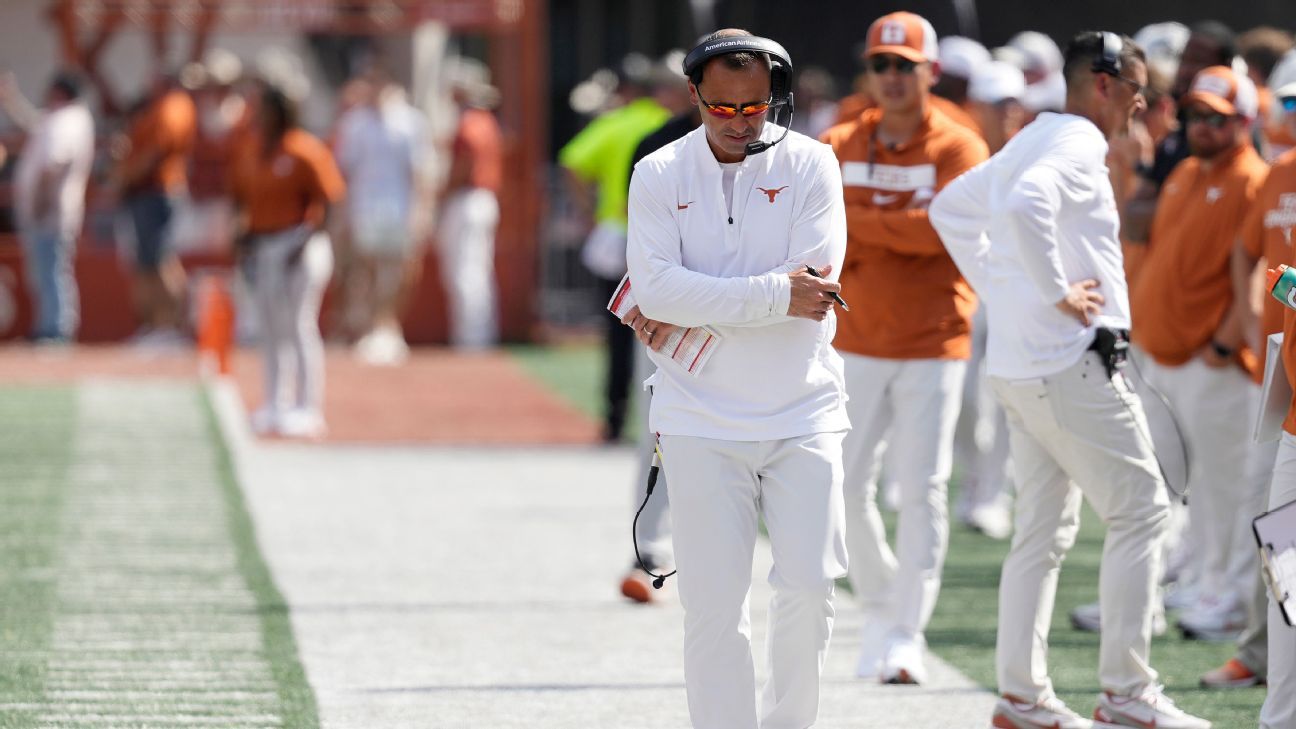
The first College Football Playoff rankings came out five weeks ago. They looked a lot like tonight’s rankings.
We’ve had precious little movement at the top, with a few teams jockeying up or down a slot, but effectively no seismic shifts in the landscape. BYU and Texas are the only two teams that were projected in the field in the committee’s first ranking that aren’t now — and they’re just barely on the outside with reasonable arguments for inclusion.
Teams ranked in the top 18 by the committee this year are a combined 55-9, with six of those losses coming to other teams ranked in the top 18. All three outliers are courtesy of — you guessed it — the ACC (Louisville to Cal, Virginia to Wake and Georgia Tech to Pitt).
That’s a massive anomaly. Last year, top-18 teams at this point had lost 19 games, including 14 to teams outside their own grouping. Top-10 teams are 33-4 this year. In the first 11 years of the playoff, top-10 teams had lost an average of nine games by this point in the season.
The two words that best describe this year’s playoff push are “status quo.”
That, of course, has been bad news for all the teams on the outside looking in — from those with valid cases such as Miami, BYU and Vanderbilt, to underdogs like USC, Utah or Arizona that might’ve had a shot in a more chaotic year.
But the real loser in this copy-and-paste rankings season is all the fans who just want to see things get weird. It’s a sad state of affairs when we’re left to rely on MACtion and the ACC to do all the heavy lifting when it comes to college football drama. The power players need to step up — or, perhaps, ratchet down — their game to add a bit more drama.
The good news is, the committee’s ad-hoc reasoning, mush-mouthed explanations and mind-boggling about-faces still leave plenty to argue about, even if the big picture hasn’t changed all that much.
Here’s this week’s biggest slights, snubs and shenanigans.


It’s not entirely clear how this committee values wins. For the past month, the priority has certainly appeared to be about who has the better losses (unless, of course, you’re Alabama).
That seems a foolish way to prioritize playoff teams, since the goal of the playoff isn’t to lose to good teams but to win games.
Does Texas have a bad loss? Yes. A 29-21 defeat to woeful Florida — even if the Gators also played Georgia and Ole Miss close and just walloped a team that beat Alabama head to head — is problematic.
But look who Texas has beaten: No. 7 Texas A&M by 10, No. 8 Oklahoma by 17 and No. 14 Vandy by three (in a game they led by 24 in the fourth quarter). That’s the résumé of a team capable of winning a national championship — even if the Horns were also capable of losing to a second-rate SEC team.
Are we trying to find teams with the most upside or give participation trophies to the ones who’ve not lost an ugly one? (Except, again, Alabama.)
And it’s not as if the committee believes an extra loss is disqualifying. Oklahoma, Alabama, Notre Dame and Miami all have two losses and are ranked ahead of one-loss BYU (more on that in a moment), so what’s the harm of moving a three-loss Texas ahead of a two-loss team that has accomplished less?
This all comes back to the most frequent and justified criticism of the committee: The same rules aren’t applied evenly. In some cases, record matters. In some cases, best wins matter. In some cases, better losses matter. The standard varies based on the team being considered. But if the committee is going to err in favor of anyone, it should probably do so for a team that’s proven — not once, not twice, but three times — that it can beat an elite opponent.
Oh, and moving Texas up ahead of, say, Notre Dame would also have the added bonus of allowing the committee to sidestep another tricky situation. Which leads us to …


We’re putting these two teams together, because we’ve already lamented the committee’s utterly disingenuous evaluation of them repeatedly, so it feels redundant to keep going down the same rabbit hole. But, for the sake of two programs being astonishingly misevaluated, let’s do one more round.
For Miami, the logic is obvious: The Canes beat Notre Dame head to head.
But let’s keep going. Miami’s two losses — SMU and Louisville — would rank as the fourth- and fifth-toughest games on Notre Dame’s schedule, had the Irish played them. Instead, Notre Dame has cruised through an essentially listless slate. Six of Notre Dame’s 10 wins came against teams that beat zero or one other Power 4 opponent. Stanford — seriously, Stanford! — is Notre Dame’s fourth-best win (by record). Yes, Notre Dame played well enough in losses to two very good teams, but one of those teams has the same record and is somehow ranked lower! Even if this is strictly about the “eye test,” there’s little argument for ignoring the head-to-head outcome. Notre Dame’s strength of record is 13th. Miami’s is 14th. Notre Dame’s game control is fifth. Miami’s is sixth. If all else is the same, how is head-to-head not the deciding factor?
Yet, here’s a little more salt in the wound for the Canes: Had Florida State finished 6-2 instead of 2-6 in ACC play, Miami would’ve won the (fifth) tie-breaker for a spot in the ACC title game and could’ve locked up its place in the playoff by simply beating Virginia. Instead, the Canes will sit at home and watch and hope and, at this point, probably get left out. Chess, not checkers, by rival FSU.
As for BYU, the committee’s desire to overlook the Cougars makes no sense. Let’s take a look at a blind résumé, shall we? (Note: Best wins and composite top 40 based on an average of SP+, FPI and Sagarin ratings.)
Team A: No. 6 strength of record, No. 14 game control, best win vs. No. 11, next vs. No. 28, loss to No. 5, four wins vs. composite top-40, five wins vs. teams that finished 7-5 or better
Team B: No. 7 strength of record, No. 10 game control, best win vs. No. 13, next vs. No. 27, loss to No. 7, three wins vs. composite top-40, two wins vs. teams that finished 7-5 or better
Now, just based on that information, Team A would seem the obvious choice. Now what if I told you Team B just lost its head coach, too?
That’s right, Team A is BYU, and Team B is Ole Miss. Every bit of data here suggests the Cougars are, at worst, on even footing with the Rebels or ahead, and yet the committee has Ole Miss ranked five spots higher.
This is, arguably, the second year in a row in which BYU was clearly the most overlooked team in the country.

A week ago, Notre Dame was ranked one spot ahead of Alabama.
Then on Saturday, the Irish beat 4-8 Stanford by 29 (in a game they at one point led 42-3), while Alabama beat 5-7 Auburn by 7 (in a game the Tigers had a chance to tie before fumbling in Tide territory late).
The committee looked at those two results and said, “You know what, We like what we saw from the Tide! Move ’em up!”
What could possibly be the logic for shifting opinions on these two teams? The only other team that jumped another winning team was Texas, and the Longhorns beat the No. 3 team in the country emphatically, not a second-tier team that fired its head coach a month ago.
Oh, and hasn’t the committee made it pretty clear losses are supposed to matter? Well, Notre Dame has two Ls to teams ranked in the top 12. Alabama got beat by a Florida State team that finished 5-7.
Even by the eye test, this makes little sense. Notre Dame has proven to be one of the most complete, dominant teams in the country, with a secondary that’s near impossible to throw on, a rookie QB who has been nearly flawless, and a running back who may well be the best player in the country. Alabama, on the other hand, has a one-note offense that can’t run the football.
We’re not believers in using advanced metrics as a ranking of accomplishment, but if this is simply a “who’s better” debate …
-
SP+ ranks Notre Dame fifth and Alabama 12th.
-
FPI ranks Notre Dame third and Alabama sixth.
-
Sagarin ranks Notre Dame second and Alabama seventh.
-
FEI ranks Notre Dame fourth and Alabama ninth.
So, again, we ask: Why would the committee possibly make this change?
We’d wager you know the answer. That sticky Canes-vs.-Irish head-to-head debate is a real headache for the committee. But if Notre Dame’s currently the last team in and something unexpected happens this weekend (hello, BYU over Texas Tech), then the committee can do as it did in 2014 and wash its hands of a tough choice and keep both Notre Dame and Miami out.
(It’s also interesting that a seven-point win over a team with a losing record is enough to jump Notre Dame, but a 31-point win over a ranked Pitt did nothing for Miami’s relative placement with the Irish despite — and we’re not sure anyone has mentioned this yet — a head-to-head win!)
But, speaking of Alabama …


4. Championship game participants
Step into the time machine with us for a moment, all the way back to championship week 2024. Here’s the state of play: Alabama, at 9-3, is ranked No. 11, the first team out of the playoff and also out of the SEC title game. Still, the Tide and the SEC hope there’s a pathway to salvation because SMU — 11-1 and ranked eighth — still has a game to play against Clemson in the ACC championship. If the Mustangs were to lose, couldn’t the committee then justify slotting SMU behind Alabama based on another data point, even though the Tide were simply sitting at home watching the action?
This was the case being made throughout the run up to the ACC championship last season. SMU, which should’ve been celebrating a miraculously successful first season in the Power 4, spent hours upon hours defending itself against criticism that it didn’t belong in the same conversation with big, bad Bama. Rhett Lashlee hinted he thought the committee’s vote was rigged, SMU players lamented their status on the chopping block despite a ranking that should’ve put them safely in the playoff field, and SEC commissioner Greg Sankey made the rounds arguing that Alabama’s (and Ole Miss’s and South Carolina’s) strength of schedule ought to put them ahead of SMU (and others).
OK, back to the present day. Here we are, with Alabama sitting perilously on the dividing line between in the field and out — a week ago, they would have been the last team in, but of course the committee had other ideas this time around — with a game to play against Georgia in the SEC championship. An ACC team (Miami) sits just a tick behind the Tide in the rankings, but it will be off this week.
So, what happens if Alabama loses?
The comparison to last year’s SMU isn’t even a particularly fair one. The Mustangs were at No. 8 before the ACC title game. Alabama is at No. 9 (and probably should be a spot or two lower). SMU’s game against Clemson was new territory. A loss to Georgia would actually undermine Alabama’s best argument for inclusion — the three-point win in Athens in September. And while SMU ultimately did make the playoff field last year, a last-second loss on a 56-yard field goal still dropped the Mustangs from No. 8 to No. 10 in the rankings.
Play this scenario out now: Alabama, ranked at No. 9, plays a team that currently counts as the Tide’s best win. Imagine if Georgia wins the rematch and does so convincingly. The committee docked SMU two spots for a last-second loss, so surely it would do at least that much to Alabama for a more convincing defeat, right? And here’s the other thing: Even with the ACC title game loss last year, SMU was 11-2 — one less loss than Alabama had. A Tide loss in the SEC title game now would be defeat No. 3 — one more than Notre Dame or Miami or (presumably) BYU.
It’s hard not to see a conspiracy here given the committee’s inexplicable flip-flop between Alabama and Notre Dame. It’s hard not to see brand bias in how the Tide’s championship week narrative diverges from SMU’s a year ago. It’s not at all hard to envision a scenario where Alabama loses to Georgia, gets in as the last team anyway, and it’s all explained away as a completely reasonable decision.

Well, the committee finally weighed in on more than one team outside the Power Four — mostly because it was just impossible to find enough Power Four teams worth ranking — and the news isn’t good for JMU. With the committee deciding already that North Texas is the higher ranked team, the Dukes’ only hope for the playoff would seem to be a Duke win in the ACC title game.
But what exactly has the committee seen to warrant that decision? Check out the numbers.
Best win (by average FPI, SP+ and Sagarin ranking)
JMU: No. 54 Old Dominion
UNT: No. 62 Washington State
Next best
JMU: No. 62 Washington State
UNT: No. 68 Navy
Loss
JMU: No. 29 Louisville
UNT: No. 24 USF
Wins vs. bowl-eligible
JMU: six
UNT: five
Strength of record
JMU: 18th
UNT: 22nd
FPI
JMU: 28th
UNT: 37th
There are certainly some check marks in North Texas’ favor, including a more impressive win over common opponent Washington State and a slightly better SP+ ranking, but on the whole, James Madison has had the tougher path here. That can reasonably change should UNT beat Tulane, but the committee should’ve waited for that to happen. Instead, they’ve made it clear JMU isn’t sniffing the playoff unless it comes at the expense of the ACC.
Also angry this week: Vanderbilt Commodores (10-2, No. 14); The ACC leadership who voted on its tie-breaker policies; Manny Diaz, who has to try to make a coherent argument for his five-loss Duke Blue Devils getting in ahead of a one-loss JMU; Every 8-4 team with a markedly better résumé than 9-3 Houston who isn’t ranked this week; Lane Kiffin’s yoga instructor and Juice Kiffin’s dog walker.
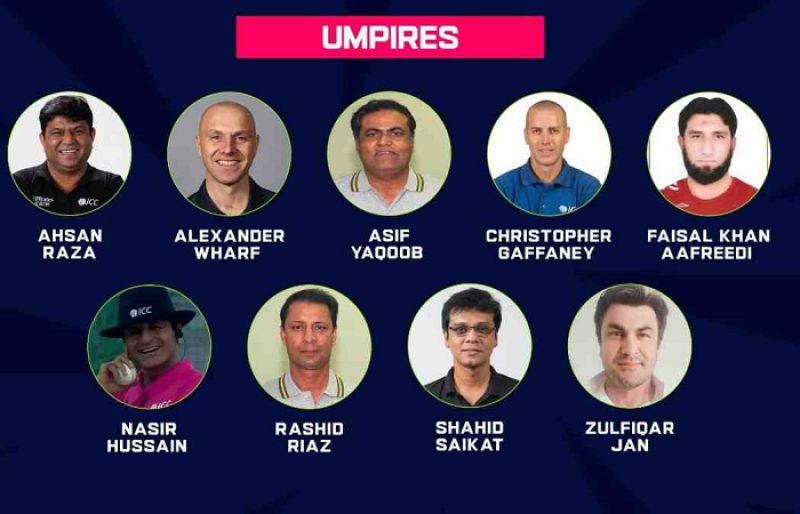
The playing control teams for the April 28 qualifier, April 29 eliminator 1 and May 1 eliminator 2 of the HBL Pakistan Super League 11 have been appointed, the Pakistan Cricket Board announced on Tuesday.
Member of ICC Elite Panel of Match Referees Sir Richard Richardson will lead the playing control team for the qualifier between Peshawar Zalmi and Islamabad United at the National Bank Stadium, Karachi.
Earlier, he made his HBL PSL debut as the match official on April 15 and will bow out for this season, having officiated 10 games.
Christopher Gaffaney of New Zealand will be joined by Alexander Wharf of England as an on-field umpire for the qualifier. Both are part of the ICC Elite Panel of Umpires.
Faisal Khan Aafreedi, ICC International Panel Umpire, will serve as the third Umpire, while PCB’s National Elite Panel Umpire Zulfiqar Jan will be the fourth umpire for the all-important 41st HBL PSL 11 match.
Roshan Mahanama of Sri Lanka will lead the playing control team in both eliminators.
He has the honour of officiating in all 11 HBL PSL seasons, and his tally of games as match referee in the league currently stands at 127.
In the Hyderabad Kingsmen v Multan Sultans eliminator 1 in Lahore, ICC Elite Panel Umpire Shahid Saikat from Bangladesh will join ICC Emerging Panel Umpire Asif Yaqoob as on-field Umpire, while Rashid Riaz Waqar of ICC Emerging Panel of Umpires will be the third Umpire.
Nasir Hussain of ICC International Panel of Umpires will perform duties as the fourth Umpire.
The eliminator 2 on May 1 between the winner of eliminator 1 and the losing team of qualifier will be officiated on-field by ICC Elite Panel Umpires Ahsan Raza and Shahid Saikat, while Asif Yaqoob and Rashid Riaz will carry out the duties of third and fourth Umpire, respectively.
The match officials for the highly anticipated May 3 final will be announced in due course.
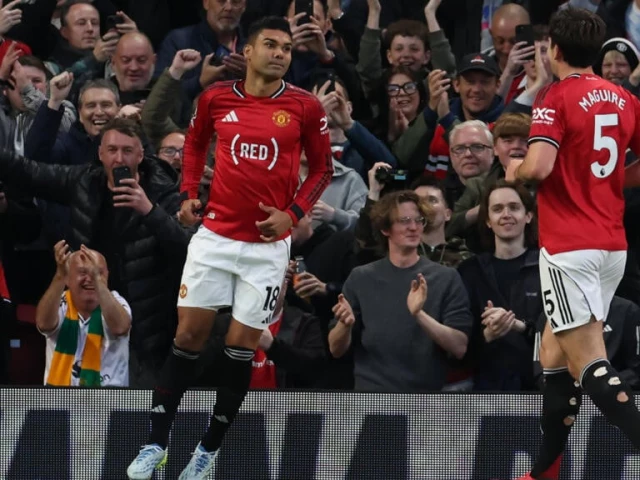
Manchester United midfielder Casemiro (L) celebrates scoring against Brentford. Photo: AFP
LONDON:
Manchester United moved within touching distance of qualifying for the Champions League as Casemiro and Benjamin Sesko sealed a 2-1 win against Brentford on Monday.
Casemiro put United ahead in the early stages at Old Trafford and Sesko doubled their lead before the interval.
Mathias Jensen’s late strike couldn’t stop United cementing their grip on third place in the Premier League.
They are 11 points clear of sixth-placed Brighton, with the top five guaranteed to reach next season’s Champions League.
Michael Carrick’s side need just two points from their last four matches to ensure their return to Europe’s elite club competition for the first time since 2023-24.
On Sunday, United host bitter rivals Liverpool, who sit three points behind them in fourth, in a clash that will go a long way to deciding who finishes third.
Interim boss Carrick, who replaced the sacked Ruben Amorim in January, is still waiting to discover if he will land the United job on a permanent basis.
The former United midfielder has made a strong case by steadying the ship after Amorim’s turbulent reign.
Leading United into the Champions League would be another persuasive argument as co-owner Jim Ratcliffe considers his options.
A 1-0 win at Chelsea in their previous match had reinvigorated United’s top-five charge after a home defeat against Leeds and a draw at Bournemouth.
Brentford last won at Old Trafford in 1937 and they paid the price for a slow start on their latest fruitless visit.
Casemiro strikes again
Kobbie Mainoo scythed through the Brentford defence with a superb run in the second minute, but Amad Diallo wasted the chance with a close-range shot that was cleared off the line by Sepp van den Berg.
Harry Maguire was inches away from marking his return from suspension with a goal when the United defender’s towering header was clawed off the line by Brentford keeper Caoimhin Kelleher.
United’s pressure was rewarded in the 11th minute as Casemiro finished off a well-worked corner routine.
Bruno Fernandes whipped the set-piece to Maguire and his looping header evaded a gaggle of Brentford defenders at the far post as Casemiro rose highest to head home from an acute angle.
Casemiro’s fourth goal in his last six games underlined the enduring value of the veteran Brazil midfielder, who is set to leave when his contract expires at the end of this season.
He celebrated by kissing the badge on his shirt as United fans implored him to stay by chanting “one more year”.
Michael Kayode nearly silenced the love-in with a header that United keeper Senne Lammens pushed away at full stretch.
Igor Thiago’s muscular power was a thorn in United’s side but the Brazilian couldn’t finish, scuffing one chance under pressure from Diogo Dalot before Kelleher saved his close-range drive.
Ayden Heaven’s last-ditch attempt to deny Thiago almost ended in an own goal, but Lammens spared the United teenager’s blushes with a fine save.
United took advantage of those misses to double their advantage in the 43rd minute.
Diallo’s determination to win a tackle deep inside his own half started the move before Fernandes drove towards the Brentford area, slipping a pass to Sesko, who lashed home from 10 yards.
Fernandes has 19 assists this season as he chases the Premier League record of 20 in a single campaign set by Thierry Henry and Kevin De Bruyne.
United were less dominant in the second half and Jensen whipped an eye-catching curler past Lammens from 20 yards in the 87th minute to set up a tense finale.
Carrick’s men wobbled but just about held firm as Mikkel Damsgaard’s header was clutched by Lammens in stoppage-time.
NEWYou can now listen to Fox News articles!
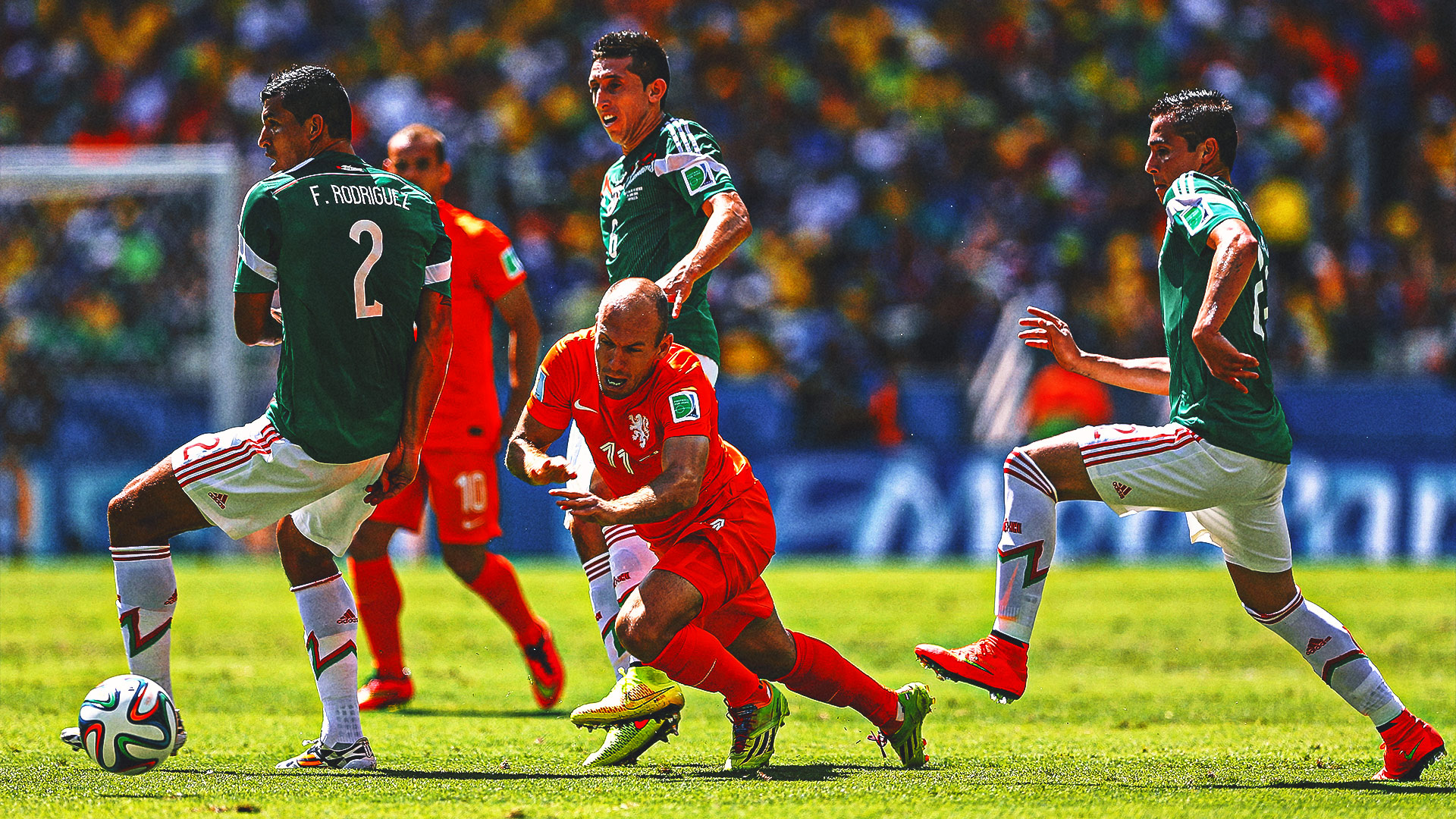
The most pressure-packed scoring opportunity in soccer might be the one where no one is defending: the penalty kick.
A goal is almost certain, so long as you keep a cool head and beat the goalkeeper. Simple enough, right?
But what exactly is a penalty kick, and how is it awarded? Here’s everything you need to know about the penalty kick ahead of the 2026 FIFA World Cup:
What Is A Penalty Kick?
A penalty kick — or “PK” — is a one-on-one duel between a field player and a goalkeeper in which the field player tries to score a direct kick from the penalty spot.
How Is A Penalty Kick Awarded?
A penalty kick is awarded when a player commits a foul — tripping, pushing or a handball — inside the penalty area, which is a large 18-yard box that extends from the goal line into the field of play. The total width of the box is 44 yards.
A penalty can be awarded in the run of play or during a Video Assistant Referee check.
Who Takes The Penalty Kick?
The designated penalty taker is usually predetermined based on a player’s proven ability to score, from the penalty spot or otherwise. For example, Harry Kane, the active leading goalscorer for England, is the designated penalty taker for the Three Lions.
How Far Is The Penalty Spot?
The penalty is 12 yards from the center of the goal line, meaning that there are just 12 yards that separate the penalty taker and the goalkeeper at the time of a penalty kick.
What Are The Rules For The Penalty Taker?
The penalty taker is given freedom to confuse the goalkeeper during their run-up to the kick so long as:
- The penalty taker doesn’t attempt a fake kick or a “feint” while attempting to strike the ball AND
- The penalty doesn’t make contact with the ball more than once during their attempt.
If a penalty taker participates in illegal feinting, they will be cautioned and an indirect free kick will be awarded to the opposing team.
If a penalty taker makes contact with the ball more than once during their attempt and the attempt is successful, the penalty kick will be retaken. If it isn’t, it will be recorded as a miss and play will resume.
What Are The Rules For The Goalkeeper?
The goalkeeper must follow three key rules during a penalty kick: face the kicker, stay between the goalposts and keep at least one foot on or over the goal line until the kick.
If a goalkeeper leaves their line during a penalty attempt and the attempt is unsuccessful, it will be retaken. If the attempt is successful, it will result in a goal.
Additionally, goalkeepers may not touch the goalposts, crossbar or netting as an intimidation tactic. Trash-talking is also not permitted.
How Often Are Penalty Kicks Awarded?
There were 23 penalty kicks awarded at the 2022 FIFA World Cup in Qatar, which was six fewer than in 2018. Argentina led all countries in penalty attempts with five, and its designated penalty taker, Lionel Messi, converted all five attempts.


Office demand rebounds to highest level since Covid pandemic began

UK’s Mulberry FY26 sales rise 5.7% on strong H2 rebound
Protesters halt NatWest shareholder meeting as boss defends climate policy

-

 Sports1 week ago
NCAA men’s gymnastics championship: All-time winners list
-

 Sports1 week ago
WWE WrestleMania 42 Night 2: Live match results and analysis
-

 Fashion1 week ago
UK’s Sosandar returns to profitability amid robust FY26 performance
-

 Politics1 week ago
UK’s Starmer seeks to deflect blame over Mandelson appointment
-
 Business1 week ago
No fuel shortage: Govt assures 100% domestic LPG, PNG, CNG supply amid Hormuz energy crunch – The Times of India
-

 Entertainment1 week ago
Lee Anderson, Zarah Sultana kicked out of UK Parliament for calling PM ‘liar’
-

 Sports1 week ago
Quetta Gladiators opt to bowl after winning toss against Peshawar Zalmi in PSL 11 clash
-
 Business1 week ago
How Trump’s psychedelics executive order could unlock stalled cannabis reform