

Fashion
North India cotton yarn prices rise as mills gain pricing power

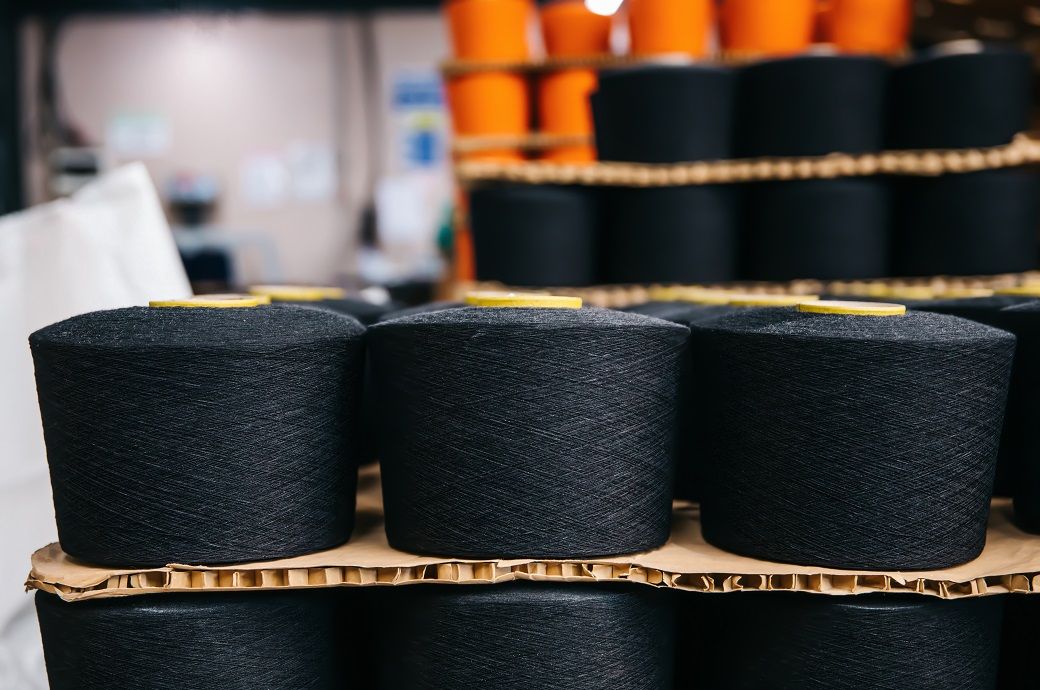
The Delhi cotton yarn market witnessed price rise of ****;*–* per kg over the past couple of days. Mills are raising cotton yarn prices to pass on increase in cotton prices. However, consumer industry feels that spinning mills are increasing cotton yarn prices disproportionately. A trader from Delhi market told Fibre*Fashion, “Spinning mills have booked their production for the next **–** days in the export market. Therefore, they face minimal pressure to sell cotton yarn in the domestic market and are quoting higher prices for the local consumer industry.”
In Delhi, ** count combed knitting yarn was traded at ****;***–***(~$*.**–*.**) per kg (GST extra), ** count combed at ****;***–*** (~$*.**–*.**) per kg, ** count carded at ****;***–*** (~$*.**–*.**) per kg, and ** count carded at ****;***–*** (~$*.**–*.**) per kg today, according to market sources.













At reported exchange rates, group sales increased 5 per cent in FY26, reversing a 3.9 per cent decline in the first half. Growth was driven by a broad-based improvement across channels, with retail (omni-channel) sales rising 11.1 per cent in H2 and franchise and wholesale expanding 31.2 per cent.
Andrea Baldo, CEO at Murlberry Group said the company has delivered ‘decisive progress’ despite a challenging macroeconomic backdrop, adding that the turnaround strategy is gaining traction across markets, with improved sales quality, stronger margins, and rising customer engagement.
Mulberry Group plc has reported a strong H2 FY26 recovery, with sales rising 13.6 per cent at constant currency, lifting full-year growth to 5.7 per cent.
Gains were driven by retail and wholesale channels, alongside improved digital and store performance.
All regions posted LFL growth.
The ‘Back to Mulberry Spirit’ strategy supported margins, brand momentum, and customer engagement.
Digital sales returned to growth in H2, up 9.2 per cent, while store sales rose 12.5 per cent, reflecting improved consumer engagement and stronger in-store performance. Over the full year, digital sales edged up 1.1 per cent and stores gained 2.9 per cent, Mulberry said in a press release.
Regionally, all markets posted positive like-for-like (LFL) growth in H2. The UK recorded a 13.7 per cent increase across retail and digital, while the US rose 20.1 per cent. Europe (excluding the UK) led with a 37.8 per cent surge, and Asia Pacific advanced 20.8 per cent.
The performance reflects progress under Mulberry’s ‘Back to Mulberry Spirit’ strategy, aimed at simplifying operations, reinforcing brand identity, and strengthening customer relationships. The company maintained a focus on full-price sales while reducing discounting, supporting improved gross margins.
Product and brand initiatives also contributed to momentum. The ‘Rooted in Craft’ campaign boosted brand visibility, while the Bayswater Limited Edition sold out rapidly following its February launch. The Boston bag continued to perform strongly, highlighting the appeal of Mulberry’s refreshed product direction.
The appointment of Christopher Kane as Ready-to-Wear Creative Director marks a strategic step in revitalising the brand’s creative direction, with new collections expected in the current financial year, added the release.
The CEO added that the group is simplifying its business, restoring full-price discipline, strengthening connections with customers, and reasserting Mulberry’s position as a distinctive British lifestyle brand. He noted that early results indicate improved sales quality, stronger margins, and growing engagement from both existing and new customers.
“While we remain focused on the work ahead, we are building momentum at pace. We are confident in our strategy and in our ability to build a sustainable, profitable business for the long term,” he said.
Fibre2Fashion News Desk (SG)
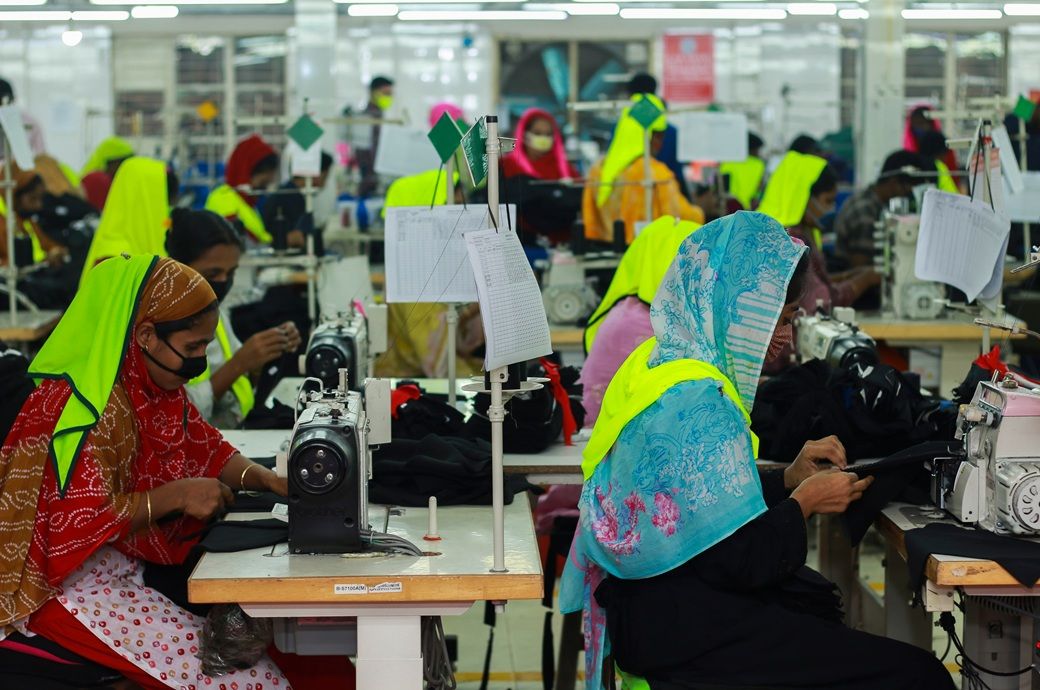
The call came at a national consultation in Dhaka on the draft Bangladesh National Strategy on Circular Economy for the sector.
Bangladesh government officials, industry leaders and sustainability experts recently called for finalising a national circular economy strategy for the textile and RMG sector as that is essential to protect competitiveness in the global apparel market.
They emphasised the need to embed circular practices across the entire value chain while improving transparency and building institutional capacity.
The event was organised by the United Nations Industrial Development Organisation (UNIDO) and the country’s Ministry of Commerce, in collaboration with Chatham House, under the Switch to Circular Economy Value Chains (SWITCH2CE) project, co-funded by the European Union (EU) and Finland.
SWITCH2CE project partner Chatham House worked with two leading national research organisations in Bangladesh to conduct two policy level research, and lessons from the pilot projects outlined future steps to foster a national circular textile strategy for Bangladesh, a release from SWITCH2CE said.
Through SWITCH2CE, technical support has been provided by Chatham House and a diverse network of partners, including international brands, research institutions, and financing organisations, working alongside local industry actors and technology providers.
Participants emphasised the need to embed circular practices across the entire value chain—from design and production to waste recycling—while improving transparency and building institutional capacity.
They emphasised policy recommendations to formalise and scale circular approaches across the entire value chain—from design and production to textile waste recycling—while improving traceability and building institutional and financial capacity.
Discussions also addressed challenges in blended fiber recycling, transparent supply chains, and the need for coordinated efforts to build a sustainable textile ecosystem by adopting a national circular strategy.
Fibre2Fashion News Desk (DS)
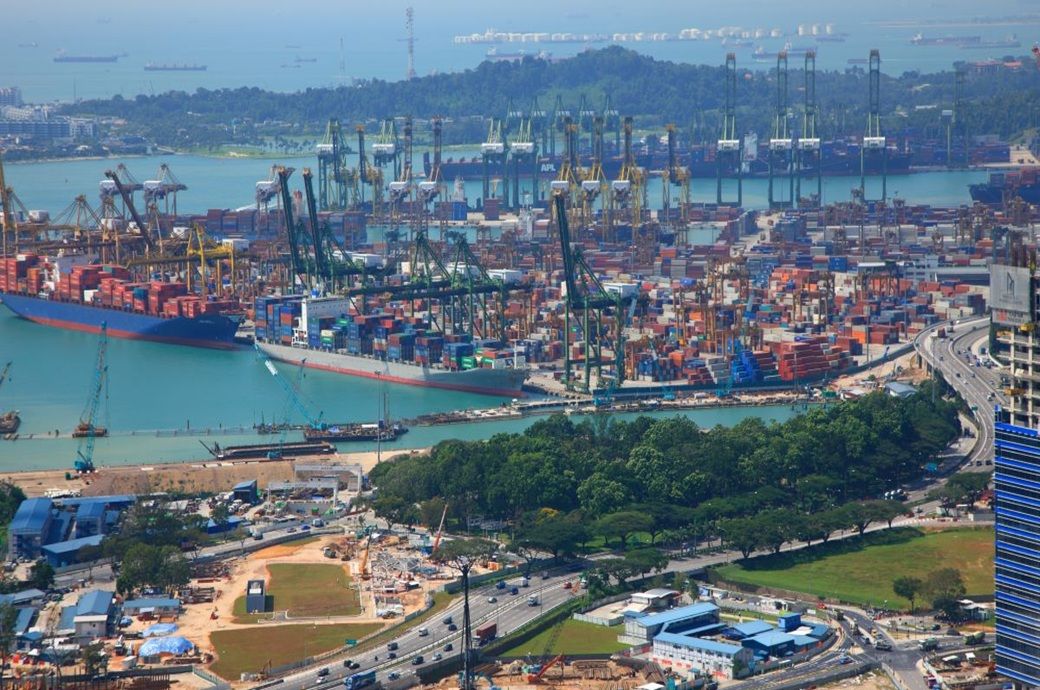
Singapore, one of the world’s most connected and efficient port hubs, offers a platform for testing and deploying innovations in areas such as cleaner fuels and digital technologies. UNCTAD complements this with global reach, policy expertise and hands-on support to developing countries.
UNCTAD and the Maritime and Port Authority of Singapore have launched a partnership to support the transition toward more sustainable, resilient and inclusive maritime transport systems.
They will promote adoption of alternative fuels and digital solutions across ports and shipping networks.
Efforts will focus on approaches that can be adapted to different national contexts.
Under the agreement, the partners will promote adoption of alternative fuels and digital solutions across ports and shipping networks. Efforts will focus on approaches that can be adapted to different national contexts, alongside knowledge-sharing in sustainable finance, digital innovation and workforce development.
“This partnership brings together Singapore’s operational excellence and UNCTAD’s global development expertise,” said Pedro Manuel Moreno, acting secretary general of UNCTAD.
“It will help accelerate a maritime transition that is not only greener and more efficient, but also resilient and inclusive—while contributing to global discussions at the UN Global Supply Chain Forum 2026,” he noted.
As pressure mounts to decarbonise ports, they face a complex balancing act: reducing emissions while keeping trade flowing efficiently and competitively, according to the UNCTAD, which recently said that challenge is turning more urgent as global supply chains navigate renewed uncertainty.
Recent tensions affecting key maritime chokepoints, including the Strait of Hormuz, have highlighted the risks of continued reliance on fossil fuels in global shipping. Volatility in energy markets and disruptions to shipping routes are reinforcing the case for alternative fuels and more resilient port infrastructure, UNCTAD said in a release.
A central priority of the partnership is ensuring that the maritime transition is inclusive.
Developing countries, many of which depend heavily on maritime trade, often face constraints in financing, technology and skills. The initiative will support these countries through training, advisory services and institutional strengthening.
Building on UNCTAD’s long-standing work with port communities, the partnership aims at improving port performance, strengthening connectivity and enhancing preparedness for disruptions.
The initiative will also contribute to preparations for the 2nd UN Global Supply Chain Forum taking place in late 2026, where policymakers, industry leaders and international organizations will address the future of trade logistics and resilience.
Fibre2Fashion News Desk (DS)


UK’s Mulberry FY26 sales rise 5.7% on strong H2 rebound
Protesters halt NatWest shareholder meeting as boss defends climate policy

North India cotton yarn prices rise as mills gain pricing power

-

 Sports1 week ago
NCAA men’s gymnastics championship: All-time winners list
-

 Sports1 week ago
WWE WrestleMania 42 Night 2: Live match results and analysis
-

 Fashion1 week ago
UK’s Sosandar returns to profitability amid robust FY26 performance
-

 Politics1 week ago
UK’s Starmer seeks to deflect blame over Mandelson appointment
-
 Business1 week ago
No fuel shortage: Govt assures 100% domestic LPG, PNG, CNG supply amid Hormuz energy crunch – The Times of India
-

 Entertainment1 week ago
Lee Anderson, Zarah Sultana kicked out of UK Parliament for calling PM ‘liar’
-
 Business1 week ago
How Trump’s psychedelics executive order could unlock stalled cannabis reform
-
 Business7 days ago
Us-India Trade Talks: US–India trade deal: Where do talks stand & what to expect – explained – The Times of India