

Business
Your FDs, RDs, SIPs Are Growing, But Are They Useless? The Biggest Mistake 90% Don’t Even Notice

Personal Finance Tips: Most of us keep saving money through fixed deposits (FDs), recurring deposits (RDs), provident fund (PF) accounts or systematic investment plans (SIPs) without giving it the thought it actually deserves. The bank deduction goes through, the balance inches up, the graph rises and everything looks fine on the surface.
But underneath this rhythm sits a truth that people are saving diligently without knowing what that money is supposed to do for them. This is a money trap that almost everyone walks into.
Investments keep running, but the purpose disappears. The amounts grow, but the “why” behind them turns vague. Once that emotional connection breaks, the whole act becomes routine and lifeless.
Why Does This Happen?
Most people say they are saving for retirement or putting money aside for the future. These answers sound responsible but reveal very little. What does retirement look like? What kind of future are we imagining? When the mind cannot see a clear picture, it refuses to bond with the goal. That is when investing becomes a cold task.
FDs continue because they have always existed. SIPs continue because the automatic deduction is fixed. After a point, this cycle becomes tiring. Savings continue, but the inner reason for saving slips out of sight.
Purpose Mapping
Purpose Mapping reminds you that money is not meant to lie dormant but to support the kind of life you want. It brings your financial decisions back into your emotional world.
Instead of thinking in numbers, you begin by imagining how you actually want your daily life to look. A person may say, “I want the freedom to shift to a smaller town by the age of 45,” or “I want to be able to take a six-month career break without fear or stress,” or even, “If something serious happens at home, I should not feel helpless.”
These statements breathe. They feel real because you can see them unfolding.
Once these lived goals come into focus, the structure of your investments naturally aligns with them. The SIP you invest in each month becomes the cushion for a future career pause. The FD becomes a tool for near-term needs. The emergency fund becomes a source of mental peace rather than an afterthought. At this stage, you are no longer saving out of habit; you are investing with intention.
The emotional link becomes even stronger when each part of your financial plan is tied to a feeling (freedom, safety, peace or control). When money stands for something human, the motivation behind saving never dries up. And when you keep your goals visible, sometimes literally, sometimes in the back of your mind, the process becomes far easier. You no longer feel that you are losing money to deductions; you feel that every deduction is building a specific life.
Life keeps changing, and so should your goals. A review every year helps your investments change in step with you. When your plans move with your life, saving no longer feels like a burden. It becomes a way of staying ready for the life you want to live.

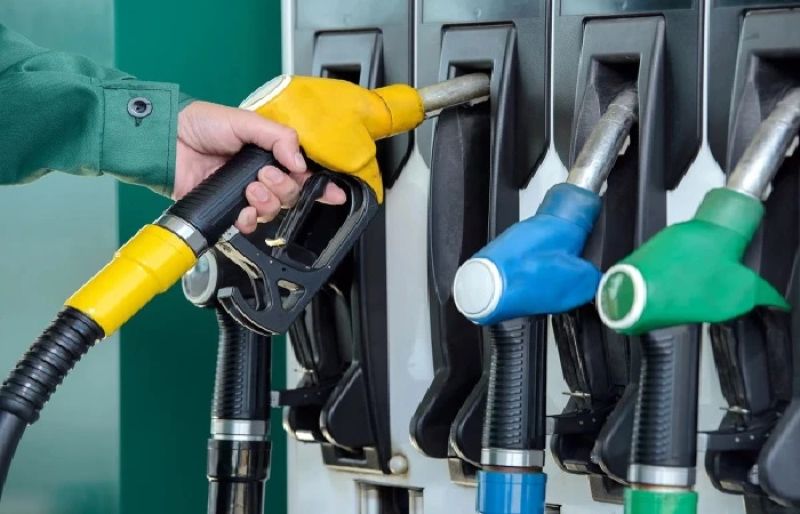
The federal government announced a Rs26.77 per litre hike in the price of petrol and high-speed diesel each on Friday, according to a notification issued by the Petroleum Division.
The new prices will be effective from April 25, 2026 for a week, the notification stated.
Following the increase, the price of HSD has jumped from Rs353.42 to Rs380.19, while the petrol price now stands at Rs393.35.
The government has been reviewing petroleum prices every Friday night following the now-paused US-Israel war on Iran, which began on February 28.
In the previous weekly review, the prime minister announced a reduction of Rs32.12 per litre in the price of high-speed diesel, while the petrol price remained unchanged.
The government jacked up petrol and diesel prices despite oil prices falling globally on Friday after it appeared a second round of Middle East talks was back on, bolstering prospects for an end to a war that has crippled energy shipments from the Gulf.
Oil prices had been climbing earlier as investors worried about a lack of progress in ending the Middle East crisis, with Tehran keeping the Strait of Hormuz closed and the US maintaining a blockade of Iranian ports.
But they dropped on reports that Iran’s Foreign Minister Abbas Araghchi was to arrive in Islamabad on Friday night.
Brent crude, the international benchmark contract, fell back below $100 a barrel.
facebook twitter
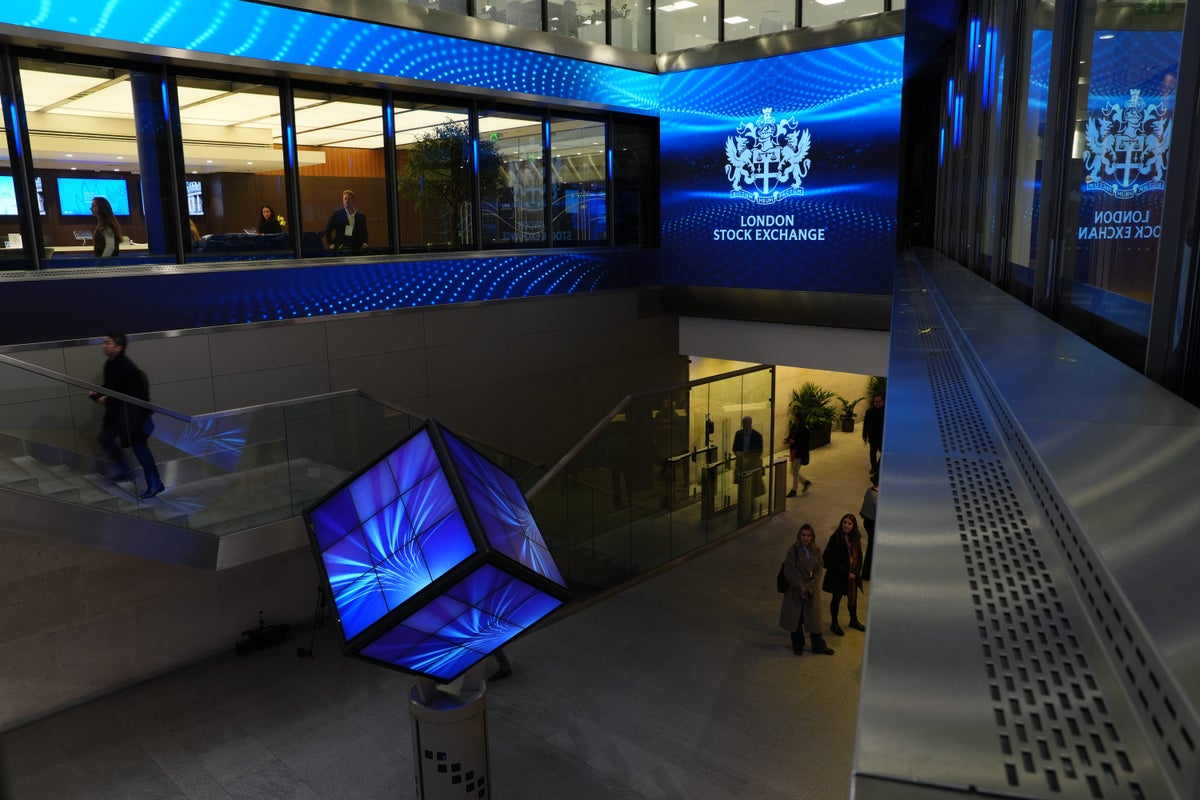
The FTSE 100 ended the week on the back foot as the crisis in the Middle East remained deadlocked.
The FTSE 100 closed down 77.93 points, 0.8%, at 10,379.08. The FTSE 250 ended down 181.71 points, 0.8%, at 22,582.81, while the AIM All-Share fell 5.73 points, 0.7%, to 796.40.
For the week, the FTSE 100 fell 2.7%, the FTSE 250 also declined 2.7% and the AIM All-Share dipped 1.7%.
The oil price continued to tick higher amid few signs of a breakthrough in the Middle East crisis.
AFP reported that Iranian foreign minister Abbas Araghchi is expected to arrive in Islamabad on Friday night, citing an official source in Pakistan, without providing details about who he was likely to meet.
The Pakistan capital has been gearing up for an anticipated second round of talks between the US and Iran, but it was not clear whether Mr Araghchi and the delegation accompanying him would meet any US officials to discuss the Middle East war.
The BBC reported that the suggestion coming from Iran is that these are bilateral talks with Pakistan, not meeting the US.
Writing on X, Mr Araghchi said his trip to Islamabad is to “closely co-ordinate with our partners on bilateral matters and consult on regional developments”.
US defence secretary Pete Hegseth said Iran has a chance to “make a good, wise deal”, adding that the US naval blockade of Iranian ports “is growing and going global”.
Mr Hegseth said the US is not “anxious” to make a deal, and “the ball is in [Iran’s] court”.
Brent oil traded at 105.78 dollars a barrel on Friday afternoon, compared with 103.25 dollars at the time of the equities close in London on Thursday.
In European equities on Friday, the CAC 40 in Paris ended down 0.8%, and the DAX 40 in Frankfurt ended 0.1% lower.
The mood was brighter in the US. In New York, the Dow Jones Industrial Average was down 0.4%, but the S&P 500 was 0.5% higher and the Nasdaq Composite 1.2% to the good.
David Morrison, senior market analyst at Trade Nation, explained the war in the Gulf is hitting Europe and the UK harder than the US.
“The former are reliant on imported energy in a way the US isn’t. While the US still must deal with higher crude oil prices, it has few worries over supplies drying up,” he pointed out.
On Wall Street, Intel was the star of the show soaring 23% after better-than-expected first quarter results and guidance, reporting “unprecedented” demand for its chips.
The yield on the US 10-year Treasury stretched to 4.32% on Friday from 4.29% on Thursday. The yield on the US 30-year Treasury widened to 4.92% from 4.89%.
The pound eased to 1.3497 dollars on Friday afternoon from 1.3500 dollars on Thursday. Against the euro, sterling fell to 1.1532 euros from 1.1551 euros.
In the UK, retail sales increased faster than expected in March as fuel sales soared 6.1% amid surging oil prices.
According to the Office for National Statistics, the volume of retail sales rose by 0.7% in March, against market consensus for no growth.
Total retail sales, excluding automotive fuel, rose by 0.2% on-month, in line with FXStreet-cited expectations.
Danni Hewson, AJ Bell head of financial analysis, explained the figures show rising petrol and diesel prices are “eating into household budgets”.
“People can only spend a pound once and if they’re choosing to shell out more than normal on fuel, they’ll have less to spend on other purchases,” she explained.
A separate report showed UK firms think food inflation could jump as high as 7% this year.
According to a Bank of England survey the Middle East conflict has “eroded” confidence that the UK economy will improve later this year.
The Decision Maker Panel survey showed that firms expected to increase their prices by 3.8% over the next 12 months, according to data for the three months to April.
This is 0.3 percentage points higher than predicted over the three months to March.
Meanwhile, the Bank of England’s deputy governor, Sarah Breeden, told the BBC on Friday the the UK central bank expects stock markets around the world to fall as share prices do not reflect the many risks facing the global economy.
Ms Breeden, who is also the Bank’s head of financial stability, said: “There’s a lot of risk out there and yet asset prices are at all-time highs. We expect there will be an adjustment at some point.”
The euro traded lower against the greenback, falling to 1.1703 dollars on Friday from 1.1708 dollars on Thursday. Against the yen, the dollar was trading at 159.55 yen, from 159.50 yen.
On the FTSE 100, packaging firm Mondi slumped 11% as it missed profit forecasts in the first quarter.
The Weybridge-based packaging firm on Friday said underlying earnings before interest, taxes, depreciation and amortisation, including forestry fair value, fell 27% to 212 million euros for the first quarter that ended March 31, from 290 million euros a year earlier.
JD Sports Fashion fell 1.9% as the Financial Times said a boardroom rift sparked the departure of chairman Andrew Higginson this week.
The FT reported that Mr Higginson quit as chairman of JD Sports after pushing for chief executive Regis Schultz to be ousted and failing to win unanimous backing for the move.
But JD Sports told Alliance News that Mr Schultz has the “continued support” of its board.
A JD Group spokesperson said: “It was mutually agreed between Andy and the board that this is the right time for a change of chair; there has been no disagreement about the board’s continued support for the CEO. The board is grateful for the valuable role that Andy has played during his tenure at the business.”
Airlines headed south amid the higher oil price and fears over jet fuel supplies.
Wizz Air fell 6.0%, easyJet 2.3% and British Airways owner IAG 1.4%.
Gold traded at 4,718.34 dollars an ounce on Friday, down from 4,731.39 dollars at the same time on Thursday.
The biggest risers on the FTSE 100 were British American Tobacco, up 96.00p at 4,302.00p, Intercontinental Hotels Group, up 3.10p at 146.00p, London Stock Exchange Group, up 180.00p at 9,992.00p, Sage Group, up 14.60p at 902.80p and Marks & Spencer, up 5.35p at 347.00p.
The biggest fallers on the FTSE 100 were Mondi, down 93.60p at 748.20p, Babcock International, down 54.50p at 1,131.50p, Antofagasta, down 145.00p at 3,686.00p, AstraZeneca, down 536.00p at 13,956.00p and JD Sports Fashion, down 2.12p at 69.94p.
Monday’s global economic calendar has German consumer confidence data. Later in the week, interest rate decisions are due in the US, Europe, UK and Japan. Inflation prints will be released in Australia and for the euro area.
Next week’s local corporate calendar sees first quarter results from oil majors BP and Shell, pharmaceutical firms GSK and AstraZeneca and banks Barclays, NatWest and Lloyds.
Contributed by Alliance News
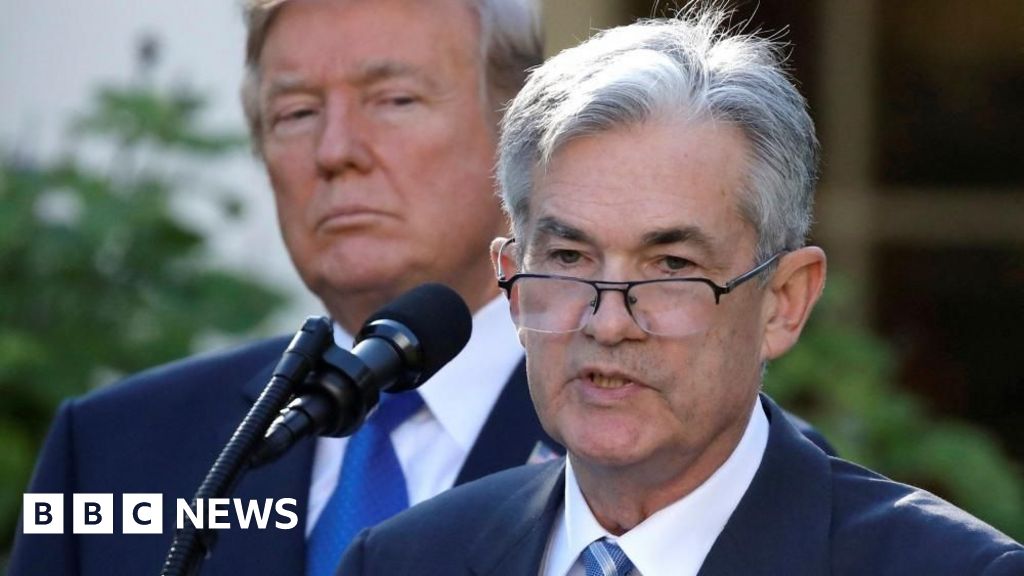
Powell’s term is nearing its end and the US Senate is considering Trump’s nominee for his replacement, Kevin Warsh. A key Republican, Thom Tillis, has withheld his support for Warsh unless the Trump administration would drop its investigation into Powell.


NASCAR makes major change in front office, including new CEO in unprecedented move: report

Extended interview: Don Cheadle – CBS News

Charlie Sheen updates on relationship with old pal Jon Cryer

-

 Fashion1 week ago
France’s LVMH Q1 revenue falls 6%, shows resilience amid Iran war
-

 Tech1 week ago
CYBERUK ’26: UK lagging on legal protections for cyber pros | Computer Weekly
-

 Sports5 days ago
WWE WrestleMania 42 Night 2: Live match results and analysis
-

 Sports1 week ago
Faheem Ashraf backs Islamabad United’s push, calls league a ‘career-changing platform’
-

 Sports5 days ago
NCAA men’s gymnastics championship: All-time winners list
-
 Business1 week ago
PepsiCo earnings beat estimates as North American food business improves
-

 Tech1 week ago
Anthropic Plots Major London Expansion
-

 Entertainment4 days ago
Lee Anderson, Zarah Sultana kicked out of UK Parliament for calling PM ‘liar’