

Politics
Dubai emerges as top billionaire destination

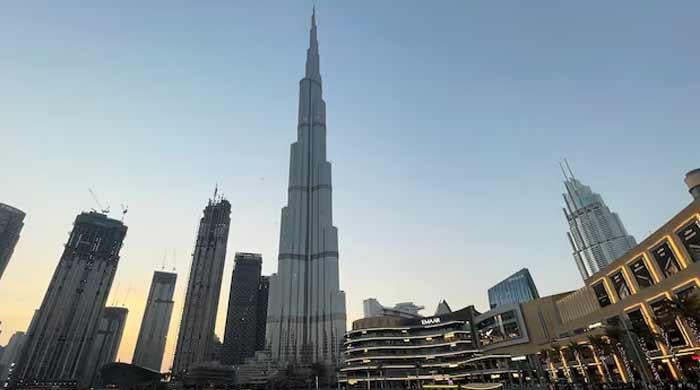
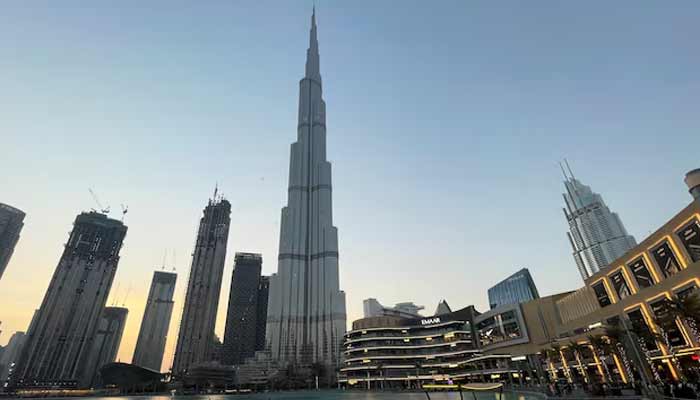
DUBAI: Dubai has become one of the world’s leading destinations for billionaires, as global wealth reached a record $15.8 trillion in 2025, according to the latest Billionaire Ambitions Report 2025.
The report is published annually by UBS — a major Swiss financial institution known internationally for managing the wealth of the world’s richest families and monitoring global billionaire trends.
The report explained that more wealthy families are relocating than ever before, mainly due to security, business opportunities, tax advantages and a higher quality of life.
The study shows that 36% of the world’s billionaires have already moved from their home country at least once, with Dubai, Singapore, London and New York emerging as their preferred destinations.
According to the report, the United Arab Emirates — especially Dubai — has become a key hub for global wealth, attracting high-net-worth individuals from Pakistan, India, Europe and across Asia.
Experts say Dubai’s tax-free system, stable governance, strong economy and international lifestyle make it one of the most attractive places for the world’s wealthy to secure their future.
The study also highlights a significant shift: women billionaires increased their wealth at twice the pace of men in 2025. In simple terms, this means that if male billionaires saw their wealth grow by around 3%, women saw growth of more than 8%.
The study noted that women have been investing more confidently in technology, finance and new businesses, allowing them to expand their fortunes more rapidly.
Another major finding is the sharp rise in inheritance. In 2025, wealthy families passed on a record $297.8 billion to their children — the largest wealth transfer ever recorded. Many young heirs are choosing the UAE as their base, attracted by its business-friendly rules and global connectivity.
Self-made billionaires also added $386.5 billion to global wealth this year, with strong growth seen in the United States, Asia-Pacific and the Middle East — including the UAE and Saudi Arabia.
The study predicts that the world’s richest families will transfer nearly $7 trillion to the next generation by 2040, a shift expected to further increase the movement of wealthy individuals towards stable financial hubs such as Dubai.
Experts say the UAE’s rise as a global magnet for wealth underlines its growing importance in the international economic landscape — especially for wealthy investors from Pakistan and other developing nations seeking stability and long-term security.
- Putin pledges uninterrupted fuel supplies, nuclear cooperation.
- Russia, India adopt economic cooperation plan till 2030.
- Modi highlights enduring trust and long-standing partnership.
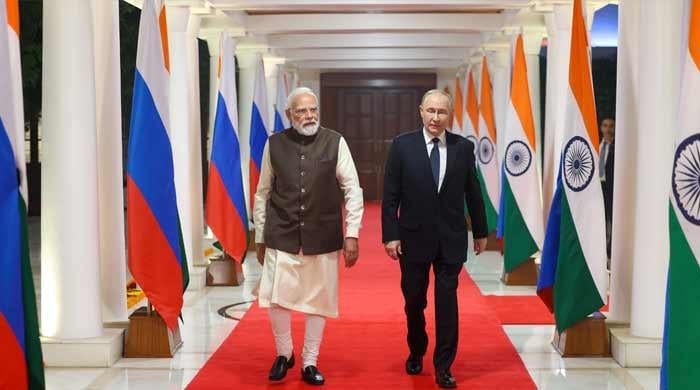
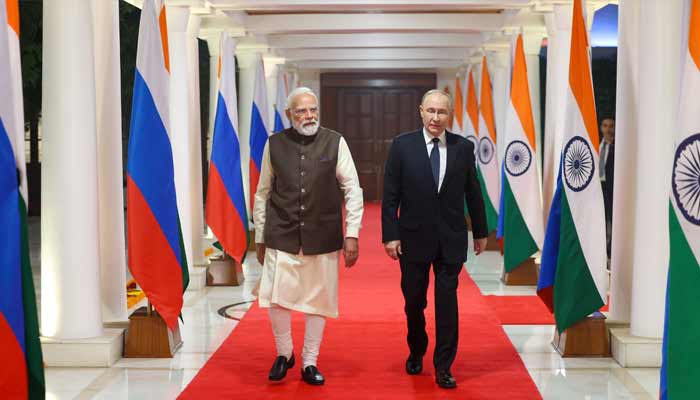
Russian President Vladimir Putin and Indian Prime Minister Narendra Modi agreed on Friday to expand and diversify trade beyond oil and defence despite Western pressure on New Delhi to scale back its decades-old close ties with Moscow.
India, the world’s top buyer of Russian arms and seaborne oil, has rolled out the red carpet for Putin during his two-day state visit, his first to New Delhi since Russia’s invasion of Ukraine in 2022.
The trip coincides with New Delhi’s talks with the US on a trade deal to cut punitive tariffs imposed by President Donald Trump on its goods over India’s purchases of Russian oil.
Russia has said it wants to import more Indian goods in an effort to grow trade to $100 billion by 2030. It has so far been skewed in Moscow’s favour due to New Delhi’s energy imports.
Ties have ‘stood test of time’, says Modi
Describing India’s enduring partnership with Russia as “a guiding star”, Modi said: “Based on mutual respect and deep trust, these relations have always stood the test of time.”
“[…]we have agreed on an economic cooperation programme for the period up to 2030. This will make our trade and investment more diversified, balanced, and sustainable,” he told reporters, with Putin by his side.
Modi, who warmly embraced Putin on the airport tarmac when he arrived on Thursday, also reiterated India’s support for a peaceful resolution to the war in Ukraine.
Putin said Russia would continue to ensure “uninterrupted fuel supplies” to India, signalling a defiant stance in the face of US sanctions, and also flagged a project underway to build India’s largest nuclear power plant at Kudankulam.
A joint statement issued following the summit said: “The leaders emphasised that in the current complex, tense, and uncertain geopolitical situation, Russian-Indian ties remain resilient to external pressure.”
21-gun salute welcome
Putin received a ceremonial welcome on Friday on the forecourt of Rashtrapati Bhavan, the colonial-era presidential palace, with a 21-gun salute as his convoy drove in.
A large business and government delegation has accompanied Putin. Among the deals signed, the two countries agreed to help Indians move to Russia for work, to set up a joint venture fertiliser plant in Russia, and boost cooperation in agriculture, healthcare and shipping.
They also agreed to reshape their defence ties to take account of New Delhi’s push for self-reliance through joint research and development, as well as the production of advanced defence platforms. This would include joint production in India of spare parts, components, assemblies, and other products for servicing Russian weapons and military equipment.
Putin challenges Washington
In an interview with broadcaster India Today aired late on Thursday, Putin challenged US pressure on India not to buy Russian fuel.
“If the US has the right to buy our (nuclear) fuel, why shouldn’t India have the same privilege?” he said, adding that he would discuss the matter with Trump.
Energy trade with India is “running smoothly” despite a minor dip in the first nine months of 2025, he said.
India has said Trump’s tariffs are unjustified and unreasonable, noting continued US trade with Moscow. The US and European Union still import billions of dollars worth of Russian energy and commodities, ranging from liquefied natural gas to enriched uranium, despite economic sanctions.
Since European countries have sought to cut their reliance on Russian energy over the Ukraine war, India ramped up its purchases of discounted Russian crude, only to reduce them under pressure from US tariffs and sanctions this year.
“India faces a conundrum; by taking steps to strengthen ties with Moscow or Washington, New Delhi risks setting back ties with the other,” Michael Kugelman, senior fellow at Washington’s Atlantic Council think tank, wrote in Foreign Policy magazine.
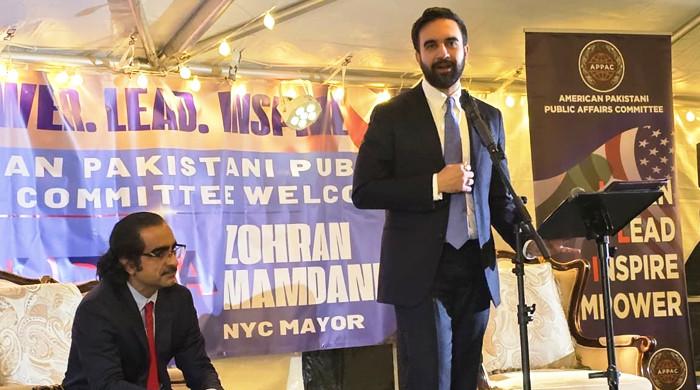
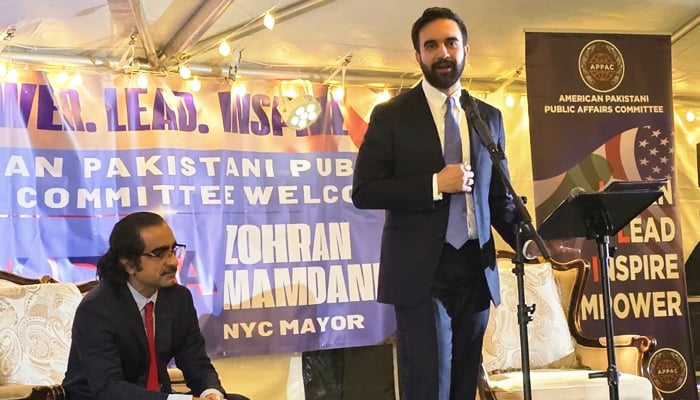
At a gathering of American-Pakistanis in Long Island, New York mayor-elect Zohran Mamdani began with a light-hearted story that captured both the challenges of political life and the deep community ties that helped carry him to victory.
“A day after Ali Najmi lost the race, he went to a restaurant to grab some doughnuts. An uncle saw him and said he had been desperately waiting to vote for Ali,” Mamdani began with an engaging story.
In fact, the first door Mamdani ever knocked on in New York City was for American-Pakistani candidate Ali Najmi, who was running for City Council. Mamdani calls Ali his brother. His defeat, he said, was a thousand-watt shock.
“That day, I told myself that we cannot allow any uncle or auntie to forget when the election is,” mayor-elect Mamdani told more than a hundred American-Pakistanis gathered to support his Transition.
The event, held in Long Island, was organised by Chairman of the American Pakistani Public Affairs Committee (APPAC) Dr Ijaz Ahmad. Many attendees had supported Mamdani since he contested the State Assembly election five years ago.
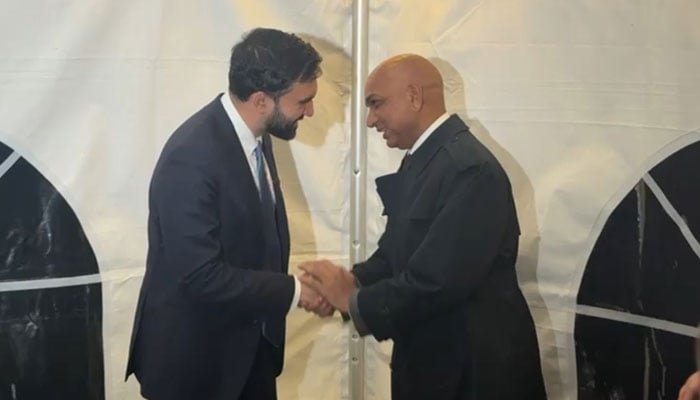
Explaining his campaign strategy, Mamdani said he reached out to people of all ages. His team contacted those who had never voted, as well as those who had not voted for decades.
“A close friend of mine, Salman, told me about his 90-year-old grandfather who had lived in New York City for nearly 50 years. This was the election that finally brought him to register to vote,” Mamdani said proudly.
With this approach, Mamdani broadened political participation. He brought Pakistanis, Indians, Bangladeshis, Nepalis, Tibetans, South Asians and others from across the five boroughs into the electoral process. He went on to win more votes than any candidate since John Vliet Lindsay in 1965.
“I am now less than 30 days away from being inaugurated as the first South Asian, the first Muslim mayor in the history of New York City — and the first immigrant mayor to lead our city in generations.”
Mamdani then shared a heartfelt message.
“The only reason I stand here is because people saw themselves in me long before I could see the path ahead. I ask you to give that same belief to every young person in this room. Young people who want to write their own story, who aim to become the leaders we have long waited for — the ones who will chart a new course for our city, our state and our country.”
Although Mamdani is the talk of the town today, his journey has been far from easy.
He revealed that many discouraged him from pursuing this goal, including close associates who reminded him of “the limitations of the promise that is made in this city, in this state and in this country.”
“At the beginning of this campaign, many said it was impossible. Many asked why I would even try. Some looked at me as though it was a fool’s errand to dream of such a thing.”
Mamdani, however, praised APPAC for its unwavering encouragement. “It is that support, at such a critical moment, that even makes this journey possible.”
He added that this was not just about American-Pakistanis, South Asians or Muslims. Many early supporters did not even know what position he was running for.
“What I have heard from so many in this room — and from Dr Ijaz himself — is the importance of making democracy reflect the city it is meant to serve. That every person, no matter where they come from, can see themselves in the politics of their home,” Mamdani remarked.
Speaking about fulfilling his campaign promises, he added: “I know the honour we share today is one I do not take lightly. Far more rests on the success of my administration than simply delivering our ambitious agenda.”
Before concluding, Mamdani shared another story — this time about a South Asian doctor who saved a woman’s life on a flight to Puerto Rico. An elected official on board asked the doctor how his service could be recognised.
“I need two tickets to Zohran Mamdani’s inauguration,” the doctor replied, according to the mayor-elect.
Earlier, in his welcome remarks, former APPAC Youth President and PSA National Co-founder Arsal Ijaz noted that Zohran Mamdani “wasn’t born into politics. He built his path step by step, door by door and community by community. His journey proves that the impossible becomes possible when you take that first step.”
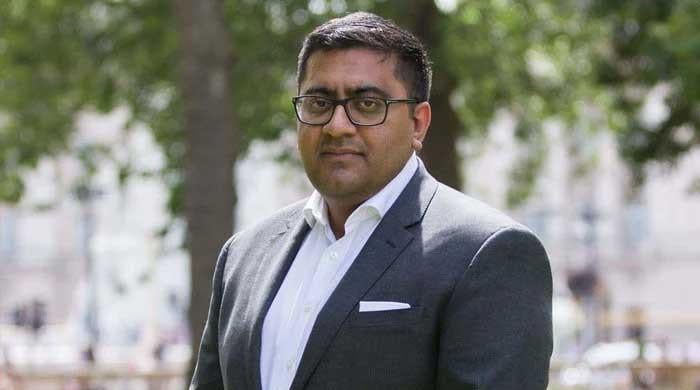
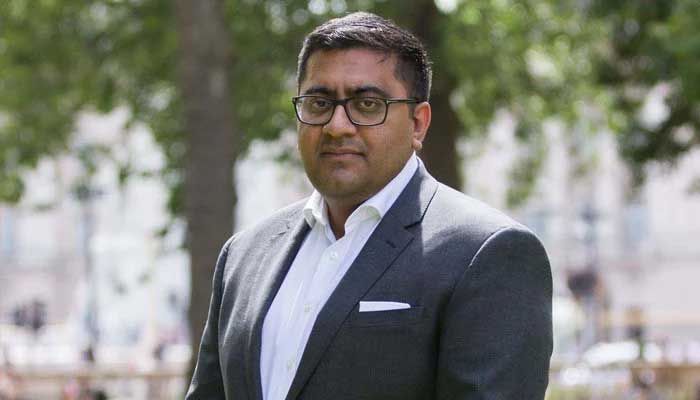
LONDON: The Board of Trustees of the British Asian Trust has announced the appointment of Hitan Mehta OBE as its new Chief Executive.
Mehta succeeds Richard Hawkes OBE, who has stepped down after 10 years of transformative leadership.
The Board extended its thanks to Hawkes for his decade of service. It said: “Under his leadership, the British Asian Trust has significantly expanded its scale and impact, improving the lives of more than 18 million people across South Asia. The board wishes him every success in the future”.
Mehta played a pivotal role in establishing the British Asian Trust in 2007 as its first-ever employee. Over the past 18 years, he has worked closely with His Majesty King Charles III, including previously as The Prince of Wales.
As a long-standing member of the British Asian Trust’s senior leadership, he has worked side by side with Hawkes to grow the organisation into one of the most respected and innovative international charities working across South Asia.
Throughout his tenure, Mehta has been central to the British Asian Trust’s global expansion, helping shape its growth across the UK, South Asia, the Gulf, and most recently North America.
He has led the Trust’s efforts to deepen engagement with the global South Asian diaspora, building influential networks across philanthropy, finance and business to strengthen the Trust’s mission worldwide.
Hawkes commented: “After an amazing 10 years at the British Asian Trust, now is the right moment for me to explore new challenges and pass on the baton to Mehta, who I have worked with closely for the last decade. I would like to thank the board for the privilege of being CEO and wish the organisation every success in the future”.
Expressing his reflections on the appointment, Mehta said, “It is an honour to step into this role at such a pivotal moment for the British Asian Trust. As we enter an important period of global and UK diaspora”.


US brand Nike debuts ACG Zegama crafted for wild, technical terrain

Netflix to buy Warner Bros. in a deal valued at $82.7 billion

‘Coastal Chaos’ and 7-5 Duke: Can the ACC’s longstanding problems ever get resolved?

-

 Tech5 days ago
Get Your Steps In From Your Home Office With This Walking Pad—On Sale This Week
-

 Sports4 days ago
India Triumphs Over South Africa in First ODI Thanks to Kohli’s Heroics – SUCH TV
-

 Fashion4 days ago
Results are in: US Black Friday store visits down, e-visits up, apparel shines
-

 Entertainment4 days ago
Sadie Sink talks about the future of Max in ‘Stranger Things’
-
 Politics4 days ago
Elon Musk reveals partner’s half-Indian roots, son’s middle name ‘Sekhar’
-

 Tech4 days ago
Prague’s City Center Sparkles, Buzzes, and Burns at the Signal Festival
-

 Sports4 days ago
Broncos secure thrilling OT victory over Commanders behind clutch performances
-

 Entertainment4 days ago
Natalia Dyer explains Nancy Wheeler’s key blunder in Stranger Things 5