

Tech
Here’s What You Should Know About Launching an AI Startup

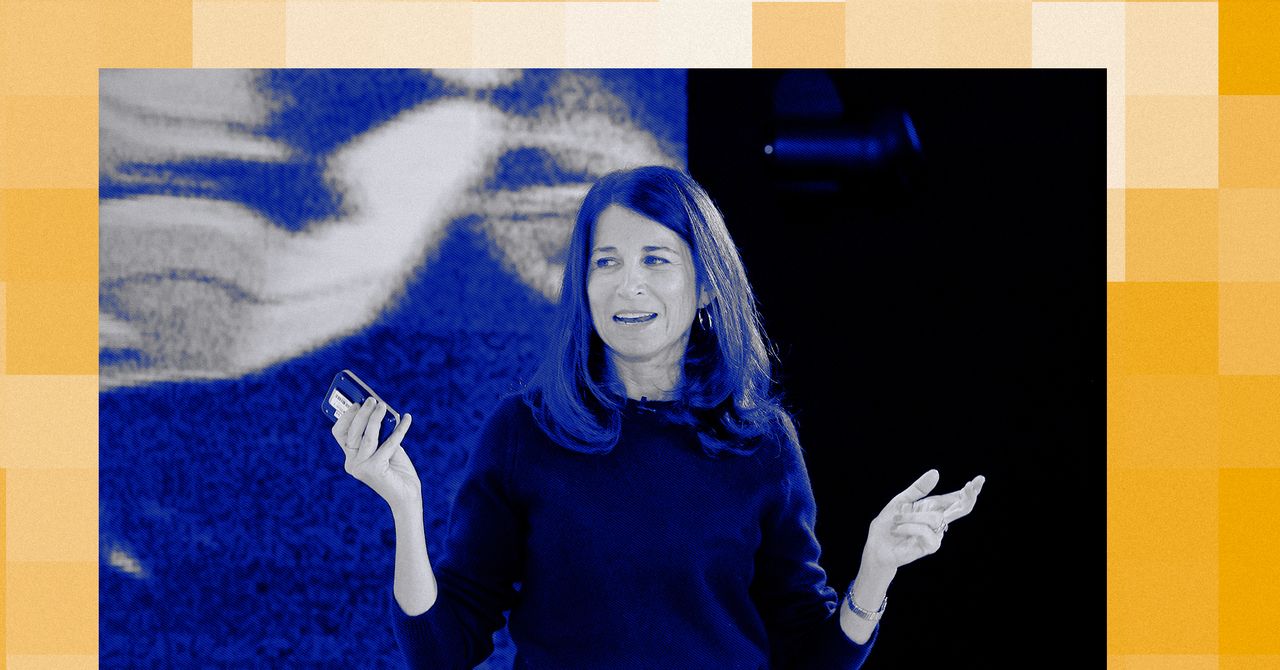
Julie Bornstein thought it would be a cinch to implement her idea for an AI startup. Her résumé in digital commerce is impeccable: VP of ecommerce at Nordstrom, COO of the startup Stitch Fix, and founder of a personalized shopping platform acquired by Pinterest. Fashion has been her obsession since she was a Syracuse high schooler inhaling spreads in Seventeen and hanging out in local malls. So she felt well-positioned to create a company for customers to discover the perfect garments using AI.
The reality was much harder than she expected. I had breakfast recently with Bornstein and her CTO, Maria Belousova, to learn about her startup, Daydream, funded with $50 million from VCs like Google Ventures. The conversation took an unexpected turn as the women schooled me on the surprising difficulty of translating the magic of AI systems into something people actually find useful.T
Her story helps explain something. My first newsletter of 2025 announced that it would be The Year of the AI App. Though there are indeed many such apps, they haven’t transformed the world as I anticipated. Ever since ChatGPT launched in late 2022, people have been blown away by the tricks performed by AI, but study after study has shown that the technology has not yet delivered a significant boost in productivity. (One exception: coding.) A study published in August found that 19 out of 20 AI enterprise pilot projects delivered no measurable value. I do think that productivity boost is on the horizon, but it’s taking longer than people expected. Listening to the stories of startups like Daydream that are pushing to break through gives some hope that persistence and patience might indeed make those breakthroughs happen.
Fashionista Fail
Bornstein’s original pitch to VCs seemed obvious: Use AI to solve tricky fashion problems by matching customers with the perfect garments, which they’d be delighted to pay for. (Daydream would take a cut.) You’d think the setup would be simple—just connect to an API for a model like ChatGPT and you’re good to go, right? Um, no. Signing up over 265 partners, with access to more than 2 million products from boutique shops to retail giants, was the easy part. It turns out that fulfilling even a simple request like “I need a dress for a wedding in Paris” is incredibly complex. Are you the bride, the mother-in-law, or a guest? What season is it? How formal a wedding? What statement do you want to make? Even when those questions are resolved, different AI models have different views on such things. “What we found was, because of the lack of consistency and reliability of the model—and the hallucinations—sometimes the model would drop one or two elements of the queries,” says Bornstein. A user in Daydream’s long-extended beta test would say something like, “I’m a rectangle, but I need a dress to make me look like an hourglass.” The model would respond by showing dresses with geometric patterns.
Ultimately, Bornstein understood that she had to do two things: postpone the app’s planned fall 2024 launch (though it’s now available, Daydream is still technically in beta until sometime in 2026) and upgrade her technical team. In December 2024 she hired Belousova, the former CTO of Grubhub, who in turn brought in a team of top engineers. Daydream’s secret weapon in the fierce talent war is the chance to work on a fascinating problem. “Fashion is such a juicy space because it has taste and personalization and visual data,” says Belousova. “It’s an interesting problem that hasn’t been solved.”
What’s more, Daydream has to solve this problem twice—first by interpreting what the customer says and then by matching their sometimes quirky criteria with the wares on the catalog side. With inputs like I need a revenge dress for a bat mitzvah where my ex is attending with his new wife, that understanding is critical. “We have this notion at Daydream of shopper vocabulary and a merchant vocabulary, right?” says Bornstein. “Merchants speak in categories and attributes, and shoppers say things like, ‘I’m going to this event, it’s going to be on the rooftop, and I’m going to be with my boyfriend.’ How do you actually merge these two vocabularies into something at run time? And sometimes it takes several iterations in a conversation.” Daydream learned that language isn’t enough. “We’re using visual models, so we actually understand the products in a much more nuanced way,” she says. A customer might share a specific color or show a necklace that they’ll be wearing.
Bornstein says Daydream’s subsequent rehaul has produced better results. (Though when I tried it out, a request for black tuxedo pants showed me beige athletic-fit trousers in addition to what I asked for. Hey, it’s a beta.) “We ended up deciding to move from a single call to an ensemble of many models,” says Bornstein. “Each one makes a specialized call. We have one for color, one for fabric, one for season, one for location.” For instance, Daydream has found that for its purposes, OpenAI models are really good at understanding the world from the clothing point of view. Google’s Gemini is less so, but it is fast and precise.







In a time when almost everything is getting more expensive, this deal on the M5 MacBook Air has me hopeful about how laptop pricing will play out the rest of the year. The M5 MacBook Air has dropped back down to $949, which is $150 off its retail price. It’s only been at this price one other time since the product launched in early March and has more consistently sold for $1,049. As someone who’s reviewed every available MacBook and their strongest competitors, I can unequivocally say that this MacBook Air is one of the very best laptop deals right now.
Take the Surface Laptop 7th Edition, for example, which has been one of my favorite alternatives to the MacBook Air through all of 2025. It had been at competitive prices with the M4 MacBook Air all along, with both laptops sometimes dropping to as low as $799 during sales events like Prime Day throughout the year. But now, the Surface Laptop has gotten an official price hike due to the RAM shortage and is currently sitting at $1,200. It’s still a laptop I like quite a lot, but at $350 more than a similarly configured M5 MacBook Air, it’s very difficult to recommend.
Or consider the MacBook Neo, Apple’s new budget laptop that also launched in March. While it’s much cheaper overall, it’s only ever been sold for $10 off its full price. At this reduced price for the M5 MacBook Air of $949, that leaves only a dangerously small $260 gap between the Neo and the Air. It’s almost embarrassing how much better the Air is by comparison—in every way imaginable. If you’re curious how these two laptops stack up, I’ve done a comprehensive comparison between them that’s worth checking out. But to put it simply, despite all the excitement (and controversy) around the much cheaper MacBook Neo, the MacBook Air still has the most price flexibility in terms of deals.
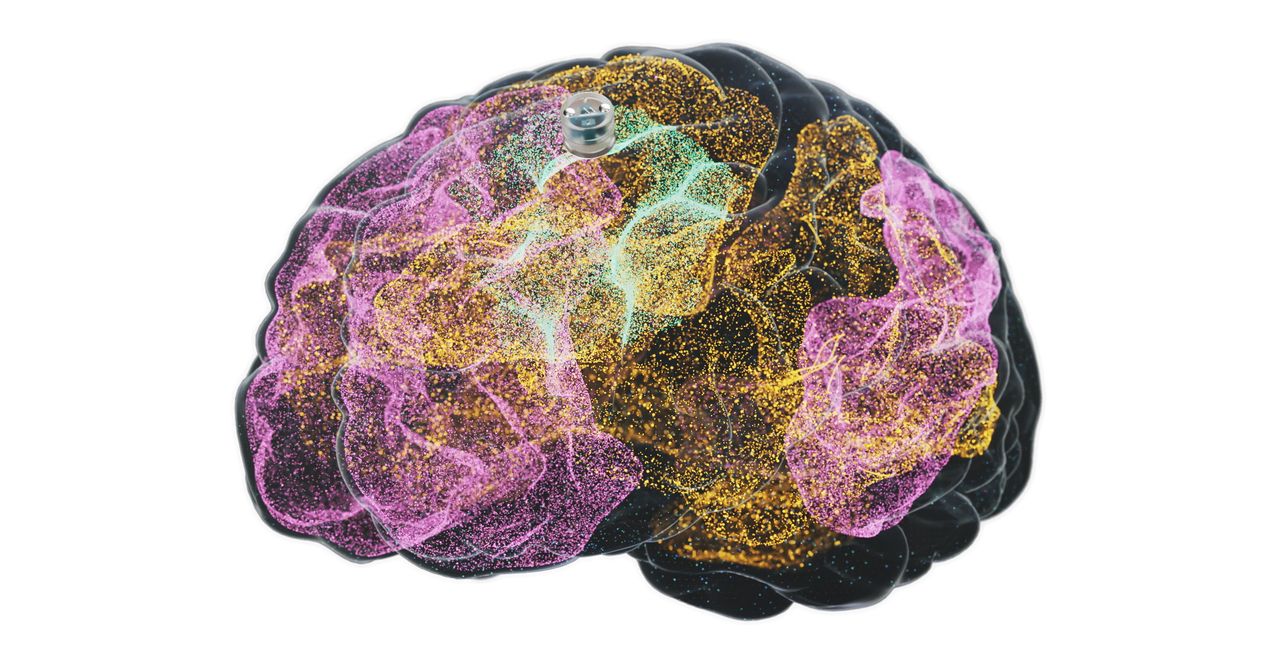
The latest brain-computer interface could help people recover from severe depression. Motif Neurotech announced Monday that the US Food and Drug Administration has approved a human study to trial the company’s blueberry-sized brain implant that sits in the skull and delivers electrical stimulation to treat depression.
The Houston-based startup, founded in 2022, is part of a budding industry pursuing technology to read and interpret brain signals. While other companies exploring similar technology, like Elon Musk’s Neuralink, Paradromics, and Synchron, are developing devices to enable paralyzed people to communicate and use computers, Motif is aiming to ease depression in people who have not benefited from medication.
The company’s device is implanted in the skull just above the dura, the brain’s protective membrane. It targets the central executive network, a part of the brain that is responsible for high-level cognitive functions and is underactive in major depressive disorder. The implant emits specific patterns of stimulation to turn “on” this network.
Motif’s device would allow patients to receive therapeutic brain stimulation at home. “Through frequent electrical stimulation, we think we can drive that neuroplasticity that creates stronger connectivity within the central executive network for patients with depression, so that they can get out of bed in the morning, call their friends, go to the gym,” says Jacob Robinson, Motif’s cofounder and CEO.
Courtesy of Motif
Electrical stimulation has been used for decades to treat depression, and Motif’s approach is just the latest iteration. Electroconvulsive or “shock” therapy began in the 1930s and is still used today in cases where patients don’t benefit from antidepressants. Deep brain stimulation, which involves surgically implanting electrodes into the brain, is occasionally used experimentally but is not FDA approved. A much milder form of stimulation known as transcranial magnetic stimulation, or TMS, was approved in 2008. While it can be highly effective, it typically requires a lengthy treatment regimen of five treatments a week for six weeks.
A study from 2021 found that during a 12-month period in the United States, nearly 9 million adults were undergoing treatment for major depressive disorder, and of those, almost 3 million were considered to have treatment-resistant depression, when symptoms do not improve after at least two, and often more, antidepressant medications.
Motif’s device can be implanted in a 20-minute outpatient procedure without the need for brain surgery. It’s powered by wireless magnetoelectric technology that Robinson developed while at Rice University and is charged with a baseball cap that patients will wear when receiving the stimulation.
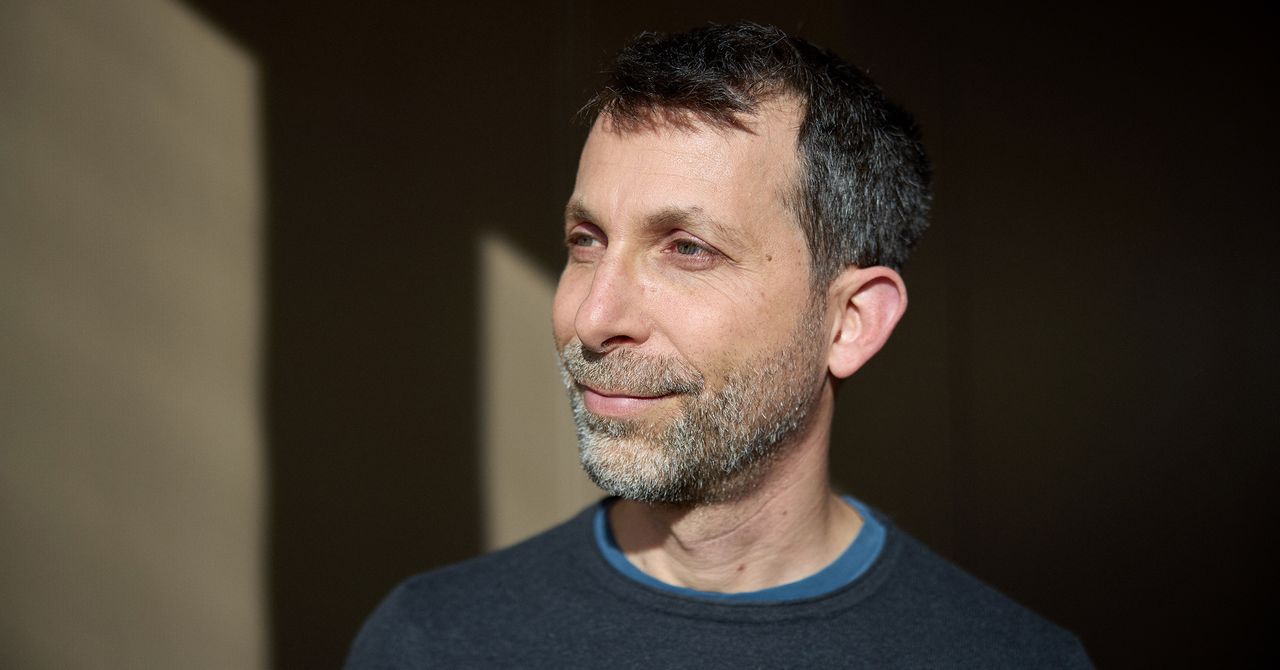
David Silver gave the world its very first glimpse of superintelligence.
In 2016, an AI program he developed at Google DeepMind, AlphaGo, taught itself to play the famously difficult game of Go with a kind of mastery that went far beyond mimicry.
Silver has since founded his own company, Ineffable Intelligence, that aims to build more general forms of AI superintelligence. The company will do this, Silver says, by focusing on reinforcement learning, which involves AI models learning new capabilities through trial and error. The vision is to create “superlearners” that go beyond human intelligence in many domains.
This approach stands in contrast to how most AI companies plan to build superintelligence, by exploiting the coding and research capabilities of large-language models.
Silver, speaking to WIRED from his office in London, says he thinks this approach will fail. As amazing as LLMs are, they learn from human intelligence—rather than building their own.
“Human data is like a kind of fossil fuel that has provided an amazing shortcut,” Silver says. “You can think of systems that learn for themselves as a renewable fuel—something that can just learn and learn and learn forever, without limit,” he says.
I’ve met Silver a few times and—despite this proclamation—he’s always struck me as one of the more humble people in AI. Sometimes, when talking about ideas he considers silly, he flashes a puckish grin. Right now, though, he’s deadly serious.
“I think of our mission as making first contact with superintelligence,” he says. “By superintelligence I really mean something incredible. It should discover new forms of science or technology or government or economics for itself.”
Five years ago, such a mission might have seemed ridiculous. But tech CEOs now routinely talk about machines outpacing human intelligence and replacing entire categories of workers. The idea that some new technical twist might unlock superhuman AI capabilities has recently spawned a raft of billion-dollar startups.
Ineffable Intelligence has so far raised $1.1 billion in seed funding at a valuation of $5.1 billion—an enormous sum by European AI standards. Silver has also recruited top AI researchers from Google DeepMind and other frontier labs to join his endeavor.
Silver says he will give all of the money he makes from equity in Effable Intelligence—a sum that could amount to billions if he is successful—away to charity.
“It’s a huge responsibility to build a company focusing on superintelligence,” he tells me. “I think this is something that has to be done for the benefit of humanity, and any money that I make from Ineffable will will go to high-impact charities that save as many lives as possible.”
Total Focus
Silver met Demis Hassabis, the CEO of Google DeepMind, at a chess tournament when they were kids, and the pair later became lifelong friends and collaborators.
They remained close after Silver left Google DeepMind, which he did only because he wanted to chart a completely new path. “I feel it’s really important that there is an elite AI lab that actually focuses a hundred percent on this approach,” he says. “That it’s not just a corner of another place dedicated to LLMs.”
The limits of the LLM-based approach can be seen, Silver says, with a simple thought experiment. Imagine going back in time and releasing a large language model in a world that believed the world was flat. Without being able to interact with the real world, the system, he says, would remain an avid flat-earther, even if it continued to improve its own code.
An AI system that can learn about the world for itself, however, could make its own scientific discoveries.


Josh Duhamel provides relationship update with ex-wife Fergie

Why Spotify has no button to filter out AI music

‘I had £20,000 stolen and had to fight a 13-month fraud reporting rule to get it back’

-

 Sports1 week ago
NCAA men’s gymnastics championship: All-time winners list
-

 Sports1 week ago
WWE WrestleMania 42 Night 2: Live match results and analysis
-

 Fashion1 week ago
UK’s Sosandar returns to profitability amid robust FY26 performance
-

 Politics7 days ago
UK’s Starmer seeks to deflect blame over Mandelson appointment
-

 Entertainment1 week ago
Lee Anderson, Zarah Sultana kicked out of UK Parliament for calling PM ‘liar’
-
 Business1 week ago
No fuel shortage: Govt assures 100% domestic LPG, PNG, CNG supply amid Hormuz energy crunch – The Times of India
-
 Business1 week ago
How Trump’s psychedelics executive order could unlock stalled cannabis reform
-

 Sports1 week ago
Quetta Gladiators opt to bowl after winning toss against Peshawar Zalmi in PSL 11 clash