

Sports
Lionel Messi exclusive: Argentina star talks World Cup, Inter Miami, more

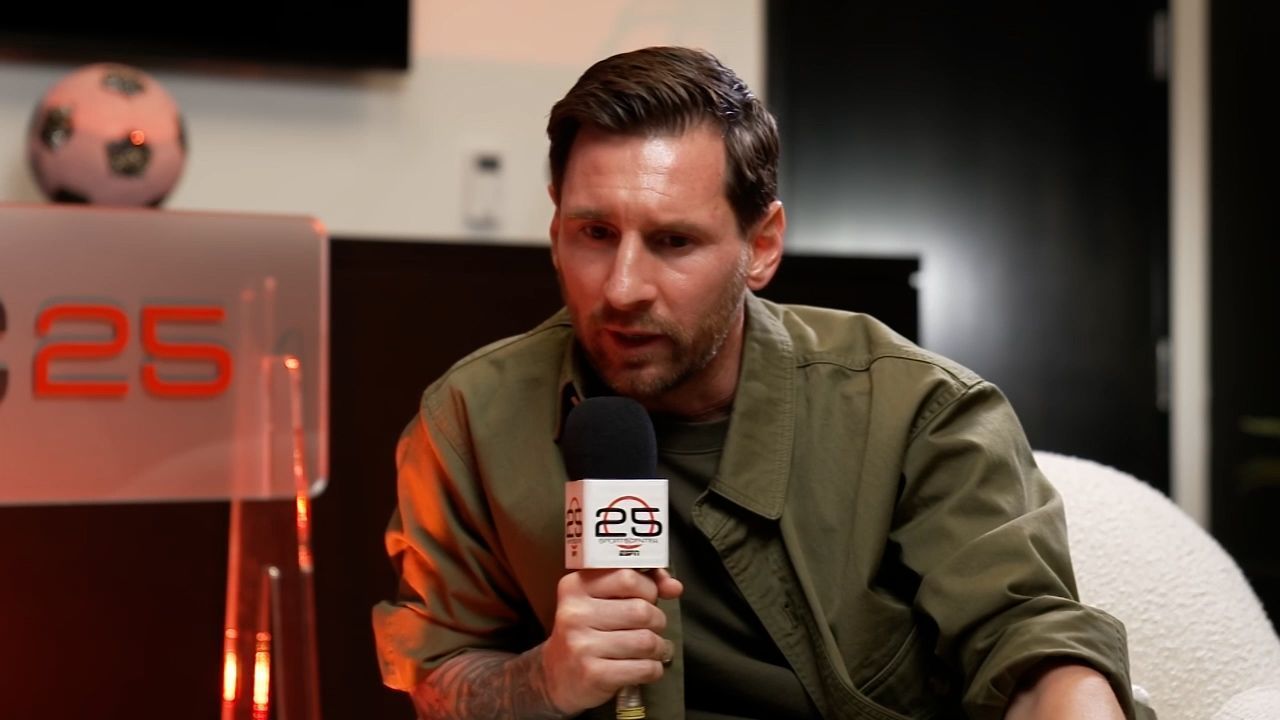
As he embarks on the final chapter of his great career, Lionel Messi sat down with ESPN.
It is an interesting time in his life. On Saturday, he will look to help Inter Miami to MLS Cup, in turn lifting his first league title outside of Europe. Back in Barcelona, where he went from teenage boy to world star, he is still revered, with constant talk of whether he will ever return as a player.
And then there is the 2026 World Cup. In little over six months, the eyes of the world will descend on the United States, Canada and Mexico as Argentina bid to defend their crown.
But will Messi take part?
In a wide-ranging interview with ESPN Argentina’s “SportsCenter,” Messi discussed a manner of topics, including family, his desire to again lead Argentina, the brilliance of Lionel Scaloni and why Pep Guardiola is one of “the best” ever.
– Messi tracker: Every goals, assist, key moment for Inter Miami
– Inter Miami reaches first MLS Cup, will host Vancouver
– Lamine Yamal: ‘I don’t want to be Lionel Messi’
On the MLS Cup final:
Messi: “I’m happy; it’s very special to play another final with this club. We already played another one recently. Being able to reach the MLS final with a ‘new’ club is spectacular.”
He added: “We’ve already started working on it [the MLS final], studying the opponent, watching videos with Masche [Javier Mascherano], doing tactical work. We’re in good shape.
“We’re in a very good moment, the team is solid and excited. Playing at home is a plus. Even though we went through a stretch where we were very inconsistent and struggled to win back-to-back games, at home we always stayed strong.”
On MLS schedule:
Messi: “I’ve said it and I’ll repeat it: this part of the season hits us differently compared to Europe. We’re going to start a tough preseason in January and then we’ll have many games in a row with the league and the [Concacaf Champions Cup].
“I’m going to prepare myself for that, but like I said, I’ll take it day by day, being honest and realistic and trying to feel good
“This year I felt really good. I was lucky to play many games. People talk about the league being very physical, and it is; rivals have improved a lot. There are long trips, games that get very back-and-forth. I truly felt good, I enjoyed it, and I hope the start of next year is the same.”
On the expectation of winning:
Messi: “I’ve always been competitive; I like to win and I try to do it. Along the way I’ve had bad stretches or tough moments, but I always keep trying and I get back up, always looking for the best.”
“Many of the things that happened to me, I only realize or value now. When you’re focused or caught up in the day-to-day, it’s very difficult. My whole career was playing every three days, always important games, always fighting for important goals.
“We’d win one and a month later we had another one, or a new year would start and I had the obligation to win everything.
“The demands of being at a big club like Barcelona, and it was the same in Paris, and also with Argentina, where you always have to go out and win.
“Most of the time it doesn’t happen or it’s very difficult, but from the start the mindset is to win everything, and the day-to-day keeps you from enjoying things.
“What’s coming becomes more important than what already happened, and with time you start valuing things much more.”
On his childhood dream:
Messi: “I always say that my childhood dream was to play for Newell’s first team. I’d go to the stadium, I played there, and I dreamed of becoming a professional in Primera. Then my life changed completely because I left at 13, debuted for Barcelona, and everything that happened afterward.
“It’s something I never would’ve imagined, not even in my best dreams. I lived things much bigger than anything I could have dreamed of.”
On his playing mentality and the brilliance of Leandro Paredes:
Messi: “The truth is I’ve always been like that [a bit hot-headed on the field]. When you step onto the pitch, your personality changes. Off the field I was shy, introverted, and on the field I transformed — I yelled, I argued, I wanted to do everything right, and it still happens today.
“It’s part of the game and everything stays there. I always play to win, and I get heated, and in those moments you can’t control your emotions. For me, everything that happens stays on the field.
“[Paredes and De Paul] They’re the kind of players you want on your team, but rivals hate them. Off the field it’s completely different because they’re two amazing, normal, humble guys. But on the field they transform.
“When I see Paredes, I think he gave Boca Juniors a huge boost since he arrived. He made them stronger, especially at home. A big part of that is because of him, because of the style of play he gives them, because he managed to organize the team on the field.
“I know the group gets along really well and that shows. I’m happy because he’s a friend, I love him a lot, and he really wanted to come back. The fact that he’s doing well makes me even happier.”
On Argentina’s World Cup chance
Messi: “The truth is we have extraordinary players, and it’s been shown for years — especially the desire and excitement since [Lionel] Scaloni took over.
“The mentality everyone has. It’s a squad full of winners, with strong mindsets, who want to win more, and that’s contagious. You see it in training, in matches. You see them train and they give everything.
“We’re an amazing group that gets along very well, but in training matches or certain drills, if they have to go hard, they go hard. Everyone gives their all, and that’s a huge strength of this group and this national team.
“Scaloni and his staff built all of this. The day-to-day atmosphere comes from them.
“New players keep appearing; aside from the ones already there, new faces keep coming in. When a group is like this, it’s easier for newcomers to fit in.
“Argentina needs to take advantage of this moment. Coming off winning the World Cup gives you confidence and relief to prepare competitions differently.”
On the genius Lionel Scaloni:
Messi: “I think from day one he established an idea, and the best thing he did — beyond how he experiences the game or how he sets up matches — is his closeness to the group.
“The way he treats players, the way he connects with each of them, because he knows them as people and knows how to talk to each one, because he built this team himself, bringing in new players, even players who weren’t well known in Argentine football.
“No matter where they play, he considers them. That keeps Argentine players motivated, knowing that at any moment they could be called if they’re performing well at their club.
“It’s extra motivation. Scaloni is the one who accomplished all of that.”
“He was a character [as a player.] Now he has become much more serious and changed. But as a teammate he was totally different.
“He was always joking and never stopped. For us younger ones, he was always close.
“I always tease him. I tell him that at the 2006 World Cup he kicked me all over the place.
“‘That’s a lie,’ he tells me.
“‘You don’t remember, but you know how hard you kicked me,’ I say.
“We come from that time together, and as he says, he was close to us, even when he was with [Jorge] Sampaoli.
“He was a teammate, and because of his personality he was close to the group, he talked to everyone, he knew us all.
“From the moment he became the head coach, our communication stayed exactly the same.
“We talk a lot, and he is like that with everyone. That’s his best quality: being himself, being direct, saying what he has to say to each one. Beyond that, he is an excellent coach at preparing matches, studying opponents’ weaknesses, knowing where they can hurt us.
“He is spectacular.
On the 2026 World Cup:
Messi: “The truth is we’ve been talking about it. He [Scaloni] understands, and we’ve discussed it a lot.
“He always tells me that he would like me to be there in any role. We have a relationship of great trust and we can talk about everything.”
On if he would play a Finalissima against Spain:
“No, to be honest, no. It’s not even confirmed if it will be played. They don’t even know if it will happen.
“But being honest, having a preseason in the middle changes everything for me.
“It’s like starting a new season from scratch, and having a preseason in the middle will help me a lot because European players arrive to finals with a ton of matches in their legs, like always. Except for Qatar, which was midseason, and many felt better because they had less load.
“I think the same will happen to me.”
On returning to Rosario:
Messi: “Well, I always say that I try to be myself and live day-by-day as I am.
“Without pretending or acting depending on who’s watching or what people might say. I have my personality, I’m like this, and I live it this way.
“I’m very private with my circle, my family, my friends, and for me the best thing is when December comes and I can go to Rosario for the holidays, with my people.
“All my life and my career I’ve been the same.
“December is for going to Argentina and spending the holidays there.
“I had ‘arguments’ with Pep [Guardiola] because sometimes the dates didn’t work or I didn’t want to. But he always understood, he let me, and he gave me permission.
“For me that was a boost. I came back with so much more motivation because I had what I loved: going back to Rosario, being with friends and family. Day-to-day, I live the same way. I take the kids to school, I go train, we come back in the afternoon with the boys, and I live a very normal, very family-oriented life.”
On ‘unique’ Pep Guardiola:
Messi: “I had crossed paths with him once, but I didn’t know him, we had no relationship until he became our coach at Barcelona. Pep is unique. There are extraordinarily good coaches, but he has something special — he’s the best of all for me.
“A bit like what we said about Scaloni: the way he sees things, prepares matches, communicates … for me he’s the best.
“We were lucky that we all coincided at Barcelona — him and all of us. He had the pieces he needed for what he wanted.”
“Then he went somewhere else and kept winning. It’s not just winning; it’s how his teams play. He did it at Bayern, he did it at City.
“Even though he didn’t win the Champions League at Bayern, he changed the way football was played in Germany, where they were used to a different style. In England he did the same… He not only changes a team, he changes how the whole league plays.”
“From the beginning we had a great relationship. Pep was very close, we talked a lot, and I learned an enormous amount from him
“I added more things to my game on top of what I already knew. I learned a lot with him — how to move, how to read spaces.
“He was even the one who put me as a false nine; in Barcelona’s youth teams I played behind the striker. That was really my position. Even when I debuted with [Frank] Rijkaard and later with Pep, they placed me as a winger, but I had never really played there.
“But I kept adding things to my game and kept growing footballwise as well.”
On the best year of his career:
Messi: “I don’t know, it’s difficult — it depends on how you look at it.
“I don’t like statistics; today everything is about that. I like to be very involved in the game. There were years when we won everything: reaching the Copa América final with the national team, winning the Champions League with Barcelona.
“It’s difficult. In 2012, I scored around 91 goals. I don’t play for that, I never cared about it.
“It wasn’t in my mind to make an assist just to break a record or surpass someone else. It’s hard to choose one year; thankfully I’ve had many very good ones.”
On importance of family:
Messi (after being shown a video of his family, from an interview when he was with Argentina’s under-20s): “For me, family is everything, the most important thing.
“They were always by my side. There were tough moments. We suffered a lot with the national team. They suffer more than we do.
“In Barcelona we won everything, and then I’d come back to the national team, things wouldn’t go well, and people insulted me; they said I didn’t feel the shirt, that I shouldn’t play anymore. My family stayed in Argentina and watched all the sports shows — you know we’re all a bit masochistic. My parents and siblings had a very hard time.”
“I was lucky to always have my family. We’re very close. Same with [wife] Antonela’s family. I enjoy having them all close, because in the end, that’s what matters most.”
On difficulty of the World Cup:
Messi: “Yes, I think we have a great group and we’re going to try again. After that, small details can leave you out.
“Any national team can complicate things, you hit the post and you’re out, or you lose on penalties. Even though we won on penalties, we were superior in the game against the Netherlands and against France, and still ended up going to penalties. We had the beast, [goalkeeper Emiliano Martinez] ‘Dibu’, who helped us win, but you can also go to penalties and lose.
“It’s very difficult to win a World Cup. It’s something that is lived differently: as a spectator, as a player, and as a fan. Now, seeing the group, I’m sure they will fight.
“Winning took a huge weight off our shoulders. Playing without that pressure is a relief, but at the same time it doesn’t guarantee anything, because everyone wants to beat the world champion.
“There are very good national teams — Spain, France again, England, Brazil, who haven’t been champions for a while and want to win again, and also Germany.”
On whether he will be at the 2026 World Cup
Messi: “I hope I can be there. I’ve said before that I’d love to be there.
“At worst, I’ll be there watching it live, but it will be special. The World Cup is special for everyone, for any country — especially for us, because we live it in a completely different way.”
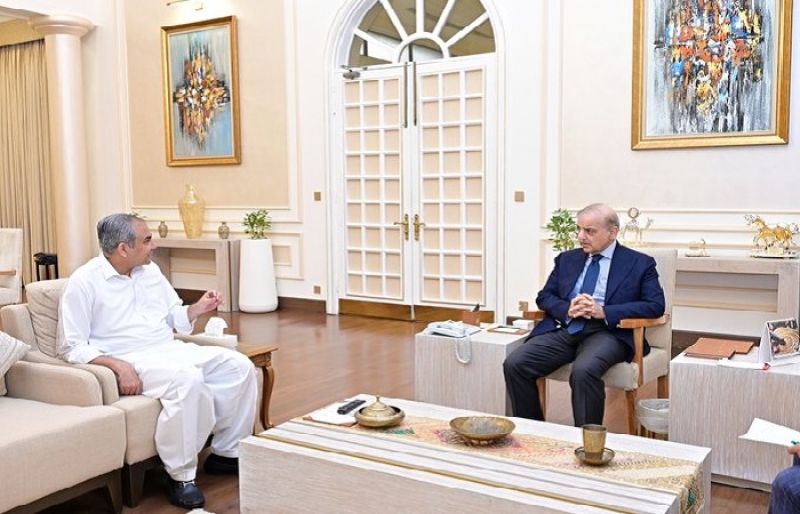
Pakistan Cricket Board (PCB) Chairman Mohsin Naqvi announced on Monday that Prime Minister Shehbaz Sharif granted approval for public attendance in all three playoff matches of the Pakistan Super League (PSL) 11.
“Just had a meeting with Prime Minister Shehbaz Sharif, and I’m pleased to share that we have secured his approval for public attendance in all three PSL playoff matches as well,” Naqvi wrote on his official X handle.
However, Naqvi cautioned that the permission “comes with an important condition from his side that fans are strongly encouraged to use public transport or minimise fuel consumption while attending the matches, in line with the ongoing national austerity efforts”.
Just had a meeting with Prime Minister Shehbaz Sharif, and I’m pleased to share that we have secured his approval for public attendance in all three PSL playoff matches as well.
However, this comes with an important condition from his side that fans are strongly encouraged to… pic.twitter.com/SXtyhrIBpF
— Mohsin Naqvi (@MohsinnaqviC42) April 27, 2026
“He also conveyed his best wishes to all four teams competing in the PSL playoffs. Looking forward to some exciting and entertaining cricket ahead,” he added.
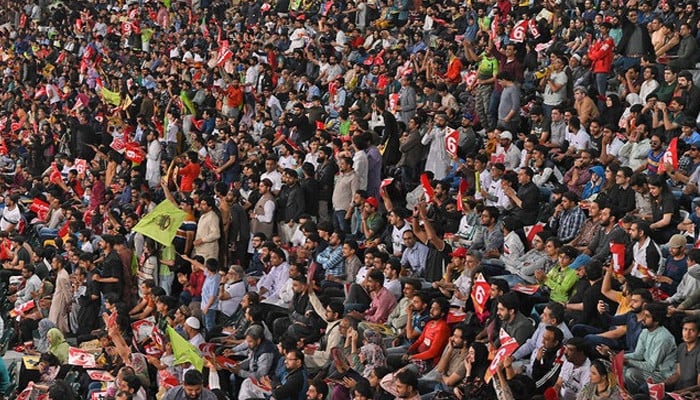
- Approval follows earlier clearance for PSL final attendance.
- Franchise owners pushed for reversal of no-crowd policy.
- Online sale of tournament’s final tickets goes live today.
Pakistan Cricket Board (PCB) Chairman Mohsin Naqvi announced on Monday that Prime Minister Shehbaz Sharif granted approval for public attendance in all three playoff matches of the Pakistan Super League (PSL) 11.
“Just had a meeting with Prime Minister Shehbaz Sharif, and I’m pleased to share that we have secured his approval for public attendance in all three PSL playoff matches as well,” Naqvi wrote on his official X handle.
The development comes two days after the premier had already approved spectator presence for the tournament final following a request from franchise owners.
The federal government had earlier restricted crowd attendance for the ongoing eight-team tournament under austerity measures, aiming to conserve resources amid the regional fuel crisis linked to the US-Israel-Iran conflict.
Under this arrangement, 40 matches were held without spectators, with the tournament now set to conclude with just four remaining fixtures, including a qualifier, two eliminators, and the final.
However, Naqvi cautioned that the permission “comes with an important condition from his side that fans are strongly encouraged to use public transport or minimise fuel consumption while attending the matches, in line with the ongoing national austerity efforts”.
“He [PM Shehbaz] also conveyed his best wishes to all four teams competing in the PSL playoffs. Looking forward to some exciting and entertaining cricket ahead,” Naqvi added.
The decision to allow spectators came after several franchise owners publicly urged the government to reconsider the no-crowd policy, arguing the league felt incomplete without fans and that spectator presence was central to the tournament’s atmosphere and identity.
Some franchise representatives had appealed directly to the premier, as well as provincial chief ministers, to permit crowds during the ongoing edition.
Meanwhile, the online sale of the PSL 11 final tickets went live today, with physical sale slated to commence on Tuesday.
With fans now allowed for all the remaining four matches of the eight-team tournament, the PCB has yet to share the ticketing details.

NEWYou can now listen to Fox News articles!
Xia Brookside certainly has made an impact on Total Nonstop Action Wrestling (TNA) over the last few weeks.
As Brookside climbs the ladder to get back into the TNA Knockouts World Championship, she appeared to make an enemy along the way. Brookside helped Arianna Grace retain the title over Lei Ying Lee at Rebellion when she put Grace’s foot on the rope to break up the pin attempt.
ZERO BS. JUST DAKICH. TAKE THE DON’T @ ME PODCAST ON THE ROAD. DOWNLOAD NOW!
Xia Brookside attends the “Freelance” screening at Regal Waterford Lakes in Orlando, Fla., on Oct. 24, 2023. (Jose Devillegas/Getty Images)
Brookside was far from finished with Lee. Last week, Lee wanted answers from Brookside. The English wrestler gave Lee a hug in the middle of the ring, but assaulted her. Their feud is heating up.
Outside of the ring, Brookside revealed on Sunday she was starting “a new chapter.” She posted a video of herself getting baptized.
“Something I’ve been considering for a very long time, after getting consistent in going to church weekly, reading daily and the incredible support from my man, it felt like the easiest decision I’ve ever made,” she wrote on X. “Thank you to everyone that came to support me.”
CLICK HERE FOR MORE SPORTS COVERAGE ON FOXNEWS.COM
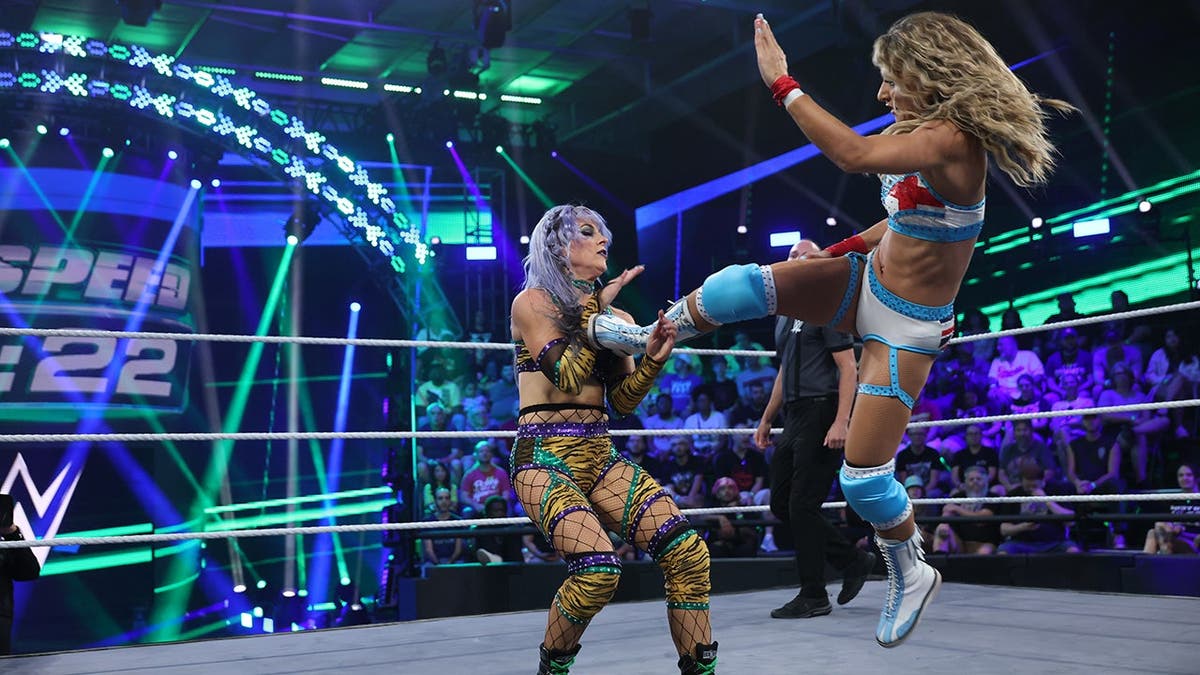
Candice LeRae and Xia Brookside compete during NXT at the WWE Performance Center in Orlando, Fla., on Sept. 2, 2025. (Matt Pendleton/WWE)
Brookside, whose real name is Xia-Louise Brooks, is the daughter of retired pro wrestling star Robbie Brookside. He currently works as a trainer and producer for WWE NXT.
She started her pro wrestling career in the United Kingdom and worked her way through the independent scene, eventually joining WWE in 2018. She was featured in WWE NXT UK before she joined Stardom in Japan and eventually TNA.
She’s held championships in International Pro Wrestling United Kingdom and Rise Wrestling during her career. She was also ranked No. 91 on Pro Wrestling Illustrated’s list of top women’s wrestlers in 2019.
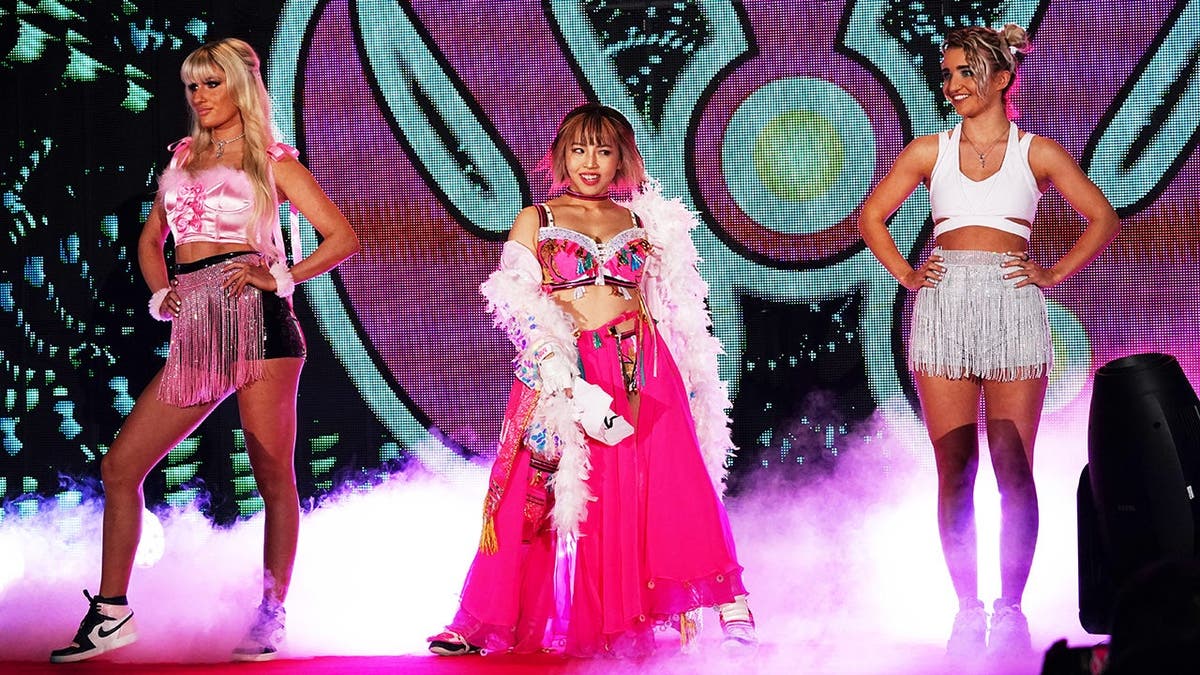
Mina Shirakawa enters the ring during the women’s pro-wrestling event Stardom at Ryogoku Kokugikan in Tokyo on Dec. 29, 2022. (Etsuo Hara/Getty Images)
CLICK HERE TO DOWNLOAD THE FOX NEWS APP
Brookside is back to making an impact on TNA again and is sure to be in line for the knockouts title down the line.


Melania Trump says ABC should ‘take a stand’ on late-night host Kimmel

A Brain Implant for Depression Is About to Be Tested in Humans

UN proliferation meeting begins amid ‘looming’ risk of nuclear arms race

-

 Sports1 week ago
NCAA men’s gymnastics championship: All-time winners list
-

 Sports1 week ago
WWE WrestleMania 42 Night 2: Live match results and analysis
-

 Politics6 days ago
UK’s Starmer seeks to deflect blame over Mandelson appointment
-

 Fashion1 week ago
UK’s Sosandar returns to profitability amid robust FY26 performance
-
 Business1 week ago
No fuel shortage: Govt assures 100% domestic LPG, PNG, CNG supply amid Hormuz energy crunch – The Times of India
-

 Entertainment7 days ago
Lee Anderson, Zarah Sultana kicked out of UK Parliament for calling PM ‘liar’
-
 Business7 days ago
How Trump’s psychedelics executive order could unlock stalled cannabis reform
-
 Sports1 week ago
Quetta Gladiators opt to bowl after winning toss against Peshawar Zalmi in PSL 11 clash