

Business
Netflix-Warner Bros: Five takeaways from the blockbuster deal

Natalie Sherman,Business reporter,
Danielle Kaye,Business reporterand
Christal Hayes,Los Angeles senior reporter
 Warner Brothers Discovery
It sounds like a simple merger deal, but it’s got all the ingredients of a Hollywood drama: a rich and powerful suitor, political intrigue, and plenty of cliff-hangers.
Netflix’s deal to buy Warner Brothers Discovery’s storied movie studio and popular HBO streaming networks, is a real-life tale of a conquering giant.
But with regulators and rivals still waiting in the wings, it’s probably just the start of the saga.
As the story unfolds, here are five key things to look out for.
1. Netflix is becoming even more powerful
Netflix has been pulling ahead in Hollywood for years now, ranking as the world’s biggest streaming subscription service and largest producer of new content in California.
But this deal – the biggest in the industry for years – would confirm its position at the head of the pack, handing the company a catalogue with nearly a century’s worth of titles and beefing up its already formidable production capacity.
That’s not to mention its sheer subscriber might, as Netflix prepares to add some of HBO’s 128 million subscribers to its already more than 300 million-strong base.
“Netflix is already the biggest streaming service and now you add HBO Max to that and it becomes arguably untouchable,” said Mike Proulx, vice president at research firm Forrester.

 Murray Close/Getty Images
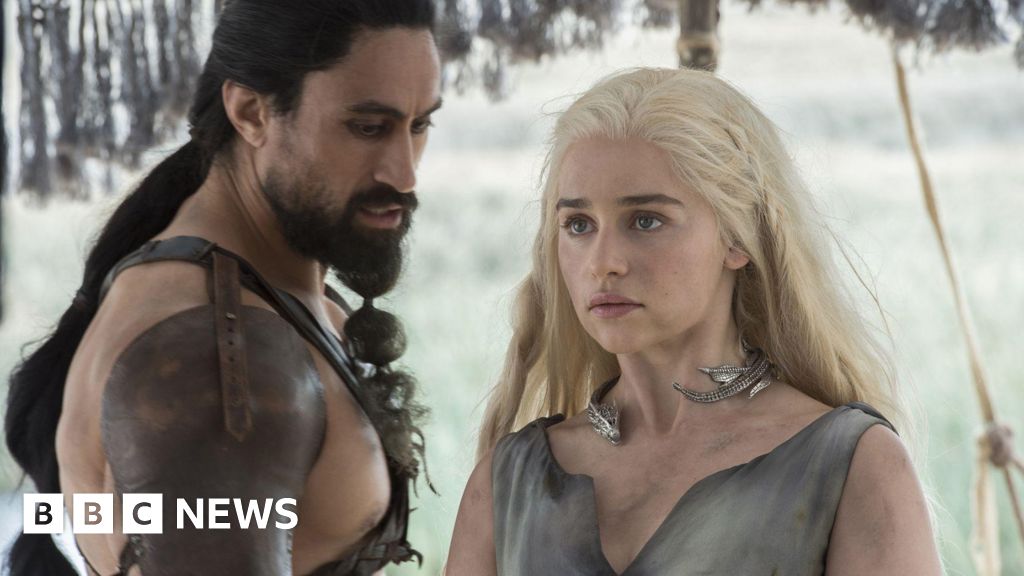
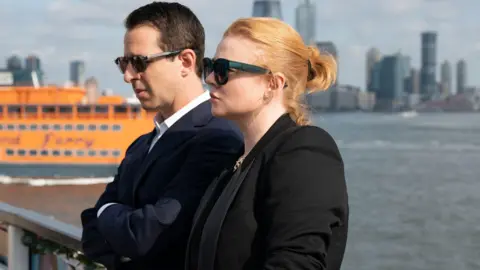
The deal will unite beloved historic franchises like Looney Tunes, Harry Potter and Friends and HBO hits like Succession, Sex and the City and Game of Thrones under the same roof as Netflix’s less conventional output, including Stranger Things and KPop Demon Hunters.
The purchase also includes TNT Sports outside the US.
2. It could mean prices go up…. or down
Netflix said it hopes to complete the deal in the next year to 18 months.
But executives are coy about how – or whether – they plan to incorporate Warner Brothers and its flagship HBO brand into the existing Netflix service.
Netflix’s co-chief executive Greg Peters said the HBO name was “very powerful” and would give the firm “a lot of options”, but would not elaborate further.
Netflix could package up films and programmes into different bundles, although analysts say they would be surprised to see the HBO brand disappear altogether.
The impact on prices is also unclear.
Netflix’s dominance could allow it to charge customers more. But if viewers find they are paying for one streaming service rather than two, it could cost them less.
3. Streaming is the future and Hollywood feels cast aside
Warner Bros is one of the studios that defined Hollywood, creating classics such as Casablanca and the The Exorcist.
But this takeover is an illustration of how cinema’s golden age has faded.
The trajectory is clear, Forrester’s Mr Proulx said, the future is “all-streaming”.
“With this deal it is official: legacy media is ending.”
Netflix has promised to keep releasing films in cinemas, a decision that makes some sense as it will be acquiring the DC superhero franchise, films that do very well in movie theatres.
But not everyone believes that will remain a priority for the streamer.
After all, earlier this year Netflix’s co-chief executive officer Ted Sarandos said he believed movie-going was an “outdated concept”. And the consolidation touches a nerve in an industry already wrestling with earlier job cuts, decline in productions and the threat of artificial intelligence.
Titanic director James Cameron was one of many in Hollywood to greet the deal with dismay, warning just before it was announced, that he thought it would prove a “disaster” for the industry.
4. The deal is not yet done
Completion of the deal is far from certain.
First, Warner Brothers Discovery has to complete the spin-off of the parts of its business that it is not selling to Netflix, including CNN, Discovery and Eurosport.
Meanwhile rival suitor Paramount Skydance, which had hoped to buy the entire Warner Brothers Discovery business, may yet try to convince shareholders it can offer a better alternative.
 Warner Brothers Discovery
The biggest question however, is whether the deal will get approval from competition regulators in the US and Europe – something that could pose a major challenge.
In Washington lawmakers from both parties have already chimed in against the deal, citing worries it will lead to fewer choices for consumers and higher prices.
Mr Sarandos said Netflix, which has to pay Warner Brothers $5.8bn if the deal falls apart, was “highly confident” it would win approval.
It will hinge in part on how regulators define the competitive landscape, said Jonathan Barnett, a professor at the University of Southern California Gould School of Law.
If regulators only look at video streaming, Netflix’s increased share of the market could raise significant red flags. But if regulators adopt a broader definition, one that includes cable and broadcast TV and even YouTube as Netflix’s competitors “the concentration concerns become less and less”, he said.
Rebecca Haw Allensworth, a professor at Vanderbilt Law School, said usually a merger like this would be a “clear-cut case for a challenge”, typically pushing for better terms for consumers.
This time, she is worried the Trump administration might put pressure on Netflix over questions like diversity and political bias, as has happened in other cases.
5. Donald Trump is another wild card
Looming over the debate is whether President Donald Trump will weigh in.
This administration has promised a lighter regulatory touch when it comes to mergers.
But the president has spoken highly of Paramount Skydance’s owners, the tech billionaire and Republican donor Larry Ellison and his son David who are behind the rival bid for Warner Bros. And Trump has always shown a keen interest in the media and entertainment industry.
There has been no comment from competition regulators in the US, but a senior Trump administration official told CNBC that it views Netflix’s bid for Warner Bros with “heavy scepticism”.

Intellia Therapeutics, building exterior and company sign, Cambridge, Massachusetts, USA.
Spencer Grant | Universal Images Group | Getty Images
Intellia Therapeutics said its Crispr-based treatment for a rare swelling condition met its goals in a late-stage trial, marking a milestone for the field of gene editing and putting the company on track to seek approval from the U.S. Food and Drug Administration.
The company’s treatment uses Nobel Prize-winning technology Crispr to edit DNA and turn off the gene that controls production of a peptide that’s overactive in people with hereditary angioedema, causing them to experience potentially life-threatening swelling attacks. Intellia’s treatment is administered once through an hourslong infusion, making the edits directly in the liver.
Intellia said the one-time treatment reduced attacks by 87% compared with a placebo, meeting the study’s main goal. Six months after treatment, 62% of patients were free from attacks and weren’t using other therapies, Intellia said.
The company described the safety and tolerability of the treatment as “favorable,” reporting the most common side effects were infusion-related reactions, headaches and fatigue. Analysts were closely watching safety in the trial since a patient in a separate trial of a different treatment from Intellia died. That patient developed a liver injury and ultimately died from septic shock following an ulcer, according to the company.
“When you think about where we started with Crispr, just 12 years ago with some of the fundamental insights, I think there was a lot of talk about what might be possible, and we’ve had reports along the way in terms of milestones, but this is the first Phase 3 data in any indication with in vivo Crispr where you’re actually changing a gene that causes disease,” said Intellia CEO John Leonard.
The only FDA-approved Crispr-based medicine comes from Vertex Pharmaceuticals. Called Casgevy, the gene editing is done outside the body, or ex vivo. The process requires collecting a person’s blood cells, making the edits outside the body, then reinfusing them back into a patient. Intellia’s treatment, meanwhile, makes the edits inside the body, or in vivo.
Intellia said it has started a rolling application with the FDA and plans to complete the filing in the second half of this year. The company expects to launch the treatment in the U.S. in the first half of next year, if it’s approved.
If approved, Intellia’s treatment, lonvoguran ziclumeran, will compete with about a dozen other chronic drugs for HAE. Despite the allure of a one-time treatment, genetic medicines haven’t always been a commercial successes. BioMarin withdrew its gene therapy for Hemophilia A because of weak sales, for example.
Leonard said there are important differences between the two, like the fact that BioMarin’s therapy faced questions about how long the effects would last. In contrast, he said Intellia hasn’t seen a single case in almost six years where the effects diminished over time.
Despite the results, he’s reluctant to call Intellia’s treatment a functional cure.
“I think this is a tipping point for the disease and tipping point for Crispr-based in vivo therapy where you can make a change [and] it’s permanent,” Leonard said. “And, as far as we can tell, we don’t have a single patient in this program or other program where there’s been any waning of the effect of what we did to the gene or the effect of what we’ve seen with the clinical aspects of the disease itself. So it’s pretty exciting.”
Clarification: This story has been updated to clarify that a patient in a separate trial of a different treatment from Intellia developed acute liver injury and ultimately died from septic shock following an ulcer.

While many airlines say they are raising prices due to high fuel costs, József Váradi says European airlines are trying to boost demand
Source link
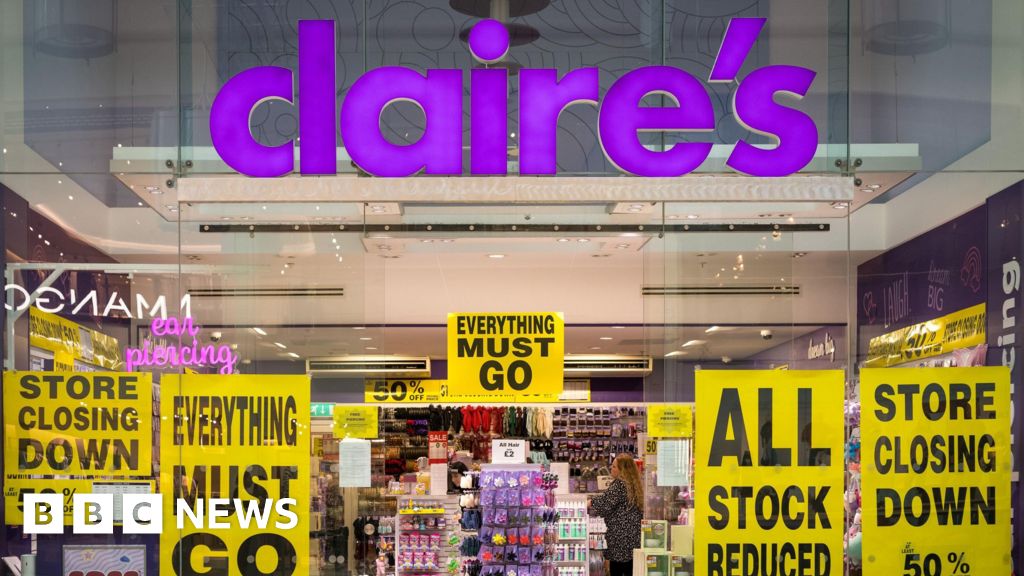
All of the chain’s standalone stores have stopped trading in the UK and Ireland.
Source link


King Charles and the Trumps unite at White House for a historic tea meeting

This M5 MacBook Air Discount Has Renewed My Faith in Cheap Laptops for 2026

Norway joins Type 26 Frigate Programme to boost NATO naval power

-

 Sports1 week ago
NCAA men’s gymnastics championship: All-time winners list
-

 Sports1 week ago
WWE WrestleMania 42 Night 2: Live match results and analysis
-

 Politics7 days ago
UK’s Starmer seeks to deflect blame over Mandelson appointment
-

 Fashion1 week ago
UK’s Sosandar returns to profitability amid robust FY26 performance
-

 Entertainment1 week ago
Lee Anderson, Zarah Sultana kicked out of UK Parliament for calling PM ‘liar’
-
 Business1 week ago
No fuel shortage: Govt assures 100% domestic LPG, PNG, CNG supply amid Hormuz energy crunch – The Times of India
-
 Business1 week ago
How Trump’s psychedelics executive order could unlock stalled cannabis reform
-

 Sports1 week ago
Quetta Gladiators opt to bowl after winning toss against Peshawar Zalmi in PSL 11 clash