

Entertainment
American playwright and actor Jeremy O. Harris arrested in Japan for allegedly smuggling ecstasy


Prominent American playwright and actor, Jeremy O. Harris, known for his Tony-nominated “Slave Play,” was arrested in Japan on suspicion of smuggling the psychedelic drug ecstasy, officials said Saturday.
Officers at Naha Airport on Japan’s southern island of Okinawa arrested Harris on Nov. 16 for an alleged violation of customs law for having 0.78 grams, or 0.0275 ounces, of the crystalized drug, also known as MDMA, in a container in a tote bag he was carrying, according to Okinawa Regional Customs spokesperson Tatsunori Fukuda.
Harris, 36, had left London’s Heathrow Airport two days earlier and transited in Taiwan’s Taoyuan International Airport before arriving in Naha for sightseeing, Fukuda said. Okinawa is a popular resort destination with mild weather throughout the year.
Evan Agostini/Invision/AP
Fukuda said Harris was arrested on the spot and taken into custody by the Tomishiro police, which filed a criminal complaint to the Naha District Prosecutors’ Office on Thursday for further investigation and possible indictment. CBS News has reached out to the Tomishiro police for additional comment.
Japanese authorities did not find any other drugs in his luggage and believe the MDMA was for his personal use. They are still investigating, Fukuda said, while adding that whether Harris made any comment on the case could not be released.
There was no immediate comment from Harris’ representatives. Harris has not publicly commented on his arrest.
CBS News reached out to the U.S. Embassy in Japan for additional comment.
Japanese criminal procedures allow investigators to keep a suspect in custody for up to 23 days before indictment, and pretrial detention can be prolonged if the accused exercises their right of silence or denies the charges, a practice widely criticized as “hostage justice.”
Those convicted of drug smuggling in Japan can face a multiyear prison term.
Harris burst onto the arts scene with “Slave Play,” written while he was still a graduate student at the Yale School of Drama. It premiered off-Broadway in 2018, inciting controversy and even a petition to shut down the production with its provocative mix of race, class and sexual taboos. It moved to Broadway the following year, earning a Tony nomination for best play, but did not win an award.
The play returned for a short run on Broadway in December 2021.
“There haven’t been enough chances for us to reflect who we are to the world and to ourselves and to ponder what that reflection means, and so this is what ‘Slave Play’ gets to do for people,” Harris told CBS New York in 2021.
In addition to small acting roles, he’s cameoed as himself on a rebooted “Gossip Girl” and served as a co-producer on several episodes of HBO’s hit series “Euphoria.”








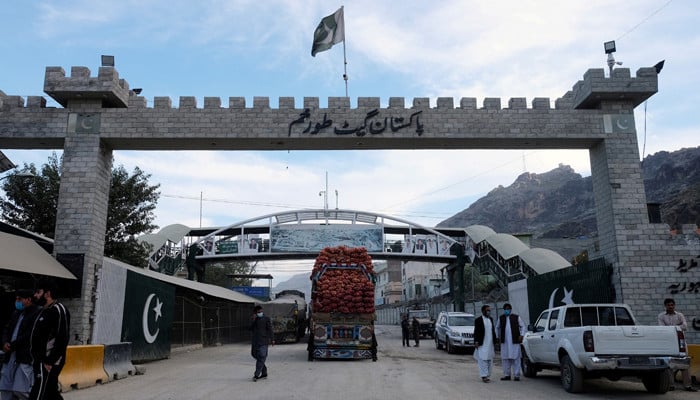
In October 2025, Pakistan closed all major western crossings with Afghanistan. Pakistan stated that the closures were necessary because of escalating tensions and TTP-linked attacks originating from Afghan territory. The current regime does not indicate a return to normal movement in the near future.
The immediate costs of the closure have been borne by traders, transporters, labourers, workers and borderland communities who depend on cross-border movement for both economic and social reasons.
Cross-border trade between Pakistan and Afghanistan is central to the borderland economy. It begins before the customs gate, in social connections, reputation, family ties, language, credit and preexisting business relationships. Much of this trade is mediated by trading networks and brokers, whose credibility depends on trust. For people living in Pakistan and Afghanistan, the border is more than a political line between the two countries; it is a long-standing socioeconomic space.
Anthropologically speaking, areas near borders comprise communities with ties to both countries – the country in which they reside and the country on the other side of the line where they have ethnic, linguistic and kinship ties. The official line between Pakistan and Afghanistan has been shaped by centuries of connection; thus, trade in the region is not simply a matter of goods passing through official channels. Much of it is also conducted on credit, given the region’s lack of formal banking and credit systems.
Policies regarding the borderlands of Pakistan and Afghanistan extensively employ concepts such as regulation, security, closure and control. For border populations, however, the frontier is not only about security but also a locally embedded economy of subsistence and mobility. It provides jobs for truck drivers, workers, warehouse staff, loaders, retailers and customs officers. The closure of the border not only affects trade figures but also disrupts the incomes, debts, mobility, and everyday planning of traders, transport workers and borderland households.
Representatives of the business community have often cited an earlier high point of around $2.7 billion in Pakistan-Afghanistan trade, though this should be treated as a business-community estimate, as published figures vary widely. A 2018 report in ‘Profit’ stated that bilateral trade had fallen from $2.7 billion to $1.2 billion in around 18 months, while other reports placed the earlier peak closer to $2.5 billion. Since then, trade has declined significantly. According to Afghanistan’s Ministry of Commerce, reported by Pajhwok, trade between Afghanistan and Pakistan in 2024 stood at $2.461 billion and in 2025 at $1.766 billion.
The Pakistan Trade Development Authority’s December 2025 report shows that Pakistan’s exports to Afghanistan fell from $754 million in July–December 2024–25 to $336 million in July–December 2025–26. Imports from Afghanistan also declined from $419 million to $239 million during the same period. This means that Pakistan’s recorded goods trade with Afghanistan fell from approximately $1.173 billion to $575 million in the first half of 2025–26.
My fieldwork with traders and transporters shows that many traders involved in the Pak-Afghan trade had homes and strong networks in Kabul. These networks gave traders from Khyber and Peshawar an advantage because they could supply goods to Afghan traders on credit due to the trust between them. My fieldwork with transporters in Karachi reinforces the same point about the importance of these networks.
After the border closure, profit margins fell sharply, in some cases by more than 50 per cent. The livelihood chain attached to even one truck is far wider than that of the driver alone, as thousands of households depend on the trucking economy indirectly through people like drivers, assistants, loading bay staff, mechanics, tyre dealers, service stations, roadhouses, warehouses, customs clearance agents, brokers and small traders. The effect of a complete stop of truck traffic for a certain period of time does not end with the transport companies. This will have a flow-on effect on the entire employment structure of the industry.
Today, many traders in Peshawar and Karachi remember a time when journeys to and from the frontier were easier and more familiar. They had homes, relatives, land – and contact networks in Kabul, Jalalabad and Kandahar. For the people of this region, the border has always been a shared space for passage, trade, kinship, and interdependence between the tribal areas and the border districts of Balochistan and neighbouring Afghanistan.
This is precisely what the current policy fails to recognise. The government cannot expect to keep borders safe by creating uncertainty in legitimate trade. While frequent closures may be justified on security grounds, in practice, they punish those who have invested time and money in legal trade to earn a living: drivers, workers, petty traders, brokers and families living near the border. In addition, closing legitimate lines of communication creates an environment that leads to the development of informal channels and increases capital outflow.
Trade and security must be addressed separately. This does not mean weakening regulations; it means recognising that lawful trade cannot survive repeated closures and uncertainty. Pakistan’s approach to Afghanistan should be more economy-centred, but it remains heavily security-centred. A viable frontier economy will require clear guidelines for opening borders, improved customs rules, payment systems and consultations with chambers, transport trade unions, customs brokers and traders from border areas.
Pakistan can manage the Pak-Afghan border more effectively if it does not see it only as a site of state control but also as a conduit for exchange, movement and community linkages.
Border communities should not be treated merely as objects of security policy and left to bear the costs of border closure. They should be recognised as economic actors whose participation is critical for durable border management and security. Policies should keep formal trade viable rather than forcing it outside of regulated systems.
The writer is a policy analyst and researcher. He is the author of ‘Pakistan’s Tribal Borderlands’ and can be reached at: [email protected]
Disclaimer: The viewpoints expressed in this piece are the writer’s own and don’t necessarily reflect Geo.tv’s editorial policy.
Originally published in The News

Pete Davidson’s friends have leaped to his defence after his ex-girlfriend, Elsie Hewitt, publicly claimed she was raising their infant daughter on her own.
Following news of the couple’s recent split, the actress posted a video on TikTok whispering that she has to work to make money and is doing it all by herself, which she described as hard.
However, an insider close to the former couple has hit back at the claims, telling Page Six that the allegations are completely untrue and that the comedian is actually paying for absolutely everything.
According to the source, the Bupkis star is currently covering the rent, general living expenses, and health insurance for both Hewitt and their daughter, Scottie Rose, who was born on 12 December.
The insider explained that those who know the pair are completely baffled by the posts, asserting that Davidson’s main priority is ensuring his family is looked after.
Despite the breakdown of the relationship and their personal disagreements, friends insist that the Saturday Night Live alum remains fully committed to being a good father.
The drama unfolded over the weekend when the Industry actress took to social media to ask for help.
Alongside her TikTok video, Hewitt shared a since-deleted Instagram Story looking for an assistant or nanny to act as her right-hand person, specifying that she would only look at applicants who provided a resume.
The public posts quickly divided fans online, with some labelling Davidson a deadbeat dad while others defended him by pointing out that he is involved in his daughter’s life and has to work as well.

In response to the backlash, Davidson’s inner circle maintains that he has rearranged his entire schedule and done everything possible to be there both physically and financially.
They emphasize that all the comic wants is for Hewitt to be happy and in a good position.
Though the pair have officially called it quits, Davidson’s camp is adamant that he is going above and beyond to be a supportive co-parent, despite the picture being painted on social media.
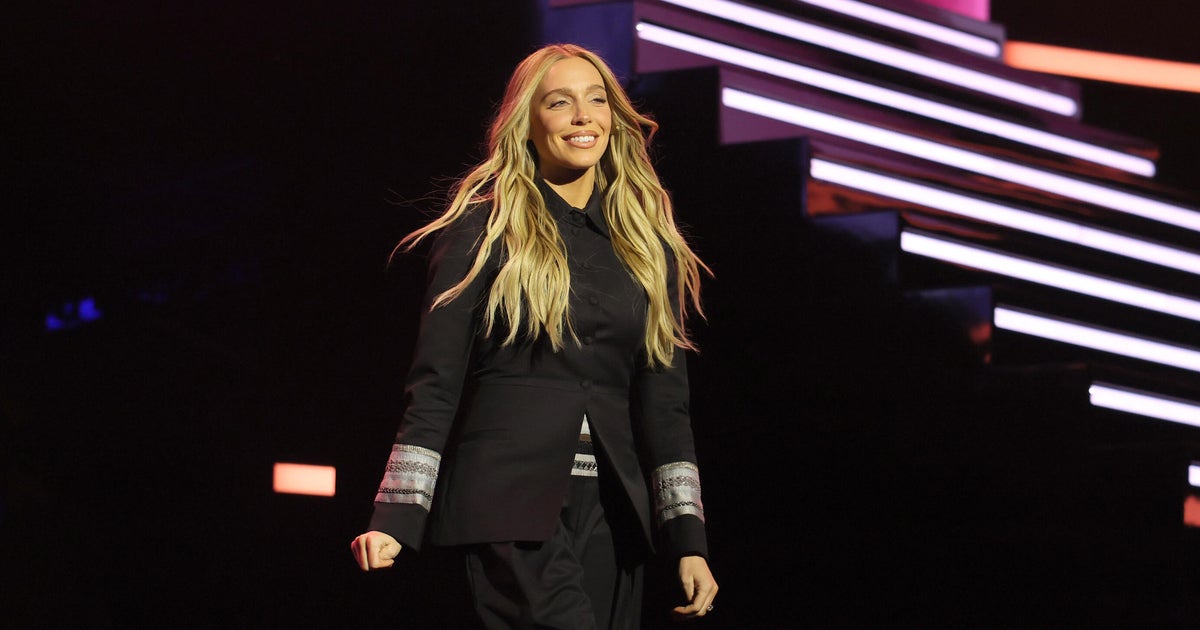
Alex Cooper, the host of one of the most popular podcasts in the United States, announced Sunday that she is expecting her first child.
The “Call Her Daddy” host shared the news in an Instagram post that showed her in a white crop top and sweatpants while looking at her husband, producer Matt Kaplan. Cooper and Kaplan tied the knot in April 2024.
“Our family,” Cooper wrote, along with a white heart emoji.
Cooper also shared the post on her Instagram story, along with a more candid selfie of herself and Kaplan. In another post, she joked that she was “honestly happy” to “finally stop trying to hide the bump.”
Cooper did not share a due date or any other information about her pregnancy.
Noam Galai
Cooper’s “Call Her Daddy” podcast has over 2.1 million subscribers on YouTube, while Cooper herself has over 7.2 million followers on Instagram.
“Call Her Daddy” features conversations covering a host of topics, including relationships, celebrity gossip and pop culture. Most episodes involve Cooper speaking with celebrities and prominent national figures, including an episode recorded with former Vice President Kamala Harris during her 2024 run for president.


Bangladesh net FDI inflows up 39.36% in 2025

US weighs drone threat from Cuba: report

India’s Pearl Global’s FY26 revenue crosses $521 mn milestone

-

 Entertainment5 days ago
Conan O’Brien hat tricks as Oscar host
-

 Tech1 week ago
Could Contact-Tracing Apps Help With the Hantavirus? Not Really
-

 Tech1 week ago
I Tried the Best Captioning Smart Glasses, and Only One Leads the Pack
-

 Fashion5 days ago
Italy’s Zegna Group’s Q1 growth boosted by strong organic performance
-

 Sports1 week ago
Bobby Cox, legendary Atlanta Braves manager who led 1995 World Series champions, dead at 84
-

 Entertainment1 week ago
Martin Short: Facing tragedy with joy
-

 Entertainment1 week ago
Tom Brady gets back at Kevin Hart during Netflix roast
-

 Entertainment1 week ago
Martha Stewart: How to make an omelet