

Business
Four invisible barriers to foreign investment | The Express Tribune

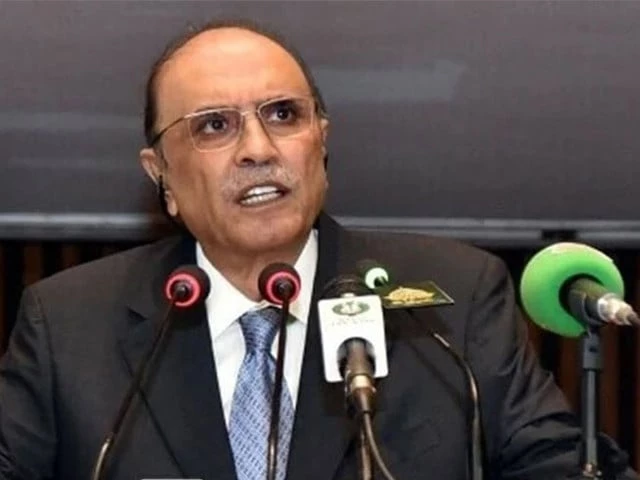
Poor systems, damaging narratives are hurting Pakistan’s image among foreign investors
ISLAMABAD:
A few days ago, President Zardari concluded his visit to China. His engagement indicates that both countries are venturing into new areas of cooperation, from security and the economy to social development, to build a community with a shared future.
The signing of MoUs to strengthen industrial, agricultural and economic cooperation underscores that people and common prosperity have always been and will remain cornerstones of the bilateral relationship. Therefore, both countries are striving to fast-track the implementation of CPEC 2.0 by accelerating the construction and operation of Special Economic Zones (SEZs). The SEZs will play a leading role in industrialisation and fast-track growth.
The commissioning of Hangor-class submarines amid a dire regional crisis underlines the strength of relations. It clearly indicates that China is serious about ensuring the safety of Pakistan’s sealines amid the global naval crisis.
Following Zardari’s visit, Prime Minister Shehbaz Sharif will soon visit China. It will be his first visit since the signing of the Action Plan to Foster an Even Closer China-Pakistan Community with a Shared Future in the New Era last year. The Action Plan comprehensively outlines future plans and covers almost all areas of mutual interest. Both countries agreed to deepen alignment between CPEC-II and the Five Corridors (Growth, Livelihoods, Innovation, Green and Openness), URAAN Pakistan, and the 5Es framework (Exports, E-Pakistan, Environment and Climate Change, Energy and Infrastructure, Equity, Ethics and Empowerment), as well as China’s eight major steps for supporting high-quality Belt and Road cooperation. The alignment was envisioned to fast-track the implementation of CPEC-II and provide Pakistan with opportunities to benefit from new initiatives. However, there are a few areas where Pakistani leadership needs to act to make the meeting fruitful and to fully exploit the potential of CPEC-II and other opportunities. My discussion with foreign investors highlights four critical areas that are extremely important in making investment decisions, in addition to economic governance, ease of doing business (EODB) and security.
First, the education and health sectors. Investors assess the status and quality of education and health systems in the countries receiving investment. They look at educational institutions and the health system at all levels, their standards, health services and the quality of education. This matters for two reasons. First, when they invest, especially in industry, they need to send their citizens for administration, meet skill needs and run the business smoothly.
Potential employees ask about the status and quality of education and healthcare in the host country to decide whether to travel there. Why? Because a good quality health and education system provides potential employees with security regarding their children’s education and their family’s health. It encourages them to bring their families and stay focused longer.
Second, the quality of education and health also determines the health and quality of human capital. These are the fundamental pillars of human capital development. Unfortunately, Pakistan has a human capital index score of 0.41%, meaning a person would be only 41% as productive. This is quite low, even compared with other countries in the region. Major factors behind poor development include a lack of access to education, let alone quality education.
According to the latest available data, Pakistan has a literacy rate of only 63%. The quality of education and skill development are other major issues. On average, 9.4 years of schooling are expected in Pakistan, which drops to 5.1 years when adjusted for the quality of education. Pakistan also has a 38% stunting rate and poor-quality water during pregnancy, which also impacts brain development. The health sector situation is further aggravated by low-quality health facilities and medicines, and the poor performance of public institutions. Owing to these factors, education and health play a prominent role in investors’ decision-making.
The low quality of education, health infrastructure and the human capital index negatively affects decision-making. They fear that low-quality human capital will reduce their productivity and business margins. Moreover, they will have to invest in expensive healthcare and education systems to provide these facilities for their families.
Second, in recent decades, a new trend has emerged. Retired government officers start consultancy businesses, especially business facilitation consultancy. There is nothing wrong with consulting. However, problems arise when certain individuals become self-declared, self-appointed focal points for various ministries and institutes. They claim they can facilitate any type of business because they have networks in ministries and institutions. They fabricate negative stories about the workings of ministries and institutions and tell investors that the system is only driven by money or power. They claim they have the power to tweak the system and facilitate your investment, but investors will have to pay for their services.
This creates a negative image of ministries and institutions. Foreign investors start to believe that institutions are asking for bribes through these self-proclaimed facilitators in the form of consultancy fees, to avoid accountability. They fear the practice will continue and that they will have to accommodate these people. In this way, they become self-proclaimed brand ambassadors of corruption. Therefore, ministries and institutions must monitor such elements. Otherwise, they will continue to damage the reputation, and the dignity of each institution will be at stake. It will provide opponents with opportunities to malign institutions and ministries.
Third, the climate vulnerability rhetoric. There is no doubt that Pakistan is highly vulnerable to climate change and its impacts. However, we need to be rational in highlighting vulnerability, its impacts and its relevance to economic development. We need to avoid doomsday scenarios, as climate hawks with limited knowledge do. A doomsday scenario will not help secure funding; rather, it will create new challenges for Pakistan in attracting investment.
Portraying the idea that anything can be washed out at any time due to climate change will create fear among investors, leading them to avoid Pakistan. Therefore, we need to present solutions and explain how we are preparing and making our business climate-proof. We need to explain how Pakistan will ensure the safety of foreign investors in the event of a disaster.
Fourth, we sell Pakistan’s connectivity potential at the higher end. However, our regional connectivity is low, which is a barrier to attracting investment. Investors feel that if they cannot sell their products in regional markets, what is the point of making big investments in Pakistan? India is trying everything to create hurdles to regional connectivity, but we need to find solutions and present alternatives.
In conclusion, first, China is ready to help revive the economy and pursue sustainable development. Second, Pakistan must resolve its own issues to benefit. Third, Pakistan needs to think beyond EODB and security and give due importance to education and health.
THE WRITER IS A POLITICAL ECONOMIST AND A VISITING RESEARCH FELLOW AT HEBEI UNIVERSITY, CHINA

Paddy Rodgers said the Observatory’s rich history showed the power of human knowledge and the need to avoid “dependence” on AI.
Source link

First, to be sure, Amazon isn’t without competitors in any of the segments it is in, including e-commerce. Major US retailers like Walmart and Target both have broad-based, rapidly-expanding online retail arms, and offer their own versions of Amazon’s Prime subscription service.
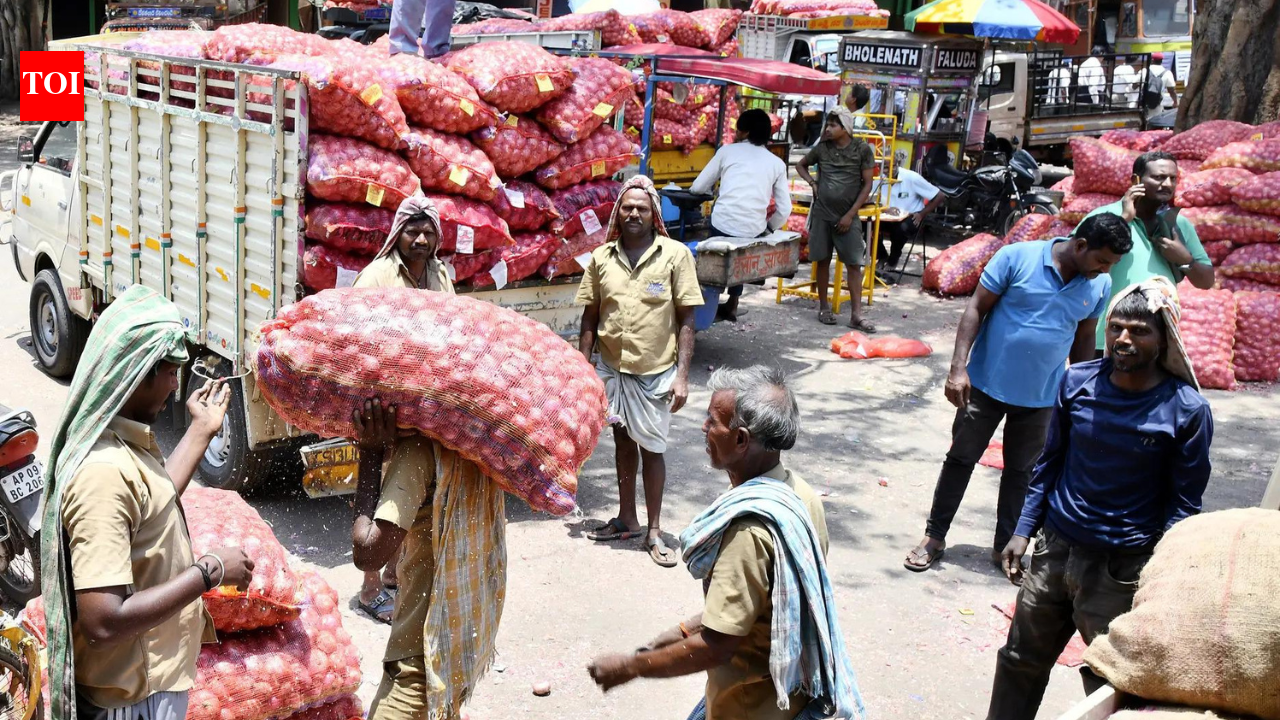
Rain clouds rolled over Maharashtra’s onion belt. Then came war winds from West Asia. Prices collapsed. Crops rotted. Farmers counted losses in rupees — and sold tears by the quintal. Across Nashik, Solapur and Chhatrapati Sambhajinagar, onion growers are reaping a bitter harvest this season as wholesale prices at agriculture produce market committees (APMCs) have crashed far below production costs.Prakash Galadhar, a farmer hailing from Paithan taluka in Chhatrapati Sambhajinagar, hauled 1,262kg of onions he had harvested to market last week. After deductions for labour, loading and transport, his final balance showed he owed the trader Re 1.In Satana APMC of Nashik district, farmer Jitendra Solanke brought 30 quintals hoping to recover at least part of his investment. Traders first offered Rs 50 a quintal. After he protested, rate climbed to Rs 175 a quintal — Rs 1.75 a kg.Still, numbers refused to add up. “I spent Rs 1,200 per quintal to grow crop. After sale, labour and transport charges, only Rs 500 remained. The loss mounted to Rs 36,000,” Solanke said.Inputs have become expensive — seeds, fertilisers, diesel, mechanised farming and labour costs have all risen sharply — while market prices have sunk into mud.“We sell onions at Rs 4 to Rs 5 per kg while production cost is over Rs 12,” said Bhausaheb Jagtap, a farmer from Pune district. “After paying everybody, nothing is left,” Jagtap said.Prices have been sliding since Feb this year. At Lasalgaon APMC in Nashik — country’s largest onion wholesale market and benchmark for national rates — the kitchen staple is currently selling between Rs 400 and Rs 1,600 a quintal. Nearly 80% of arrivals fetch less than Rs 800 a quintal.In Solapur APMC, arrivals on May 13 touched 14,756 quintals. Prices ranged from Rs 100 to Rs 1,700 a quintal, or Rs 1 to Rs 17 a kg. A year ago, onions sold there for Rs 2,500 to Rs 3,000 a quintal.Growers said break-even price stands near Rs 18 a kg. “Losses are massive because nearly 80% of onions are selling between Rs 400 and Rs 800 per quintal,” said Bharat Dighole, president of Maharashtra Onion Growers’ Association.Market experts blamed a perfect storm: bumper arrivals, weak domestic demand, export disruptions and rain-damaged produce flooding mandis.“Geopolitical tensions involving Iran, US and Israel disrupted export markets and reduced overseas demand,” said Vikas Singh, vice president of Horticulture Produce Exporters’ Association of India.Unseasonal rain between March 19 and 21 added another blow to the farmers. Showers lashed Nashik district just as summer onion harvest began, damaging ready crop and triggering rot during storage. “Only 30% of produce was grade-1 quality,” said Prakash Jadhav, head of onion department at Solapur APMC. “Rain damage and long storage hurt quality.”Farmers are demanding onions be brought under minimum support price, pegging at Rs 3,500 a quintal. Growers’ groups want Maharashtra govt to compensate farmers by Rs 1,500 a quintal for distress sales.(Inputs from Prasad Joshi)


Bangladesh net FDI inflows up 39.36% in 2025

US weighs drone threat from Cuba: report

India’s Pearl Global’s FY26 revenue crosses $521 mn milestone

-

 Entertainment5 days ago
Conan O’Brien hat tricks as Oscar host
-

 Tech1 week ago
Could Contact-Tracing Apps Help With the Hantavirus? Not Really
-

 Tech1 week ago
I Tried the Best Captioning Smart Glasses, and Only One Leads the Pack
-

 Fashion5 days ago
Italy’s Zegna Group’s Q1 growth boosted by strong organic performance
-

 Sports1 week ago
Bobby Cox, legendary Atlanta Braves manager who led 1995 World Series champions, dead at 84
-

 Entertainment1 week ago
Martin Short: Facing tragedy with joy
-

 Entertainment1 week ago
Tom Brady gets back at Kevin Hart during Netflix roast
-

 Entertainment1 week ago
Martha Stewart: How to make an omelet