

Sports
Who has the most work to do? Where all 30 MLB teams stand ahead of winter meetings

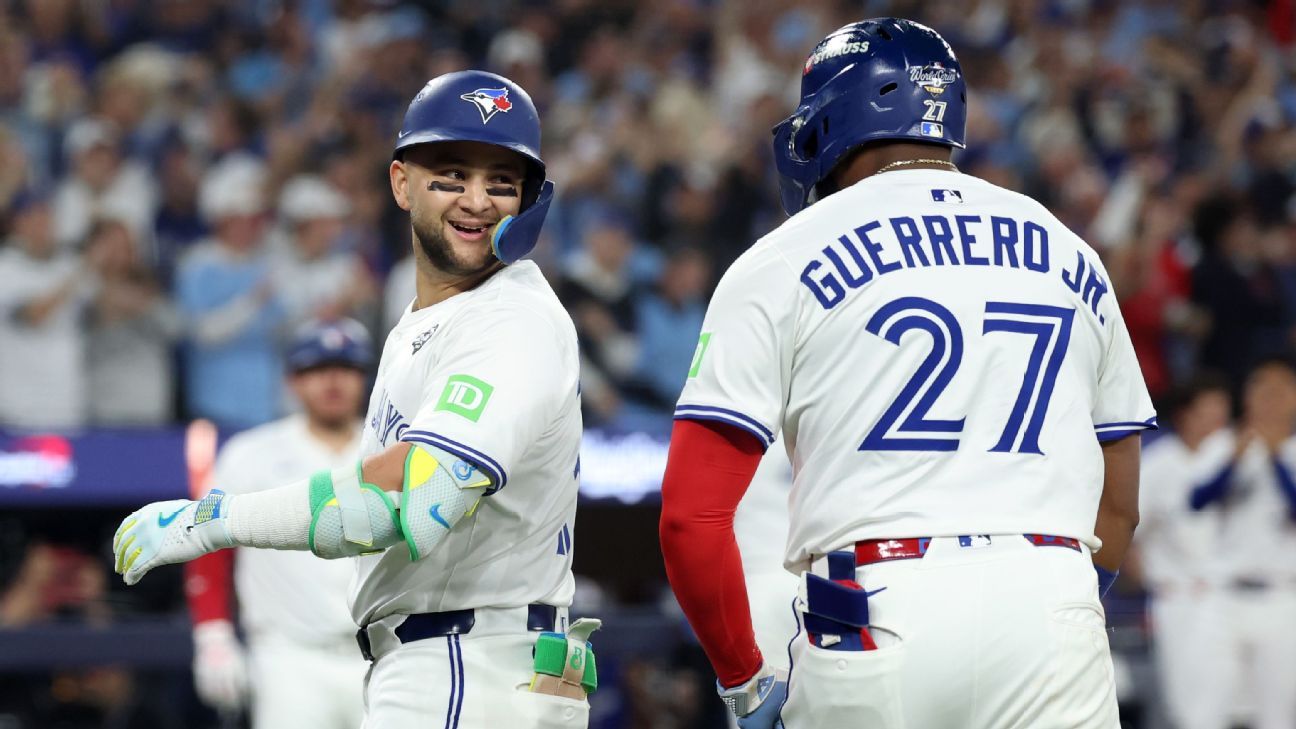
As the baseball industry prepares to convene in Orlando, Florida, for the winter meetings, we note that is seems like yesterday that the focus was much farther north, in Toronto. That was where, just over a month ago, the 2025 season reached its crescendo and conclusion with the Los Angeles Dodgers‘ thrilling Game 7 win over the Toronto Blue Jays to clinch their second straight World Series crown.
As the focus shifts to every team’s retooling effort for 2026, one thing we already know about next season: It’s going to have a tough act to follow.
The early steps toward accomplishing that have already taken place in the form of a handful of trades and free agent signings. While the heavy lifting of this hot stove season still lies ahead, things could really get percolating next week with every team’s chief decision-makers in the same place, at the same time.
For now, we’ll check in with our first offseason Stock Watch, which looks at how the landscape has shifted since the World Series ended and glimpses at how things might unfold from here. The numbers set a baseline for the rest of the winter and give us some markers from which to compare everyone’s progress when we check in again after the new year.


Win average: 98.6 (Last Stock Watch: 92.9, 4th)
In the playoffs: 94.7% (Last: 99.9%)
Champions: 22.4% (Last: 10.6%)
So far: The Dodgers have done a little roster pruning and a lot of waiting for the market to take shape.
To do: The champs haven’t done much — non-tendering reliever Evan Phillips has probably been the headline move — but no team is better positioned to sit back and see how the offseason unfolds. The Dodgers’ lineup is getting pretty old, and you’d like to see a little more youth injected into the mix. Some of that is keeping opportunities open for Dalton Rushing and, later, Josue De Paula and Zyhir Hope, among others. But signing Kyle Tucker would boost the outfield, and as he’s only 28, he would make the Dodgers a little younger. The bullpen needed to be reshuffled and will be. Last year’s ploy to stock the relief crew with big-name closer types flopped and yet it feels very Dodger-like to plug Edwin Diaz into the ninth-inning role.

Win average: 91.0 (Last: 74.1, 24th)
In the playoffs: 77.2% (Last: 0.0%)
Champions: 7.7% (Last: 0.0%)
So far: The Braves have been active on the margins with low-level trades and waiver claims. They will have a hectic spring training when it comes to sorting out all of their depth options. The trade of glove-first Nick Allen for utility player Mauricio Dubon, in conjunction with Ha-Seong Kim‘s decision to opt out, threw the shortstop position into even more flux than it already was.
To do: The Braves are poised for a big-time bounce-back season on paper, thanks to a healthy dose of positive regression in both the performance and health departments. They probably want to add at least a midrotation veteran starter. But the top priority is shortstop, and it’s not clear how many good options there are. Bo Bichette‘s bat would be a great fit, but his defense wouldn’t be. On our trade candidates list, the presence of CJ Abrams should perk up your ears.

Win average: 90.5 (Last: 90.5, 8th)
In the playoffs: 73.3% (Last: 98.9%)
Champions: 8.2% (Last: 10.6%)
So far: Trent Grisham accepted their qualifying offer, and they non-tendered some relievers.
To do: The Yankees have a lot of work to do but obviously, given this ranking, they are building up from a strong baseline. On the pitching side, they need to add relief options, perhaps even at the back of the pen if they don’t want to ride with either David Bednar or Camilo Doval as a pure ninth-inning hammer. They also need to add rotation depth, though that’s going to be an interesting group that in theory will improve periodically next season as Carlos Rodon, Gerrit Cole and Clarke Schmidt return from injuries. The heavier lifting needs to be done on the position side, where Cody Bellinger‘s bat needs to be replaced. Tucker is an obvious fit but so, too, is Bellinger himself. The degree of the need depends on how the Yankees view the progress of Jasson Dominguez and Spencer Jones. The Yankees have a strong offensive forecast as is but there is room for an impact righty bat (Pete Alonso?) or just some better options on the right side for the bench.

Win average: 89.8 (Last: 86.7, 11th)
In the playoffs: 72.6% (Last: 88.2%)
Champions: 6.6% (Last: 5.2%)
So far: After last season’s collapse, the Mets have been hard at work to make sure it doesn’t happen again. The additions of Marcus Semien and Devin Williams add a couple of splashy names, but the Mets also have big names to replace (Alonso, Diaz and Brandon Nimmo, who was the return for Semien).
To do: The Mets need at least one everyday outfielder, so Tucker and Bellinger make sense. If the Twins are willing to part with Byron Buxton, he would look good in center field. The bullpen needs more, with a possible reunion with Diaz the obvious but pricey option. And while the Mets have a surfeit of exciting young rotation candidates, after last season’s injury issues they need some stability, so a veteran with a track record of durability should be high on the list.

Win average: 89.7 (Last: 91.7, 6th)
In the playoffs: 69.3% (Last: 99.4%)
Champions: 8.1% (Last: 7.7%)
So far: After coming probably as close to winning a World Series as a team can get without actually winning it, the Blue Jays aren’t messing around this offseason. After adding Dylan Cease and Cody Ponce to a deep rotation, the Blue Jays’ hot stove campaign is already sizzling.
To do: Like all teams, the Blue Jays can stand to add in the margins in terms of bullpen help and general depth. The big to-do item concerns the free agency of Bichette, whose personality and bat were so crucial to Toronto’s 2025 success. Toronto can be satisfied at shortstop defensively with Andres Gimenez, but Bichette looked pretty good at the keystone in the World Series, especially considering he was limited physically, and really good hitting behind Vladimir Guerrero Jr. But Tucker would look good too, and the Blue Jays have the positional flexibility to make pretty much any impact lineup acquisition work. The addition of Cease already wards off the ghosts of frustrating free agent pursuits past so it’s all poutine from here.

Win average: 89.7 (Last: 86.5, 12th)
In the playoffs: 71.7% (Last: 74.1%)
Champions: 7.2% (Last: 2.6%)
So far: The Mariners got out ahead of the free agent market by re-upping with first baseman Josh Naylor on a five-year contract that solidifies what has long been a problem position for Seattle.
To do: Eugenio Suarez hit free agency, which opens up the need for a power bat in the Seattle lineup, especially when you have to assume that Cal Raleigh probably isn’t going to hit 60 home runs again. That bat doesn’t have to be another third baseman, though bringing back Suarez on a short deal makes sense. But the Mariners could also use Ben Williamson at the hot corner while waiting on the arrival of Colt Emerson. The bat also could be an outfielder or a DH. How about Kyle Schwarber? Whatever path Jerry Dipoto takes, the Mariners are sitting pretty, especially when you consider how far short last season’s rotation fell in relation to expectation. Now imagine last season’s Mariners with the rotation we thought they were going to have.

Win average: 88.5 (Last: 98.7, 1st)
In the playoffs: 69.0% (Last: 100.0%)
Champions: 5.2% (Last: 18.3%)
So far: Milwaukee issued a qualifying offer to Brandon Woodruff, which he accepted.
To do: The young Brewers are well situated and can hope for organic improvement from maturing players, as long as they don’t start straddling the fence between winning now and sustainability. The time to strike is now, especially with Woodruff back in the fold to pair with Freddy Peralta. (Trading Peralta would be an example of fence-straddling.) It’s hard to look at this roster and not dream what it could be with a prime-time power bat in the middle of the everyday lineup. And that player could be a DH, which means that every hitter who is a free agent and a potential trade candidate can work. Let’s hope the Brewers see this offseason as a chance to splurge on that final piece of the puzzle.

Win average: 87.2 (Last: 93.8, 2nd)
In the playoffs: 60.2% (Last: 100.0%)
Champions: 3.9% (Last: 10.6%)
So far: The Phillies haven’t done much, but there has been a good bit of hand-wringing by their always impatient fans.
To do: There’s a Schwarber-shaped hole in the Phillies’ lineup and a J.T. Realmuto-shaped void behind the plate. Ranger Suarez, Max Kepler, Jordan Romano also factor as the Phillies have quite a list of free agents. The list of roster holes might need to include Zack Wheeler if his recovery from thoracic outlet syndrome is longer than the currently projected end of May. The Phillies are already projected to exceed the first luxury tax threshold by Cot’s Contracts despite all of those high-profile expiring deals. The top of the payroll chart is Wheeler, Trea Turner, Bryce Harper, Aaron Nola and Nick Castellanos. All but Turner on that list carries a major question concerning injury or age-related decline. So what do the Phillies have to do? A lot — but the baseline, for now, appears strong enough to justify trying for another push in 2026.

Win average: 86.9 (Last: 89.7, 9th)
In the playoffs: 56.2% (Last: 97.9%)
Champions: 5.1% (Last: 6.7%)
So far: The Red Sox traded for starting pitcher Sonny Gray.
To do: The Gray trade gives Boston some innings surety behind Garrett Crochet and means the Red Sox don’t have to push too hard on Connelly Early and Payton Tolle in the early stages of next season. The lineup, sans Alex Bregman, has plenty of options, but there’s a gaping need for a legitimate power bat, or two. Schwarber would be an ideal fit, but you could make an argument for a short deal involving Suarez as well, if bringing back Bregman isn’t on the table. This would be an epic fit for Alonso as well, if the Red Sox aren’t sold on Triston Casas at this point.

Win average: 86.5 (Last: 92.9, 5th)
In the playoffs: 57.0% (Last: 100.0%)
Champions: 4.2% (Last: 11.3%)
So far: If anything, the Tigers have shown the culture they’ve created is strong enough that players don’t flee at the first opportunity. First, starter Jack Flaherty picked up his player option to stick around, then Gleyber Torres accepted the team’s qualifying offer. The Tigers haven’t done much else, but at least they have fewer holes.
To do: First, the Tigers need to not trade Tarik Skubal. That’s easy enough to do. Signing him to a fat extension also would be nice. Otherwise, what are we doing here? Skubal can be a free agent after the 2026 season, and the Tigers’ payroll space is largely wide open starting in 2027. As for improving the offense, Detroit can reasonably count on progress from Riley Greene and Colt Keith, and perhaps less so from Spencer Torkelson. Top prospects Kevin McGonigle and Max Clark are looming, but a veteran lineup anchor can easily be accommodated. A stopgap shortstop makes sense as well, maybe someone such as Isiah Kiner-Falefa.

Win average: 85.8 (Last: 88.1, 10th)
In the playoffs: 51.3% (Last: 85.3%)
Champions: 3.4% (Last: 3.6%)
So far: Houston acquired infielder Nick Allen for Mauricio Dubon and signed starting pitcher Ryan Weiss.
To do: On the same day the Blue Jays signed the reconstituted Cody Ponce, the Astros inked his Hanwha Eagles teammate, Weiss. In the KBO, the pair were like expatriate versions of Koufax and Drysdale. We’ll see how that translates to MLB, but Weiss adds a rotation solution at a contract price point that allows for more additions. Houston still needs another veteran rotation addition, preferably one with more of a big league track record than Weiss. The Astros might need to make a splash in the outfield, depending on how they view incumbents Jake Meyers, Zach Cole and prospect Jacob Melton in the context of their right-now contention timeline.

Win average: 85.5 (Last: 93.3, 3rd)
In the playoffs: 53.6% (Last: 99.9%)
Champions: 2.7% (Last: 7.2%)
So far: The Cubs reworked the contract of starter Colin Rea, re-signed starter Shota Imanaga — after everyone opted out of the labyrinthine contract that might or might not serve as the basis of a Dan Brown novel — and signed reliever Phil Maton.
To do: The Cubs are in pretty good shape on the position player front, assuming prospects Owen Caissie and Kevin Alcantara are ready for prime time. That’s good because they need to add impact pitching. There is plenty of competence and decent depth already on hand, but the group lacks any semblance of star power — which is expensive. So expect more competence and more depth. If it were me, I’d trade for Pablo Lopez, then sign Ranger Suarez and Edwin Diaz.

Win average: 84.9 (Last: 90.6, 7th)
In the playoffs: 49.1% (Last: 99.4%)
Champions: 2.3% (Last: 4.0%)
So far: The Padres declined an option on last year’s Cody Ponce — Kyle Hart — then signed him back. They also added veteran right-handed reliever Craig Stammen. … Wait, Stammen is what? OK. Never mind.
To do: The Padres need a power bat and rotation help. They have the flexibility to be creative with addressing both needs, and when it comes to creative baseball solutions, A.J. Preller is your man. The rotation saw Cease and Michael King hit free agency, and Cease is now in Toronto. That’s some high-impact stuff that’s not easy to replace, unless you decide to make Mason Miller a starter again. Doing that and re-upping with Robert Suarez would be a less pricey proposition than what it would cost to land a top free agent or trade candidate. As for the power bat, San Diego has plenty of playing time to offer a first baseman or designated hitter type, both spots that ought to be a good source of the home run power the Padres need.

Win average: 84.5 (Last: 82.5, 14th)
In the playoffs: 45.7% (Last: 11.3%)
Champions: 2.6% (Last: 0.2%)
So far: The Royals re-signed catcher Salvador Perez, tendered a contract to and re-signed infielder Jonathan India, and traded for outfielder Kameron Misner and starter Mason Black.
To do: The Royals’ new deal with Perez probably means the future Hall of Fame catcher (yes, he is) will probably finish his career with the club, as it should be. The decision to bring back India on a one-year, $8 million deal to avoid arbitration was a head-scratcher. It’s not so much that India can’t recover his past value, but given the Royals’ roster and apparent reluctance to stretch payroll much further, it seems like that money could have been better stashed for an outfield upgrade that the team desperately needs. The Royals can hope Jac Caglianone makes a leap after his first look at the majors, but they need more than that. Rumors suggest a swap of a starting pitcher to address the need. That can work, but it also depends on which starter you’re talking about. But the Royals can’t come up empty in this pursuit again, after a season when the need was so apparent in nearly every game they played.

Win average: 83.2 (Last: 72.3, 26th)
In the playoffs: 37.9% (Last: 0.0%)
Champions: 2.0% (Last: 0.0%)
So far: The Orioles traded starting pitcher Grayson Rodriguez for outfielder Taylor Ward, traded for reliever Andrew Kittredge and signed closer Ryan Helsley.
To do: Even this jump back into the middle of the Stock Watch pack should buoy the spirits of Orioles fans after last season’s debacle. It’s a reminder that, yes, this is an organization with a lot of talent. The move for Helsley clarifies the bullpen picture, both in terms of the roles for current players and the roles for the pitchers Baltimore still needs to acquire. That’s the beauty of a legit ninth-inning reliever. The rotation needs more, especially given the risky Rodriguez deal. But Ward slots in as the cleanup hitter in a Baltimore lineup that retains the upside of youth. Of the nine batters who figure to get the most at-bats, Ward (32) is the oldest, but the second oldest is Adley Rutschman (27), which is kind of mind-blowing. The youth is a feature, not a bug.

Win average: 82.9 (Last: 83.6, 13th)
In the playoffs: 36.5% (Last: 28.7%)
Champions: 2.0% (Last: 1.1%)
So far: The Rangers traded Semien for Nimmo.
To do: After a disappointing 2025, the Rangers are going to look different in 2026. The addition of Nimmo, 32, actually makes the lineup a little younger, though he is nearing the outer range of the typical prime for a hitter. The rest of the lineup has a lot of trend-related potential, from injury bounce-backs (Corey Seager), young hitters on the upswing (Wyatt Langford, Evan Carter, Josh Jung) and performance regression (Jake Burger, Joc Pederson). Fast-rising prospect Sebastian Walcott should be ready to help at some point in 2026. Texas needs help behind the plate after non-tendering Jonah Heim, though Heim might be the most palatable option on the market. More than anything, Texas needs to add to the bullpen at every level of leverage. In other words, the Rangers have plenty to do.

Win average: 81.8 (Last: 73.8, 25th)
In the playoffs: 32.8% (Last: 0.0%)
Champions: 1.2% (Last: 0.0%)
So far: The Twins acquired backup catcher Alex Jackson.
To do: One reason the Twins rate this high is the ongoing presence of Buxton, Lopez and Ryan — three veterans at or near the top of Minnesota’s payroll tree, and all ranking members of our trade candidates list. If the Twins’ roster trends even younger and cheaper, this ranking will tumble accordingly. Until we know just how lean the Twins want to go, it’s hard to say what they should or might do, because nothing might be the unfortunate answer.

Win average: 81.4 (Last: 78.9, 19th)
In the playoffs: 32.5% (Last: 0.5%)
Champions: 1.1% (Last: 0.0%)
So far: The initial moves have been low-level stuff.
To do: It’s important to keep in mind that Arizona ranked eighth in runs per game after the 2025 trade period, during which they offloaded Eugenio Suarez, Naylor and Randal Grichuk. This is a team still brimming with offensive talent, less so if rumors of a possible Ketel Marte deal prove to be prescient. The outfield could use a boost, though you don’t want to block the path if prospect Ryan Waldschmidt proves to be on the fast track. More than anything, Arizona needs to inject some veteran innings into the rotation. Also, please bring back Paul Goldschmidt.

Win average: 81.3 (Last: 81.6, 16th)
In the playoffs: 31.2% (Last: 4.8%)
Champions: 0.8% (Last: 0.1%)
So far: The Giants added some depth options.
To do: San Francisco’s big splash was to make Tony Vitello baseball’s first college-to-MLB manager. With the rotation down a future Hall of Fame veteran as Justin Verlander hits free agency, should the Giants just go ahead and sign longtime Vitello friend and advocate Max Scherzer? Why draw it out? The rotation could use the help. MLB’s decision to go with the challenge version of the new automated balls and strikes system preserves most of the value of Gold Glove catcher Patrick Bailey, but the offense needs more slug, probably coming in the form of an outfielder. This is another team for which Tucker or Bellinger would be a fit, if they can stomach the challenges of Oracle Park.

Win average: 80.6 (Last: 79.4, 18th)
In the playoffs: 27.7% (Last: 0.9%)
Champions: 1.0% (Last: 0.0%)
So far: They did ink reliever Connor Brogdon on Wednesday.
To do: More than anything, Cleveland fans can look forward to Chase DeLauter playing in the regular season after his debut during the 2025 playoffs. The Guardians need offense. Badly. And we know they aren’t going to spend for it, so keep an eye on Cleveland in the trade market. As far as non-elite free agents, I kind of like the idea of Luis Arraez for this group as a DH/utility type who adds batting average to the mix and takes the team’s existing ethos to another dimension. But more than that, Cleveland needs a proven masher. Can’t we afford at least one Eugenio Suarez?

Win average: 80.4 (Last: 80.8, 17th)
In the playoffs: 25.2% (Last: 3.6%)
Champions: 1.0% (Last: 0.1%)
So far: As usual, the Rays have made a lot of moves and not one would merit any kind of a headline. That doesn’t mean they weren’t good moves, it just means that even with a new owner, these are still the Rays.
To do: The return of Jonny DeLuca and the ongoing ascension of Carson Williams has the position group in good shape, pending the dealing of veterans such as Brandon Lowe. The Rays probably will target veteran rotation options from the second and third tiers of free agency, and the trade market. It won’t be make headlines, but it will probably work.

Win average: 79.2 (Last: 81.6, 15th)
In the playoffs: 24.0% (Last: 6.8%)
Champions: 0.7% (Last: 0.2%)
So far: The Reds haven’t done much yet, beyond re-signing closer Emilio Pagan on Wednesday, but the rumor mill has been picking up.
To do: So who knows what to make of it, but reportedly there is mutual interest between the Reds and Schwarber to bring the slugger to the team he grew up rooting for. This is almost heartbreakingly tantalizing for the good people of Cincinnati. First, it would be a shocking free agency win for a team that doesn’t get many of them. Second, it would make Schwarber the de facto mayor of the Queen City. Third, he’s exactly what the Reds need — a legit home run hitter who would yank fly ball after fly ball in the general direction of Kentucky. Get it done, and then we can worry about the rest of the roster.

Win average: 76.7 (Last: 78.1, 20th)
In the playoffs: 15.9% (Last: 0.4%)
Champions: 0.3% (Last: 0.0%)
So far: The Cardinals traded Gray to Boston for pitchers Richard Fitts and Brandon Clarke.
To do: New lead executive Chaim Bloom seems intent on embarking on the full reset the Cardinals should have begun last year if they were going to do it at all. Now the task is to move Nolan Arenado, Willson Contreras and, perhaps, Brendan Donovan for prospects. The Cardinals have young talent in the majors — Masyn Winn, Victor Scott II, Jordan Walker — and more on the horizon — Thomas Saggese, JJ Wetherholt. This doesn’t have to be a long process.

Win average: 76.2 (Last: 74.2, 23rd)
In the playoffs: 12.6% (Last: 0.0%)
Champions: 0.3% (Last: 0.0%)
So far: The Athletics DFA’d and non-tendered JJ Bleday.
To do: The lineup, even without further additions, remains really exciting. The pitching staff needs work, but at least the A’s can mostly focus on that area. It’s a worthy project for a team that has gone from 50 to 69 to 76 wins over the past three seasons. It’s likely that the A’s will focus on bounce-back candidates and other wild-card types to join a legion of nondescript pitchers on the 40-man roster, though few who follow the team would root against another Luis Severino-like splurge. The task for the winter is figuring out if three or four of the rotation candidates (one of whom is Severino) have any shot at a sub-4.00 ERA. If so, the A’s can hang around wild-card contention and enter the add category by the trade deadline.

Win average: 75.0 (Last: 75.8, 21st)
In the playoffs: 10.6% (Last: 0.0%)
Champions: 0.1% (Last: 0.0%)
So far: It has been crickets so far for the Marlins, or whatever the aquatic equivalent to crickets might be.
To do: Miami is well positioned to enter wild-card contention after a 79-win season in 2025. It’s a roster with clear strengths (rotation depth) and weaknesses (offense). Thus, there are deals to be made. If the Marlins really want to get splashy (see what I did there) they could also deal from their enviable depth at catcher. The obvious lineup slots to upgrade on offense are all the corner positions not occupied by Kyle Stowers. This could be an interesting winter in a good way for Marlins fans.

Win average: 73.6 (Last: 71.6, 27th)
In the playoffs: 8.7% (Last: 0.0%)
Champions: 0.1% (Last: 0.0%)
So far: For the Pirates, it has been a lot of DFAs and non-tenders to clear 40-man roster space for Rule 5-eligible prospects.
To do: It might be an exciting time? Even with Jared Jones still recovering from elbow surgery, the Pirates’ Paul Skenes-led rotation is ripe with potential. Konnor Griffin is still only 19 with just 21 games at Double-A under his belt, but as the consensus top prospect in the game, he carries the promise of a looming Skenes-like impact on the position side. On top of all that, the Pirates might actually spend some money. With a lineup that currently projects to feature only three above-average hitters, upgrading should not be difficult.

Win average: 69.0 (Last: 75.4, 22nd)
In the playoffs: 2.8% (Last: 0.0%)
Champions: 0.0% (Last: 0.0%)
So far: The Angels traded Ward for Rodriguez and signed starter Alek Manoah.
To do: On Nov. 2, the Angels had nine players 31 years old or more, plus a 29-year-old, reach free agency. When they dealt Ward on Nov. 19, that subtracted another over-30 player. This will be a younger version of the Angels. So far, the Angels have added two injury bounce-back candidates for the rotation, both of whom were not so long ago considered Cy Young candidates, either in the present (Manoah) or the future (Rodriguez). It’s a good strategy that lessens the pressure on the younger starters on the 40-man roster now probably slated for Triple-A. The Angels have a dire need for bullpen help and can probably use a glove-first center fielder (Harrison Bader?). Though you wouldn’t peg the Angels as contenders just yet, the direction does seem more coherent.

Win average: 63.7 (Last: 64.5, 28th)
In the playoffs: 0.7% (Last: 0.0%)
Champions: 0.0% (Last: 0.0%)
So far: It has been the bare minimum of administrative roster maneuvering.
To do: The Nationals have turned the page completely on the Mike Rizzo era everywhere but on the field. There’s a new regime putting a new spin on things, with Paul Toboni taking over the front office and Blake Butera assuming control of the clubhouse. The presence of Abrams and MacKenzie Gore, among others, in the rumor mill might be smoke and mirrors, but it’s also suggestive. The last rebuild didn’t work and the best thing Toboni can do is spin the value of those players into more players. For Nats fans, the wait for relevance will continue into the uncertain future.

Win average: 56.2 (Last: 59.6, 29th)
In the playoffs: 0.0% (Last: 0.0%)
Champions: 0.0% (Last: 0.0%)
So far: The White Sox acquired outfielder Everson Pereira from the Rays for starting pitcher Yoendrys Gomez and reliever Steven Wilson, and signed starter Anthony Kay.
To do: Even as the White Sox bide their time, building out their prospect base and waiting for those in or near the majors to develop, Chris Getz keeps attacking all sectors of the 40-man roster. Kay, who flamed out with the Blue Jays, is the latest pitcher to head to the Pacific Rim to rebuild his value and come back for a nice contract. The White Sox had a lot of success a couple of years ago when Getz landed just such a pitcher in Erick Fedde, who performed well for Chicago and was spun into a nice trade return that included Miguel Vargas. The White Sox need to figure out once and for all what to do with Luis Robert Jr., but the wide-net approach of Getz and his staff continues to improve the position of the organization. At some point though, the White Sox will have to actually, you know, win games.

Win average: 49.7 (Last: 45.9, 30th)
In the playoffs: 0.0% (Last: 0.0%)
Champions: 0.0% (Last: 0.0%)
So far: There hasn’t been much on the roster front for the Rockies, but the news has still been pretty good.
To do: Free agency began on Nov. 2 and the Rockies hired Paul DePodesta as president of baseball operations five days after. So not surprisingly, Colorado’s hot stove season is off to a sleepy start. DePodesta hired Josh Byrnes from the Dodgers on Wednesday to serve as his GM, and if nothing else, the Rockies will move toward an organizational approach that should be much more in step with the current best practices in the sport. The roster needs everything, but at least there will be some fresh eyes on it.
NEWYou can now listen to Fox News articles!
The most pressure-packed scoring opportunity in soccer might be the one where no one is defending: the penalty kick.
A goal is almost certain, so long as you keep a cool head and beat the goalkeeper. Simple enough, right?
But what exactly is a penalty kick, and how is it awarded? Here’s everything you need to know about the penalty kick ahead of the 2026 FIFA World Cup:
What Is A Penalty Kick?
A penalty kick — or “PK” — is a one-on-one duel between a field player and a goalkeeper in which the field player tries to score a direct kick from the penalty spot.
How Is A Penalty Kick Awarded?
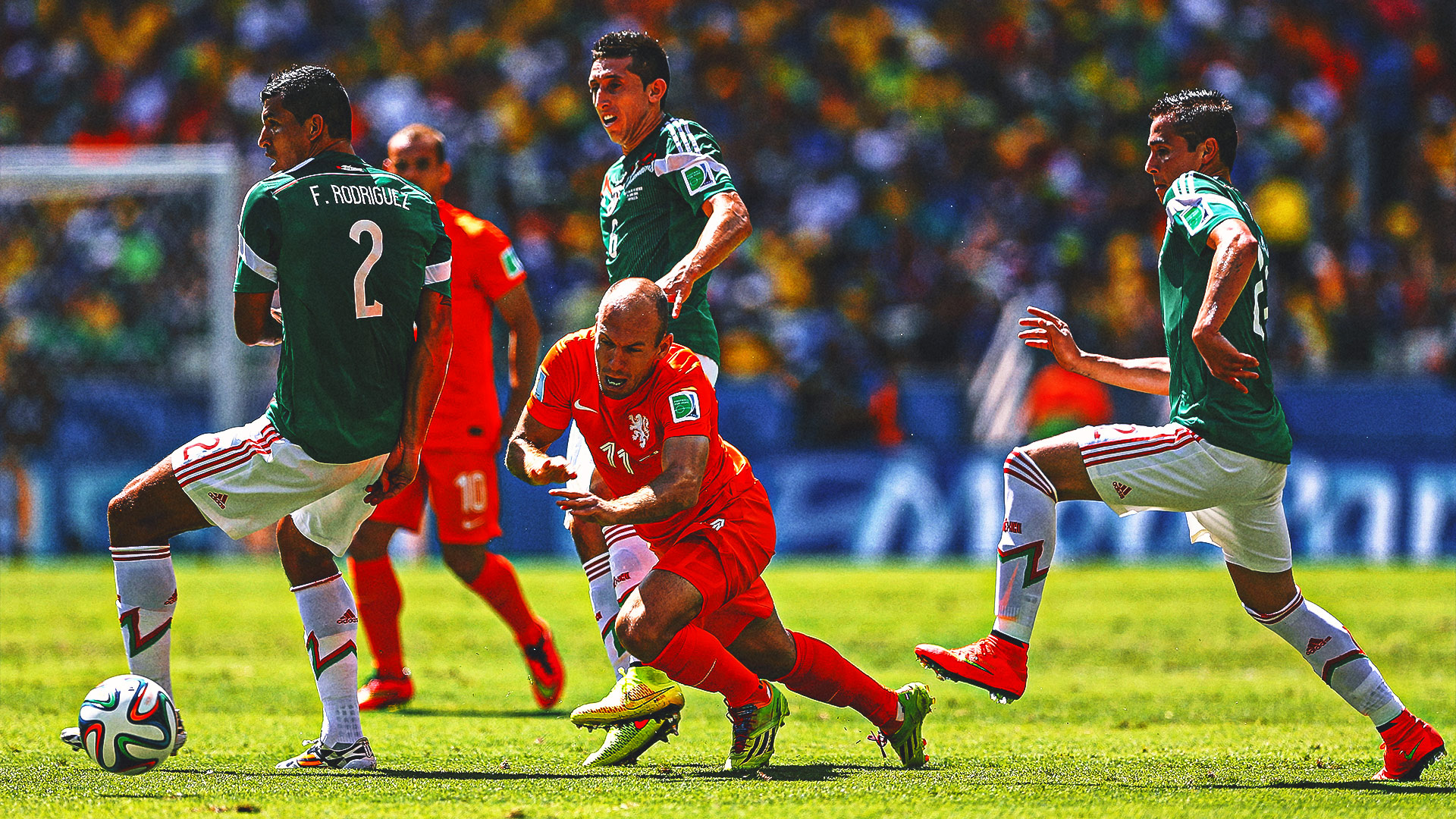
A penalty kick is awarded when a player commits a foul — tripping, pushing or a handball — inside the penalty area, which is a large 18-yard box that extends from the goal line into the field of play. The total width of the box is 44 yards.
A penalty can be awarded in the run of play or during a Video Assistant Referee check.
Who Takes The Penalty Kick?
The designated penalty taker is usually predetermined based on a player’s proven ability to score, from the penalty spot or otherwise. For example, Harry Kane, the active leading goalscorer for England, is the designated penalty taker for the Three Lions.
How Far Is The Penalty Spot?
The penalty is 12 yards from the center of the goal line, meaning that there are just 12 yards that separate the penalty taker and the goalkeeper at the time of a penalty kick.
What Are The Rules For The Penalty Taker?
The penalty taker is given freedom to confuse the goalkeeper during their run-up to the kick so long as:
- The penalty taker doesn’t attempt a fake kick or a “feint” while attempting to strike the ball AND
- The penalty doesn’t make contact with the ball more than once during their attempt.
If a penalty taker participates in illegal feinting, they will be cautioned and an indirect free kick will be awarded to the opposing team.
If a penalty taker makes contact with the ball more than once during their attempt and the attempt is successful, the penalty kick will be retaken. If it isn’t, it will be recorded as a miss and play will resume.
What Are The Rules For The Goalkeeper?
The goalkeeper must follow three key rules during a penalty kick: face the kicker, stay between the goalposts and keep at least one foot on or over the goal line until the kick.
If a goalkeeper leaves their line during a penalty attempt and the attempt is unsuccessful, it will be retaken. If the attempt is successful, it will result in a goal.
Additionally, goalkeepers may not touch the goalposts, crossbar or netting as an intimidation tactic. Trash-talking is also not permitted.
How Often Are Penalty Kicks Awarded?
There were 23 penalty kicks awarded at the 2022 FIFA World Cup in Qatar, which was six fewer than in 2018. Argentina led all countries in penalty attempts with five, and its designated penalty taker, Lionel Messi, converted all five attempts.
The Pakistan Cricket Board (PCB) has unveiled ticketing information for the Pakistan Super League (PSL) 11 Qualifier between Peshawar Zalmi and Islamabad United, set to take place at Karachi’s National Bank Stadium on Tuesday.
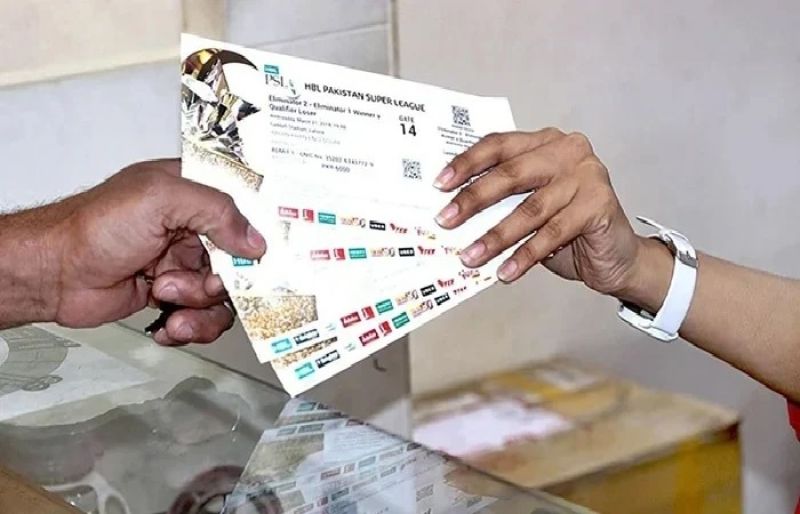
According to the cricket board, E-Tickets for the high-stakes fixture can be purchased from tonight, with prices for all enclosures of the aforementioned venue set at Rs500.
Furthermore, the physical tickets will be available for sale from Tuesday morning and can be bought at the TCS Express Centre at the China Ground situated opposite the venue.
The PCB further advised fans with tickets to reach the stadium “well before the start of play” to avoid any inconvenience. Notably, the coin toss for the Qualifier will take place at 6:30pm as per the Pakistan Standard Time (PST), with the first ball to be bowled at 7pm.
Meanwhile, the ticket details for the remaining two playoffs, set to be played in Lahore, will be announced in due course.
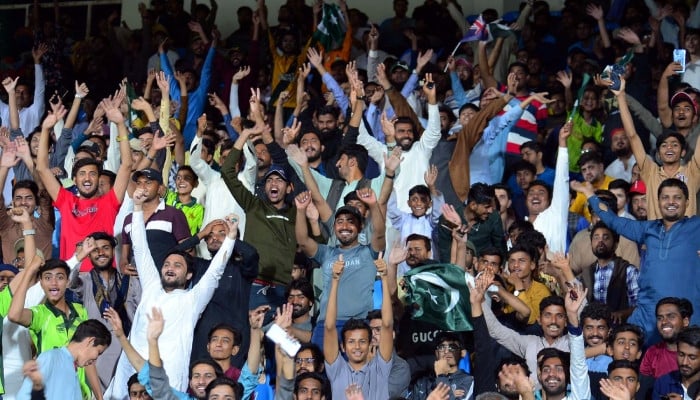
The cricket board announced the ticketing details hours after Prime Minister Shehbaz Sharif granted approval for public attendance in all three playoffs of the ongoing PSL 11.
Taking to X, PCB Chief Mohsin Naqvi said he had a meeting with the premier, during which the cricket board secured his approval for allowing fans in the stadia for the upcoming playoffs of the eight-team tournament.
“Just had a meeting with Prime Minister Shehbaz Sharif, and I’m pleased to share that we have secured his approval for public attendance in all three PSL playoff matches as well,” Naqvi wrote on the microblogging website.
The Pakistan Cricket Board (PCB) has unveiled ticketing information for the Pakistan Super League (PSL) 11 Qualifier between Peshawar Zalmi and Islamabad United, set to take place at Karachi’s National Bank Stadium on Tuesday.
According to the cricket board, E-Tickets for the high-stakes fixture can be purchased from tonight, with prices for all enclosures of the aforementioned venue set at Rs500.
Furthermore, the physical tickets will be available for sale from Tuesday morning and can be bought at the TCS Express Centre at the China Ground situated opposite the venue.
The PCB further advised fans with tickets to reach the stadium “well before the start of play” to avoid any inconvenience. Notably, the coin toss for the Qualifier will take place at 6:30pm as per the Pakistan Standard Time (PST), with the first ball to be bowled at 7pm.
Meanwhile, the ticket details for the remaining two playoffs, set to be played in Lahore, will be announced in due course.
The cricket board announced the ticketing details hours after Prime Minister Shehbaz Sharif granted approval for public attendance in all three playoffs of the ongoing PSL 11.
Taking to X, PCB Chief Mohsin Naqvi said he had a meeting with the premier, during which the cricket board secured his approval for allowing fans in the stadia for the upcoming playoffs of the eight-team tournament.
“Just had a meeting with Prime Minister Shehbaz Sharif, and I’m pleased to share that we have secured his approval for public attendance in all three PSL playoff matches as well,” Naqvi wrote on the microblogging website.


Buckingham Palace issues ‘disappointing’ update on King Charles amid threat

Trump not happy with latest Iran proposal to end war, says US official

World Cup FAQ: How Are Penalties Awarded And What Are The Rules?

-

 Sports1 week ago
NCAA men’s gymnastics championship: All-time winners list
-

 Sports1 week ago
WWE WrestleMania 42 Night 2: Live match results and analysis
-

 Fashion1 week ago
UK’s Sosandar returns to profitability amid robust FY26 performance
-

 Politics7 days ago
UK’s Starmer seeks to deflect blame over Mandelson appointment
-
 Business1 week ago
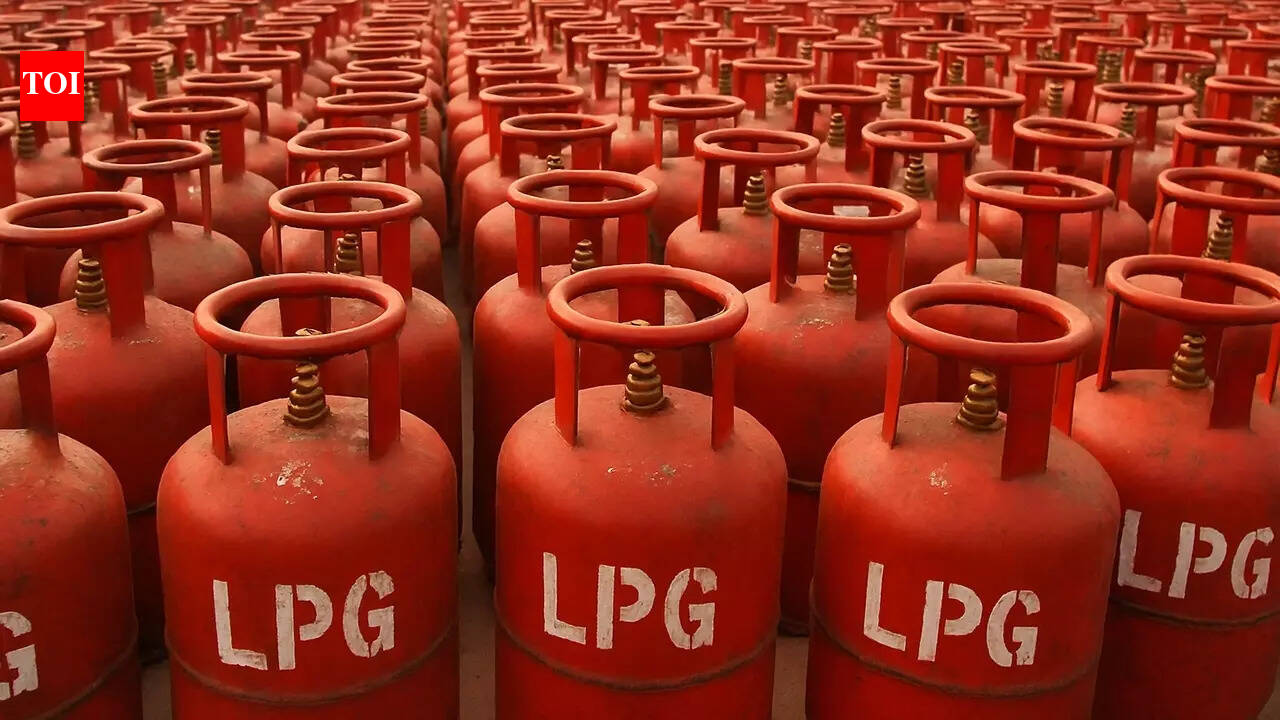
No fuel shortage: Govt assures 100% domestic LPG, PNG, CNG supply amid Hormuz energy crunch – The Times of India
-

 Entertainment1 week ago
Lee Anderson, Zarah Sultana kicked out of UK Parliament for calling PM ‘liar’
-
 Business1 week ago
How Trump’s psychedelics executive order could unlock stalled cannabis reform
-

 Sports1 week ago
Quetta Gladiators opt to bowl after winning toss against Peshawar Zalmi in PSL 11 clash