

Business
Stellantis to bring tiny Fiat car to U.S. following Trump remarks


Stellantis plans to offer the Fiat Topolino, an all-electric quadricycle vehicle, in the U.S.
Stellantis
DETROIT – Chrysler parent Stellantis on Monday announced it will offer an all-electric small “car” called the Fiat Topolino in the U.S.
The automaker did not announce timing for the vehicle, but Fiat CEO Olivier François confirmed plans to bring the vehicle to the market, with “more details to come next year.”
Fiat’s announcement comes less than a week after President Donald Trump praised small “Kei” cars from Japan during a meeting at the White House with Stellantis CEO Antonio Filosa and other U.S. lawmakers and automotive executives.
“They’re very small. They’re really cute,” Trump said during the Wednesday meeting. “And I said, ‘How would that do in this country?’ And everyone seems to think ‘good,’ but you’re not allowed to build them.”
Trump said he ordered U.S. Transportation Secretary Sean Duffy to allow small vehicles like the Kei “micro” cars to be built and driven in the U.S. It’s not necessarily illegal to produce such cars in America, but they have to meet American safety standards, speed requirements and other regulations.
A Stellantis spokeswoman said Fiat’s announcement was unrelated to Trump’s comments last week and that the automaker has been gauging customer interest for the Topolino at U.S. events such as auto shows.
The Topolino, which translates to “little mouse” in Italian, is actually categorized as “an all-electric quadricycle” rather than a car, according to Stellantis. It has a top speed of roughly 28 miles per hour and driving range of up to 75 kilometers (less than 50 miles) on a single charge. The vehicle is produced in Morocco.
Small cars have historically not sold well in the U.S.
The most recent meaningful push to sell small cars in the U.S. occurred after the Great Recession in 2009 under the Obama administration. Back then, Italian automaker Fiat was allowed to purchase bankrupt automaker Chrysler, in part, to help bring such vehicles to the U.S.
Fiat and its small 500 city car reentered the U.S. market in 2011 amid Fiat’s takeover of Chrysler (both now owned by Stellantis).
In its first full year in 2012, Fiat sold 43,772 vehicles in the U.S. Those sales have since dwindled to roughly 1,500 Fiat vehicles sold last year in the U.S.







The Reserve Bank of India (RBI) on Monday decided against activating the countercyclical capital buffer (CCyB), indicating that current financial and credit conditions do not warrant an additional capital requirement for banks, PTI reported.The central bank said the decision followed a review and empirical assessment of indicators used under the CCyB framework.“Based on review and empirical analysis of CCyB indicators, it has been decided that it is not necessary to activate CCyB at this point in time,” RBI said in a statement.Under the RBI (Commercial Banks – Prudential Norms on Capital Adequacy) Directions, 2025, the CCyB framework is activated when financial conditions indicate rising systemic risks linked to excessive credit growth.The framework primarily relies on the credit-to-GDP gap as a key indicator, along with supplementary metrics.According to the RBI, the CCyB mechanism is intended to serve two broad objectives.Firstly, it requires a bank to build up a buffer of capital in good times, which may be used to maintain the flow of credit to the real sector in difficult times.Secondly, it achieves the broader macro-prudential goal of restricting the banking sector from indiscriminate lending in the periods of excess credit growth that have often been associated with the building up of system-wide risk.The framework was introduced globally after the 2008 financial crisis as part of measures proposed by the Group of Central Bank Governors and Heads of Supervision (GHOS) under the Basel framework to strengthen financial system resilience.
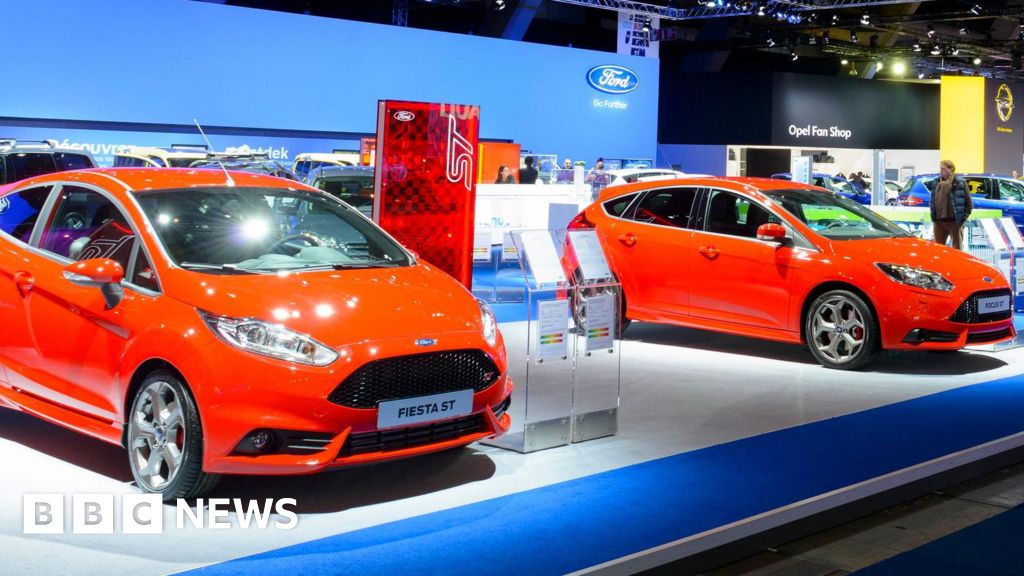
The company has announced plans to build seven new models in Europe including a small electric hatchback.
Source link

“Today’s policymaking is constrained by a more volatile external environment with more frequent and overlapping shocks, a rising public interest bill, in part reflecting market concerns with countries’ elevated debt, and the long-standing challenge of weak productivity growth,” he said.


Turkiye’s current account deficit expected to widen in 2026: Minister

UK’s clothing imports fall 3% in Q1, sharply lower than Q4 2025
RBI sees no signs of excess credit risk, keeps countercyclical capital buffer inactive

-

 Entertainment6 days ago
Conan O’Brien hat tricks as Oscar host
-

 Tech1 week ago
Could Contact-Tracing Apps Help With the Hantavirus? Not Really
-

 Fashion5 days ago
Italy’s Zegna Group’s Q1 growth boosted by strong organic performance
-

 Sports1 week ago
Bobby Cox, legendary Atlanta Braves manager who led 1995 World Series champions, dead at 84
-

 Entertainment1 week ago
Martin Short: Facing tragedy with joy
-

 Entertainment1 week ago
Tom Brady gets back at Kevin Hart during Netflix roast
-

 Sports1 week ago
Jacob Fatu unleashes vicious assault on Roman Reigns after World Heavyweight Championship loss at WWE Backlash
-

 Entertainment1 week ago
Martha Stewart: How to make an omelet