

Business
Meet the pilots flying Spirit Airlines’ yellow jets to the desert


When Spirit Airlines shut down before dawn on May 2, work for pilot Steve Giordano was just beginning.
Giordano, managing partner of the Nomadic Aviation Group, told CNBC he organized a massive repossession of more than 20 Spirit planes that lessors wanted returned.
In just over a week, he said he and his team ferried 23 Spirit planes from airports around the country to the Arizona desert. Just hours earlier, those bright yellow Airbus jets had been flying Spirit customers.
Giordano, who runs Nomadic with co-founder Bob Allen, was starting to hear in the late morning on May 1 that his team would be at work soon. “We finally got the trigger pulled to start moving crews at 6 p.m.” on May 1, he said. Spirit shut down at 3 a.m. ET the next morning.
So Nomadic and hired pilots — some of whom were previously flying for Spirit — began ferrying the aircraft out West with no customers on board to special airports outside of Phoenix and Tuscon, Arizona, where they’ll be stored for now.
Retired or otherwise unused aircraft are often parked out in the desert because the climate reduces the risk of corrosion or other damage. Airlines parked thousands of them there when travel collapsed in the Covid pandemic.
Repossessing aircraft
A retired Spirit Airlines Airbus plane in Coolidge, Arizona, in February 2023.
Leslie Josephs/CNBC
Nomadic organizes everything from getting fuel for the planes it’s flying to ensuring the aircraft have necessary inspections and crews for the flights.
Unlike with an airline that has a large staff of dispatchers, mechanics and pilots, “when you’re out on a mission like this, there’s a lot more responsibility as far as getting the mission accomplished,” Giordano told CNBC. “To be honest, the easy part of this is the flying part of it.”
Nomadic is a specialist in aviation. The company typically transports aircraft to new customers around the world. Rarely, the company’s work also means repossessing planes for leasing firms or other owners when an airline liquidates.
“It’s certainly the least frequent type of operation that we do,” Giordano said.
Major airline shutdowns in the U.S. are rare, and Spirit’s collapse was the biggest in decades. Earlier this month, Spirit began the long process of dismantling the discount carrier in bankruptcy court.
Part of that liquidation process involves returning planes to the lessors, which is where Nomadic Aviation comes in. According to a court filing, Spirit had 114 Airbus A320 planes, and 66 of them were leased.
Giordano said he was so busy before one Spirit repossession flight that he forgot to eat.
“By the time I got to the airplane, I’m like, ‘Oh no, I’m really hungry and there’s not going to be any options until we get to Arizona,'” Giordano said. “One of the mechanics said, ‘Hey, all the galley carts are full.’ So it had all the normal Spirit snacks. I think I had some Milano cookies. … I had a couple snack boxes with cheese. It was basically free and unlimited.”
Not everything was free for the taking, like Wi-Fi.
“I had to pay for it, but it worked,” he said of the Spirit plane he ferried from Philadelphia International Airport to Pinal County Airport in Marana, Arizona.
In demand
A Spirit Airlines Airbus A320 parked at LaGuardia Airport in New York days after the carrier ceased operations.
Leslie Josephs/CNBC
It isn’t clear where each plane that was in Spirit’s fleet will end up. The carrier had already reduced its fleet in recent years and cut routes to save cash.
Engines that weren’t part of a major Pratt & Whitney recall, which grounded Spirit’s jets and hurt the airline years before it even filed for bankruptcy, could be in high demand.
A Pratt & Whitney PW1127G engine was going for about $14.5 million in January, up from $11.3 million three years earlier, according to aviation consulting firm IBA Group.
Supply chain shortfalls since Covid have lifted values of secondhand parts, none more valuable than engines, though there are hundreds of components that make up an aircraft and can be sold.
“The engines that were operational will be very welcomed,” said Stuart Hatcher, IBA’s chief economist. “The turnaround time at the shops is still probably close to double what it should be.”
Giordano who lives not far from the Philadelphia airport, said it was “surreal” driving to work to fly the last Spirit plane out of that airport.
“This is the last time this will ever happen, and I happen to be flying it,” he said.


Business
India’s next manufacturing push: Why the government is identifying 100 products to cut import dependence
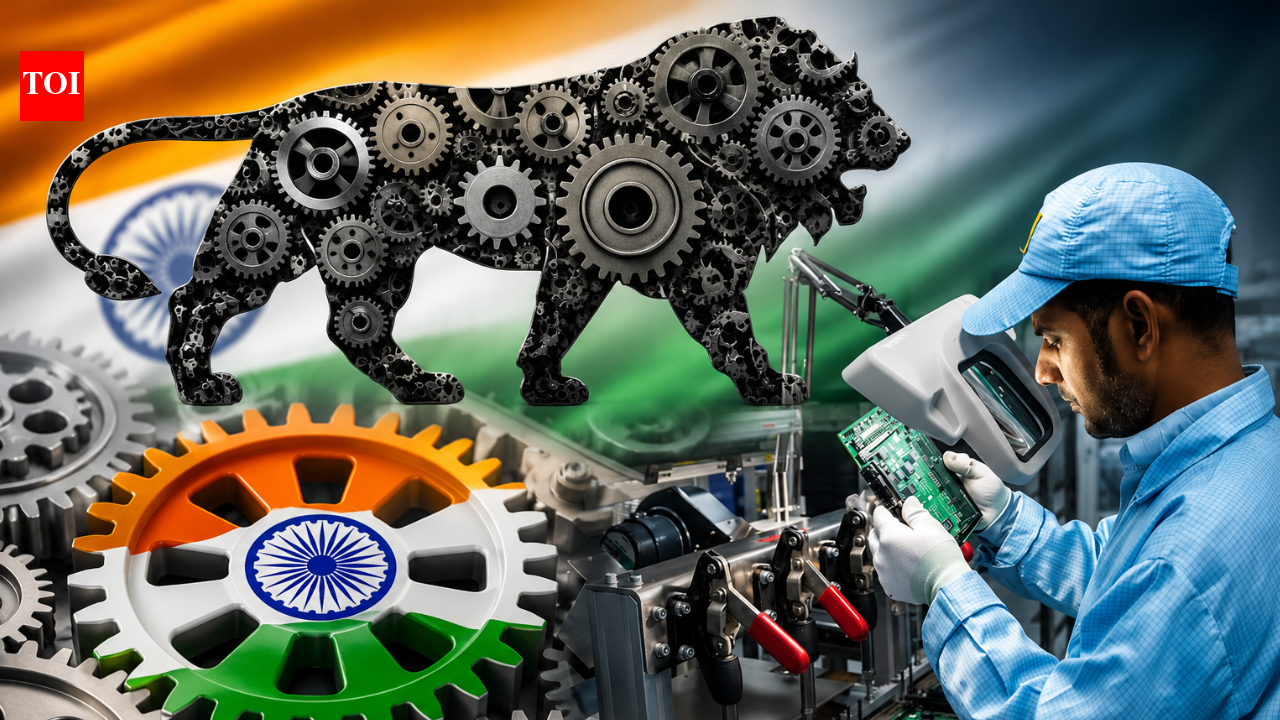
India is preparing a fresh manufacturing push centred on identifying nearly 100 products that are either not produced domestically or are inadequately manufactured despite existing capability, signalling a sharper industrial policy focus amid shifting global supply chains, geopolitical tensions and the country’s ambition to emerge as a global manufacturing hub.The initiative, outlined by Department for Promotion of Industry and Internal Trade (DPIIT) Secretary Amardeep Singh Bhatia, comes alongside a broader policy push that includes faster foreign investment approvals, easing of FDI norms, expanded free trade agreements (FTAs) and a proposed “Made in India” branding framework aimed at improving the global positioning of Indian products.The government’s approach reflects a broader shift in industrial strategy — from focusing primarily on attracting investment to identifying gaps in domestic manufacturing ecosystems and attempting to address them sector-by-sector.
What is the government planning?
Speaking at a Confederation of Indian Industry (CII) event, DPIIT Secretary Amardeep Singh Bhatia said the government is working with industry stakeholders to identify around 100 products that are either not manufactured in India or are being produced in insufficient quantities, as quoted by PTI.The list includes components from the automobile sector such as axles and motorcycle parts, though officials indicated the exercise spans multiple industrial segments.“Another area where we have been working is to bring in another 100 products which are either not getting manufactured in India as of now or which are not sufficiently being manufactured at the moment,” Bhatia said.The objective is to expand domestic manufacturing capacity for both local consumption and exports.“We are working closely with the industry (on that),” DPIIT secretary said, adding that many products are not manufactured in India despite existing capability, with gaps often linked to technology or scale.The initiative also reflects a structural challenge within Indian manufacturing. Several industrial products and intermediate components continue to be imported despite India possessing engineering capabilities, labour scale and market demand to support local production.
Why this push matters now
Over the past few years, India has increasingly attempted to position itself as an alternative manufacturing destination amid global supply-chain diversification efforts and geopolitical tensions.Disruptions caused first by the Covid-19 pandemic and later by the Russia-Ukraine conflict and the ongoing Middle East crisis exposed vulnerabilities in concentrated global production networks.India now increasingly views manufacturing resilience as both an economic and strategic priority.The government’s Production Linked Incentive (PLI) schemes, semiconductor initiatives, electronics manufacturing incentives and logistics reforms have already aimed to deepen domestic industrial capacity. The latest 100-product identification exercise appears intended to extend that effort into component ecosystems and industrial sub-sectors.The focus on auto components is particularly significant because India already has a strong automobile manufacturing base but still depends on imports for several high-value precision components and specialised industrial inputs.
Where FDI comes from and the manufacturing gap in which sectors
India’s total foreign direct investment (FDI), including equity inflows, reinvested earnings and other capital, has crossed $1.14 trillion since April 2000, according to government data. Fresh equity inflows alone stood at $776.75 billion during April 2000-December 2025.During April-February 2025-26, total FDI inflows crossed $88 billion. The services sector remains the largest FDI recipient, followed by software and hardware, telecom, trading, automobiles, construction and pharmaceuticals. Yet India continues to import large quantities of industrial machinery, electronic components, precision engineering goods and intermediate manufacturing products.
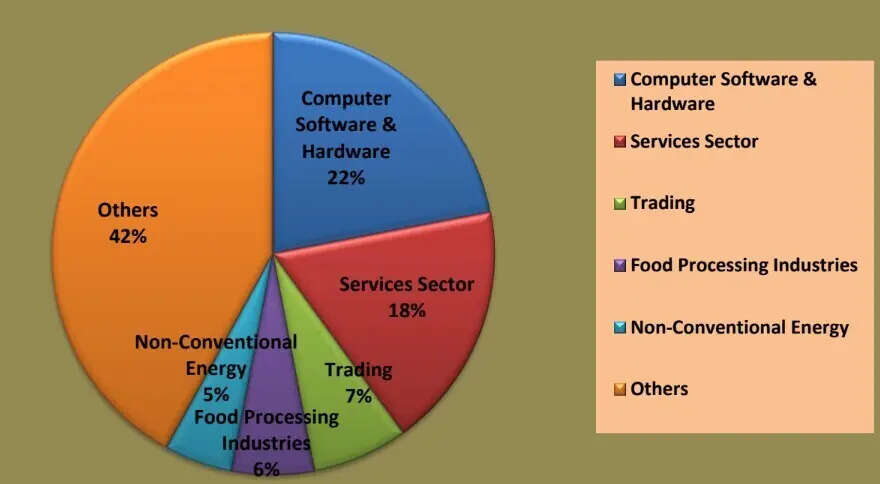
Sector-wise distribution of FDI equity inflows (April to December 2025)
Singapore accounted for 37 per cent of FDI equity inflows during April-December 2025, followed by the US at 16 per cent and Mauritius at 10 per cent.
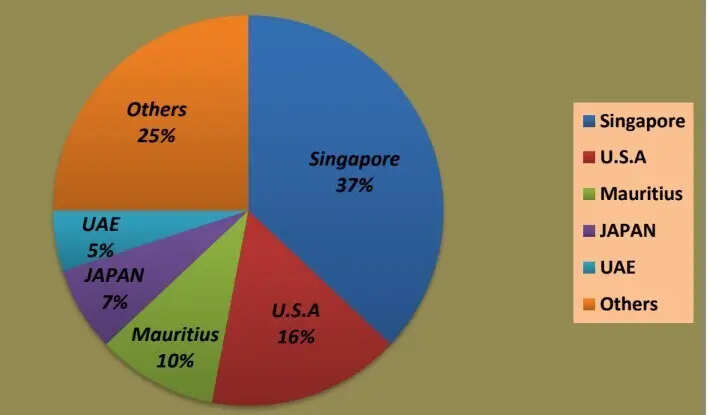
FDI equity inflow in top 5 countries, (April to December 2025)
At the same time, technology-intensive manufacturing economies such as Germany, South Korea and Taiwan continue to account for a relatively modest share of overall inflows.Policy analysts have argued that attracting a greater share of manufacturing-linked FDI from technology-exporting economies will be important if India wants to move beyond assembly-led growth towards deeper value addition and industrial capability building.Government officials increasingly acknowledge that without stronger domestic supplier ecosystems, India’s manufacturing expansion risks remaining dependent on imported intermediate goods and high-value components.
Faster approvals and easing FDI norms
Alongside the manufacturing push, the government has updated its Standard Operating Procedure (SOP) for processing FDI proposals.Under the revised framework, all FDI applications requiring government approval are to be cleared within 12 weeks, compared with the earlier 10-week timeline prescribed in 2017.The process is also being made fully paperless through the National Single Window System portal.
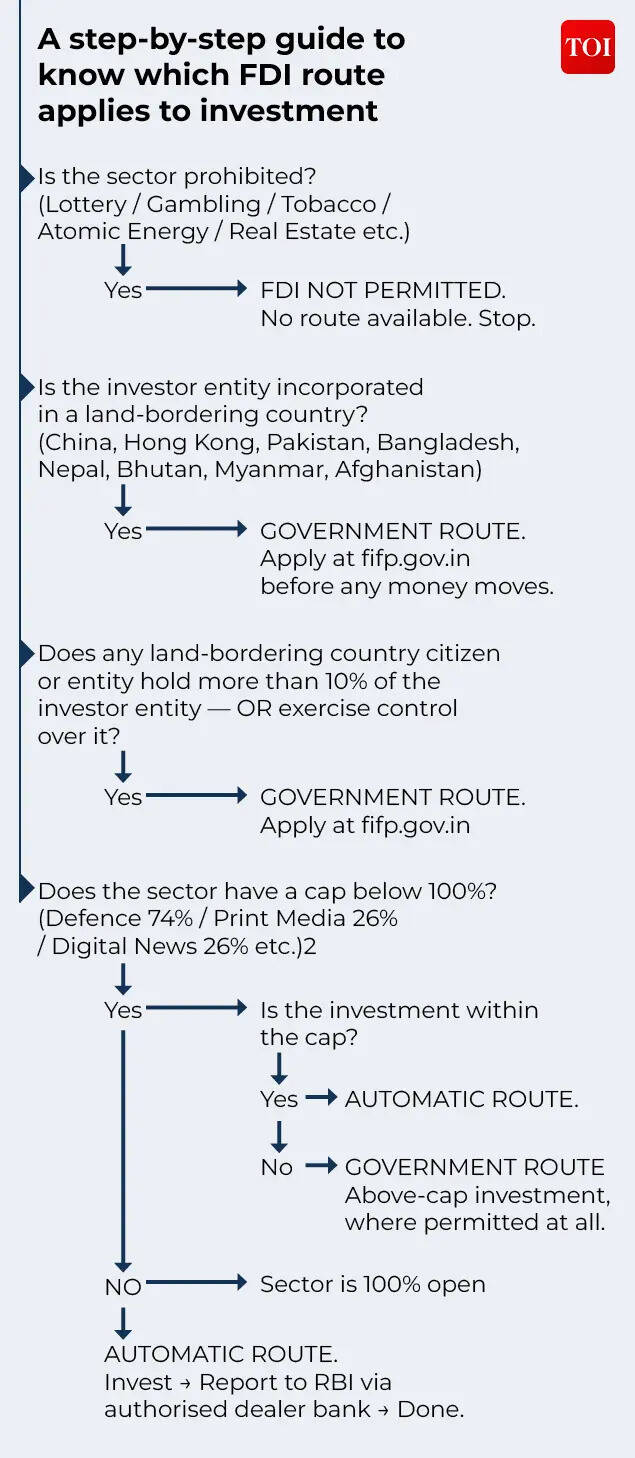
The updated SOP further introduces stricter timelines for consultations with ministries and regulators such as the RBI, Ministry of Home Affairs and Ministry of External Affairs. In cases where comments are not received within the stipulated period, it will be presumed that the concerned department has no objections.The changes come after the government eased certain provisions linked to Press Note 3 (PN3) — the 2020 framework introduced after the Galwan clashes to scrutinise investments from countries sharing land borders with India.Under the latest relaxation, foreign companies with up to 10 per cent Chinese or Hong Kong shareholding can now invest through the automatic route in sectors already open to automatic FDI approval, provided the stake remains non-controlling.The government has also announced expedited 60-day clearances for investments in sectors such as capital goods, electronic components, advanced battery components, polysilicon wafers and rare earth processing.
Why FTAs are central to the strategy
The manufacturing push is also closely linked to India’s expanding trade agreement network.Commerce Minister Piyush Goyal recently said India aims to take exports to $1 trillion in the current financial year after achieving record goods and services exports of $863.11 billion in 2025-26.India has concluded multiple FTAs in recent years, including agreements with the UAE, UK, Australia, New Zealand, Mauritius and the European Free Trade Association (EFTA) bloc, while negotiations continue with several other economies.
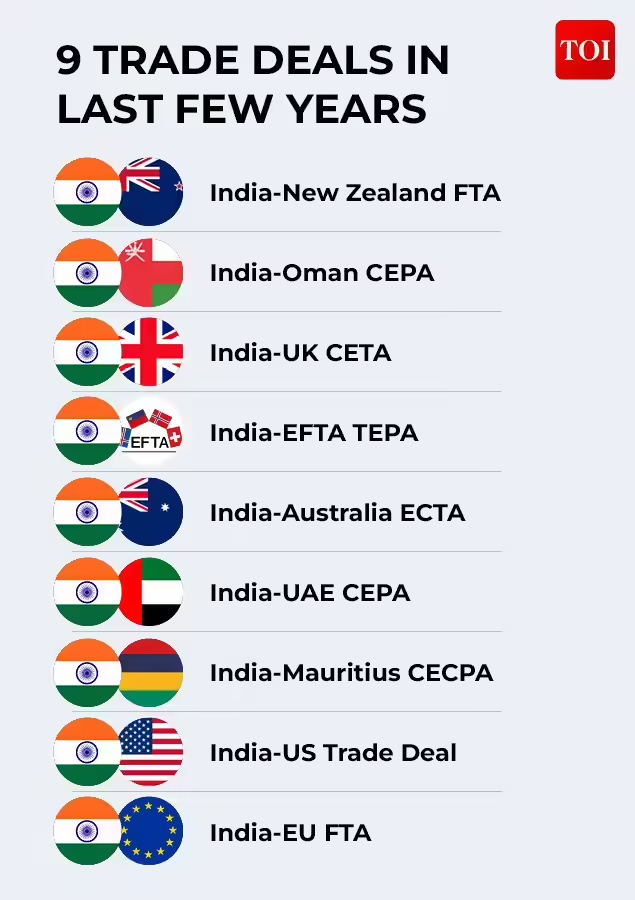
For policymakers, the strategy increasingly involves integrating investment, manufacturing and trade policy — attracting investment, strengthening supplier ecosystems, integrating Indian firms into global value chains and using FTAs to secure overseas market access.
The proposed ‘Made in India’ branding push
Alongside industrial reforms, DPIIT is also preparing to launch a “Made in India Brand Scheme”.The programme, currently being piloted in the steel sector, aims to create a quality-assurance and value-addition certification system supported by a common logo.Officials say the objective is not merely to label products as Indian-made but also to build greater global confidence around manufacturing quality and standards.The approach mirrors strategies previously adopted by countries such as Germany, Japan and South Korea, where manufacturing identity became closely associated with quality and reliability over time.
The bigger challenge
Despite the renewed policy push, India’s manufacturing sector continues to face structural constraints that have persisted for decades. Manufacturing’s contribution to GDP has largely remained stuck in the 15-17 per cent range over the past two decades, well below the ambitions outlined in the National Manufacturing Policy, 2011, which had targeted raising the sector’s share to 25 per cent of GDP and generating 100 million jobs.While India has improved its ease of doing business, expanded infrastructure spending and rolled out production-linked incentives, industry continues to flag deeper bottlenecks ranging from high logistics costs and fragmented supply chains to regulatory complexity, uneven infrastructure quality, skill shortages, research & development, innovation and technology adoption like AI.DPIIT secretary Bhatia said that artificial intelligence is advancing fast and is affecting manufacturing through higher productivity and innovation.”We should be ready for that…world over, this change has been felt,” Bhatia said.A parliamentary standing committee on commerce, in a March 2026 report, urged stronger efforts to reduce import dependence in sectors such as electronics, crude petroleum and gold, while emphasising domestic value addition.“Department should undertake a strategic diversification of India’s merchandise export basket with a clear shift towards high-value sectors and emphasise the need to revitalising labour-intensive industries through targeted policy support and effective utilization of existing schemes.” ” The parliamentary standing committee on commerce noted.
The Committee further recommends strengthening of domestic manufacturing capabilities to reduce dependence on imports particularly in crude petroleum, gold and electronic components and also focus on capacity building measures and strengthening supply chain. Value addition initiative should be at priority to enhance competitiveness and improve overall trade balance with focus on real ‘Make in India’ and ‘Aatmanirbhar Bharat’
The parliamentary standing committee on commerce, March 2026 report.
The Economic Survey 2025-26 similarly argued that manufacturing capability should increasingly be treated as a strategic national asset, with the state playing a larger coordinating and capability-building role.The challenge for India, therefore, is no longer limited to attracting factories. It increasingly involves building complete industrial ecosystems capable of competing with established global manufacturing networks.As India advances towards its long-term economic ambitions, policymakers appear to be recognising that the next phase of manufacturing growth may depend less on headline investment announcements and more on whether the country can successfully localise the products, components and technologies it still imports at scale.
Business
FinMin calls Panda Bond a ‘transformational step’ for Pakistan economy | The Express Tribune
Says successful issuance reflects growing confidence of Chinese institutions, global investors
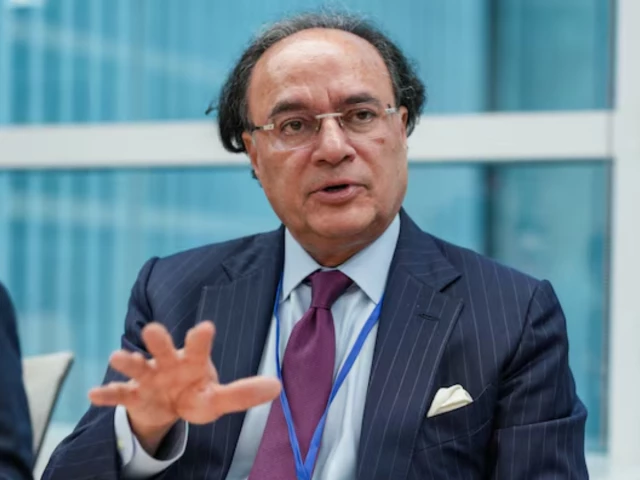
Pakistan Finance Minister Muhammad Aurangzeb speaks during an interview at the International Monetary Fund and World Bank Group’s annual spring meetings in Washington DC, US, April 13, 2026, PHOTO: REUTERS
Finance Minister Muhammad Aurangzeb on Saturday said Pakistan’s inaugural Panda Bond issuance marked a “transformational step” in the country’s financial landscape and opens a new chapter in Pakistan-China economic cooperation by giving Pakistan access to the world’s second-largest and second-deepest capital market for the first time.
Speaking in an interview with China Global Television Network (CGTN) following the official Panda Bond Issuance Ceremony in Beijing, Aurangzeb said the successful issuance reflected the growing confidence of Chinese institutions and global investors in Pakistan’s macroeconomic stability, reform agenda and economic direction.
Read: FinMin highlights Pakistan, China ties at bond launch
The finance minister said the Panda Bond issuance was significant not only for Pakistan’s financing strategy but also for the internationalisation of the Renminbi (RMB).
“Nearly one-quarter of bilateral trade between Pakistan and China is already being settled in RMB and Chinese Yuan (CNY),” he said, highlighting increasing financial integration and expanding economic partnership between the two countries.
Discussing broader Pakistan-China economic cooperation, Aurangzeb said the first phase of the China-Pakistan Economic Corridor (CPEC) under the Belt and Road Initiative (BRI) had largely focused on infrastructure development, while the second phase was increasingly centred on business-to-business collaboration, industrial cooperation and monetisation of infrastructure assets.
“The strategic priorities of Pakistan and China remain closely aligned in promoting connectivity, trade, investment, and sustainable economic growth,” he said.
Aurangzeb also said Pakistan had successfully managed the “first-order implications” of the prevailing regional conflict, including procurement and logistics challenges, while maintaining macroeconomic stability.
“Key economic indicators continue moving in the right direction,” he said.
The minister reaffirmed the government’s commitment to structural reforms, fiscal discipline and investment-friendly policies aimed at promoting long-term and inclusive economic growth.
Read More: ADB, AIIB back Pakistan’s first Panda bond for green infrastructure project
“Ongoing reforms in taxation, energy, state-owned enterprises, and digital governance are strengthening investor confidence and improving Pakistan’s economic outlook,” he said.
Aurangzeb participated in the interview after attending the official ceremony marking Pakistan’s first-ever Panda Bond issuance in Beijing on Friday.
The overall Panda Bond Programme is valued at $1 billion, while the inaugural issuance amounts to the equivalent of $250 million. The issuance is being supported by the Asian Development Bank and the Asian Infrastructure Investment Bank.
Representatives from China’s Ministry of Finance and the People’s Bank of China also attended the ceremony.
Aurangzeb expressed appreciation for the support extended by the Chinese government, regulators, financial institutions and multilateral development partners in facilitating Pakistan’s entry into the Chinese onshore bond market.
He said he was confident the successful issuance would pave the way for future sovereign issuances and deeper financial connectivity between Pakistan and China.
KARACHI:
Gold and silver prices declined in both international and domestic markets on Saturday. In the international bullion market, the price of gold fell by $6 per ounce to $4,539.
According to the All-Pakistan Gems and Jewellers Sarafa Association, in the local market, the price of gold per tola decreased by Rs600 to Rs476,262. The price of 10 grams of gold also declined by Rs515 to Rs408,317.
Meanwhile, silver prices also recorded a sharp decrease in the domestic market. The price of silver per tola dropped by Rs159 to Rs8,073, while the rate for 10 grams of silver fell by Rs136 to Rs6,921.
Read: Gold per tola falls by Rs15,500 as global prices decline
A day earlier, gold prices recorded a sharp decline in global and domestic markets. In the international bullion market, the price of gold per ounce fell by $155, bringing it to $4,545 per ounce.
According to the All-Pakistan Gems and Jewellers Sarafa Association, in the local market, the price of gold per tola decreased by Rs15,500 to Rs476,862. Similarly, the price of 10 grams of gold fell by Rs13,289 to Rs408,832.
Meanwhile, silver prices also declined in the country. The price of per tola silver dropped by Rs972 to Rs8,232, while the price of 10 grams of silver fell by Rs833 to Rs7,057.
On Thursday, gold prices in Pakistan edged higher, tracking slight gains in the international market, where bullion remained broadly steady as investors weighed developments in the US-Israel conflict with Iran and signals from high-level diplomatic engagements between the United States and China.
Read more: SBP forex reserves increase $17m
In the local market, the price of gold per tola rose by Rs1,000 to settle at Rs492,362, according to rates issued by the All-Pakistan Gems and Jewellers Sarafa Association. Similarly, the price of 10-gram gold increased by Rs858 to Rs422,121.
On Wednesday, gold had closed at Rs491,362 per tola after declining by Rs1,100, reflecting continued volatility in the domestic bullion market in line with shifting global cues. In the international market, spot gold was little changed at $4,689.99 per ounce at 1043 am EDT (1443 GMT), while the US gold futures for June delivery slipped 0.2% to $4,695.80.
The US dollar index edged up 0.2%, making dollar-denominated bullion relatively more expensive for holders of other currencies and slightly capping the upside momentum.


Eurovision reaches its grand final in Austria clouded by politics and protests

Boeing shares drop 4% after China agrees to buy 200 jets: here’s why

Start time, favourites, how to watch live

-

 Tech1 week ago
A new frontier: Identity stack evolves for agentic systems | Computer Weekly
-

 Tech1 week ago
‘Orbs,’ ‘Saucers,’ and ‘Flashes’ on the Moon: Pentagon Drops New UFO Files
-

 Tech1 week ago
What Microsoft Executives Really Thought About OpenAI in 2018
-
 Fashion1 week ago
New orders in German manufacturing up 5% MoM in Mar 2026: Destatis
-

 Tech1 week ago
Nick Bostrom Has a Plan for Humanity’s ‘Big Retirement’
-

 Sports1 week ago
Shaheen Afridi achieves landmark feat during opening Test against Bangladesh
-

 Fashion1 week ago
US’ Carter’s taps retail veteran Sharon Price John as new CEO
-

 Tech1 week ago
I Tried the Best Captioning Smart Glasses, and Only One Leads the Pack