

Politics
Trump launches gold card programme for expedited visas with a $1m price tag

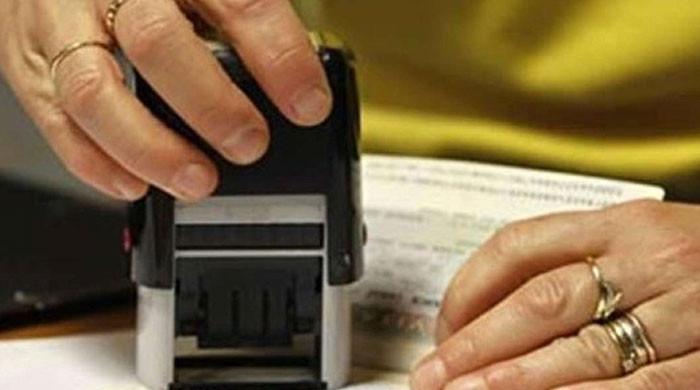

WASHINGTON: President Donald Trump’s administration officially launched his “Trump Gold Card” visa programme on Wednesday to provide a pathway, with a steep price, for non-US citizens to get expedited permission to live in the United States.
The website Trumpcard.gov, complete with an “apply now” button, allows interested applicants to pay a $15,000 fee to the Department of Homeland Security for speedy processing.
After going through a background check or vetting process, applicants must then make a “contribution” – the website also calls it a “gift” – of $1 million to get the visa, similar to a “Green Card,” which allows them to live and work in the United States.
“Basically it’s a Green Card, but much better. Much more powerful, a much stronger path,” Trump told reporters at the White House. “A path is a big deal. Have to be great people.”
Commerce Secretary Howard Lutnick said some 10,000 people have already signed up for the gold card during a pre-registration period and he expected many more to do so. “I would expect over time that we’d sell, you know, thousands of these cards and raise, you know, billions, billions of dollars,” Lutnick told Reuters in a brief interview.
Lutnick said the gold card programme would bring people into the United States who would benefit the economy. He compared that to “average” Green Card holders, whom he said earned less money than average Americans and were more likely to be on or have family members on public assistance. He did not provide evidence for that assertion.
Trump’s administration has pursued a broad crackdown on immigration, deporting hundreds of thousands of people who were in the country illegally and also taking measures to discourage legal immigration.
The gold card programme is the Trump version of a counterbalance to that, designed to make money for the US Treasury in the same way the president, a former New York businessman and reality television host, has said his tariff programme has successfully done.
Lutnick noted that there was also a corporate version of the gold card that allowed companies to get expedited visas for employees they wanted to work in the United States, for a $2 million contribution per employee.
- Trump blames Iran leadership for stalled negotiations.
- US president says he prefers peaceful option over strike.
- Iran says it wants talks but rejects ‘imposed’ peace terms.
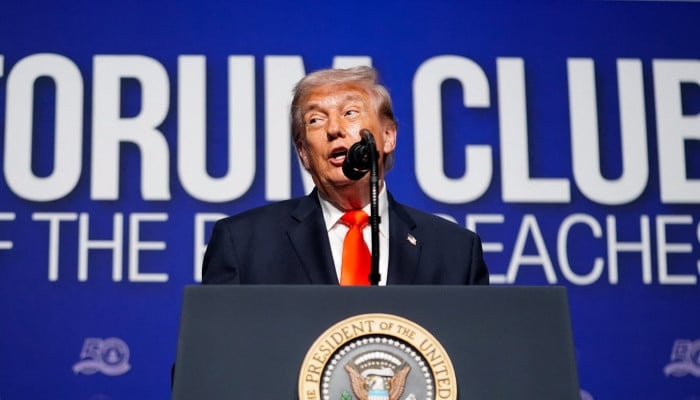
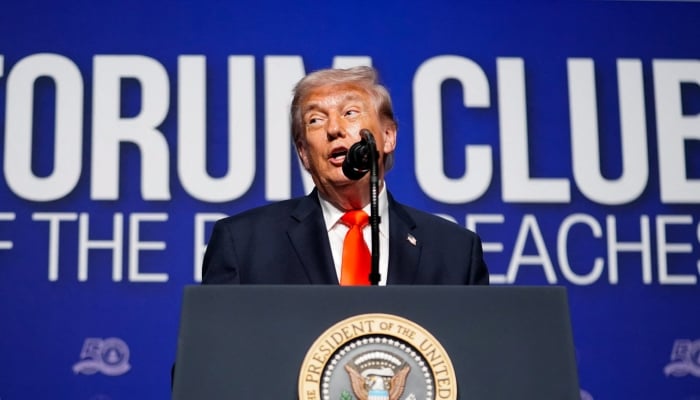
US President Donald Trump said he was “not satisfied” with a new Iranian negotiating proposal, as peace talks remain frozen despite a weeks-long ceasefire.
Iran delivered the draft to mediator Pakistan on Thursday evening, the IRNA news agency reported, without detailing its contents.
“At this moment I’m not satisfied with what they’re offering,” Trump told reporters, blaming stalled talks on “tremendous discord” within Iran’s leadership.
“Do we want to go and just blast the hell out of them and finish them forever — or do we want to try and make a deal?” he added, saying he would “prefer not” to take the first option “on a human basis.”
The war, launched by the United States and Israel with surprise strikes on February 28, has been on hold since April 8, with only one failed round of direct talks since.
Trump, under pressure at home to seek congressional authorisation for the war, wrote to lawmakers Friday declaring hostilities “terminated” — despite no change in the US military posture.
The Pentagon later said the US would withdraw about 5,000 troops from Germany over the next year after German Chancellor Friedrich Merz said this week that Iran was “humiliating” Washington at the negotiating table.
Iran has maintained its stranglehold on the Strait of Hormuz, choking off major flows of oil, gas, and fertiliser, while the United States has imposed a counter-blockade on Iranian ports.
Despite the stalemate, the ceasefire has held — but fighting has continued elsewhere in the region.
On the Lebanese front, Israel has continued deadly strikes despite a ceasefire with Iran-backed group Hezbollah in mid-April that sought to halt more than six weeks of fighting.
Lebanon’s health ministry said 13 people were killed in strikes in the south, including in the town of Habboush, where the Israeli army had issued an evacuation order shortly before the attack.
Meanwhile, Washington announced late Friday it had approved major arms sales to its allies in the Middle East, including a $4 billion Patriot missile deal with Qatar and nearly $1 billion in precision weapons systems to Israel.
‘Stuck in purgatory’
Iran’s judiciary chief Gholamhossein Mohseni Ejei said Friday that his country had “never shied away from negotiations,” but added it would not accept “imposition” of peace terms while seeking to avoid renewed conflict.
The White House has declined to provide details on the proposal, but news site Axios reported US envoy Steve Witkoff had submitted amendments that put Tehran’s nuclear program back on the negotiating table.
The changes reportedly include demands that Iran not move enriched uranium from bombed sites or resume activity there during talks.
News of the Iranian proposal briefly pushed oil prices down nearly 5%, though they remain about 50% above prewar levels amid the ongoing closure of the Strait of Hormuz.
Tehran resident Amir told Paris-based AFP journalists the stalemate “feels like we are stuck in purgatory” and expressed little hope for the proposal.
“This is all to waste time,” he said, predicting the United States and Israel “will attack again.”
‘Terminated’
Washington, meanwhile, is grappling with a legal dispute over whether Trump has passed a deadline to seek congressional approval for the war.
Officials argue that a ceasefire pauses the 60-day clock, at which point congressional authorisation would be required — a claim disputed by opposition Democrats.
Trump faces growing domestic pressure, with inflation rising, no clear victory in sight, and midterm elections approaching.
“There has been no exchange of fire between United States Forces and Iran since April 7, 2026,” Trump said in letters to congressional leaders, adding that the hostilities “have terminated.”
Fourteen members of Iran’s Revolutionary Guards were reportedly killed defusing what the Fars news agency called unexploded cluster bombs and aerial mines in northwestern Zanjan province.
Iran has accused the United States and Israel of using cluster munitions, which scatter bomblets that can remain dangerous for years.
‘Nothing left’
On top of military strikes, the war’s economic toll on Iran is deepening.
Washington imposed new sanctions on three Iranian currency firms and warned others against paying a “toll” for safe passage through Hormuz.
The US military says its blockade has stopped $6 billion in Iranian oil exports, while inflation has surged past 50 percent.
“For many people, paying rent and even buying food has become difficult, and some have nothing left at all,” 28-year-old Mahyar told an AFP reporter based outside Iran.
Supreme leader Ayatollah Mojtaba Khamenei said Friday in a statement that “the owners of damaged businesses should avoid, as much as possible, layoffs and separation of their workforce” while threatening Iran’s enemies with “economic and cultural jihad.”
Trump has repeatedly criticised allies for failing to join efforts to reopen Hormuz.
France and Britain have led efforts to assemble a coalition to reopen the strait once peace is secured. But a US official said Washington is launching its own coalition to restart shipping.
French Foreign Minister Jean-Noel Barrot said the US mission would “complement” European initiatives rather than replace them.
Meanwhile, the USS Gerald R Ford aircraft carrier has left the Middle East after taking part in operations against Iran, a US official said Friday, though two other carriers remain.
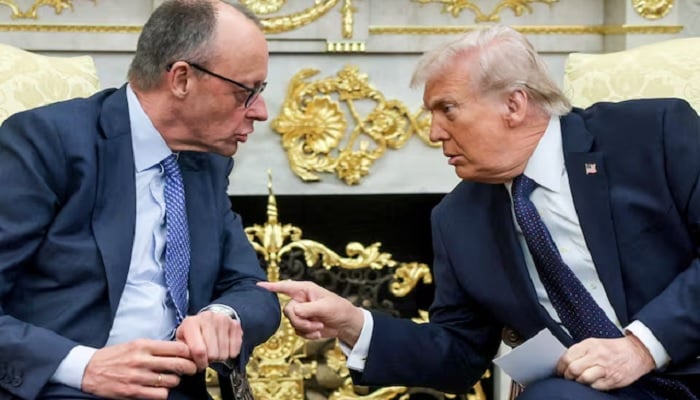
- Trump and Germany’s Merz in diplomatic spat over Iran war.
- US president reacting to Merz remarks, Pentagon official says.
- Some 35,000 US military personnel are stationed in Germany.
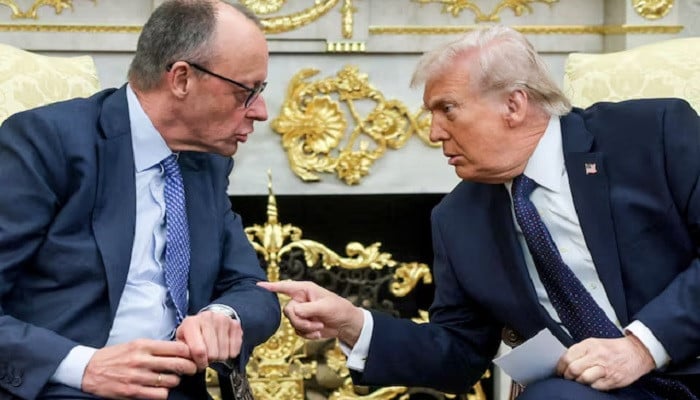
The United States is withdrawing 5,000 troops from NATO ally Germany, the Pentagon announced on Friday, as a rift over the Iran war widens between President Donald Trump and Europe.
Trump had threatened a drawdown in forces earlier this week after sparring with German Chancellor Friedrich Merz, who said on Monday the Iranians were humiliating the US in talks to end the two-month-old war and that he did not see what exit strategy Washington was pursuing.
A senior Pentagon official, speaking on condition of anonymity, said recent German rhetoric had been “inappropriate and unhelpful.”
“The president is rightly reacting to these counterproductive remarks,” the official said.
The Pentagon said the withdrawal was expected to be completed over the next six to 12 months. Germany is home to some 35,000 active-duty US military personnel, more than anywhere else in Europe.
The official said the drawdown would bring US troop levels in Europe back to roughly pre-2022 levels, before Russia’s invasion of Ukraine triggered a buildup by then-President Joe Biden.
The official also cast the decision in terms of the Trump administration’s push for Europe to become the main security provider on the continent. But it is nonetheless another potent reminder of Trump’s willingness to respond to perceived disloyalty by allies.
Reuters exclusively reported last week an internal Pentagon email that outlined options to punish Nato allies that Washington believes failed to support US operations in the war with Iran, including suspending Spain from Nato and reviewing the US position on Britain’s claim to the Falkland Islands.
Clashes with Europeans
It is unclear if more withdrawals from Europe will follow. On Thursday, Trump said “probably” when asked whether he would consider pulling US troops out of Italy and Spain.
Last month, he threatened to impose a full US trade embargo on Spain, where the Socialist leadership said it would not allow its bases or airspace to be used to attack Iran. The United States has two important military bases in Spain: Naval Station Rota and Morón Air Base.
Trump has also clashed with Italian Prime Minister Giorgia Meloni over the Iran war and Trump’s criticism of Pope Leo. The US president said in April that Meloni, once a strong Trump supporter, lacked courage and had let Washington down.
Trump has chastised NATO allies, too, for not sending their navies to help open the Strait of Hormuz. The waterway, a chokepoint for global oil shipments, has remained virtually shut during the Iran conflict, causing market turmoil and unprecedented disruption in energy supplies.
“The president has been very clear about his frustrations about our allies’ rhetoric and failure to provide support for US operations that benefit them,” the senior Pentagon official said.
German ties fray
Merz has said Germans and Europeans were not consulted before the US and Israel started attacking Iran on February 28, and that he had conveyed his scepticism about the conflict directly to Trump afterwards.
Trump has long wanted to reduce the US troop presence in Germany. He pushed for a reduction of about 12,000 troops at the end of his first term, but that cut was never enacted. Trump lost the election, and Biden reversed the plan.
Trump’s Wednesday announcement that he was reviewing US troop levels in Germany surprised German military officials who spoke to Reuters, citing what they called constructive meetings at the Pentagon earlier in the day.
They argue that Germany has done more than other allies to support the US war in Iran, including allowing the use of bases and giving permission for overflights. Germany is also home to a huge military hospital in Landstuhl.
Earlier this week, the German government approved key targets for its 2027 budget, including a strong commitment to increase defence spending.
Imran Bayoumi, a former Pentagon official, said that while the cuts in Germany were not as drastic as they might have been, they nonetheless risked further dividing the United States and Europe.
“European leaders will likely push more to bolster their defence spending, viewing Washington as increasingly unreliable and untrustworthy,” said Bayoumi, now with the Atlantic Council.
As part of Trump’s withdrawal decision, a brigade combat team now in Germany will be pulled out of the country, and a long-range fires battalion that the Biden administration had planned to begin deploying to Germany later this year will no longer deploy, the official said.
- Deadline arrives as Iran sends new peace proposal.
- War has roiled markets, raised prices, angering consumers.
- Unpopular conflict continues six months before US elections.
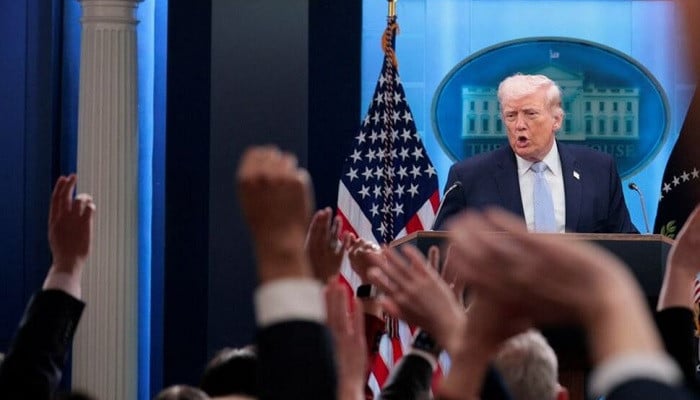
US President Donald Trump’s administration argued that a ceasefire with Tehran had “terminated” hostilities as a legal deadline arrived on Friday for coming to Congress about the two-month Iran war.
Under the 1973 War Powers Resolution, the president can wage military action for only 60 days before ending it, asking Congress for authorisation or seeking a 30-day extension due to “unavoidable military necessity regarding the safety of United States Armed Forces” while withdrawing forces.
The war began on February 28, when Israel and the US began airstrikes on Iran. On Friday, the Iranian state news agency IRNA said Tehran had sent its latest proposal for negotiations with the US to Pakistani mediators.
Trump formally notified Congress of the conflict 48 hours after the first airstrikes, starting the 60-day clock that ends May 1.
As that date approached, congressional aides and analysts said they expected the Republican president to sidestep the deadline. A senior Trump administration official said on Thursday the administration’s view was that the war powers law deadline did not apply.
“For War Powers Resolution purposes, the hostilities that began on Saturday, February 28, have terminated,” said the official, requesting anonymity while describing the administration’s thinking.
No way out: Democrat Senator
Congressional Democrats, who have tried repeatedly to pass war powers legislation that would force Trump to end the war or come to Congress for authorisation, dismissed that characterisation, saying there was nothing in the 1973 law allowing for a ceasefire.
They also said the continuing deployment of US ships blockading Iranian oil exports was evidence of continuing hostility, not a ceasefire.
“After sixty days of conflict, President Trump still does not have a strategy or way out for this poorly planned war,” Senator Jeanne Shaheen of New Hampshire, the top Democrat on the Senate Foreign Relations Committee, said in a statement calling the deadline “a clear legal threshold” for Trump to act.
Party loyalty as elections loom
Trump’s fellow Republicans, who hold slim majorities in the Senate and House of Representatives and rarely break from Trump, have voted almost unanimously to block every resolution seeking to end the conflict.
The Iran war has killed thousands, caused billions of dollars in damage and roiled world markets, disrupting energy shipments and boosting a wide range of consumer prices.
Polls show the war is unpopular among Americans, six months before the November elections that will determine who controls Congress next year.
Trump’s approval rating sank to the lowest level of his current term this week, as Americans blamed the war for higher prices.
The US Constitution says only Congress, not the president, can declare war, but that restriction does not apply to short-term operations or to counter an immediate threat.
On Thursday, Trump received a briefing on plans for fresh military strikes to compel Iran to negotiate an end to the conflict.
If fighting resumes, Trump can tell lawmakers he has started a new 60-day clock. Presidents from both parties have repeatedly done so when waging intermittent hostilities since Congress passed the War Powers Act in response to the Vietnam War.
That conflict, widely unpopular with Americans, was also not authorised by Congress.


ICE cotton witnesses sharp rise on weaker dollar, strong exports

Palace drops Princess Charlotte unseen photo for 11th birthday

Sydney Sweeney hard launches her romance with beau Scooter Braun

-
 Business1 week ago
France Ends Airport Transit Visa Requirement for Indian Travellers | Business – The Times of India
-

 Tech1 week ago
They Wanted to Join Raya. They’ve Been on the Waiting List for Years
-

 Tech5 days ago
A Brain Implant for Depression Is About to Be Tested in Humans
-

 Tech1 week ago
Why Do I Like Dyson’s PencilVac So Much?
-

 Entertainment1 week ago
Anne Hathaway makes shocking confession about Taylor Swift’s music
-

 Tech5 days ago
Almost 90% of women leave tech industry within 10 years | Computer Weekly
-

 Fashion1 week ago
North India cotton yarn steady despite continued push by spinners
-

 Sports5 days ago
Toulouse fall to first home defeat for a year | The Express Tribune