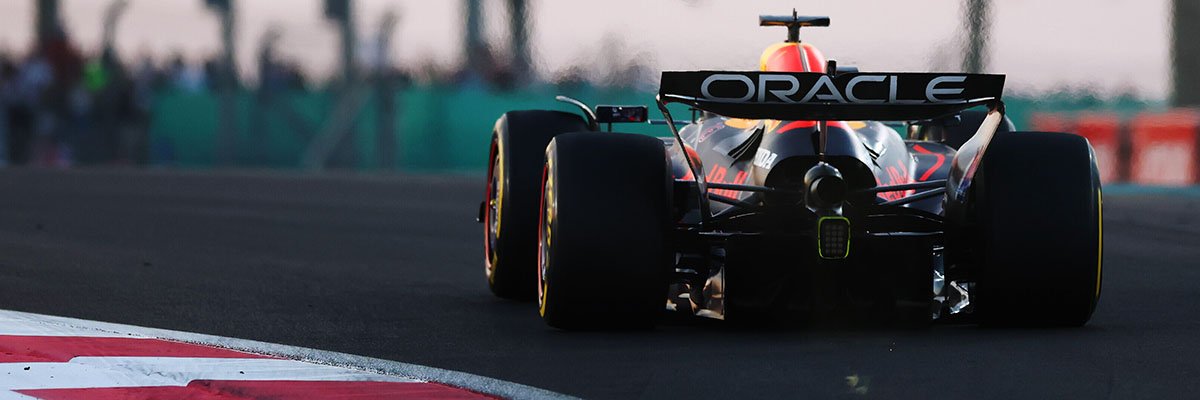
As countless case studies published on Computer Weekly have shown through the years, every minute and every penny that a Formula 1 team is spending on research, development and testing is precious and only grudgingly wasted.
In a cost-capped sport that is as much an engineering competition as it is one of driver skill, victory – whether in the drivers’ or constructors’ championships – often comes down to the finest of margins.
This season, the world of F1 is also dealing with a once-in-a-decade overhaul of the sporting regulations that have essentially forced a ground-up redesign of its cars. For some, like Mercedes-AMG Petronas, this has paid off big time. But for Oracle Red Bull Racing, the past few weeks have been rough ones.
The team’s drivers, former world champ Max Verstappen and his new partner Isack Hadjar, may not have much to show for it as they head to Miami for the fourth round of the season, but at HQ in Milton Keynes, its engineers are working flat out and morale is good.
When it comes to testing parts and components in its wind tunnel, a recent engagement with identity and access management specialist 1Password is paying dividends, with the team’s technicians now able to work much more efficiently.
In a world like cyber security, success can be hard to quantify. Sometimes it can even be dangerous to say too much, lest you speak candidly and give a watching threat actor something to go on. But in this instance, Oracle Red Bull Racing can definitively state that after adopting 1Password, it has slashed its wind tunnel recovery time from an hour to two minutes – that’s a cut of 97% – during the test and development process.
But why is that the statistic we’re running with? And how does identity and access management (IAM) technology apply to wind tunnels? It seems an unlikely link on the surface, but Matt Cadieux, team CIO, explains why it matters.
“The guys who are developing and improving the tunnel and its software push boundaries. The models are bigger, the complexity is bigger, and sometimes when you’re running that load for the first time, the infrastructure is not capable enough,” says Cadieux. “Probably once a every few months we have an outage, and it’s largely due to pushing boundaries with our tools and methods.”
A challenging customer
Ian Brunton heads up software development at Oracle Red Bull Racing’s Aerodynamics team. He takes up the story.
“The people I work with are essentially responsible for writing the software used across the teams of engineers that design the car. We plug into commercial CAD [Computer Aided Design] packages and tie them up to the CFD [Computational Fluid Dynamics] estate so that we can iterate quickly in those early stages,” he says.
“We also support the wind tunnel … We’re currently building a new wind tunnel here which is a significantly challenging project, but I think will pay a dividend in helping us build, ultimately, the fastest car on the planet.”
Brunton describes his team as challenging customers when it comes to IT. He sets high standards and expectations, and by his own admission is harsh in their application. “We’re aiming to provide high uptime,” he says, “and the last thing we need is any system, regardless of what it is, not operating as it is expected to.”
The need for uptime becomes even more important because the wind tunnel environment is a highly regulated one in terms of the number of hours the team is allowed to do testing, as well as the number of experiments that it can run.
“We basically have an eight-week period in which we have to audit what we’ve done in that period, and we have a budget to use in that period,” says Brunton. “To some extent, the pressure is on – it’s almost worse in the wind tunnel than it is at the track … Generally, at the track, you have components that are well manufactured, you know they’re going to fit together and you have a limited number of options in which to configure and build the car.
“But when you’re at the tunnel, it’s effectively an experiment in what we think is going to add performance. There might be parts that maybe don’t completely fit; engineers are discovering, as they’re going, how to design that part.
“[With] the pressure that those guys are under to build the car in that timeframe, they can’t afford any downtime – [we don’t want to waste] time, or waste runs in terms of that experiment. Losing that budget is criminal in the sense that it has a direct impact on the performance of the car on the track.”
It’s about trying to optimise the amount of time that the people working at the tunnel can focus on just working at the tunnel Ian Brunton Oracle Red Bull Racing
From Brunton’s perspective, a failure in an inherently complex system – with close to 20 services running across multiple clusters using multiple Kafka topics and different databases, that has caused the tunnel to shut down before completion, wasting time and slows development – is a big problem.
“If something happens and the system needs to be reset, it relies on someone at the tunnel realising there’s a problem and getting on the phone to someone like me – and that can be in the middle of the night because the tunnel runs 24 hours a day – I’ve got to take the call, get onto my machine, figure out the problem and start bringing that system back online,” says Brunton.
In essence, what 1Password enables him to do is to automate returning the systems to a known steady state, so that someone who is technical in terms of car design and engineering but may not know what Kubernetes is or what a SQL database does can effectively hit a big red button and get things moving again.
With 1Password, service restoration is fully automated with Ansible and RunDeck, and a complete redeploy can be triggered in around two minutes with the playbook authenticating via a dedicated, rotatable token to retrieve the secrets it needs at runtime.
“It’s about trying to optimise the amount of time that the people working at the tunnel can focus on just working at the tunnel,” says Brunton.
ID control plane
But the engagement doesn’t begin and end with wind tunnel uptime; the efficiencies go much deeper.
In moving its secrets into 1Password, Oracle Red Bull Racing has created a single, trusted control plane for credentials spanning Kubernetes clusters, environments, namespaces, factory, wind tunnel and simulation workloads.
Developers now access shared vaults with clear ownership and repeatable patterns to make sure that they can retain predictable access during redeployments or workflow changes, while human and automation access are segregated into dedicated vaults with limited user access for critical Kubernetes workloads – this includes Aero clusters and Kubernetes deployments.
The team is now using 1Password’s Kubernetes Operator, authenticated via 1Password Connect Server, to pull values from 1Password items and create Kubernetes secrets for workloads. If items change, the operator can update the secret and trigger a roll-out to allow workloads to pick up the new values.
In Brunton’s Aerodynamics unit alone, for example, five vaults hold almost 100 entries for cluster credentials, SQL passwords, client secrets, access tokens and Windows Virtual Machine (VM) logins. Meanwhile, his colleagues in Vehicle Performance and Powertrains maintain more than 150 entries. Now that new deployments default to 1Password, the two teams can reduce the time they spend coordinating access, limit potentially dangerous ad hoc sharing, and understand what credentials are current when developers are in the process of modifying (or restoring) workloads.
For simulation workflows, Oracle Red Bull Racing is using the 1Password command line interface (CLI) to retrieve SQL connection strings and Microsoft Entra ID credentials to access their needed services. Now that these secrets are centralised, they can replace plaintext credentials with secret references from a shared and governed source instead of having to embed secrets in code or configuration files – another risk.
Since their applications now rely on secret references, this means users can safely change out their credentials and support both safer automation and earlier application programming interface (API) adoption. The results are improved fidelity and capability much earlier in the simulation process, when changes are much easier to manage – and more affordable – than doing it outside of simulation.
Going trackside
“We’re always trying to raise the bar with our cyber posture and credential management,” says Cadieux. “Everyone here is part of a team and tries to do the right thing – and if you tap someone on the shoulder, it usually corrects the behaviour quite quickly – so having early visibility and being able to nip problems in the bud with a simple tap is helpful.”
Having standardised secrets and access across engineering, Oracle Red Bull Racing is now looking to take 1Password trackside. On a given race weekend, it runs multiple advanced Monte Carlo (the mathematical model, not the Grand Prix) simulations to evaluate different scenarios and support on-the-fly strategy decisions.
It is now exploring the application of these same patterns to its Oracle Cloud Infrastructure (OCI)-based trackside systems – including credential and certificate management – through which it can achieve consistent automation at race-day pressure.
So, what’s not to like? Well, early compatibility problems slowed the initial uptake of Snapdragon X, and the CPU’s integrated graphics performance turned out to be pretty terrible. And to date, powerful onboard AI features just haven’t proven important, as most AI workloads are still being done in the cloud. With the second-generation X2, Qualcomm set out to deliver on the original promise of faster performance.
But what exactly does “faster” mean? As with most claims in the PC computing space, it’s all about the benchmarks. On the Zenbook A16, the tests I ran indeed showcased exemplary performance from the X2 Elite Extreme, in some of the most widely used benchmarking tools, namely Geekbench 6 and Cinebench 2024. (I don’t have enough competitive Cinebench 2026 results to make wide comparisons yet on that benchmark.)
The performance boost on Geekbench is particularly striking, with the A16 scoring 50 to 100 percent faster than competing systems from AMD and Intel. It’s even faster than the Apple MacBook M4 Pro, the last Mac for which I have comparable benchmark scores. However, that Mac did beat the Asus on the Cinebench benchmark, but not by much, and the Asus now stands solidly in second place in my testing archive.
Graphics performance is much better than in previous generations of Snapdragon X chips, with frame rates quadrupling on average, depending on the test. That’s a dramatic and much-needed improvement for the CPU, and while no one will accuse the A16 of being a gaming rig, it does at least make for a workable experience with less taxing games and graphics-heavy workloads.
Beige Belies Performance
Photograph: Chris Null
I’m happy enough with how the Snapdragon X2 Elite Extreme performs to sign off on its performance claims, but there’s a lot more to the Zenbook A16 than its CPU.
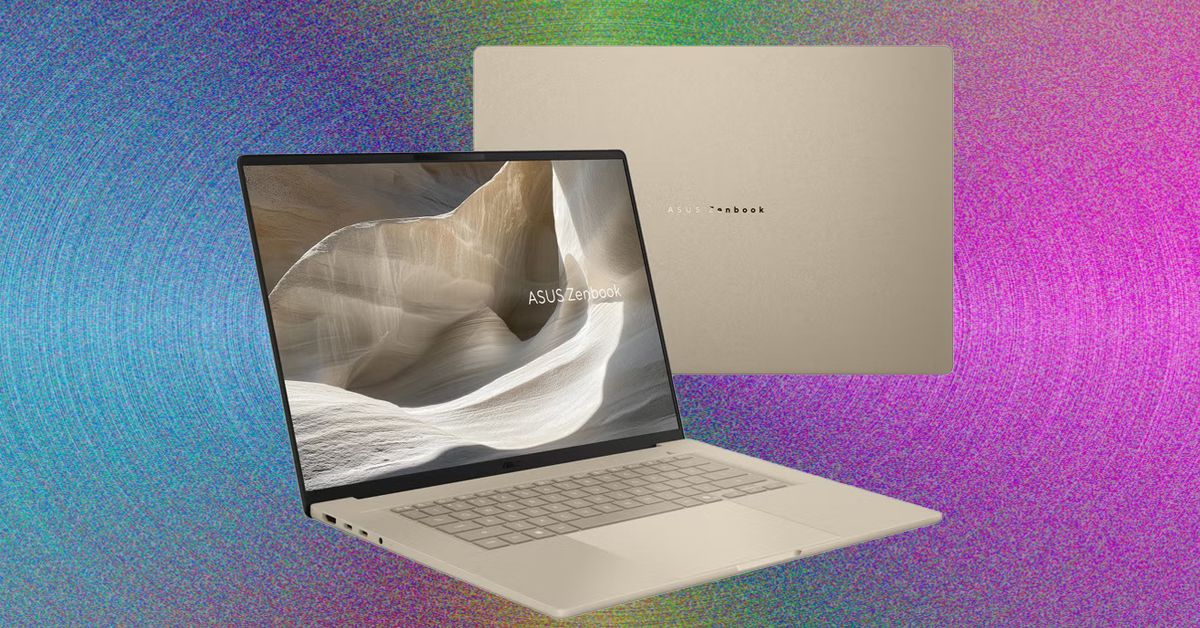
Under the hood, the Snapdragon X2 Elite Extreme X2E94100 CPU is complemented by 48 GB of RAM and a 1-TB SSD. The 16-inch touchscreen offers a solid resolution of 2880 x 1800 pixels, and it’s incredibly bright. A weight of 2.9 pounds is impressive (if not unheard of) for the 16-inch category, and at 0.65 inches (at its thickest), it has a svelte, quite portable carrying experience. Asus’s Ceraluminum technology (now with added magnesium) is used in the machine’s lid, base, and keyboard frame. That helps keep it thin and light, though when adjusted or touched, the screen shimmied more than I expected.
LongchampLarge Le Pliage Tote for $180: This bestseller is the equivalent of a classic white tee: timeless, versatile, and built to be passed down for generations. Inspired by origami, Le Pliage folds down small when you need to pack it, but it’s also roomy enough to double as your personal item. I can fit all the essentials in here—laptop, Kindle, my airport toiletries, snacks, and then some. With its minimalist design and zipper closure for valuables, it’s also the ideal work bag for business trips. My one gripe with this travel tote bag is the lack of internal compartments (besides two impractical flat pockets), but if you’re someone who has little pouches and tech organizers for your gear, you might not miss it.
Cincha the Vegan Leather Go-Tote for $130: This vegan leather bag is deceptively huge. The base is 7.5 inches deep, so while it doesn’t look that big in pictures, it holds an astonishing amount of stuff. I’ve packed enough clothes in it for a full weekend trip. I usually have concerns about vegan leather cracking and breaking with use, but Cincha’s soft pebbled fabric does not look or feel obviously plastic. This is the tote bag I took on a multi-week trip to the Philippines, and the leather stood up to rain and being kicked around airport lounges, ferries, and train depots. However, it is more than 2 pounds heavier than a Longchamp Le Pliage, so this is strictly for when you can sling it on top of your carry-on. —Adrienne So
Mission Workshop Drift Laptop Tote for $345: The Drift is my favorite travel tote. It’s burly but with styling that’s refined and classy, and the rolled handles and removable strap make it comfortable to carry by hand or over the shoulder. But the best thing about it is the smartly organized storage pockets inside and out. It feels designed especially for people like me who always carry an army of gadgets. The Drift is kind of a beast, though. It’s too huge to slide under the seat in front of you on an airplane, but it fits into the overhead baggage compartment. —Michael Calore
Vera Bradley Original Duffel for $105: If there were ever a product I would refer to as “ol’ reliable,” it’s undoubtedly the Vera Bradley bag. The bright pattern, durable materials, and washable cotton structure have held up remarkably well for over a decade’s worth of travels. Even when I’ve completely overpacked and lugged it with me on planes, trains, and car travels, I don’t detect strain on the handle stitching. There are no internal pockets, but you do have four exterior ones located around the sides of the bag for easy access (or last-minute additions to your planned outfits). —Julia Forbes
BaubleBar Large Custom Icon Tote for $98: What sets BaubleBar apart is its playful personalization. Your chosen icons (up to six, depending on the size) are embroidered directly onto the canvas tote. The process is super user-friendly, with predesignated spots to help you visualize your picks. Choose from zodiac signs, cutesy foods, initials, and more. Just note that it’s a final sale, so be sure of your design before ordering. The large size fits everything you need for a beach day trip, and the medium and small options are better for light shopping or city exploring. It closes with just a snap button, which isn’t the most secure for crowded areas.
Aer Simple Tote for $139: Have you ever hefted a nylon or leather tote in your hand and realized that slinging it over your shoulder would give you immediate scoliosis? Then you want Aer’s ultra-lightweight, simple sailcloth tote, which weighs less than a pound. Its 15 liters felt surprisingly capacious. I fit two jackets inside on a walk with my kids, and the 3-inch-wide bag tucked neatly under my arm. The two exterior drop pockets fit my Nalgene and Kinto mug, and my phone fits neatly in the exterior zipper pocket. This is a great upgrade if you are getting tired of carrying everything in your canvas tote from Umami Mart and want a bag that’s not going to get soaked in something questionable if you put it down in the wrong place on the subway. It is a little more expensive, though. —Adrienne So
Cuyana System Tote 16-Inch for $378: The Cuyana System Tote is a modular gear-hauler that shape-shifts with your itinerary. Designed to outlast the churn of fast fashion, this travel tote starts minimal, but the genius lies in its add-ons. A laptop sleeve or insert organizer creates a structure on the go, with dedicated slots for your computer, water bottle, and other work essentials. A System Flap Bag insert doubles as a clutch or in-bag organizer, and a detachable, adjustable crossbody strap (also available in a wide model) converts the tote, perfect for hands-free airport sprints if you’re unintentionally trying out airport theory. Instead of stitched-on straps prone to failure, the System Tote’s handles are cut directly from its leather body, minimizing points of wear. The main compartment snaps shut rather than zips, something to know if you’re the spill-averse type.
Avoid This Tote
Calpak Diaper Tote Bag with Laptop Sleeve for $195: This bag was really puffy, but felt bulky, and space was lost to give the puffiness to the bag’s layers. It was somehow too big for everyday use, but not big enough when I needed a lot of stuff brought along for a day trip or long outings. It also didn’t really feel that diaper bag-centric; the only thing “diaper” about it was the baby wipe compartment on the outside, but I would have preferred an exterior pocket to store actual diapers along with it. You could stuff a couple of diapers in the flat front pocket, but it’s not as ideal as other designs I’ve tried. The insulated bottle pockets are handy if you travel with bottles, but feel useless after your baby graduates from bottles (which they graduate much earlier than diapers!) It’s not a bad bag, but I’d recommend a different design for parents and travelers alike. —Nena Farrell
To determine the best travel tote, I put each bag through real-world travel scenarios to see how it performs. That means packing it with laptops, chargers, clothes, and toiletries, testing comfort when worn over the shoulder or carried by hand. I’ll overstuff the totes to check durability, organization, and accessibility. I’ll evaluate how it fits under airplane seats, protects tech gear, and resists wear and weather. If it’s supposedly water-resistant, I’ll take it out in the rain to determine whether it survives without soaking its contents.
I scrutinize every pocket, compartment, and zipper for usability. When it comes to design, I pay attention to the details: interior fabric choices that make contents easy to see, convenient pocket placement, and hardware choices like zippers and zipper pulls. I also like to take note of the key design elements, such as the handle length and overall structure.
I prioritize quality and sustainability, and I include eco-friendly brands for environmentally conscious consumers. I also made sure to include an array of fabrics for stylistic variability. Lastly, I consider how each bag stacked up against its price point, ensuring that the quality justified the cost.
A garlic-herb salmon with risotto was probably the best among the family meals I tried. The chopped asparagus was less than visually appealing when drizzled in garlic butter, but still tasty and a bit crisp. The salmon was tender and flaky. And the sweet pea risotto had no choice but to be delicious. There was so much cheese, butter, and lemon it was pretty much a concert of fats and acid.
That chicken parm was likewise a mountain of cheese and salt. It reminded me, pleasantly, of countless family meals I had as a child in the 1980s: cheese-topped chicken, garlic bread, shells stuffed with ricotta and topped with even more cheese. The big difference is that there is simply no way my mother would have cooked this meal without a vegetable.
Toval app via Matthew Korfhage
And nutrition is where Toval runs aground a little. The nutritional notes on that chicken parm meal betray 2,300 milligrams of sodium per serving, pretty much the entire daily allowance for an adult human. This is also on par with comparable servings of Stouffer’s meat lasagna. The Tovala meal also carried about 10 times the cholesterol as Stouffer’s.
Many other meals followed a similar pattern, loading up on fats and salt in order to make meals tasty. The net effect is that it’s a lot more like rich restaurant food than what most people prepare at home. Whether this is a good or a bad quality is up to you.
Only one meal of the seven I tried failed utterly: I flagged a teriyaki chicken dinner to my editor as a possible cultural crime against Japan. The meal was sweet soy drenching pale and steaming chicken, with an implausible side of thick egg rolls and some loose, unseasoned broccoli. It felt like the “Japanese” food you’d get at a mall food court in the ’90s. But again, this was a rare major misstep.
A more pernicious issue, in meals designed for the whole family, is the near-universal high-fat, cholesterol, and sodium content. Many with the income and inclination to eat hearty, low-effort meals like the ones from Tovala are either parents with children, or people in the retirement bracket. Each has their own reason to desire a little more nutrition, and less fat and salt.
By the end of a couple of weeks of testing recipes, I’ll admit I felt a little relieved. I was grateful to feel my arteries slowly reopen. Tovala’s culinary model makes a lot of sense to me, as a smart way of splitting the difference between prepared meals and fresh food. And the company has proven it can cook well. It might be nice if they’d also cook a diet that felt more sustainable.









 Tech6 days ago

 Tech6 days ago
 Tech5 days ago

 Entertainment6 days ago
 Sports5 days ago