Business
GSK boss says US is the best country to invest in
Simon Jack,Business editorand
Archie Mitchell
While successive governments have stressed that the UK is a superpower in life sciences, in the eyes of one of the country’s biggest pharmaceutical companies, the US is the best place to invest.
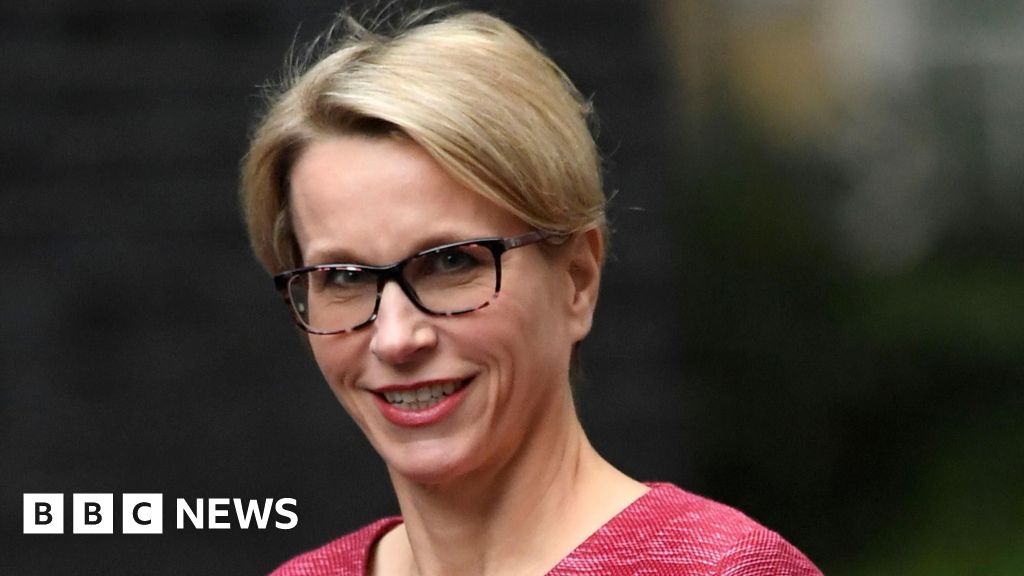
The boss of the vaccines and medicines giant GSK, Dame Emma Walmsley, has told the BBC the company will invest $30bn (£23bn) in the US by the end of this decade.
The cash injection across the pond comes as other major drug makers have pulled UK projects worth billions after years of frustration over NHS drug budgets and pressure from President Donald Trump to set up production in the states.
And despite a new deal which will see the NHS pay more as part of a zero tariffs deal on shipping UK pharmaceuticals to America, Dame Emma is not going to “shy away” from GSK’s US investment plans.
The US is where the pharma giant makes more than half its turnover and is “still the leading market in the world in terms of the launches of new drugs and vaccines,” she says.
Alongside China, it is “the best market in the world to do business development”.
GSK’s latest stateside investment drive followed US pharmaceutical company Merck – which is called MSD in Europe – scrapping a planned £1bn expansion of its UK operations.
UK drug maker AstraZeneca has also announced it is pausing a planned £200m investment in a Cambridge research facility while ploughing tens of billions of dollars into the US.
Other drug companies have also said there is little appetite to invest in the UK, which successive governments have insisted is a life sciences superpower.
Dame Emma, who will leave GSK in January after eight years at the helm, stressed that GSK remains committed to the UK, noting that the interview was being carried out in its new global headquarters in London.
“No one should be deluded that the UK is going to be a massive scale market, a domestic market, but it can be an exporter of innovation in life sciences,” she says.
“For GSK, it’s 2% of our sales are here. More than 50% are in the US. But we’re very heavily invested, and remain committed to being invested in terms of manufacturing and research and development.”
Despite challenges facing Britain’s pharmaceuticals industry, Dame Emma welcomes the deal to scrap tariffs on UK drug shipments to the US as “a step in the right direction” for Britain.
The deal means the UK will pay more for medicines through the NHS – in return for a guarantee that US import taxes on pharmaceuticals made in the UK will remain at zero for three years.
Dame Emma says it is a welcome reversal of a long term decline in the portion of the NHS budget spent on medicines compared to other countries’ health systems.
The move, she suggests, will encourage the kind of innovation that supports ground-breaking new medicines, such as GSK’s new asthma drug which can be taken twice a year and could slash hospital admissions by 70% for serious asthma sufferers.
GSK hopes the new treatment will be approved for use by the NHS within weeks.
Asked about the health of the UK, Dame Emma says there are “social demographic root causes” for its decline.
She says health outcomes vary widely depending on where you live: “You can probably get a 10 or 15-year difference in lifespan prospects depending on which postcode you’re in.”
Dame Emma pointed to British diets and a lack of education around nutrition as part of the problem.
“I think there’s no question that the food system is fundamentally something we need to look at harder.”
Dame Emma also opened up about the differences she has experienced between the NHS and the private healthcare system in the US, having given birth in London, Paris and twice in New York.
“Both the experience of childbirth and all the follow up that happens afterwards are very, very different,” she says. “Anything from the advice you’re given.. .the frequency with which you are expected to be visited, how long you are in hospital and what kind of follow-up advice.”
Dame Emma added what matters is the balance of price, access and outcomes, and that the NHS still has “work to do” on getting the balance right.
Dame Emma, who also sits on the board of Microsoft, says the world is on the cusp of major advances in health science thanks in part to advances in AI which promise to accelerate innovation
“90% of the projects in our industry don’t work, they take a decade and cost billions. Getting to a place where you just double that to you know, instead of 10% working, 20% working will completely change the trajectory of innovation.”
In the end, she adds, few things are more important than health. “It is one of the few things that every single person on the planet ends up caring about.”
Business
Petrol, Diesel Fresh Prices Announced: Check Rates In Your City On December 13
Last Updated:
Petrol, Diesel Price On December 13: Check City-Wise Rates Across India Including In Delhi, Mumbai and Chennai.
Petrol, Diesel Prices On December 13.
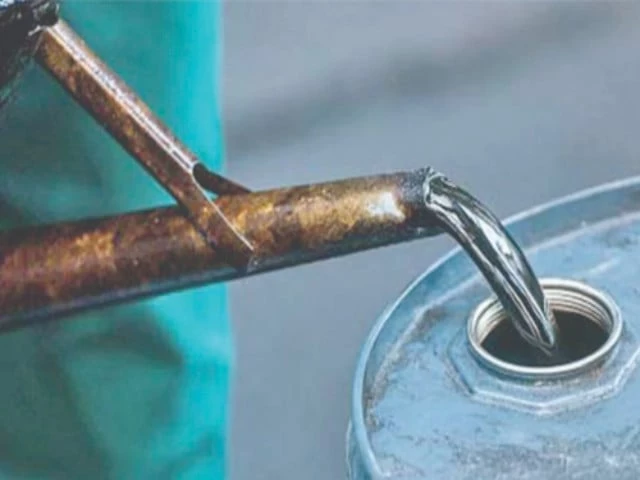
Petrol and Diesel Prices on December 13, 2025: OMCs update petrol and diesel prices daily at 6 am, aligning them with fluctuations in global crude oil prices and currency exchange rates. This daily revision promotes transparency and ensures consumers have access to the most up-to-date and accurate fuel prices.
Petrol Diesel Price Today In India
Check city-wise petrol and diesel prices on December 13:
| City | Petrol (₹/L) | Diesel (₹/L) |
|---|---|---|
| New Delhi | 94.72 | 87.62 |
| Mumbai | 104.21 | 92.15 |
| Kolkata | 103.94 | 90.76 |
| Chennai | 100.75 | 92.34 |
| Ahmedabad | 94.49 | 90.17 |
| Bengaluru | 102.92 | 89.02 |
| Hyderabad | 107.46 | 95.70 |
| Jaipur | 104.72 | 90.21 |
| Lucknow | 94.69 | 87.80 |
| Pune | 104.04 | 90.57 |
| Chandigarh | 94.30 | 82.45 |
| Indore | 106.48 | 91.88 |
| Patna | 105.58 | 93.80 |
| Surat | 95.00 | 89.00 |
| Nashik | 95.50 | 89.50 |
Key Factors Behind Petrol and Diesel Rates
Petrol and diesel prices in India have remained unchanged since May 2022, following tax reductions by the central and several state governments.
Oil Marketing Companies (OMCs) update fuel prices daily at 6 am, adjusting for fluctuations in global crude oil markets. While these rates are technically market-linked, they are also influenced by regulatory measures such as excise duties, base pricing frameworks, and informal price caps.
Key Factors Influencing Fuel Prices in India
-
Crude Oil Prices: Global crude oil prices are a primary driver of fuel prices, as crude is the main input in petrol and diesel production.
-
Exchange Rate: Since India relies heavily on crude oil imports, the value of the Indian rupee against the US dollar significantly affects fuel costs. A weaker rupee typically translates to higher prices.
-
Taxes: Central and state-level taxes constitute a major portion of retail fuel prices. Tax rates vary across states, leading to regional price differences.
-
Refining Costs: The cost of processing crude oil into usable fuel impacts retail prices. These costs can fluctuate depending on crude quality and refinery efficiency.
-
Demand-Supply Dynamics: Market demand also influences fuel pricing. Higher demand can push prices up as supply adjusts to consumption trends.
How to Check Petrol and Diesel Prices via SMS
You can easily check the latest petrol and diesel prices in your city through SMS. For Indian Oil customers, text the city code followed by “RSP” to 9224992249. BPCL customers can send “RSP” to 9223112222, and HPCL customers can text “HP Price” to 9222201122 to receive the current fuel prices.
December 13, 2025, 07:46 IST
Read More
Business
Why your chocolate is getting smaller, more expensive and less chocolatey
Archie MitchellBusiness reporter
Getty ImagesCrack open a tub of Celebrations or pull a Terry’s Chocolate Orange from a stocking these days, and have you noticed, there seems to be a little less to go around?
Not only that, you might find – no, it is not your imagination – that some popular treats taste a little different, a little less “chocolatey”.
To top it all the prices have risen too.
So will your festive favourites still hit the sweet spot this Christmas?
Chocs away
Many of the companies making popular bars and chocolates admit they have been looking for ways to save money. A tried-and-tested one is to replace some of the more expensive ingredients, like cocoa, with cheaper ones, a strategy that’s been dubbed “skimpflation”.
Some recipes have changed so much that bars like Toffee Crisp, Penguin and others can no longer be called chocolate.
There is even a debate among some chocolate fans over whether the year-round classic Cadbury’s Dairy Milk has changed its recipe.
Becca Amy Stock, a TikTok influencer who goes by the name Becca Eats Everything, set herself the task of reviewing every milk chocolate bar at Britain’s major supermarkets. The 29-year-old spent six hours and £100 on her rigorous research.
She concluded Dairy Milk was “more oily” since Cadbury’s takeover by the American company Mondelez in 2010. And the brand, famous for its “glass and a half” of milk, was less milky, she said.
“You do notice the difference,” Becca says, “Cadbury’s does not taste how it used to taste.”
Becca Amy StockMilk chocolate in the UK must have at least 20% cocoa solids and 20% milk solids to earn the name chocolate. Without that it has to be labelled “chocolate flavour” not chocolate. Cadbury’s Dairy Milk still meets that standard.
Mondelez says it has not been fiddling with the recipe, at least not recently.
“Our Cadbury Dairy Milk products continue to be made with the same delicious recipes that consumers know and love,” its spokesperson said. “The cocoa content has not changed for many years.”
Crunching the numbers
But it is still one which you’ll be paying more for.
Plenty of food manufacturers have been reducing the size of their products, without dropping prices, known as shrinkflation.
And some are also putting prices up, too.
Chocolate prices in supermarkets have risen by more than 18% on average from this time last year, according to market researchers Kantar.

We got these figures by analysing price data collected by market researchers Assosia across four of the UK’s biggest grocers, Tesco, Sainsbury’s, Asda and Morrisons, between December 2021 and December 2025.
They show:
- Cadbury’s Dairy Milk weighs 10% less, while the cost jumped from £1.86 to £2.75 – a 48% price increase
- Mars Celebrations has shrunk by 23%. The price has risen from £4.25 to £6.11 – a 44% jump
- Terry’s Chocolate Orange is 8% smaller, while the cost has risen from £1.49 to £2.25 – a 51% price rise
Getty ImagesMondelez’s spokesperson said putting up prices was a “last resort” but ingredients are costing more – in particular cocoa and dairy.
“This means our products continue to be much more expensive to make.
“As a result of this difficult environment, we have had to make the decision to slightly reduce the weight and increase the list price of some of our Cadbury products,” they said.
Mars Wrigley told the BBC higher cocoa prices and manufacturing costs meant they had to “adjust some… product sizes… without compromising on quality or taste.”
Sticky costs
So what has caused the price of cocoa and milk to shoot up?
Extreme weather caused by climate change has hit cocoa farmers’ crop yields in Africa, says Ghadafi Razak, an academic at Warwick Business School.
Extreme rainfall in India, Brazil and Thailand in 2023, followed by droughts the following year have meant poor harvests in those countries too, pushing up prices.
The extra costs take time to feed through to customers, says Christian Jaccarini, a senior food analyst at the Energy & Climate Intelligence Unit think tank, which means those extra costs are hitting shop shelves now.
“It takes about 18 months for the impact of a shock to be felt by consumers, so we still have quite a long time with higher prices for chocolate,” he said.
Milk prices have shot up too. Diarmaid Mac Colgáin, founder of the Concept Dairy consultancy blames the rising cost of feed, fuel and fertilisers as well as farmers facing higher wage bills and production costs.
He says some brands have substituted palm oil and shea oil for some of the milk to make up the fat content of their chocolate.
Bad taste
Shoppers are becoming increasingly aware of these cost-saving tactics, but that does not mean they are happy about it.
It is the element of unwanted surprise that can leave a bad taste, according to Reena Sewraz, retail editor at consumer champion, Which?
It can feel “especially sneaky” when companies shrink products or downgrade their ingredients she said.
“With Christmas not far away, shoppers will be looking to get the best value from what they buy,” she said. “Supermarkets and manufacturers should be more upfront about making these changes. Customers may not love the news – but [then] at least they don’t feel misled.”
AlamyBut there is not much you can do about it. For Becca, who insists she’s not “chocolated out” despite her chocolate-tasting marathon, quality not quantity is the way to go.
She suggests fellow chocoholics treat themselves to smaller premium bars such as Tony’s Chocolonely. They’ll cost more but she finds them more satisfying.
She also plans to treat herself to a selection-box on Christmas day.
Otherwise she generally advises against “food snobbery”.
“I think supermarket own-brands are actually a much better way to get better quality chocolate.”
Business
Rivian’s AI, autonomy impress Wall Street, but EV and capital concerns remain
Rivian CEO RJ Scaringe at the company’s first “Autonomy and AI Day” on Dec. 11, 2025, in Palo Alto, California.
Lora Kolodny | CNBC
Rivian Automotive impressed Wall Street on Thursday with its plans for artificial intelligence, automation and an internally developed silicon chip, but significant challenges involving demand and capital remain for the electric vehicle maker.
Despite Wall Street analysts expressing some optimism following Rivian’s first “Autonomy and AI Day,” the company’s stock fell 6.1% to close Thursday at $16.43 per share. But shares recovered Friday to close at $18.42, up 12.1%
While the event didn’t cause many analysts to change ratings or price targets, Needham raised its price target on Rivian by 64% to $23 per share. The firm did so on the tech announcements and potential for future licensing deals, as well as higher-than-consensus expectations on deliveries next year of the company’s new midsize R2 SUV.
“RIVN signaled a shift from an [automaker] adopting autonomy to one leveraging AI to build end-to-end autonomy,” Needham analyst Chris Pierce said in a Friday investor note.
The company’s stock had ramped up heading into the AI Day, but many analysts believed the announcements from the event were already “priced in.” Shares also fell as OpenAI made its own AI announcement Thursday, revealing its most advanced model yet.
“We attended Rivian’s Autonomy & AI Day yesterday in Palo Alto and came away mostly impressed with the strategic direction outlined by management,” Deutsche Bank analyst Edison Yu said Friday in an investor note. “However, the stock’s weakness seems warranted given the run-up since earnings and lack of a major AI partnership/deal announcement.”
Rivian’s announcements included a proprietary chip, RAP1, designed for “physical AI,” namely autonomous driving; an evolved software architecture, or “brains” of the vehicle; a new AI assistant; and a road map for getting to “personal L4,” or fully self-driving personally owned vehicles.
The latter begins later this month with an update involving its hands-free driving system, followed by plans to continue to expand capabilities until vehicles reach full autonomy in the years ahead. Rivian did not disclose a time frame for the full autonomy or potential robotaxi fleet autonomous vehicles.
Leading up to the event, Rivian shares were up more than 30% to $17.50. Despite those gains, shares remain well off the levels of the company’s IPO of $78 per share in 2021.
Barclays analyst Dan Levy and others said while Rivian’s technology announcements, including the surprise proprietary chip, were impressive, the company remains a “show me” story amid more challenging market conditions.
“With RIVN facing a tougher path to breakeven on core vehicle sales alone, we believe with enhanced AV/AI capabilities RIVN is further paving the path to additional software/service revenues, which would be margin accretive,” Levy said Friday in an investor note. “To be clear, there is certainly a ‘show me’ element for RIVN on its capabilities.”
Challenges include slumping EV demand following the end of up to $7,500 tax credits in September, lack of other support under the Trump administration and internal struggles at the company involving products and capital.
Several analysts noted the adoption of advanced driver assistance systems remains low across the industry, even at U.S. EV leader Tesla, and Rivian is continuing to play catch-up to other companies that have offered such systems for years.
Shares of “pure EV” plays Tesla, Rivian and Lucid in 2025.
Rivian founder and CEO RJ Scaringe and other executives argued that the company’s vertical integration of in-house capabilities including software, AI, vehicle platforms and other technologies will enable the automaker to be more efficient, quicker and better than others.
“AI is enabling us to create technology and customer experiences at a rate that is completely different from what we’ve seen in the past,” Scaringe said during the event.
Such arguments, as well as the automaker’s prior $5.8 billion joint venture software deal with Volkswagen, have led Wall Street to price Rivian’s software business higher than its core of producing and selling EVs, given market conditions.
A $12 price target for Rivian shares from Morgan Stanley, which recently downgraded the company to underweight, includes $7 for software and services and $5 for its core automotive business. Several analysts added that Rivian might be able to license or sell its newest technologies, including chips.
“RIVN is developing a suite of hardware and software offerings to remain competitive in an Auto 2.0 world. However, several risks remain around demand, potentially limiting data capture needed to reach higher levels of autonomy,” Morgan Stanley’s Andrew Percoco said in a Friday note.
Morgan Stanley raised concerns about autonomy adoption rates, lackluster EV demand ahead of Rivian’s new “R2” vehicle next year and a prolonged path to profitability as reasoning for the rating confirmation.
Rivian R2 is showcased at the company’s first Autonomy and AI Day showcasing developments in self-driving technology, in Palo Alto, California, Dec. 11, 2025.
Carlos Barria | Reuters
RBC Capital Markets analyst Tom Narayan agreed: “The advancements enhance Rivian’s product offering but do not address ongoing concerns around liquidity and R2/R3 profitability.”
Rivian continues to lose billions of dollars annually, despite significant cost reductions and gains in software revenue thanks to its deal with VW.
Rivian ended the third quarter with $7.7 billion in total liquidity, including nearly $7.1 billion in cash, cash equivalents and short-term investments that Scaringe has said position the company “really well” for the R2 launch.
The R2 midsize SUV is crucial for Rivian — especially since it’s a major market in the U.S. With expectations of a $45,000 starting price, it is anticipated to broaden Rivian’s customer base and be a proof-point for the company’s efforts regarding profitability and cost savings.
Rivian’s current R1 pickup truck and SUV consumer models start at more than $70,000. It also builds electric delivery vans, largely for its biggest shareholder, Amazon, that start at around $80,000.
“Profitability pressure will likely intensify as Rivian rolls out its ~$45K R2 platform in the highly competitive mid-size SUV segment,” Narayan said. “While targeting a lower price point could increase market reach, the R1 platform’s struggles with profitability despite being nearly double the price of the R2 raise.”
Shares of Rivian, with a $22.5 billion market cap, are rated hold with a $15.43 per share price target, according to average ratings and estimates compiled by FactSet.
— CNBC’s Michael Bloom contributed to this report.
-
Politics5 days agoThailand launches air strikes against Cambodian military: army
-
Entertainment1 week agoSabrina Carpenter recalls ‘unbelievable’ experience with pal Taylor Swift
-
Sports1 week agoAustralia take control of second Ashes Test | The Express Tribune
-
Politics6 days ago17 found dead in migrant vessel off Crete: coastguard
-
Fashion5 days agoGermany’s LuxExperience appoints Francis Belin as new CEO of Mytheresa
-
Tech1 week agoWIRED Roundup: DOGE Isn’t Dead, Facebook Dating Is Real, and Amazon’s AI Ambitions
-
Fashion1 week agoBangladesh’s economic outlook cautiously optimistic: Govt
-
Politics5 days agoZelenskiy says Ukraine’s peace talks with US constructive but not easy