

Business
Shrinking economy takes toll on FTSE 100 amid ‘unsurprising surprise’

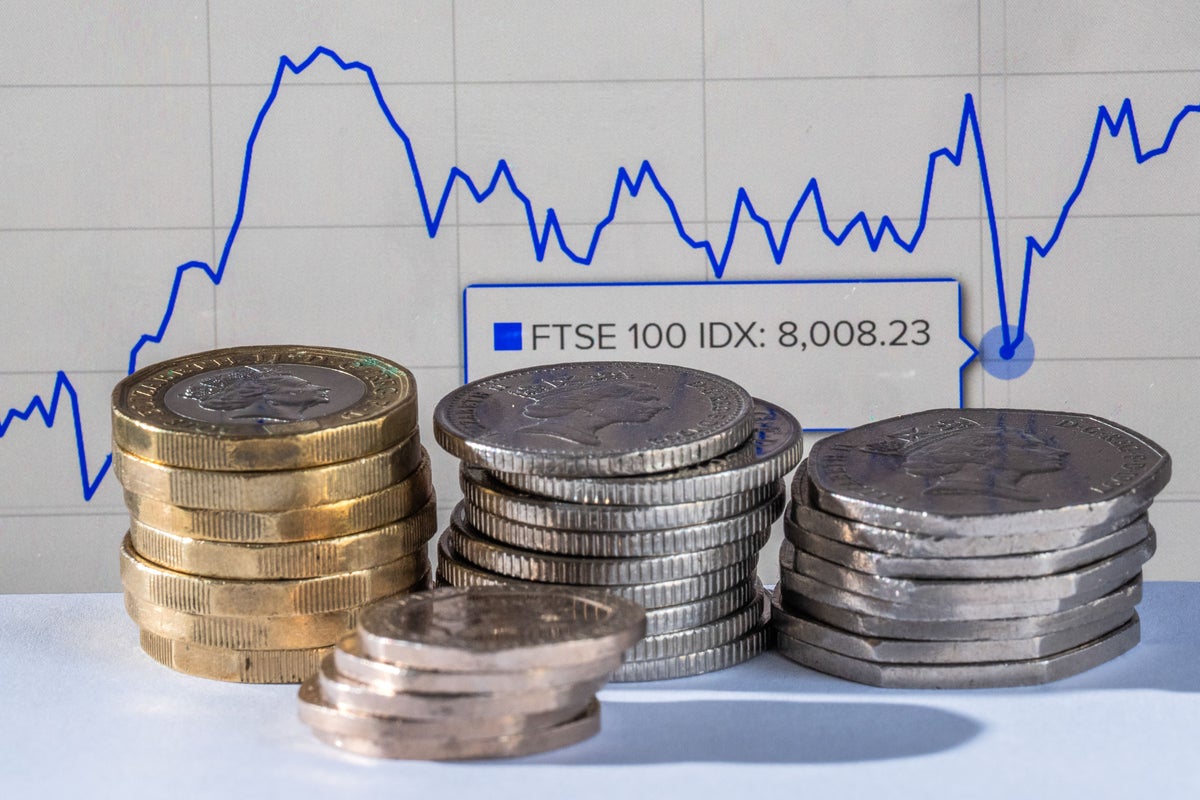
The FTSE 100’s early promise faded on Friday amid downbeat economic growth figures and fresh US tech weakness.
The FTSE 100 index closed down 54.1 points, 0.6%, at 9,649.03.
It had earlier traded as high as 9,761.47.
The FTSE 250 ended 24.45 points higher, 0.1%, at 21,876.55, and the AIM All-Share ended up 3.70 points, 0.5%, at 751.36.
For the week, the FTSE 100 fell 0.2%, the FTSE 250 declined 0.9% and the AIM All-Share dropped 0.2%.
The mood was knocked by news that the UK economy shrank in October, according to figures from the Office for National Statistics.
Gross domestic product is estimated to have fallen by 0.1% in October, the same as in September, missing the FXStreet-cited market consensus for a 0.1% rise.
Services output fell by 0.3%, while construction output fell by 0.6%.
Production output, however, climbed 1.1%.
Citi analyst Callum McLaren-Stewart called the data “an unsurprising surprise”.
“A miss in October is perhaps not the most surprising outcome.
“Pre-budget uncertainty, and particularly the degree of speculation ahead of the event, can likely explain the miss relative to forecasts,” he said.
“For households, the prospect of income tax increases (which was still very much live during October) would likely have put the brakes on consumer spending,” the Citi analyst said, while, on the business side, “the associated lack of clarity around which sectors were to be taxed, will have likely delayed/slowed investment decisions”.
Berenberg analyst Andrew Wishart fears some of the slowdown in the UK economy could be due to underlying issues and not just budget uncertainty.
“We suspect that deteriorating fundamentals rather than a budget-related setback in confidence are to blame, so a recovery seems unlikely in the near term,” Mr Wishart said.
The data was seen as cementing a quarter-point interest rate cut at next week’s Bank of England Monetary Policy Committee meeting.
“Not that it was in any doubt at all, but today’s data essentially guarantees that the Bank of England will slash rates again next week.
“The focus will instead be on the guidance for rates in 2026.
“Any dovish undertones that hint at further easing ahead could bode ill for the pound,” Ebury analyst Matthew Ryan said.
Mr McLaren-Stewart agrees the data “clearly supports the consensus case for a cut”.
“However, we anticipate the (BoE) will be obliged to cut lower than currently priced in 2026, necessitating a terminal rate below 3%, supported by weaker GDP outlook,” he added.
Sterling fell back after the figures, after rallying in recent days.
The pound was quoted lower at 1.3356 US dollars at the time of the London equities close on Friday, compared to 1.3416 US dollars on Thursday.
The euro stood at 1.1739 US dollars, down against 1.1746 US dollars.
Against the yen, the dollar was trading higher at 155.69 yen compared to 155.24.
In Europe on Friday, the CAC 40 in Paris closed down 0.1%, while the DAX 40 in Frankfurt ended 0.5% lower.
Stocks in New York were lower at the time of the London equity close.
The Dow Jones Industrial Average was down 0.7%, the S&P 500 index was 1.4% lower, while the Nasdaq Composite was down 2.1%.
Technology stocks were firmly in the red once more as Broadcom slid 11% after results failed to match lofty expectations, while Oracle fell a further 4.6%.
The yield on the US 10-year Treasury was quoted at 4.19%, stretched from 4.12% on Thursday.
The yield on the US 30-year Treasury was at 4.86%, widened from 4.77%.
Supporting the dollar and pushing yields higher, comments from two officials who voted against the Federal Reserve’s decision to lower interest rates this week.
Chicago Fed President Austan Goolsbee had joined Kansas City Fed President Jeffrey Schmid in pushing to keep rates unchanged instead at the central bank’s two-day policy meeting, which ended on Wednesday.
“I believe we should have waited to get more data, especially about inflation, before lowering rates further,” said Mr Goolsbee in a statement Friday.
In a separate statement, Mr Schmid, who also pushed for no rate cut at the Fed’s October meeting, said: “Right now, I see an economy that is showing momentum and inflation that is too hot, suggesting that policy is not overly restrictive.”
In addition, Federal Reserve Bank of Cleveland President Beth Hammack said she would prefer interest rates to be slightly more restrictive to keep putting pressure on inflation, which is still running too high.
Back in London, InterContinental Hotels Group rose 2.3% as Jefferies upgraded to “buy” from “hold”‘, but Whitbread dropped 2.2% as the broker moved the Premier Inn owner the other way, to “hold” from “buy”.
Elsewhere, 1Spatial soared 45% after agreeing in principle to a proposed £87.1 million offer from VertiGIS, a portfolio company of London-based private equity firm Battery Ventures.
The Cambridge, England-based location master data management software company said the cash bid would value each 1Spatial share at 73 pence.
VertiGIS confirmed that it has completed commercial due diligence, has a clear understanding of the 1Spatial business and requires only limited confirmatory diligence to proceed to making a firm offer.
But Card Factory plummeted 27% after cutting its profit guidance as it said weak high-street retail footfall hurt its UK store sales performance.
The Wakefield, England-based greeting cards, gifts and celebration merchandise retailer said it expects adjusted pretax profit of between £55 million and £60 million for financial 2026, which ends on January 31, if current trading trends persist.
This is lower than the company’s previous guidance, which was for mid-to-high single-digit-percentage growth in adjusted pretax profit from £66.0 million in financial 2025, roughly £70 million.
Card Factory attributed weak consumer confidence to the lower high street footfall, which has persisted into its “most important” trading period.
Brent oil was quoted at 61.30 dollars a barrel at the time of the London equities close on Friday, up from 60.91 late on Thursday.
Gold was quoted at 4,291.08 dollars an ounce on Friday, higher against 4,254.97.
The biggest risers on the FTSE 100 were Burberry, up 54.50 pence at 1272.5p, Ashtead Group, up 128.0p at 5,138.0p, BT Group, up 3.7p at 180.5p, Intercontinental Hotels Group, up 185.0p at 10,235.0p and Fresnillo, up 46.0p at 2,904.0p.
The biggest fallers on the FTSE 100 were St James’s Place, down 49.0p at 1,316.5p, British American Tobacco, down 146.0p at 4,238.0p, Anglo American, down 80.0p at 2,817.0p, Weir, down 80.0p at 2,856.0p and Imperial Brands, down 86.0p at 3,179.0p.
Monday’s economic calendar has CPI figures in Canada.
Later in the week, interest rate decisions are due in Europe, Japan and the UK. In addition, US nonfarm payrolls figures will be released, plus UK and US inflation and retail sales data.
Next week’s UK corporate calendar has delayed full-year results from travel retailer WH Smith and half-year numbers from electricals retailer Currys.
Contributed by Alliance News.

Food delivery giant Just Eat, funeral firm Dignity and motor platform Autotrader are among five firms under investigation by the UK’s competition watchdog as part of its crackdown on fake and misleading online reviews.
The Competition and Markets Authority (CMA) said it had launched probes against the companies – also including customer review and feedback firm Feefo and Pasta Evangelists – to see whether consumer laws have been broken.
Since April last year, companies have been banned from certain tactics around online reviews under law, such as fake posts, paid-for reviews that are not clearly marked as incentivised, as well as for hiding negative feedback.
Sarah Cardell, chief executive of the CMA, said: “Fake reviews strike at the heart of consumer trust – with many of us worrying about misleading content when looking at reviews online.
“With household budgets under pressure, people need to know they’re getting genuine information – not reviews or star ratings that have been manipulated to push them towards the wrong choice.
“We’ve given businesses the time to get things right. Now we’re deploying our new powers to tackle some of the most harmful practices head on.”
The CMA said it was looking into whether Just Eat’s ratings system had inflated some restaurant and grocer star ratings, giving a misleading picture of quality.
For Autotrader and Feefo, the CMA is investigating whether a number of one-star reviews – moderated by Feefo, which handles reviews for the new and used car site – were hidden on the platform and did not count towards the star ratings.
Dignity is under investigation by the CMA into whether it asked staff to write positive reviews about the firm’s crematoria services.
And artisan fresh pasta chain Pasta Evangelists is being probed over allegations it offered customers discounts for leaving five-star reviews on delivery apps without this being disclosed.
If the CMA finds the firms have broken the law, it can order them to change their practices and fine them up to 10% of their annual global sales.
An Autotrader spokesperson said: “We endeavour always to operate as a responsible and compliant business and will co-operate fully with the CMA’s investigation.”
It comes after the CMA recently secured commitments from Google and Amazon to beef up their systems to identify and remove fake reviews.
Amazon last June agreed to put in place “robust processes” to quickly detect and remove fake reviews alongside sanctions for rogue sellers and businesses after an investigation by the CMA to curb the customer hazard.
The tech giant said it would sanction businesses that boost their star ratings via bogus reviews or catalogue abuse, including bans from selling on the website, while users could also be banned for posting fake reviews.
Consumer group Which? welcomed the investigations and said the CMA must “get tough” on firms found to be breaking the law with reviews.
Sue Davies, head of consumer rights policy at Which?, said: “Investigations are a welcome first step, but enforcement will be key – the regulator must be prepared to get tough, use its powers and issue serious fines if these companies aren’t playing by the rules.”
The CMA said it swept more than 100 review publishers as part of the clampdown and sent advisory letters to 54 firms to improve their compliance with the law, with 90% having made changes in response and 75% telling the watchdog they better understood the rules.
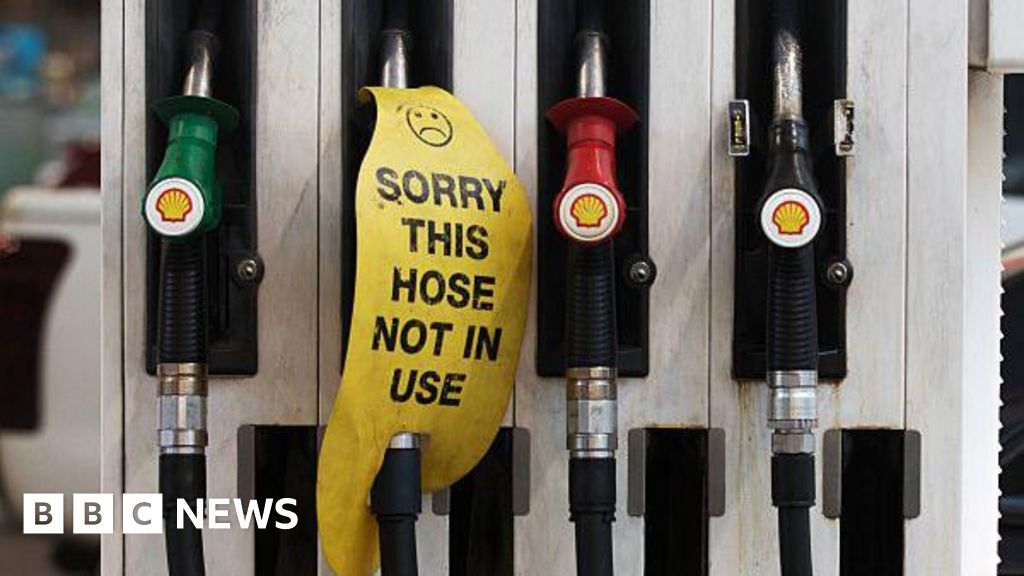
Anthony Albanese says nation’s supply remains “secure” amid reports of panic buying and shortages.
Source link

A woman has been awarded $6m in a verdict that could have implications for hundreds of other cases in the US.
Source link


Germany’s ifo index drops to 86.4 in March as uncertainty weighs on
Just Eat and Autotrader among five firms under investigation over online reviews

Australia’s Myer posts strong H1 FY26 sales growth, up 24.5% YoY

-

 Fashion1 week ago
Sales at US apparel, clothing accessories stores up 4% YoY in Jan 2026
-

 Entertainment1 week ago
Val Kilmer revived 1 year after death through AI
-
 Fashion1 week ago
US’ G-III Apparel’s FY26 sales fall 7% to $2.96 bn
-

 Sports1 week ago
March Madness 2026 – How to watch in SA, start time, schedule, TV channel for NCAA championship basketball tournament
-
 Business1 week ago
Brits cashing in jewellery as gold price hits record high
-

 Fashion6 days ago
China’s textile & apparel exports surge 17% to $50 bn in Jan-Feb 2026
-
 Business1 week ago
Video: The Effects of High Oil Prices
-
 Business6 days ago
Flipkart group CFO to leave co amid IPO plans – The Times of India