

Business
Eli Lilly’s next-generation obesity drug delivers strong weight loss, reduces knee pain in late-stage trial


The Eli Lilly logo appears on the company’s office in San Diego, California, U.S., Nov. 21, 2025.
Mike Blake | Reuters
Eli Lilly on Thursday said its next-generation obesity drug delivered what appears to be the highest weight loss yet in a late-stage trial while reducing knee arthritis pain, clearing the first of several upcoming studies on the weekly injection.
The highest dose of the drug helped patients with obesity and a type of knee arthritis lose an average of 23.7% of their body weight at 68 weeks, when analyzing all participants, including those who discontinued treatment. When evaluating only patients who stayed on the drug, the highest dose delivered 28.7% weight loss on average.
The company said some patients lost so much weight that they decided to drop out of the trial.
“It’s incredible,” said Dr. Caroline Apovian, co-director of the Center for Weight Management and Wellness at Brigham and Women’s Hospital. “Now, we have a drug that rivals the weight loss benefits of surgery.”
Apovian said Eli Lilly appears to be positioning the drug strategically for people with severe obesity, or a body mass index above 35 or 40. She noted that the company said 84% of patients in the trial had a BMI above that number in the trial.
Shares of Eli Lilly rose more than 3% on Thursday.
It is the first late-stage data on retatrutide, which works differently from existing injections and appears to be more effective. Eli Lilly is betting big on retatrutide as the next pillar of its obesity portfolio after its weight loss injection Zepbound and its upcoming pill. But it’s still unclear when the drug could enter the market.
It’s a critical part of the drugmaker’s plan to maintain its market share majority over Novo Nordisk in the booming market for weight loss and diabetes drugs. Some analysts estimate the segment could be worth about $100 billion by the 2030s.
Retatrutide also met the trial’s other main goal of reducing pain from knee osteoarthritis – a common condition that wears down the joint’s cartilage and leads to pain and stiffness – by up to 62.6% on average when analyzing all patients, based on a widely used survey. More than 1 in 8 patients who took the drug were completely free from knee pain by the end of the trial, Eli Lilly said.
One concern with current weight loss drugs is that they can lead to the loss of lean muscle mass. But Apovian said the results show that in adults with severe obesity, you can improve physical function with retatrutide.
The results appear to surpass Wall Street’s expectations. In a note ahead of the findings, BMO Capital Markets analyst Evan Seigerman said his base-case assumption was for the drug to show weight loss of around 20% to 23%, with at least a 50% reduction in knee pain.
The company believes retatrutide “could become an important option for patients with significant weight loss needs and certain complications, including knee osteoarthritis,” Kenneth Custer, president of Lilly Cardiometabolic Health, said in a statement.
In a note Thursday, JPMorgan analyst Chris Schott said retatrutide’s tolerability data, or how well patients handle the treatment, is “somewhat worse vs Zepbound, though not surprising, in our view.”
Roughly 18% of patients on the highest dose of the drug stopped treatment due to side effects, compared with 4% of those in the placebo group. Eli Lilly said those dropout rates were “highly correlated” to patients’ starting body mass index and included discontinuations due to “perceived excessive weight loss.”
Among those with a BMI of 35 or higher who took highest dose, 12% stopped treatment. Schott said that number is closer to the dropout rates seen in trials on Eli Lilly’s weight loss drug Zepbound and Novo Nordisk‘s obesity injection Wegovy.
In a separate note on Thursday, BMO’s Seigerman said discontinuation rates “appear to highlight the speed and strength of weight loss was excessive for some patients with lower BMI.” But he said, “all in results are impressive.”
Around 43% of patients on the highest dose experienced nausea, while roughly 33% and 20.9% had diarrhea and vomiting, respectively. More than 1 in 5 patients on the highest dose also experienced dysesthesia, which is an unpleasant nerve sensation. The company said it was generally mild for patients and rarely led to them discontinuing treatment.
The study, called TRIUMPH-4, didn’t solely focus on weight loss, meaning that other trials specifically designed for that outcome could produce different or higher results. Eli Lilly expects to report findings from seven additional phase three trials on the drug by the end of 2026.
Dubbed the “triple G” drug, retatrutide works by mimicking three hunger-regulating hormones – GLP-1, GIP and glucagon – rather than just one or two like existing treatments. That appears to have more potent effects on a person’s appetite and satisfaction with food than other treatments.
Tirzepatide, the active ingredient in Zepbound, mimics GLP-1 and GIP. Novo Nordisk’s semaglutide, the active ingredient in Wegovy, mimics only GLP-1.
Higher doses of tirzepatide helped patients with obesity lose roughly 20.9% of their body weight on average in late-stage studies, when analyzing all patients regardless of discontinuations.
As Eli Lilly establishes an edge in the space, its chief rival, Novo Nordisk, is racing to catch up. In March, Novo Nordisk said it agreed to pay up to $2 billion for the rights to an early experimental drug from the Chinese pharmaceutical company United Laboratories International.
Novo Nordisk’s newly acquired drug is a clear potential competitor to retatrutide because it similarly uses a three-pronged approach to promoting weight loss and regulating blood sugar. But Novo Nordisk’s treatment is much earlier in development, meaning it will take several years before it reaches patients.




Heineken has announced a substantial investment exceeding £44 million into hundreds of its pubs across the UK, a move expected to create approximately 850 jobs.
The Dutch brewing giant’s Star Pubs operation, which manages 2,350 sites nationwide, is undertaking this significant financial commitment despite a challenging period for the pub sector.
The industry has faced considerable pressure over the past year, grappling with escalating labour costs and increases in national insurance contributions.
Concurrently, consumer spending has been constrained by concerns over inflation and rising unemployment, further impacting pub revenues. However, pubs did receive additional business rates support from the government last month, aimed at alleviating some of these financial burdens.
Lawson Mountstevens, managing director of Star Pubs, indicated that the investment strategy is partly designed to bolster revenues and help the group navigate the recent “sustained increases in running costs”.
This year, £44.5 million will be allocated to upgrades for 647 pubs. A notable 108 of these venues are earmarked for particularly significant cash injections, with each transformation costing at least £145,000.
Heineken clarified that while the majority of its pubs are group-owned, they are independently operated by local licensees. A key focus for this investment, particularly in the lead-up to the 2026 football World Cup, will be on sports-focused venues.
The pub firm and brewer has a history of significant investment in British pubs, having pumped £328 million into the sector since 2018. Work has already commenced at 52 locations, including eight projects dedicated to reopening boarded-up pubs that have endured lengthy closures.
Mr Mountstevens also urged the government to reduce the tax burden on pubs, arguing it would ease cost pressures and foster further job creation within the industry.
He stated: “We can only do so much; the root-and-branch reform of business rates that the industry has been calling for over many years is urgently required, as well as a lowering of the burden of taxation on pubs, including VAT and beer duty.”
He concluded with a direct appeal: “We are calling on the Government to support us in bringing out the best in the Great British pub.”
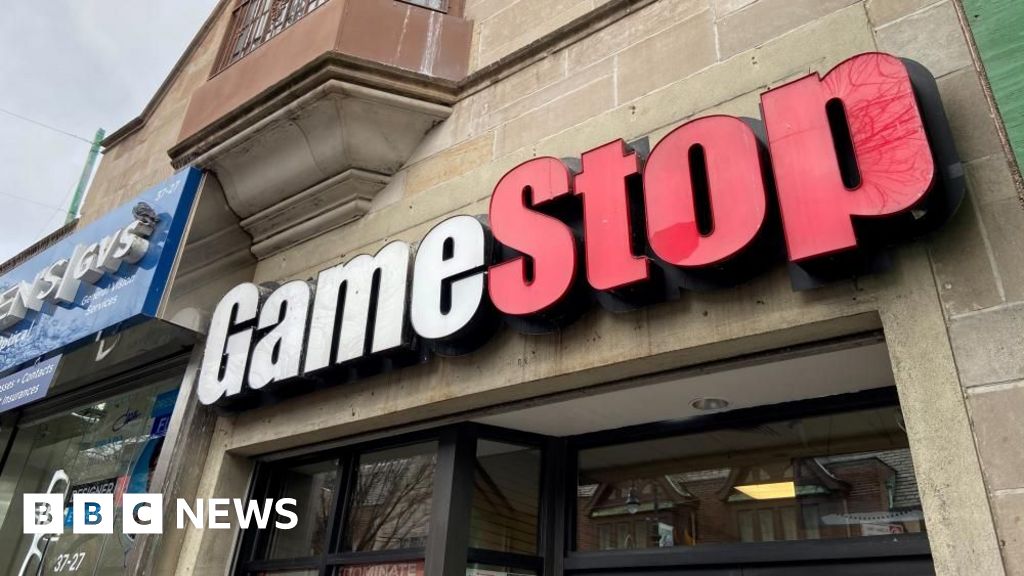
GameStop’s boss Ryan Cohen says he sees potential to make eBay a much bigger rival to Amazon.
Source link
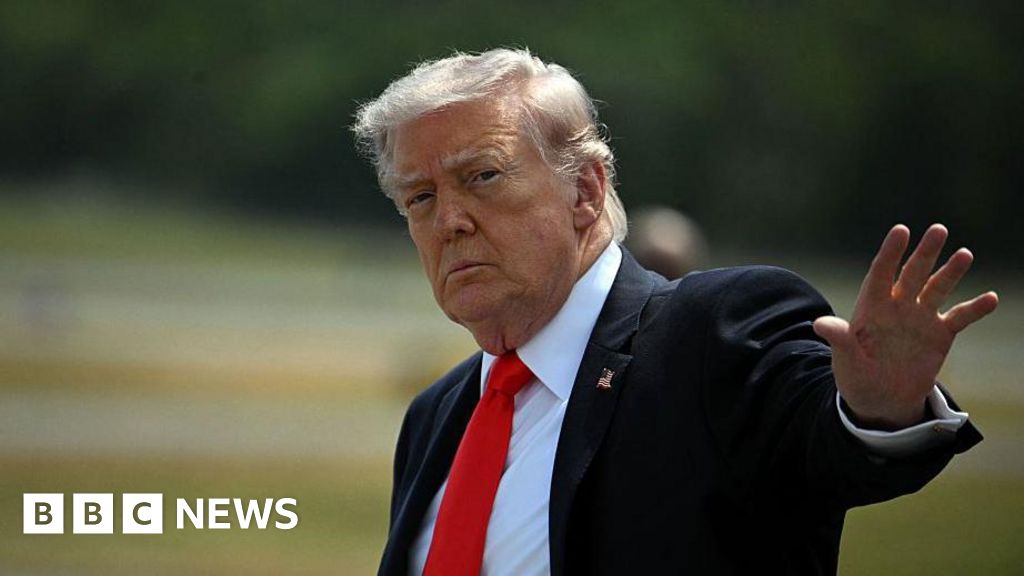
It comes as the US said on Monday it will begin to help “guide” vessels out of the Strait of Hormuz.
Source link


Greg Brockman Defends $30B OpenAI Stake: ‘Blood, Sweat, and Tears’

Met Gala 2026 “Costume Art” red carpet pictures from New York City

Jack Brooksbank opts for intimate celebration as new baby brings fresh focus

-

 Tech1 week ago
A Brain Implant for Depression Is About to Be Tested in Humans
-
 Business1 week ago
Pakistan’s oil market is fuelling the crisis | The Express Tribune
-

 Tech1 week ago
Almost 90% of women leave tech industry within 10 years | Computer Weekly
-
 Business1 week ago
‘I had £20,000 stolen and had to fight a 13-month fraud reporting rule to get it back’
-

 Sports7 days ago
Pro wrestling star Steph De Lander reveals how colleague’s advice helped lead her to title triumph at ACW
-

 Entertainment1 week ago
Melania Trump says ABC should ‘take a stand’ on late-night host Kimmel
-

 Tech7 days ago
This Ambitious Laptop Doesn’t Leave Much Room for Your Hands
-

 Entertainment1 week ago
Norway joins Type 26 Frigate Programme to boost NATO naval power