

Fashion
Gauthier Borsarello announces his departure from Fursac


Published
December 15, 2025
Under Gauthier Borsarello’s creative direction, Fursac joined the Paris Fashion Week calendar. Over five years at the creative helm of the French menswear brand, the designer remained faithful to the label’s formal roots while setting a new tone.
Under the leadership of the vintage specialist and co-founder of L’étiquette magazine, the brand, which was still called De Fursac when he arrived and had just been taken over by the SMCP group, staged its first presentation for the spring/ summer 2023 season. Last January, Borsarello staged a catwalk show to present his vision for autumn/ winter 2025-2026. In mid-December, he announced his departure via his Instagram account.
“I would like to sincerely thank Daniel Lalonde, Elina Kousourna, Alix Le Naour, Evelyne Chetrite, and Judith Milgrom for the opportunity to work at Fursac five years ago as creative director. This chapter has been meaningful, both creatively and professionally. I am grateful for the trust, the exchanges, and the freedom to contribute to the evolution of the brand,” he says in a message dated December 12.
“I am particularly proud of the studio, design, image, and communications, and of what we have achieved together: bringing the brand onto the official Fashion Week calendar after just one season, and continuing this journey through to the Paris Fashion Week show in January 2025. Thank you for the experience, perspective, and relationships built along the way. I will carry them with me on my journey.”
In five years, the designer has introduced modernised silhouettes and strengthened Fursac’s casual wardrobe, with a heightened focus on fabric choices. He has also broadened his references, from inspirations drawn from football and surfing to a more cutting-edge creative universe centred on music and the arts, as in his SS25 presentation through work with artist Lionel Estève, whose work is exhibited at the Musée Picasso in Paris.
The group confirmed this decision to FashionNetwork.com. “The group’s studio teams have taken over and are currently working on finalising the FW 2026 collection,” notes Isabelle Guichot, SMCP’s chief executive.
The brand welcomed Louise Bousquet-Andreani as its managing director at the beginning of the year. For the time being, activity at its historic premises and boutique on the corner of Richelieu-Drouot, on the Grands Boulevards in Paris, has been put on hold, FashionNetwork observed.
“The Fursac teams at the rue Richelieu boutique have been temporarily redeployed to the brand’s other Parisian stores, notably for the end-of-year sales period. SMCP hopes to reopen the rue Richelieu boutique at the beginning of 2026”, explains Isabelle Guichot, who adds that “as part of the change of ownership of the building, SMCP has decided to bring Fursac’s head office teams into its offices in the 1st arrondissement of Paris.”
Along with Claudie Pierlot, Fursac is reported under the group’s Other Brands segment in SMCP’s published results. After revenue reached €167 million in 2023, this division declined to €148 million in 2024. In the first nine months of 2025, sales were stable compared with the previous year at €108 million, on group revenue of €895 million.
Following the completion of legal proceedings regarding the actions of its former shareholder, the group’s current majority shareholders announced their intention to sell their shares on November 27.
This article is an automatic translation.
Click here to read the original article.
Copyright © 2025 FashionNetwork.com All rights reserved.












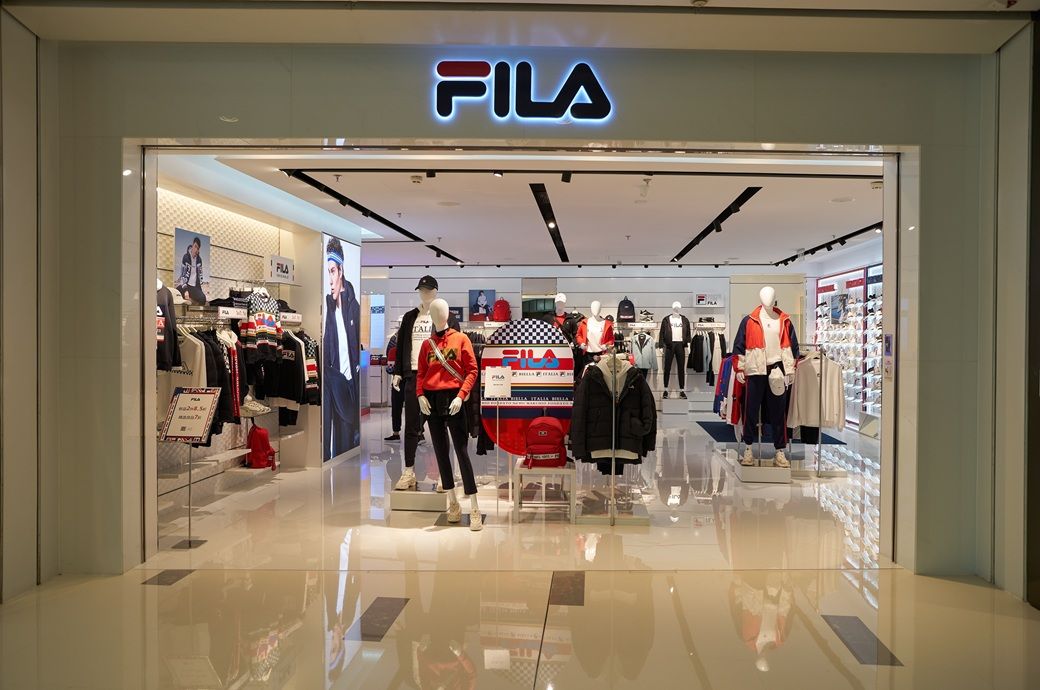
The Misto segment recorded annual revenue of KRW 829.6 billion, down 9.6 per cent YoY due to US restructuring and inventory clearance. However, operating profit rebounded to KRW 74.7 billion, signalling a strong turnaround, with the segment delivering its fourth consecutive quarter of profitability.
Misto Holdings has reported revenue of KRW 4.47 trillion (~$2.97 billion) in 2025, up 4.7 per cent YoY, with operating profit rising 31.6 per cent.
While the Misto segment declined, profitability improved.
Growth was driven by Greater China and steady Acushnet performance.
In Q4, revenue rose 6.3 per cent, led by Acushnet, while the company returned KRW 285.4 billion to shareholders.
The growth momentum was led by Greater China, which delivered triple-digit expansion in 2025 as the company scaled its presence through leading K-fashion brands such as Marithe+Francois Girbaud, Matin Kim, Rest and Recreation, and Raive. In Korea, Fila continued to benefit from stable demand in its footwear franchise models, Misto Holdings said in a press release.
The Acushnet segment maintained steady performance, supported by robust demand for golf equipment and premium positioning, contributing to overall earnings stability.
“2025 was a meaningful year in which we further clarified our identity as a global brand portfolio company following our corporate name change. Based on the expansion of our Greater China business, improved profitability in the Misto segment, and Acushnet’s solid growth, we strengthened the stability of our earnings. We will continue to enhance brand value, maintain profitability-focused management, and execute our shareholder return policy to support sustainable growth,” said Ho Yeon (Aaron) Lee, CFO of Misto Holdings.
Meanwhile, in the fourth quarter (Q4), revenue rose 6.3 per cent YoY to KRW 915.2 billion, supported by profitability-focused operations, restructuring of its US business, and continued growth at Acushnet despite macroeconomic uncertainty.
Acushnet remained a key contributor in Q4, with revenue increasing 10.9 per cent YoY to KRW 698.3 billion, driven by strong sales of Titleist T-Series irons and SM10 wedges, along with higher average selling prices for FootJoy golf shoes.
Misto Holdings also advanced its shareholder return strategy, returning approximately KRW 285.4 billion through dividends and share repurchases in 2025, achieving 57.1 per cent of its three-year target.
Fibre2Fashion News Desk (SG)

However, actual use of foreign direct investment (FDI) in the Chinese mainland declined during the same period, falling 5.7 percent year on year (YoY) to ¥161.45 billion ($23.43 billion), as mentioned in official ministry figures.
China established 8,631 new foreign-invested firms in the first two months of the year, up 14 per cent YoY, even as actual FDI inflows fell 5.7 per cent to ¥161.45 billion ($23.43 billion).
High-tech industries attracted ¥63.21 billion ($9.19 billion), rising 20.4 per cent and accounting for 39.2 per cent of total inflows, while investment from Canada and Switzerland surged sharply.
Sector-wise, FDI inflows totalled ¥47.52 ($6.90 billion) in manufacturing and ¥111.22 billion ($16.17 billion) in services, indicating continued dominance of the service sector in attracting foreign capital. High-tech industries remained a key growth area, drawing ¥63.21 billion ($9.19 billion) in investment, up 20.4 per cent year on year (YoY) and accounting for 39.2 percent of the national total.
In terms of source countries, investment from Canada and Switzerland recorded strong gains, surging 210 per cent and 41.3 per cent respectively compared with the same period last year, highlighting a shift in the composition of foreign capital entering the Chinese market.
Fibre2Fashion News Desk (JP)

In 2023, 73 per cent of APAC CEOs were optimistic about global economic prospects; however, it was down to 64 per cent in 2025. Globally, only 68 per cent of CEOs remain upbeat about this—the lowest level seen in four years.
APAC CEOs reported much more optimism in 2025 about the growth prospects of their own economies over the next three years, while confidence in global economic prospects dropped, KPMG said.
Optimism about their own country’s prospects was the highest in Australia and lowest in India last year.
About four-fifths of APAC CEOs also saw substantial growth opportunities for their organisations and industries.
Optimism about their own country’s prospects was the highest in Australia (90 per cent) and lowest in India (71 per cent) last year, a KPMG release said citing its latest annual ‘APAC CEO Outlook’.
The declining confidence of APAC CEOs in the global landscape also reflects ongoing uncertainty and volatility that has plagued the global markets, stemming from an evolving geopolitical landscape, persistent supply chain constraints and intensifying scrutiny on sustainability, KPMG noted.
Furthermore, about 80 per cent of APAC CEOs also saw substantial growth opportunities for their organisations and industries, in line with the global average.
In fact, in 2025, executives appear more certain that their companies are on an upward trajectory compared to the previous year: 61 per cent of respondents expect earnings to increase by more than 2.5 per cent this year, compared to just 52 per cent in 2024.
CEOs in Japan (76 per cent) are particularly optimistic about their earnings outlook compared to global and regional peers, reflecting its solid domestic demand and stable GDP performance.
This positivity is driving many in APAC to continue investing in their businesses, with executives noting that there is strong appetite for increased hiring (92 per cent) and mergers and acquisitions (87 per cent) over the next three years, and a substantial number (82 per cent) of APAC CEOs expecting to spend more than 10 per cent of their budgets on artificial intelligence (AI) in the next 12 months.
This clearly indicates that subdued global outlook has not dampened optimism around companies’ prospects in APAC, KPMG remarked.
Confidence in the growth prospects of the global economy is lowest among Chinese companies (58 per cent). This likely reflects, in part, the impacts of an uncertain tariff environment. Strained relations with its main export partner and uncertainty around global demand are likely some areas of concern among firms in China.
Global trade risks topped the minds of APAC CEOs last year, especially as geopolitical tensions and trade realignments dominated headlines. These trends have persisted in 2025, with supply chain resilience remaining a top three driver of organisational decision-making in the short term.
However, the landscape is shifting with the arrival of emerging technologies like generative AI. AI integration is the top issue driving APAC executives’ short-term decision-making, a notable contrast with global peers who are more focused on cybersecurity issues and supply chain resilience, KPMG added.
Fibre2Fashion News Desk (DS)


South Korea’s Misto Holdings’ 2025 profit jumps 31.6% on steady growth

Australia and EU agree sweeping trade deal in face of global uncertainty

How Jaxon Smith-Njigba’s contract extension impacts Seahawks

Strategic oil stocks to be released ‘immediately’ in Asia and Oceania: IEA

Transfer rumors, news: Real Madrid open to Camavinga exit, as Premier League clubs circle

New Income Tax Act 2025 To Take Effect From April 1: 10 Key Changes That Will Affect Your Money

-
 Entertainment1 week ago
Strategic oil stocks to be released ‘immediately’ in Asia and Oceania: IEA
-
 Sports1 week ago
Transfer rumors, news: Real Madrid open to Camavinga exit, as Premier League clubs circle
-
Business1 week ago
New Income Tax Act 2025 To Take Effect From April 1: 10 Key Changes That Will Affect Your Money
-

 Sports1 week ago
PCB files complaint over allowing Bangladesh to take review on penultimate ball – SUCH TV
-
 Business7 days ago
Stocks and pound rise as US rate call approaches
-

 Tech6 days ago
Justice Department Says Anthropic Can’t Be Trusted With Warfighting Systems
-

 Sports6 days ago
March Madness 2026 – How to watch in SA, start time, schedule, TV channel for NCAA championship basketball tournament
-

 Sports7 days ago
WBC championship: USA-Venezuela preview, live updates, analysis