

Entertainment
Fear, fiat and the future

Pakistan has quietly crossed an important threshold. After laying the legal foundations for a regulated digital-assets ecosystem through the Digital Nation Pakistan Act and the Virtual Asset Regulatory Ordinance earlier this year, the Pakistan Virtual Asset Regulatory Authority (PVARA) began accepting licence applications for crypto exchanges on December 2.
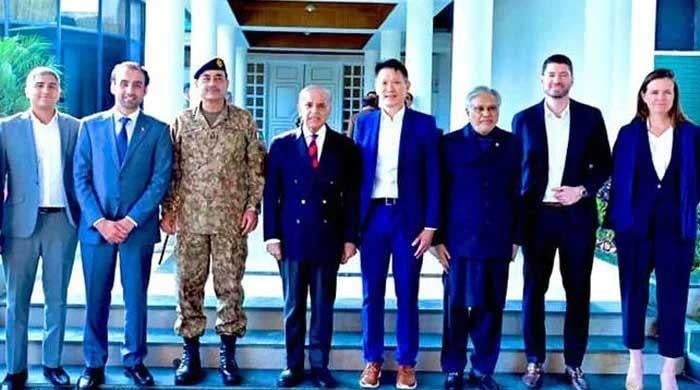
That shift was underscored at the highest levels of the state on December 6, when Binance Global CEO Richard Teng met in Islamabad with senior policymakers, alongside Prime Minister Muhammad Shehbaz Sharif and COAS-CDF Field Marshal Syed Asim Munir.
The engagement reflected not market curiosity, but institutional intent: an acknowledgement that questions of money, payments and digital value now sit alongside national economic and security priorities.
In practical terms, this means that, in due course, buying bitcoin through regulated local payment rails will become easier, cleaner and compliant.
This is a notable development, arriving at a familiar moment of fear. Bitcoin prices are down again. Critics are loud. Headlines speak of exhaustion, excess, and the end of the cycle. Cash-outs accelerate. Confidence wobbles. Fear, once again, dominates the conversation.
But history offers perspective. Similar periods of pessimism marked the closing phases of the previous four-year bitcoin cycles: from 2014 to 2017, and again from 2018 to 2021. Viewed through that lens, the currency cycle that began in 2022 is not collapsing; it is maturing.
Focusing solely on price action obscures the deeper issue. The real risk is not bitcoin’s volatility. It is the financial system that bitcoin was created to question. Nowhere is that system’s failure more visible than in Pakistan. At its core, that failure manifests through inflation: a process widely misunderstood and routinely misdescribed. Inflation is often explained as prices going up.
That description is convenient and incomplete. Prices are not the cause of inflation; they are its effect. Inflation begins with the continuous expansion of the money supply. When currency is created year after year, the purchasing power of every unit declines. Savers lose quietly. Salaries lag. Living standards erode.
In Pakistan, the consequences are everywhere. Food, fuel, rent and education cost more each year: not because they have become intrinsically more valuable, but because the currency measuring them buys less. The result is a population trapped in short-term thinking: working harder, saving less and feeling perpetually behind.
Crucially, this erosion occurs without transparency or consent. A small group controls the monetary system. Everyone else must ask permission to use their own money through banks and intermediaries. Profits are privatised. Losses are socialised. Asset bubbles form, crises follow and wealth concentrates further at the top.
No matter how hard most people work, the value of their earnings continues to erode unless they gain access to assets ahead of inflation or become part of the system itself. Pakistan’s recurring economic crises are not isolated national failures; they are local expressions of a global monetary order that rewards access over effort. This is the quiet failure of money.
Which brings us to the alternative. Bitcoin enters this landscape not as an investment pitch, but as a monetary alternative. It is decentralised and returns agency to individuals. It functions as an equaliser in societies increasingly fractured by economic stress and resentment. Its properties are straightforward.
Bitcoin has a fixed supply of 21 million coins, permanently capped. No central authority can expand it. No political emergency can dilute it. Its rules are enforced by code rather than discretion, and its security rests on energy and mathematics, not faith in institutions.
While bitcoin is often dismissed as volatile, that volatility has unfolded within a clear long-term upward trajectory, while its underlying fundamentals have remained unchanged. Over longer horizons, it has been the best-performing asset of the past decade. More revealing, however, is what happens when goods are priced in bitcoin rather than local currency.
Housing, technology and productive assets often become cheaper over time: not because value disappears, but because the money measuring them improves.
In 2012, a modest home in Islamabad priced at a few million rupees would have required thousands of bitcoins. Today, that same property may cost tens of millions of rupees, yet only a single-digit amount of bitcoin. The house did not change. The currency did.
For Pakistan, a country where money not only underperforms but also routinely collapses as a store of value, and where debasement is felt long before it is formally acknowledged, this distinction matters. Regulation does not validate bitcoin’s price, nor does it eliminate risk.
What it does is legitimise access. As compliant frameworks take shape and local rails develop, bitcoin is increasingly encountered not as a speculative instrument but as a savings technology, competing directly with a currency that has struggled to preserve purchasing power.
This matters most for a younger generation priced out of real estate, excluded from traditional asset classes and increasingly sceptical of institutions that promise stability but deliver erosion. Bitcoin does not require property deeds, brokerage accounts or political proximity. It requires only time, discipline and a long-term horizon.
Bitcoin offers no guarantees. It carries real risk. But it restores something modern money has quietly taken away: the choice to opt out of a system designed to dilute by default. In a world where money has quietly failed its most basic functions, that choice may be the most powerful feature of all.
Disclaimer: The viewpoints expressed in this piece are the writer’s own and don’t necessarily reflect Geo.tv’s editorial policy.
The writer is an Islamabad-based lawyer and Strategic Legal Counsel at HP | FKM. She can be reached at: [email protected]
Originally published in The News
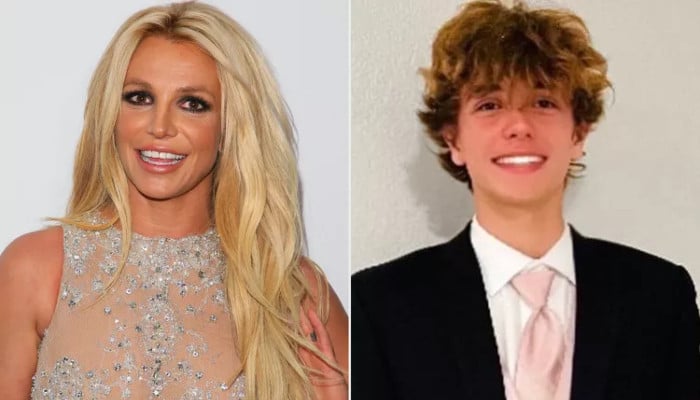
Britney Spears has broken her social media silence following her DUI arrest last month, sharing a playful video with her younger son Jayden Federline, her first post since the 4 March incident.
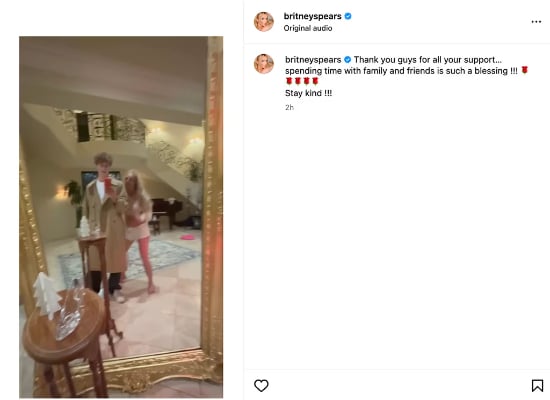
The 44-year-old uploaded the clip to Instagram on 27 March, showing the pair larking around together in front of a mirror, taking turns holding a red phone to snap pictures.
Britney was clearly in good spirits, tossing her hair and smiling throughout. At one point she danced playfully around Jayden before quickly catching herself.
“Naughty little sister and a mama too!” she said while leaping around him. “Composure, I’m being very composed.”
Jayden, 19, had his own moment in the video when he put on a Fedora hat and channelled his inner Michael Jackson, saying: “I wish I could be like Michael.”
Britney also changed outfits during the clip, swapping her initial all-white look, low-rise white shorts and a cropped long-sleeved top, for skinny jeans, a blazer and heels.
She captioned the video warmly: “Thank you guys for all your support… spending time with family and friends is such a blessing!!! Stay kind!!!”
The reunion comes after her rep confirmed in early March that Britney would be spending time with her sons as she worked through the aftermath of her arrest.
“Britney is going to take the right steps and comply with the law and hopefully this can be the first step in long overdue change that needs to occur in Britney’s life,” the statement said.
Her rep added that her loved ones were putting together a plan to support her wellbeing going forward.
The mother-son time carries extra meaning given how difficult their relationship has been at times.
Britney went close to three years without seeing Jayden, making the recent reconnection all the more significant to her. When he came back into her life in 2024, she was openly overwhelmed.
“I’m in shock!!! He came back and he feels older and smarter than me!!!” she wrote at the time. “He’s a man and I cry everyday of my life because of the miracle and genius he is!!!”
Jayden, who had been living in Hawaii with his father Kevin Federline, has since moved back to Los Angeles to pursue music.
He last appeared on Britney’s Instagram in early January, and the pair have spent the last two Christmases together. Britney also shares son Sean, 20, with Federline.
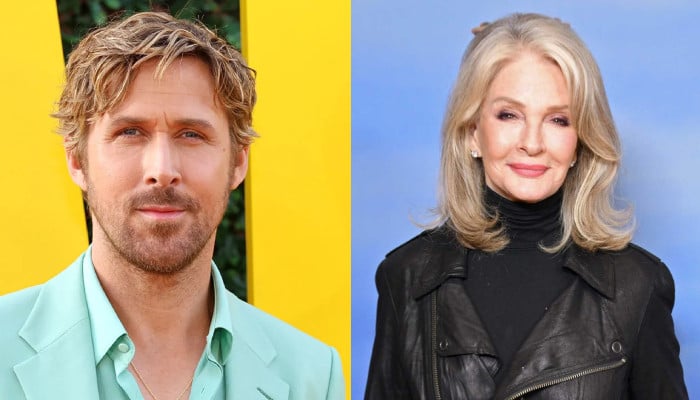
Ryan Gosling, the three-time Oscar-nominated actor has accepted an invitation to visit the set of Days of Our Lives after a heartfelt exchange with the show’s legendary star Deidre Hall that captured Hollywood’s attention this week.
It started when Gosling, appearing on the Happy Sad Confused podcast while promoting Project Hail Mary, spoke warmly about growing up watching the long-running soap and singled out Hall’s portrayal of Marlena Evans as formative viewing.
He was particularly taken by the show’s possession storyline, and used the moment to make a broader point about how underappreciated soap actors are.
“They do not get the love they deserve,” he said.
“The amount they have to memorize the night before, like 10 pages of dialogue. They get one take, and it’s impossible scenarios.”
Watching Hall move between playing an ordinary person and someone “possessed by the devil,” he added, was “an incredible acting class.”
Hall, who has played Marlena since 1976, responded with a video message thanking Gosling and inviting him to come and see the set for himself.
“We’re just thrilled to be acknowledged and to be so well spoken of,” she said, sharing that the cast had watched Gosling’s comments together behind the scenes.
Gosling’s reply, posted to Eva Mendes and Project Hail Mary‘s Instagram accounts, left no room for ambiguity.
“This is a very enthusiastic yes to a very cordial invitation,” he said.
“I will be there to thank you in person… It wasn’t Marlon Brando. It wasn’t De Niro. It was you.” He also called Hall his “OG acting inspiration”, a line that, given the company it puts her in, is quite the tribute.
Project Hail Mary is currently in cinemas, with new episodes of Days of Our Lives streaming on Peacock.
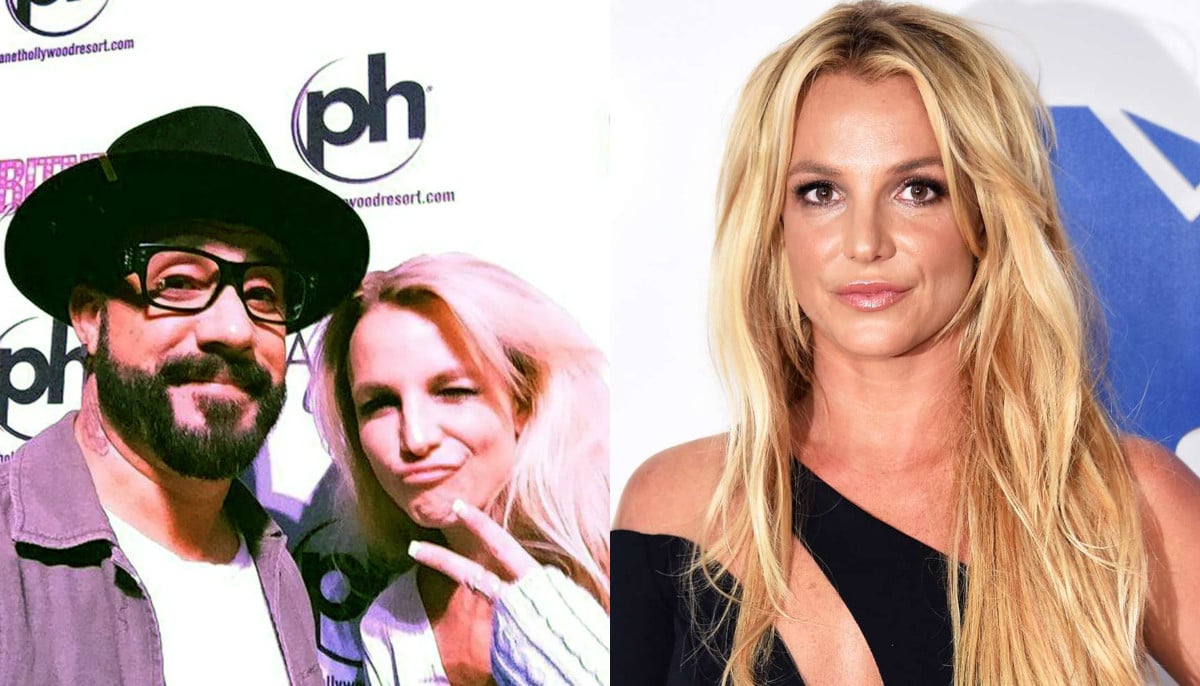
AJ McLean is a friend Britney Spears can lean on during her tough time amid ongoing legal woes after her DUI arrest.
The Backstreet Boys member, 48, spoke in support of Spears during the iHeartRadio Music Awards 2026, as he revealed that they are also neighbours.
“We see each other every so often,” McLean said, adding, “live in the same neighborhood in the same area.”
The singer, who was nominated for the favourite onscreen category at the awards, noted that he “always just give[s] her a hug and check[s] on her” whenever he runs into the pop icon, in conversation with Page Six.
The Everybody hitmaker also added that he wishes “her the best,” without mentioning the arrest. When asked if he has spoken to her recently, he told the outlet that he hasn’t.
This comes after Spears was arrested in Ventura County, California earlier this month after she as caught swerving and speeding allegedly under the influence.
She was later released in the morning and her manager Cade Hudson released an official statement saying her actions were “inexcusable.”
While the Toxic songstress has not addressed the situation herself, an insider spilled that she is devastated and scared beyond measure for what the consequences would be.


Men’s March Madness live tracker: Updates from every Sweet 16 game Friday

Ben White booed in return — but he did more than flat England teammates in Uruguay draw
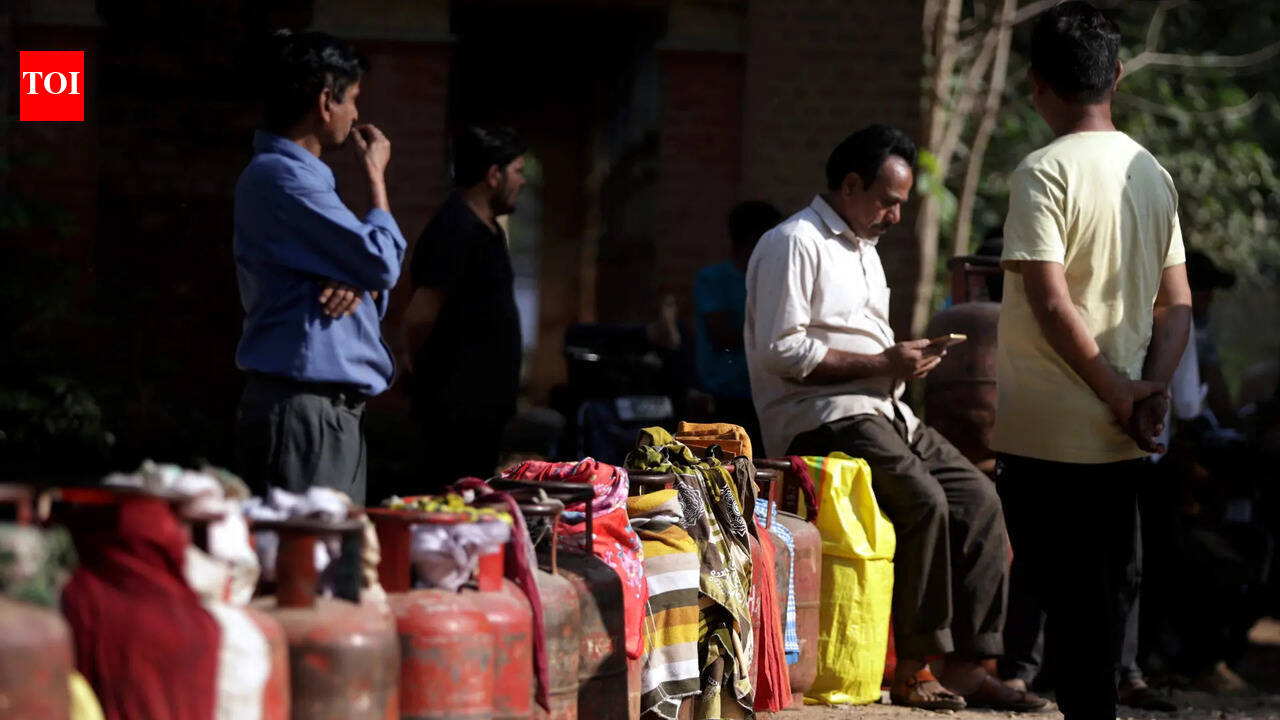
LPG crisis: No respite for restaurants yet – The Times of India

-
 Business7 days ago
Flipkart group CFO to leave co amid IPO plans – The Times of India
-

 Fashion7 days ago
China’s textile & apparel exports surge 17% to $50 bn in Jan-Feb 2026
-

 Sports1 week ago
Rating Adidas’ 2026 World Cup away shirts: Argentina, Spain, Mexico and more
-
 Business1 week ago
Video: The Effects of High Oil Prices
-
 Fashion1 week ago
The hidden $1.62 war tax now embedded in every garment you source
-

 Sports1 week ago
American Conference Commissioner Tim Pernetti thanks Trump for Army-Navy game executive order
-
Tech1 week ago
The Corsair 4000D RS PC Case Keeps Your System Cool
-

 Tech1 week ago
‘Uncanny Valley’: Nvidia’s ‘Super Bowl of AI,’ Tesla Disappoints, and Meta’s VR Metaverse ‘Shutdown’